You're viewing free preview questions — 6 questions previewing here — subscribe to unlock 137 more, plus the Full Question Bank, Mock Papers & Worksheets.Upgrade
Back

Orbits, gravity and satellites — Free MYP5 Physics Practice Questions

Free questions

Open in full, with answers, mark scheme and examiner insights.

Question 1Criterion A · Band 1-4 · Easy · 5 marksrevisionprep.com

Concept of orbit (elliptical paths)

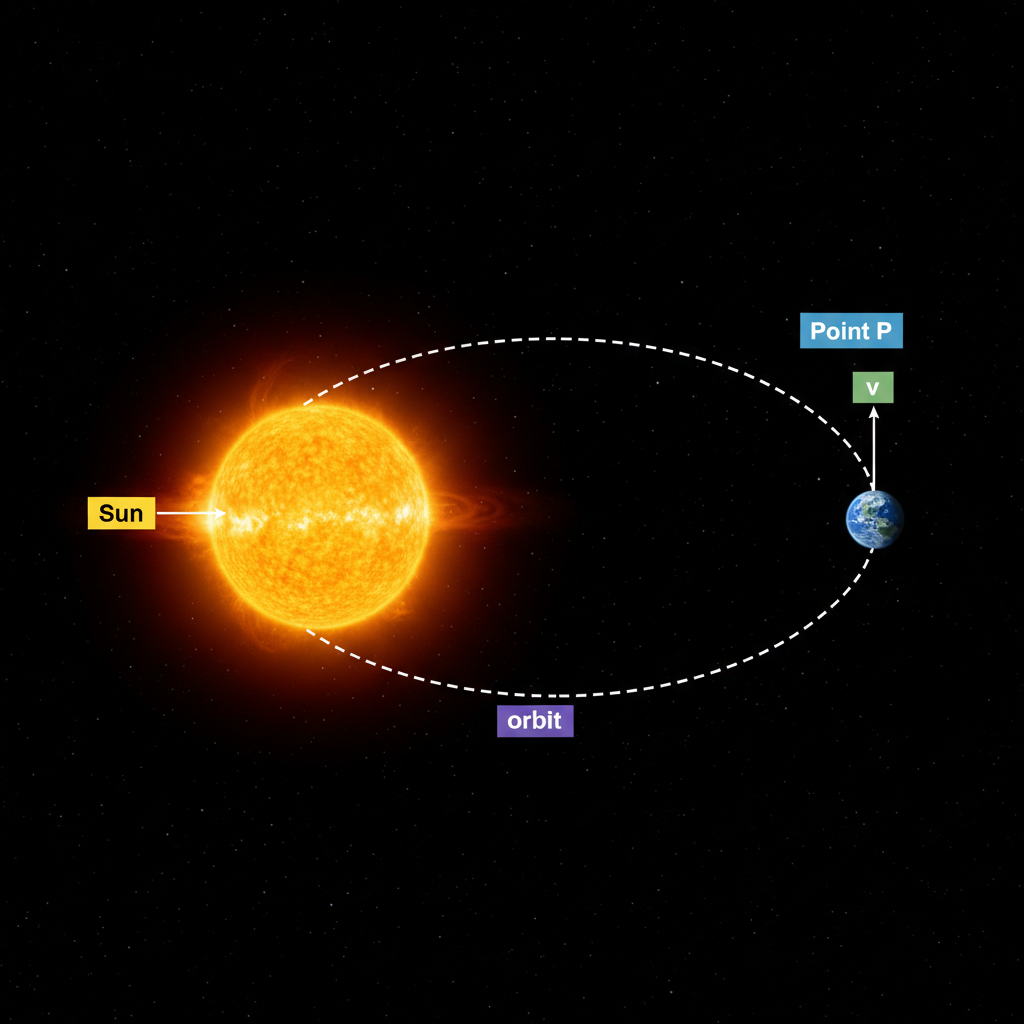
The diagram shows a planet at point P in its orbit around the Sun.
Question diagram
(a)
State the force that keeps the planet in orbit and its direction. [2]Criterion A (i) · Level 1-2
(b)
Describe the direction of the planet's velocity at P. [1]Criterion A (i) · Level 1-2
(c)
Explain why, in an elliptical orbit, the planet's speed changes as it moves around the Sun. [2]Criterion A (ii) · Level 3-4

revisionprep.com

Summary Answer

Not available for this question.

Model Answer

Not available for this question.

Marking Scheme

Not available for this question.

Examiner Insights

Not available for this question.

Question 2Criterion A · Band 1-2 · Easy · 4 marksrevisionprep.com

Orbital types: Geostationary, Low Earth orbit
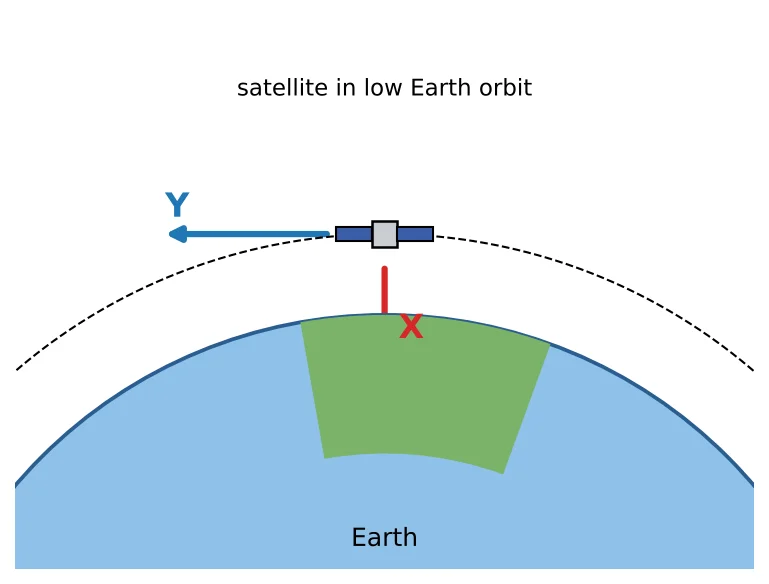
The diagram shows a satellite in low Earth orbit, 400 km above Earth. Arrow X points towards Earth's centre; arrow Y points opposite to the satellite's direction of motion.
Question diagram
(a)
Identify the arrow that represents the gravitational force on the satellite. [1]Criterion A (i) · Level 1-2
(b)
State the force represented by arrow Y. [1]Criterion A (i) · Level 1-2
(c)
State what happens to the satellite's speed and height over time because of the force represented by arrow Y. [2]Criterion A (i) · Level 1-2

revisionprep.com

Summary Answer

Not available for this question.

Model Answer

Not available for this question.

Marking Scheme

Not available for this question.

Examiner Insights

Not available for this question.

Question 3Criterion A + C · Band 1-6 · Medium · 5 marksrevisionprep.com

Role of gravity in maintaining orbits

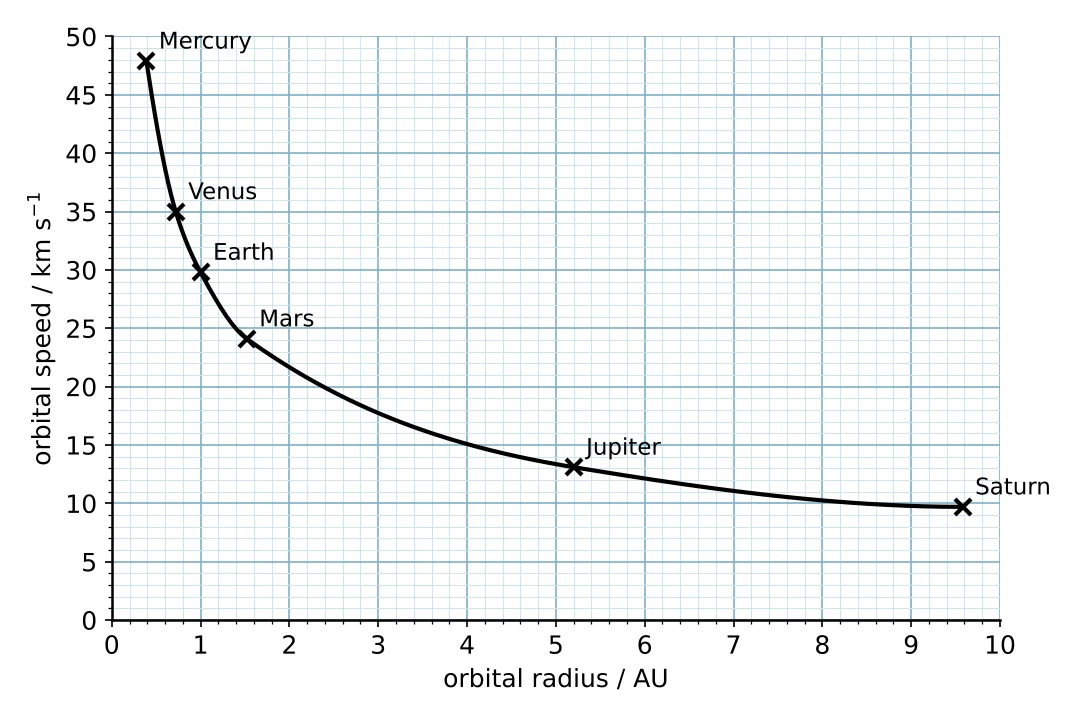
The graph shows the orbital speed of six planets plotted against their orbital radius.
Question diagram
(a)
Write down the orbital speed of Earth. [1]Criterion A (i) · Level 1-2
(b)
Describe the relationship shown by the graph. [1]Criterion C (ii) · Level 3-4
(c)
Explain the relationship in terms of the Sun's gravitational force. [2]Criterion A (iii) · Level 5-6
(d)
Use the graph to estimate the orbital speed of an asteroid at 3.0 AU. [1]Criterion C (ii) · Level 3-4

revisionprep.com

Summary Answer

Not available for this question.

Model Answer

Not available for this question.

Marking Scheme

Not available for this question.

Examiner Insights

Not available for this question.

Question 4Criterion C + B · Band 3-6 · Medium · 8 marksrevisionprep.com

Basic idea of Kepler’s Laws of Planetary Motion

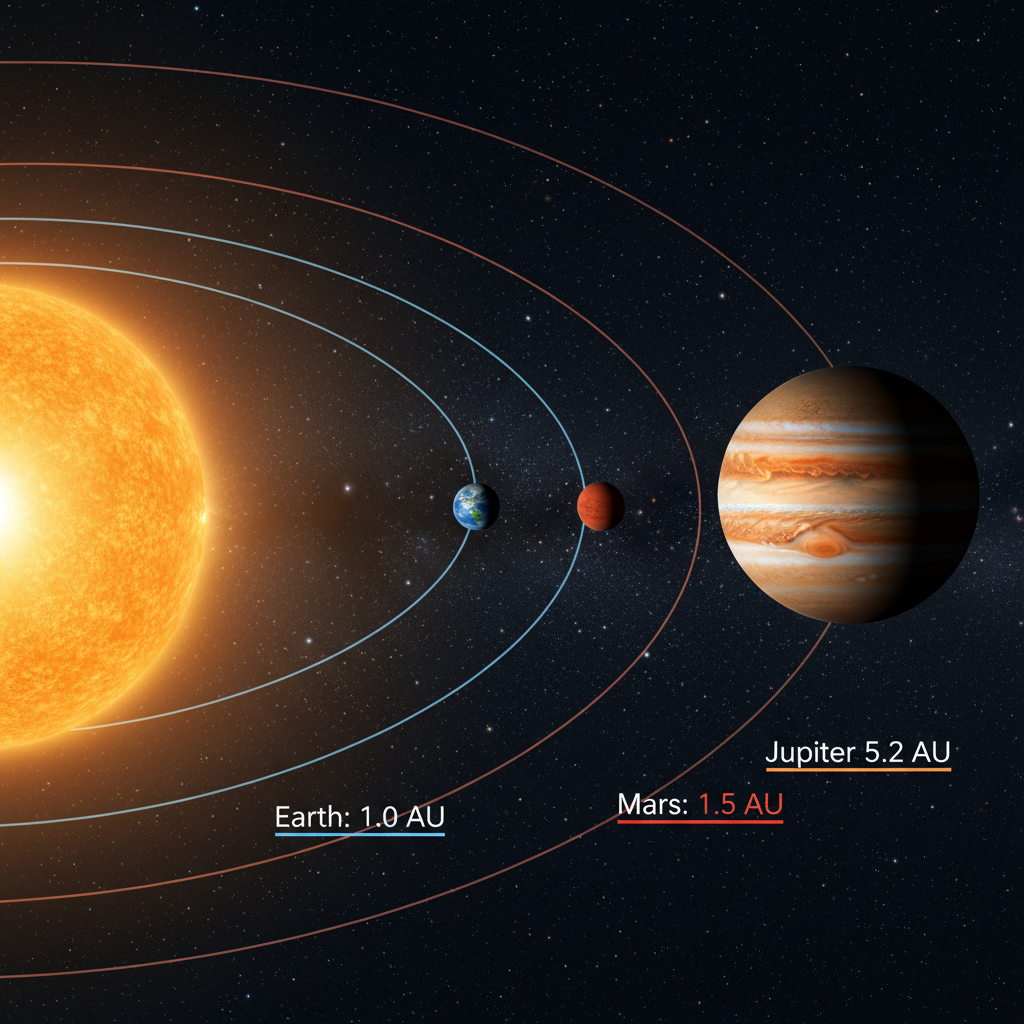
The diagram shows Earth, Mars and Jupiter at their average distances from the Sun.

Earth1.0 AU1.0 year
Mars1.5 AU1.9 years
Jupiter5.2 AU11.9 years
Question diagram
(a)
Calculate T2a3\dfrac{T^2}{a^3} for Mars and for Jupiter. [2]Criterion C (ii) · Level 3-4
(b)
Explain what these values show. [1]Criterion C (ii) · Level 3-4
(c)
Mars's value is about 7% above 1. Evaluate whether this means Mars does not obey Kepler's third law. [2]Criterion C (iii) · Level 5-6
(d)
Describe how an astronomer could measure the orbital period of Jupiter from observations on Earth, and how the astronomer could reduce errors. [3]Criterion B (iii) · Level 5-6

revisionprep.com

Summary Answer

Not available for this question.

Model Answer

Not available for this question.

Marking Scheme

Not available for this question.

Examiner Insights

Not available for this question.

Question 5Criterion B · Band 3-8 · Challenge · 10 marksrevisionprep.com

Orbital distance, speed and period

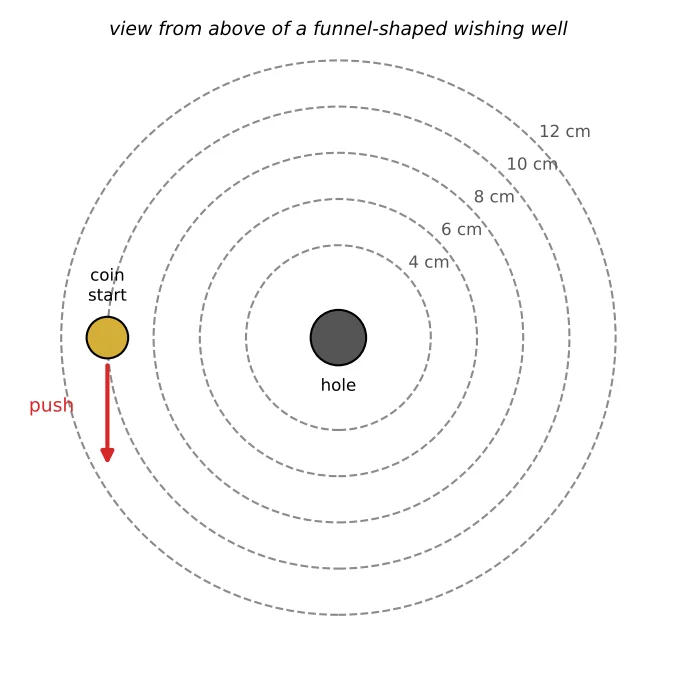
A science museum has a wishing well: a funnel with a hole in the middle. A coin pushed round the funnel goes round and round while spiralling inwards until it drops through the hole. A student thinks the funnel behaves like a gravity well, so a coin closer to the hole should take less time to go round once, like a planet closer to the Sun. The diagram shows the funnel from above with circles drawn at 4, 6, 8, 10 and 12 cm from the hole. A coin is started on the 10 cm circle with a sideways push.
Question diagram
(a)
Formulate a testable hypothesis using the student's idea, and give a scientific reason for it. [2]Criterion B (ii) · Level 3-4
(b)
State the independent variable and the dependent variable, and explain how the student could measure the dependent variable accurately when each coin stays in motion for only a few seconds. [3]Criterion B (iii) · Level 5-6
(c)
The coin spirals inwards, so its radius is not constant. Explain how the student can make the method fair and the results reliable. [2]Criterion B (iv) · Level 5-6
(d)
Evaluate whether the results of this investigation could be used as valid evidence for how the orbit time of planets depends on their distance from the Sun. [3]Criterion B (iv) · Level 7-8

revisionprep.com

Summary Answer

Not available for this question.

Model Answer

Not available for this question.

Marking Scheme

Not available for this question.

Examiner Insights

Not available for this question.

Question 6Criterion D + A · Band 1-8 · Challenge · 7 marksrevisionprep.com

Definition of satellites

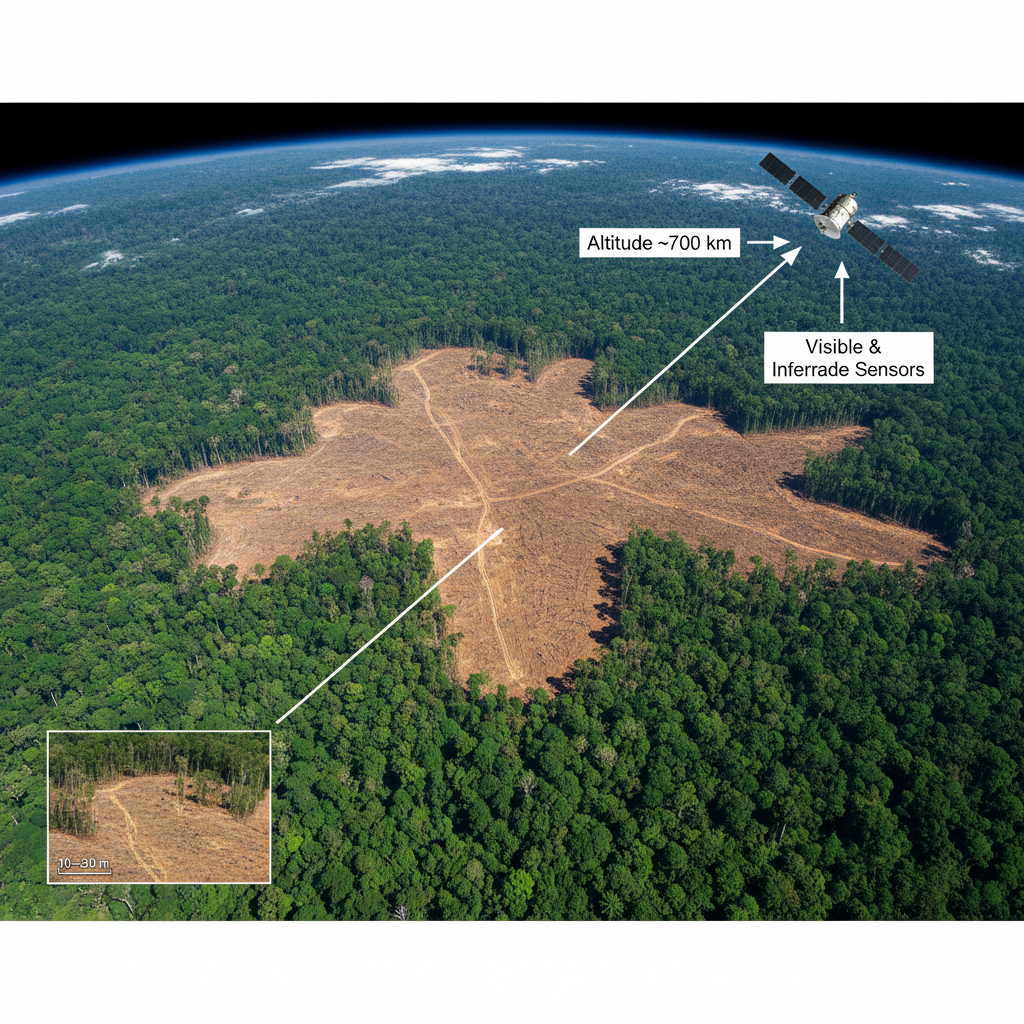
The diagram shows a satellite in low Earth orbit about 700 km above the Amazon rainforest. Its visible and infrared sensors can see details down to 10 to 30 m across. The images are used by governments, environmental groups and companies.
Question diagram
(a)
State why a satellite in orbit is useful for monitoring a forest the size of the Amazon. [1]Criterion A (i) · Level 1-2
(b)
Explain why the satellite may fail to detect a few trees cut down inside the forest. [2]Criterion A (ii) · Level 3-4
(c)
Discuss the benefits and risks of using satellite images to monitor the rainforest and the people who live there. [4]Criterion D (i), D (ii) · Level 7-8

revisionprep.com

Summary Answer

Not available for this question.

Model Answer

Not available for this question.

Marking Scheme

Not available for this question.

Examiner Insights

Not available for this question.

That's every free question here — 6 of 143.

+137 more questions, plus Mock Papers & Worksheets, are waiting in Premium.

Upgrade