You're viewing free preview questions — 6 questions previewing here — subscribe to unlock 95 more, plus the Full Question Bank, Mock Papers & Worksheets.Upgrade
Back

Stars and their life cycle — Free MYP5 Physics Practice Questions

Free questions

Open in full, with answers, mark scheme and examiner insights.

Question 1Criterion A · Band 1-4 · Easy · 5 marksrevisionprep.com

The Sun: composition and structure

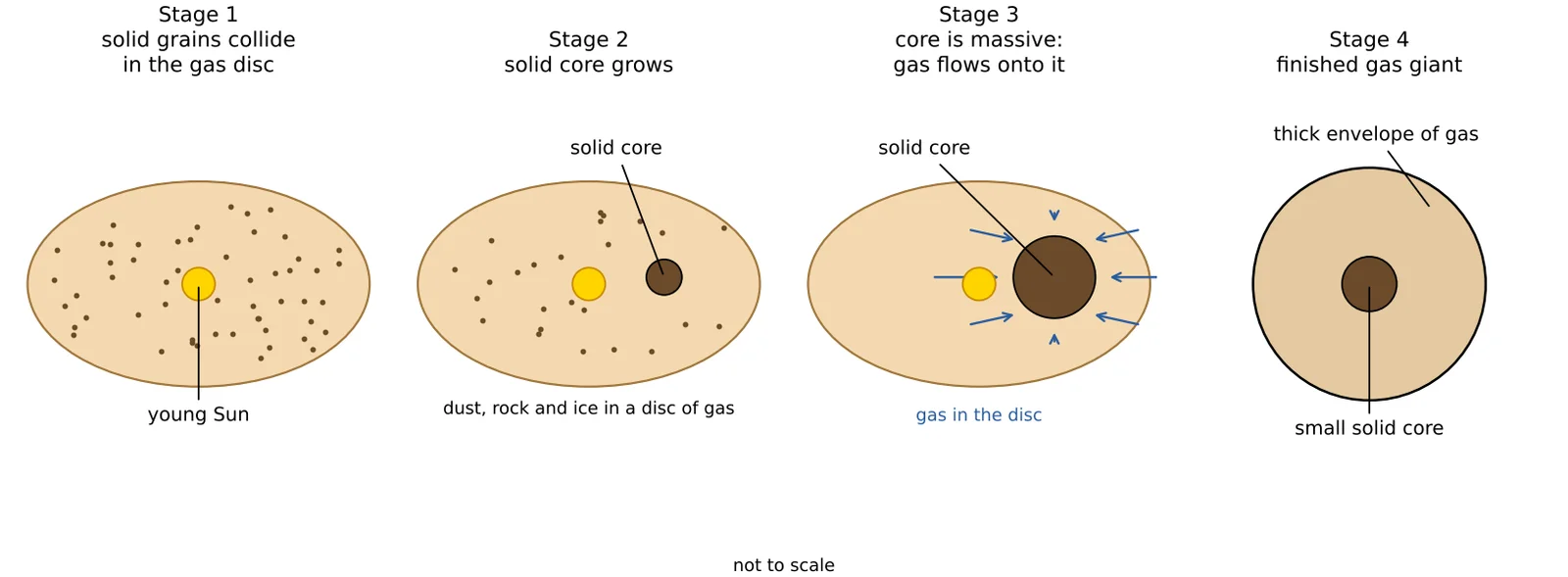
The diagram shows four stages in the formation of a gas giant such as Jupiter: a solid core of rock and ice grows first, then rapidly pulls in gas from the surrounding disc.
Question diagram
(a)
State the two gases that made up most of the disc around the young Sun. [1]Criterion A (i) · Level 1-2
(b)
Explain why the core had to grow large before the planet could gather a thick envelope of gas. [2]Criterion A (ii) · Level 3-4
(c)
Explain why gas giants have a composition similar to the Sun's, while Earth does not. [2]Criterion A (iii) · Level 3-4

revisionprep.com

Summary Answer

Not available for this question.

Model Answer

Not available for this question.

Marking Scheme

Not available for this question.

Examiner Insights

Not available for this question.

Question 2Criterion A · Band 1-4 · Easy · 5 marksrevisionprep.com

Role of stars in element formation

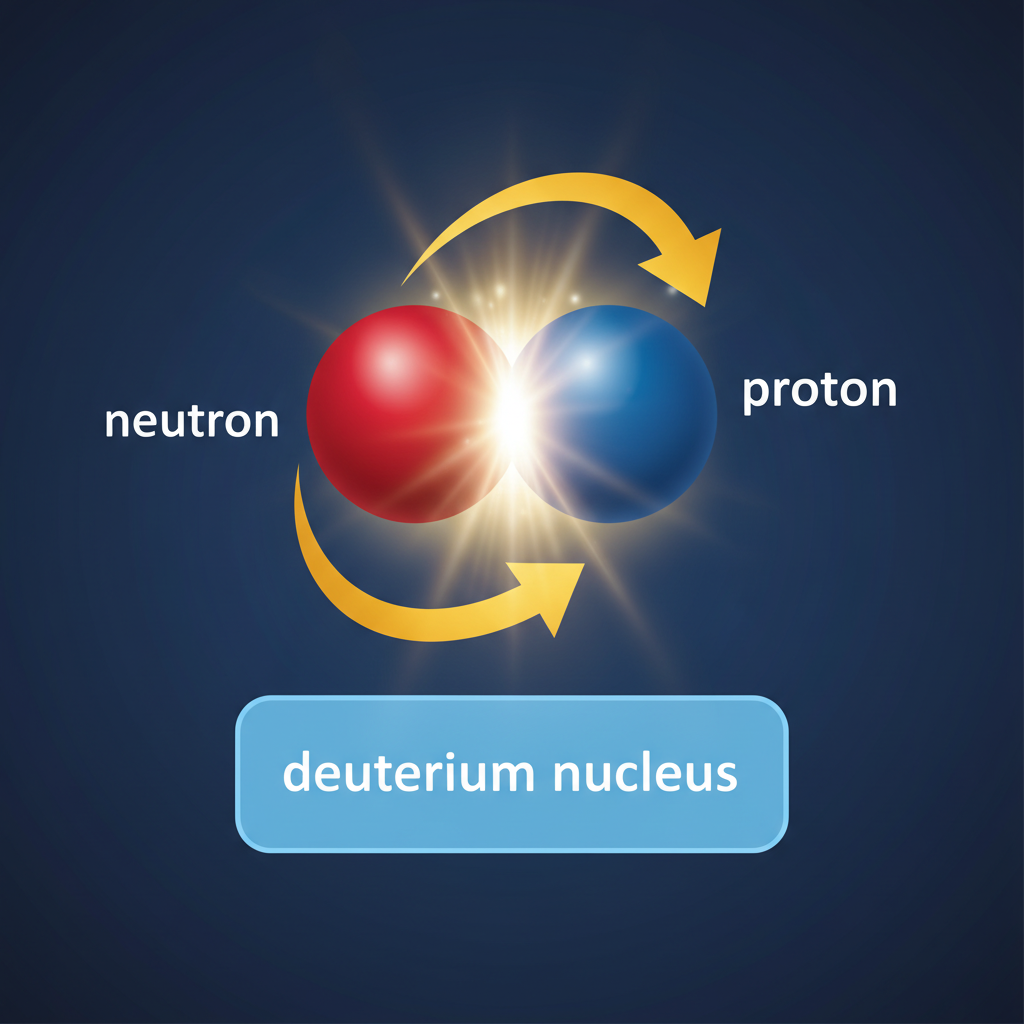
The diagram shows a neutron and a proton joining to form a deuterium nucleus.
Question diagram
(a)
State the charge of a deuterium nucleus and the element it belongs to. [2]Criterion A (i) · Level 1-2
(b)
Explain why forming deuterium is an important step in making helium. [2]Criterion A (ii) · Level 3-4
(c)
In the first second after the Big Bang, deuterium could not survive. Suggest why. [1]Criterion A (iii) · Level 3-4

revisionprep.com

Summary Answer

Not available for this question.

Model Answer

Not available for this question.

Marking Scheme

Not available for this question.

Examiner Insights

Not available for this question.

Question 3Criterion C + A · Band 1-6 · Medium · 7 marksrevisionprep.com

Nuclear Reactions in Stars - fusion

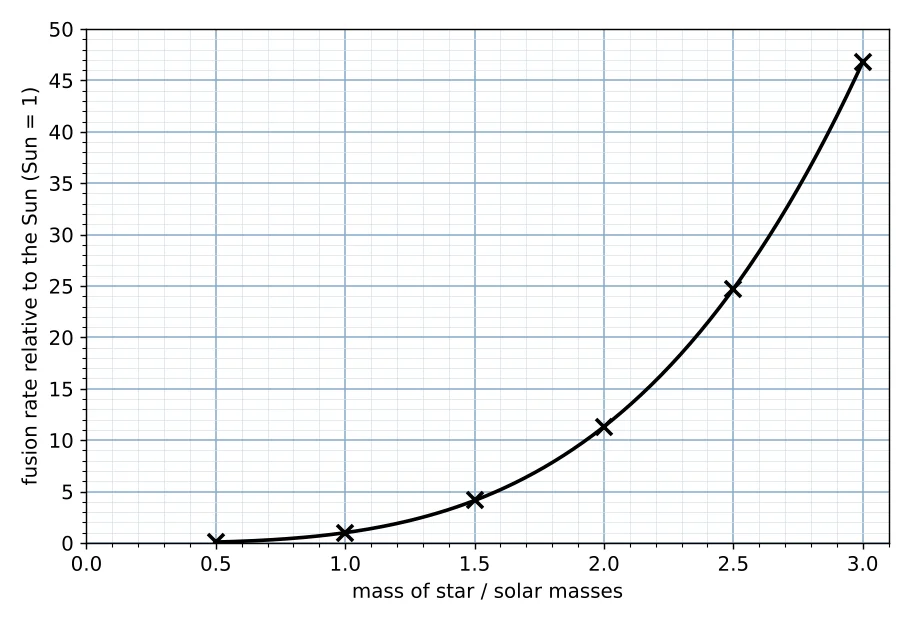
The graph shows how the rate of fusion in a star's core depends on the star's mass. Rates are given relative to the Sun (Sun = 1).
Question diagram
(a)
Write down the fusion rate of a star of 2.0 solar masses. [1]Criterion C (ii) · Level 1-2
(b)
Describe the relationship shown. [1]Criterion C (ii) · Level 3-4
(c)
Explain why more massive stars have much higher fusion rates. [3]Criterion A (ii) · Level 5-6
(d)
A star of 3.0 solar masses has three times as much hydrogen as the Sun. Use the graph to deduce whether it will live longer or shorter than the Sun, and by roughly what factor. [2]Criterion C (ii) · Level 5-6

revisionprep.com

Summary Answer

Not available for this question.

Model Answer

Not available for this question.

Marking Scheme

Not available for this question.

Examiner Insights

Not available for this question.

Question 4Criterion A · Band 5-6 · Medium · 4 marksrevisionprep.com

Life cycle of stars

(a) Compare the life cycle of a star with a mass similar to the Sun with that of a star 20 times the Sun’s mass, from the main sequence onwards. [4]

revisionprep.com

Summary Answer

Not available for this question.

Model Answer

Not available for this question.

Marking Scheme

Not available for this question.

Examiner Insights

Not available for this question.

Question 5Criterion B + C · Band 3-8 · Challenge · 9 marksrevisionprep.com

The Sun: composition and structure

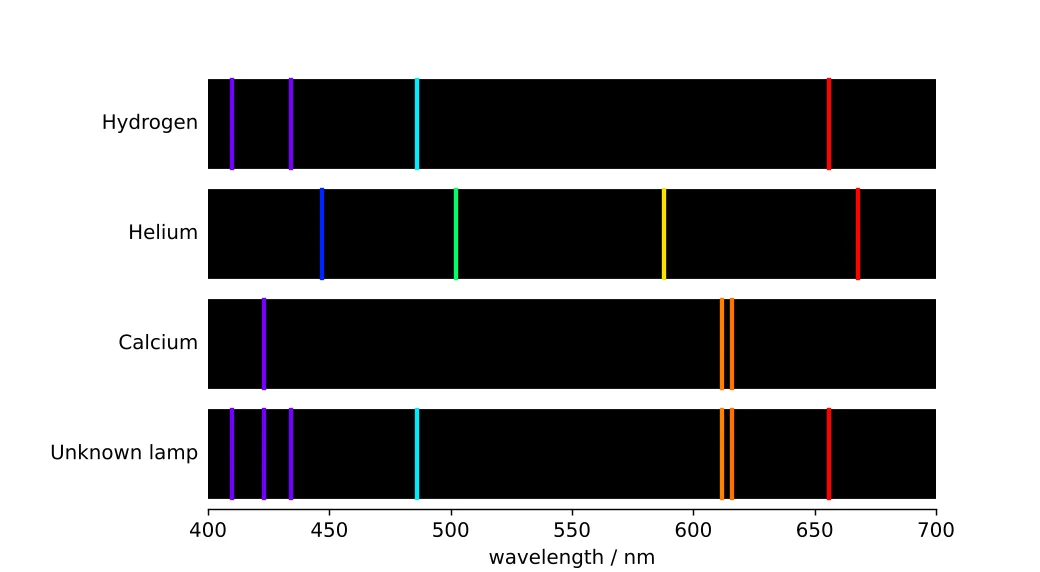
A student uses a spectroscope to look at the light from three lamps that contain hydrogen, helium or calcium gas, and from a fourth lamp that contains an unknown mixture. The figure shows the bright lines seen in each lamp. Each element gives its own pattern of lines.
Question diagram
(a)
Identify the gases in the unknown lamp. Give the evidence for each gas, and one piece of evidence for a gas that is not present. [2]Criterion C (ii) · Level 3-4
(b)
The student wants to find out whether a dim lamp can still be identified. Design an investigation using the spectroscope to find how the brightness of the lamp affects the number of lines the student can identify. [4]Criterion B (ii), B (iii) · Level 5-6
(c)
Evaluate whether your investigation would show that this method can identify elements in the light of a distant star. Suggest one improvement. [3]Criterion B (iv) · Level 7-8

revisionprep.com

Summary Answer

Not available for this question.

Model Answer

Not available for this question.

Marking Scheme

Not available for this question.

Examiner Insights

Not available for this question.

Question 6Criterion D + A · Band 3-8 · Challenge · 8 marksrevisionprep.com

Supernova (basic concept)

In 1054 CE, astronomers in China recorded a "guest star" that was visible in daylight for 23 days and at night for nearly two years. Today the Crab Nebula, a supernova remnant with a neutron star at its centre, is seen at that position.
(a)
Explain how these records help astronomers today. [2]Criterion D (i) · Level 3-4
(b)
Discuss the importance of preserving and studying historical scientific records from different cultures. Give a conclusion. [4]Criterion D (ii), D (iii) · Level 7-8
(c)
Explain how a neutron star is formed in a supernova. [2]Criterion A (ii) · Level 3-4

revisionprep.com

Summary Answer

Not available for this question.

Model Answer

Not available for this question.

Marking Scheme

Not available for this question.

Examiner Insights

Not available for this question.

That's every free question here — 6 of 101.

+95 more questions, plus Mock Papers & Worksheets, are waiting in Premium.

Upgrade