You're viewing free preview questions — 5 questions previewing here — subscribe to unlock 72 more, plus the Full Question Bank, Mock Papers & Worksheets.Upgrade
Everyday Applications and Safety — Free MYP5 Physics Practice Questions

1QuestionDangers of Overloading and Short CircuitsConcept Practice
1 mark~2 minCriterion A
A household circuit contains a live wire, a neutral wire, an appliance, and a protective component labelled X. Component X is connected in series with the appliance on the live wire.
(a) Identify component X, which melts and breaks the circuit when excessive current flows. [1]
(a) Identify component X, which melts and breaks the circuit when excessive current flows. [1]

Solutions
2QuestionDangers of Overloading and Short CircuitsAssessment Practice
3 marks~5 minCriterion D
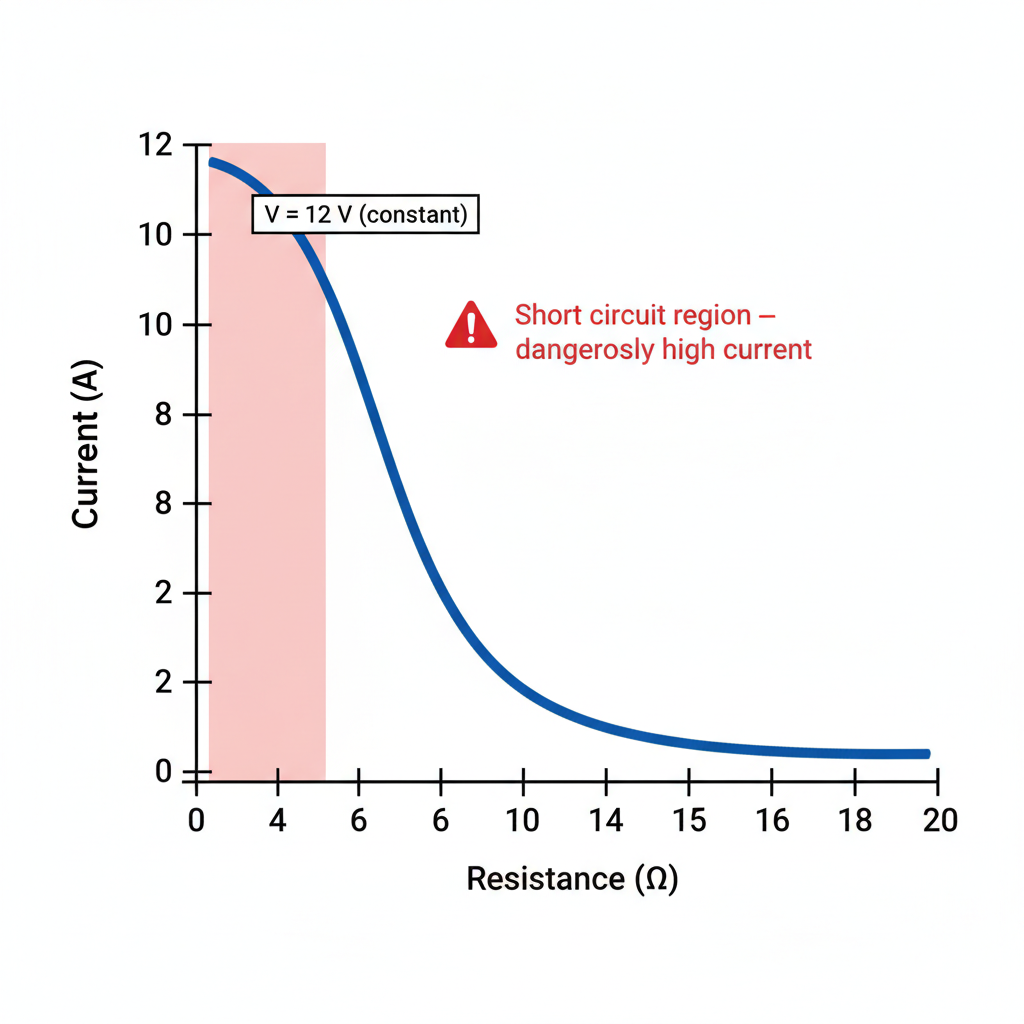
The graph below shows how current varies with resistance in a circuit maintained at a constant voltage of 12 V.
a
State Ohm's Law and rearrange it to express in terms of and . [1]
b
Explain the shape of the graph using your expression from part (a). [1]
c
Identify the region of the graph where a short circuit would occur and analyse why this region represents a serious electrical hazard. [1]
Solutions
3QuestionEarth Wires and Electrical GroundingAssessment Practice
3 marks~5 minCriterion A
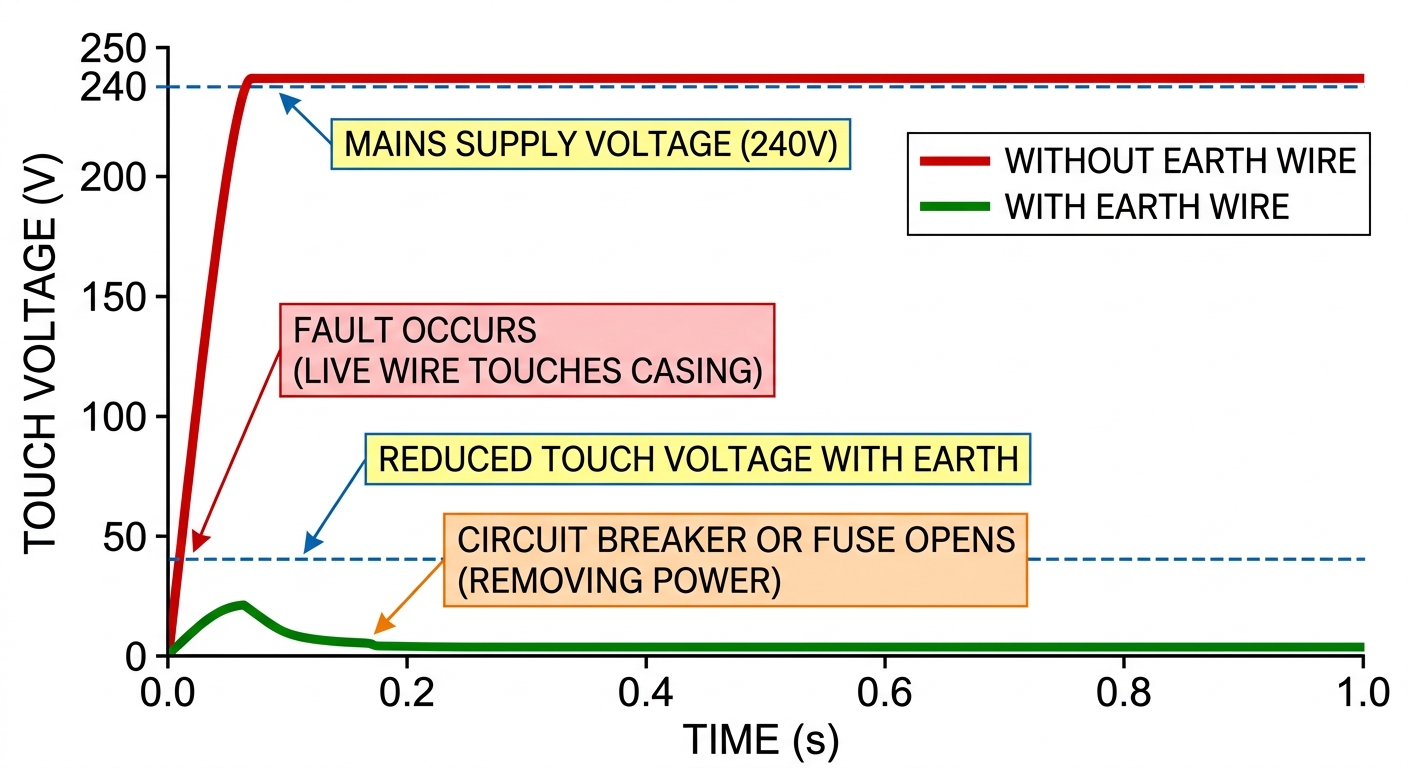
The graph below shows touch voltage versus time for a faulty metal-cased appliance in which a live wire contacts the casing. Two curves are plotted: one without an earth wire and one with an earth wire connected. In the earthed scenario, the touch voltage drops to near zero within milliseconds of the fault occurring.
Explain why the touch voltage drops to near zero when the earth wire is present. [3]
Explain why the touch voltage drops to near zero when the earth wire is present. [3]
Solutions
4QuestionDangers of Overloading and Short CircuitsAssessment Practice
4 marks~6 minCriterion C
Fuse Protection
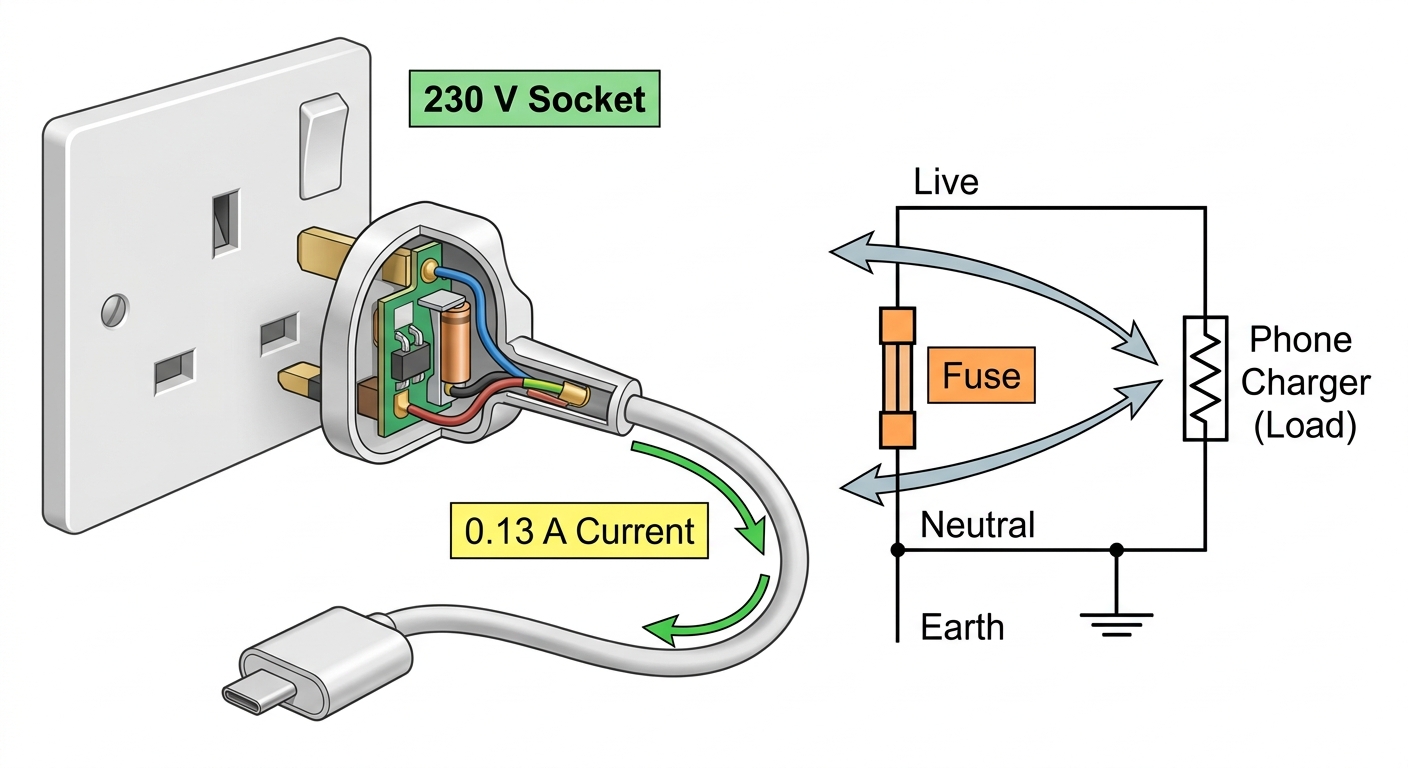
A phone charger is connected to a 230 V mains socket and draws a current of 0.13 A. Available fuse ratings for this circuit are 3 A, 5 A, and 13 A.
A phone charger is connected to a 230 V mains socket and draws a current of 0.13 A. Available fuse ratings for this circuit are 3 A, 5 A, and 13 A.
a
Calculate the power consumed by the charger. Use . [1]
b
Explain how a fuse protects a circuit, linking the physical process inside the fuse to the safety outcome for the circuit. [2]
c
A student argues that a 13 A fuse is acceptable because it will not blow during normal operation. Evaluate this claim, using the current drawn by the charger to support your reasoning. [1]
---
---
Solutions
5QuestionDangers of Overloading and Short CircuitsAssessment Practice
8 marks~12 minCriterion D
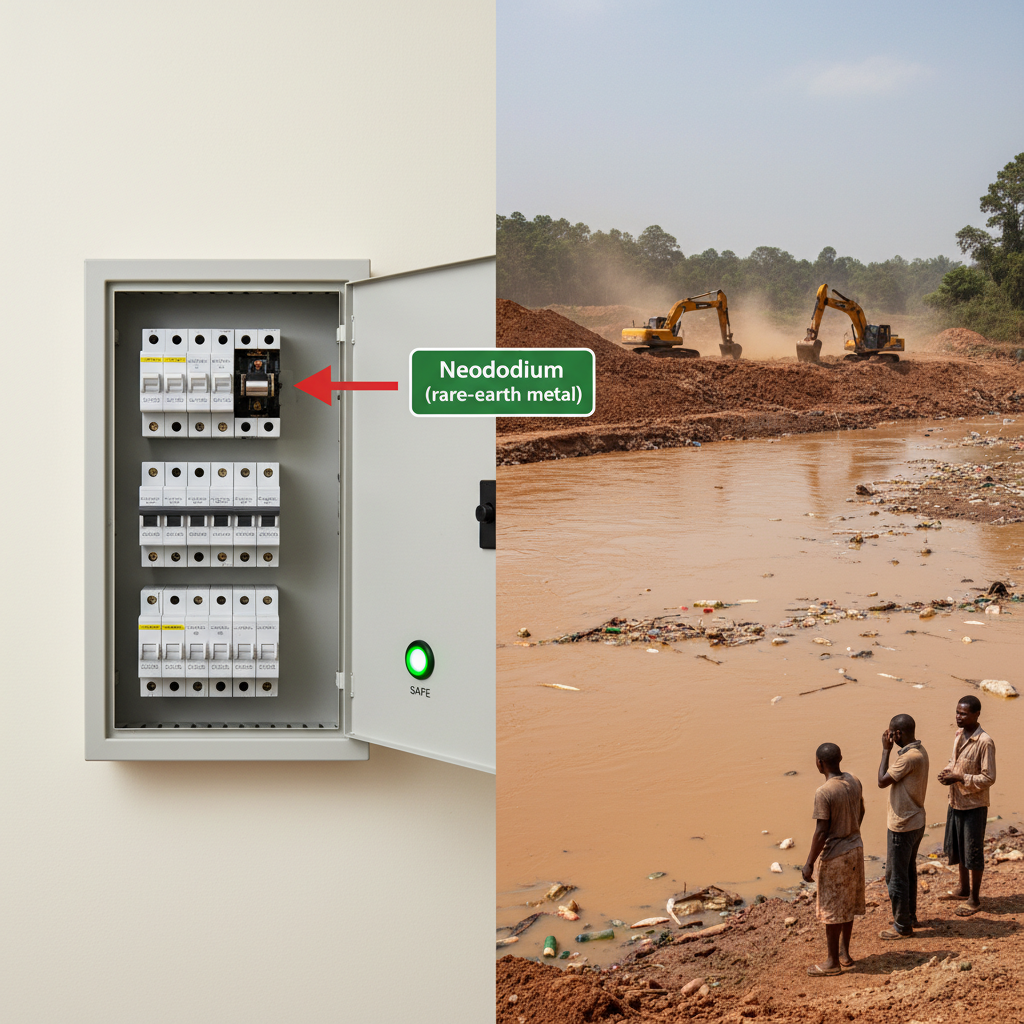
A homeowner replaces an old fuse box with a modern circuit breaker panel. The breakers contain neodymium, a rare-earth metal essential to their tripping mechanism. Neodymium mining in a developing country has caused severe river pollution and health problems for nearby communities. The homeowner is aware of these harms but prioritises family safety.
a
Explain how a circuit breaker reduces the risk of electrical fires and electric shock during a short circuit or overload. [2]
b
Describe the environmental and social harms caused by neodymium mining, as presented in this scenario. [2]
c
Evaluate whether the homeowner's decision is ethically justified, considering both the safety benefits for their family and the negative impacts on distant communities. [4]
Solutions
That's every free question here — 5 of 77.
+72 more questions, plus Mock Papers & Worksheets, are waiting in Premium.