You're viewing free preview questions — 5 questions previewing here — subscribe to unlock 204 more, plus the Full Question Bank, Mock Papers & Worksheets.Upgrade
Magnetic Fields and Electromagnetism — Free MYP5 Physics Practice Questions

1QuestionForce acting on current carrying wire in external magnetic fieldConcept Practice
2 marks~3 minCriterion D
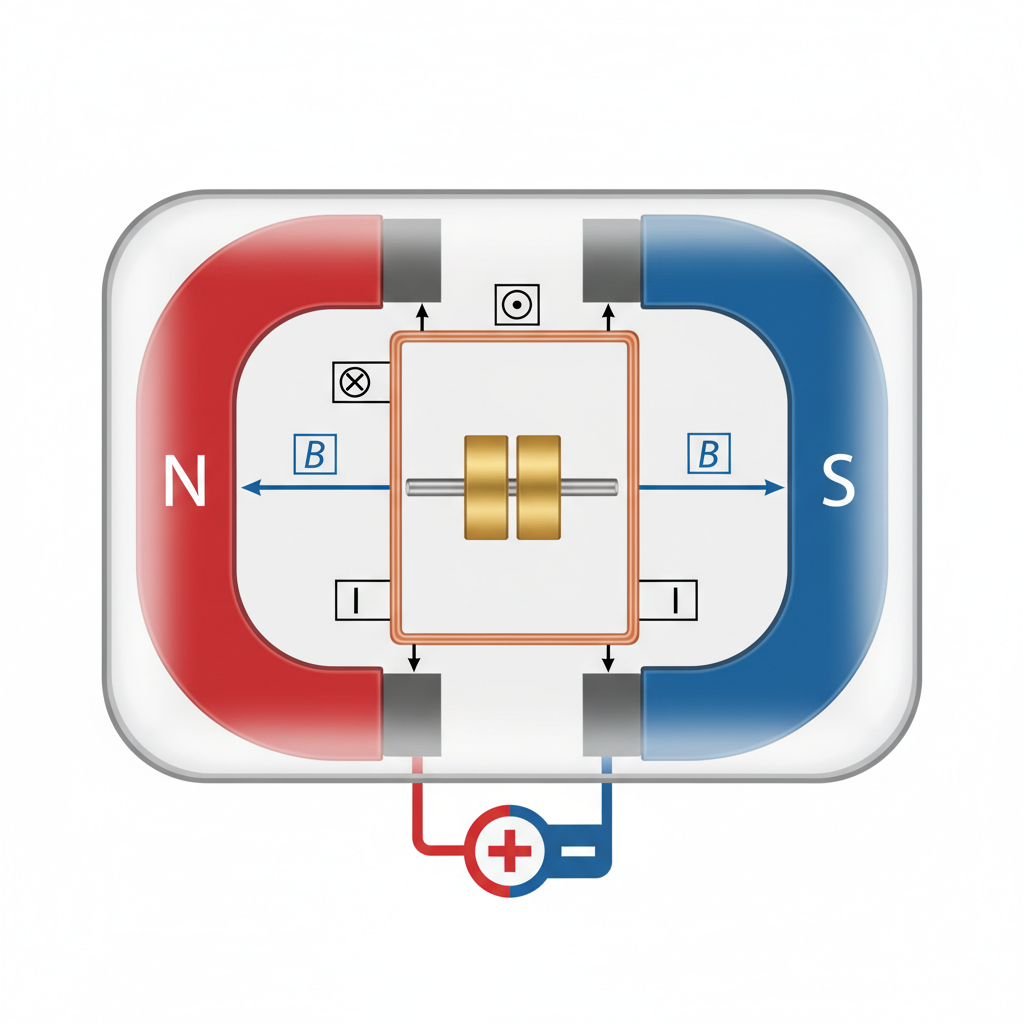
An electric motor in a washing machine contains a current-carrying coil placed inside a magnetic field.
a
Explain how the magnetic force acting on the current-carrying coil produces rotation inside the electric motor. [1]
b
Explain one societal benefit that washing machines, powered by electric motors, provide to communities. [1]

Solutions
2QuestionMagnetic Materials / Temporary and Permanent MagnetsAssessment Practice
2 marks~3 minCriterion D
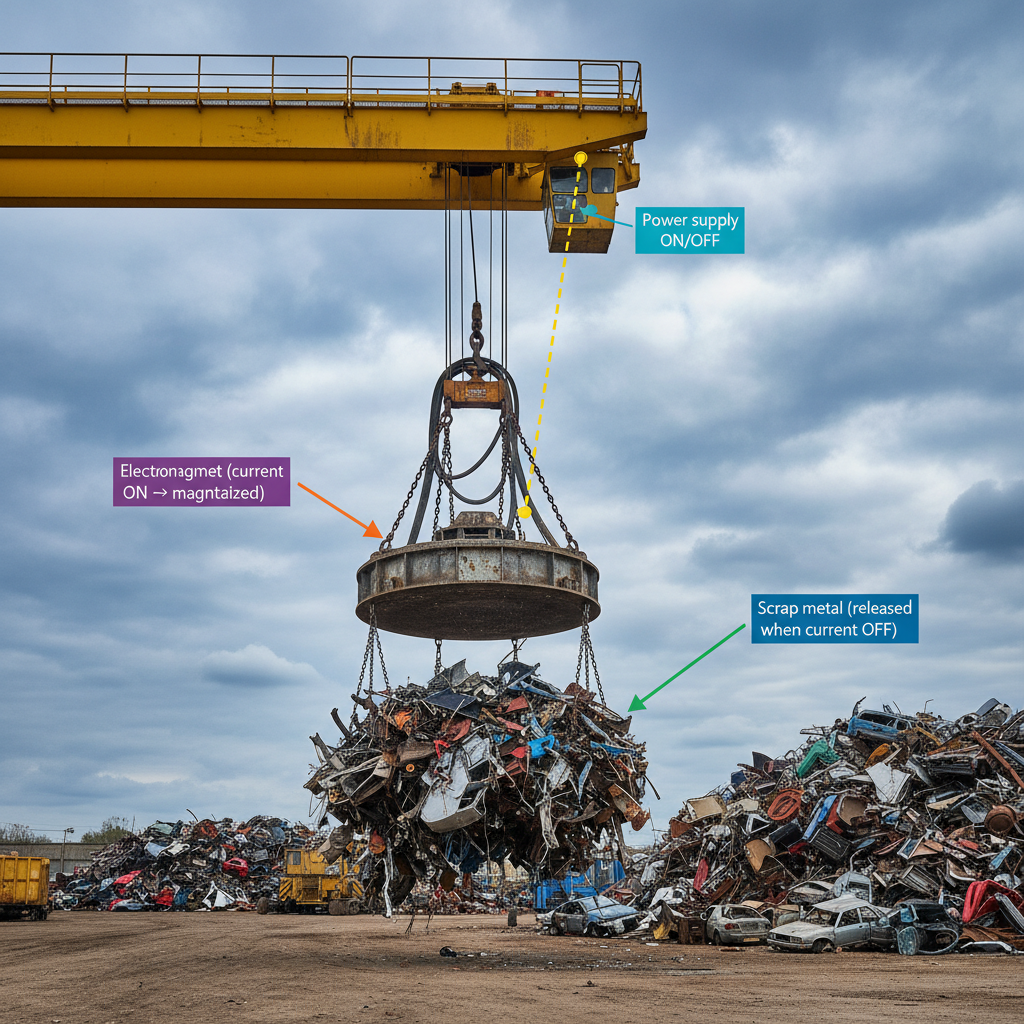
A scrapyard crane uses an electromagnet to sort ferromagnetic scrap metal. The electromagnet consists of a coil of wire wound around a soft-iron core.
a
Explain how switching the current on and off allows the electromagnet to lift and then release scrap metal. [1]
b
Evaluate why replacing the electromagnet with a permanent magnet would make the crane impractical for this task. [1]
Solutions
3QuestionForce acting on current carrying wire in external magnetic fieldConcept Practice
3 marks~5 minCriterion A
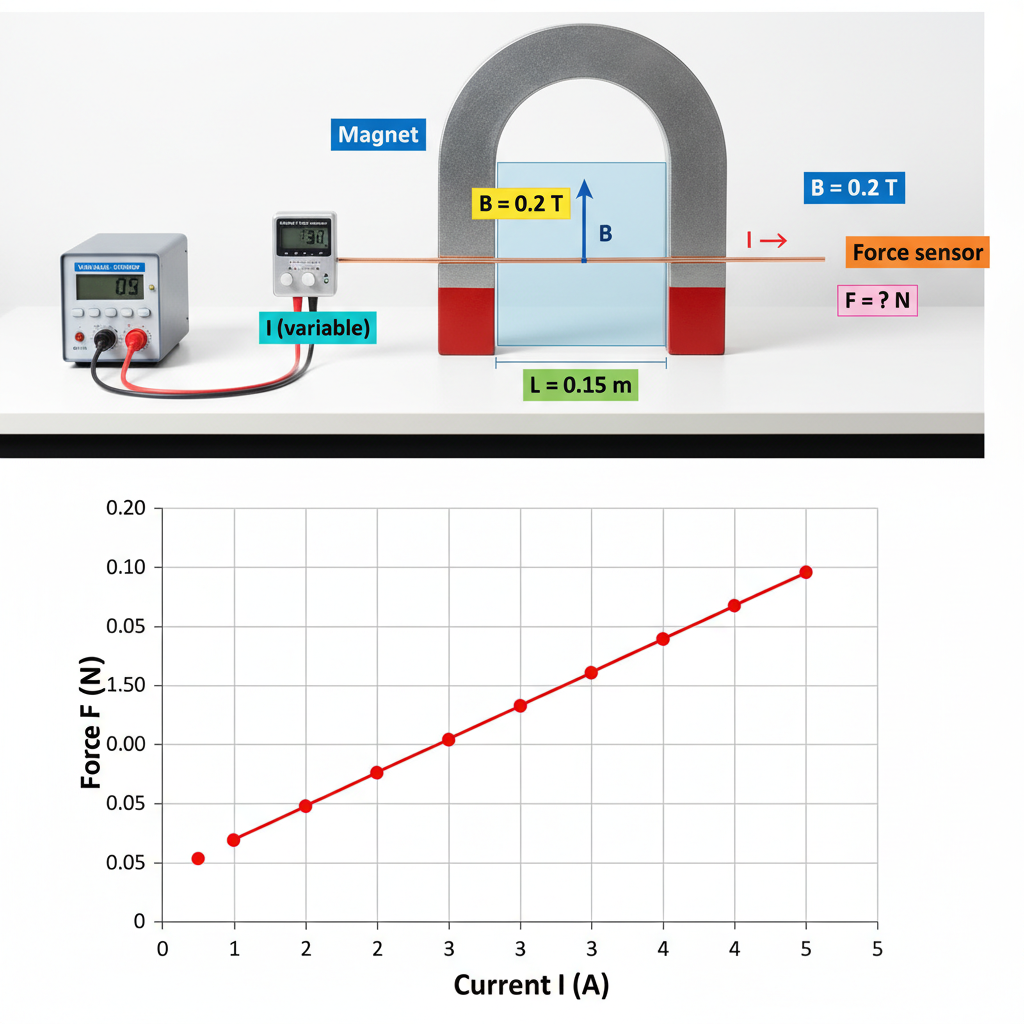
A student investigates the force on a current-carrying wire in a uniform magnetic field of strength . The length of wire inside the field is . The student varies the current and records the force . The graph of against is a straight line passing through the origin.
a
State the equation relating , , , and , and calculate the gradient of the graph. [1]
b
Explain why the graph is a straight line through the origin. [1]
c
The student doubles the length of wire inside the field while keeping and constant. Analyse how this change affects the gradient of a new – graph. [1]
Solutions
4QuestionMagnetic Field Around a Bar MagnetAssessment Practice
4 marks~6 minCriterion A
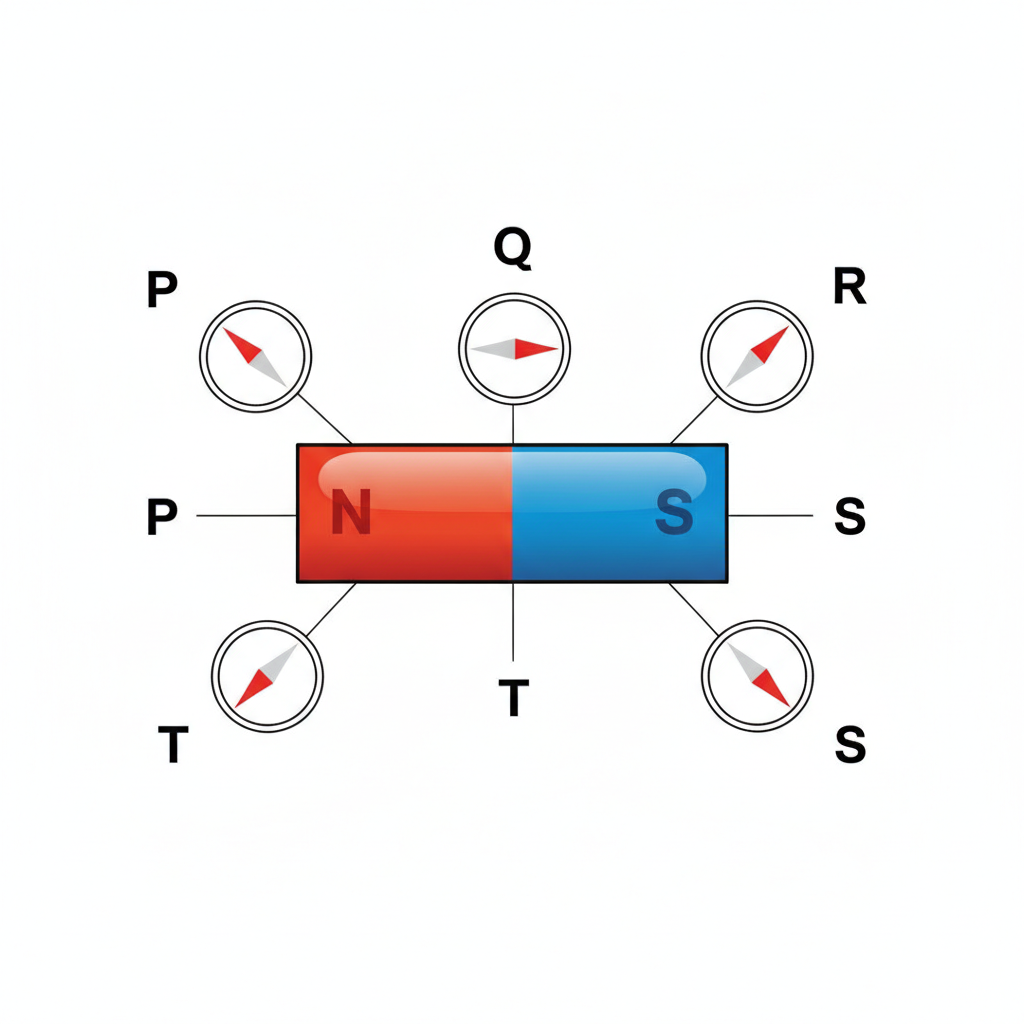
A student places a plotting compass at five positions around a bar magnet, labelled P, Q, R, S, and T, as shown in the diagram. At positions P and S (near the north pole) the needle points away from the magnet; at Q and T (near the south pole) it points toward the magnet; at R (beside the midpoint) it aligns parallel to the magnet's length.
a
Explain why the compass needle points in a different direction at each position, referring to magnetic field lines and the magnet's poles. [2]
b
The compass positions are closer together near the poles than near the midpoint. Explain what this spacing suggests about field line density and field strength at those regions. [1]
c
Evaluate one limitation of using a plotting compass to map the complete magnetic field of a bar magnet. [1]
Solutions
5QuestionField Lines Around Straight Current carrying conductors and SolenoidsAssessment Practice
5 marks~8 minCriterion C
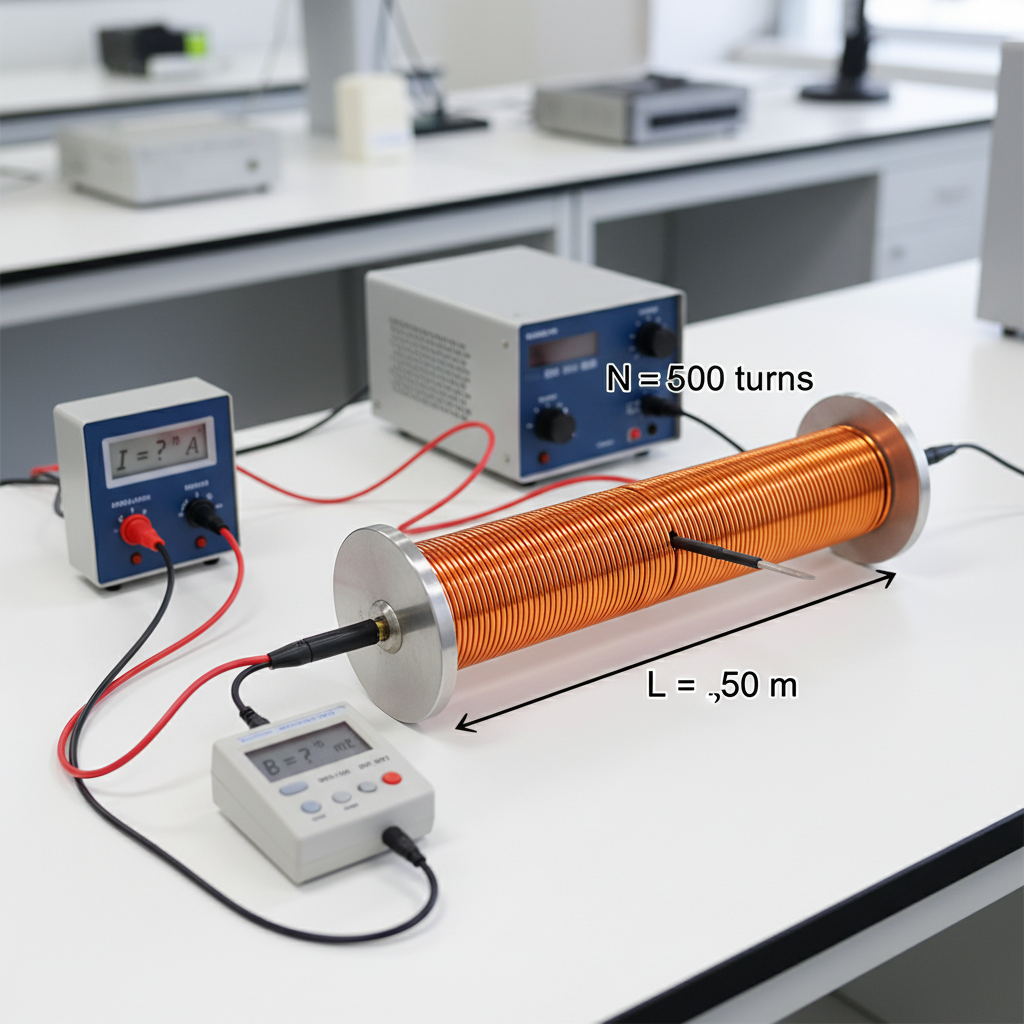
A student investigates the magnetic field inside a solenoid of length m with turns. The magnetic flux density (in mT) is measured at the centre for different currents (in A).
(A): 0.5, 1.0, 1.5, 2.0, 2.5, 3.0
(mT): 1.26, 2.51, 3.77, 5.03, 6.28, 7.54
The magnetic field inside a solenoid is , where .
(A): 0.5, 1.0, 1.5, 2.0, 2.5, 3.0
(mT): 1.26, 2.51, 3.77, 5.03, 6.28, 7.54
The magnetic field inside a solenoid is , where .
a
Convert to tesla (T). Construct a graph of (T) against (A), draw a line of best fit, and calculate its gradient. [2]
b
Deduce an experimental value for using your gradient and the solenoid dimensions. [2]
c
The accepted value is T·m/A, giving a percentage error of approximately 100%. Analyse one source of systematic error that could cause this result and explain how the experimental setup could be modified to reduce it. [1]
Solutions
That's every free question here — 5 of 209.
+204 more questions, plus Mock Papers & Worksheets, are waiting in Premium.