RevisionPrep
Log inGo Premium

Physics

Free Version

Matter and Thermal Physics

6 subtopics · 336 exam-style questions

“Pick a subtopic to start practising.”
DensityStates of matter and kinetic theorySpecific heat capacityLatent heat and changes of statePressureHeat transfer: conduction, convection and radiation

Sample questions from Matter and Thermal Physics

  1. Heat transfer: conduction, convection and radiation[3 marks]
    A slice of bread is being toasted in an electric toaster.

    (a) Identify the main method by which energy passes through the metal wall of the toaster to its outer surface. [1]

    (b) Identify the main method by which warm air carries energy upwards out of the toaster slots. [1]

    (c) Identify the main method by which a hand held at the side of the toaster, not touching it, feels warm. [1]
    Practise this subtopic
  2. Pressure[3 marks]
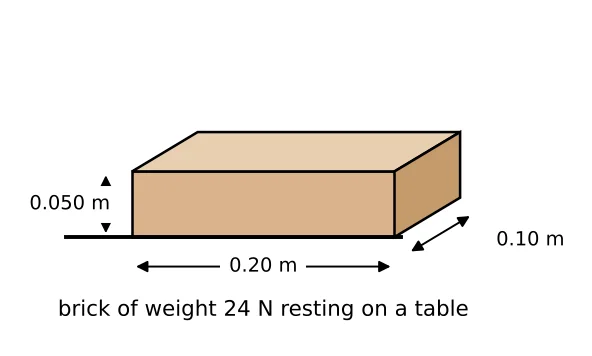
    The diagram shows a brick of weight 24 N resting on a table. The brick measures 0.20 m by 0.10 m by 0.050 m.

    (a) State which face of the brick, when it rests on the table, would exert the greatest pressure. [1]

    (b) Calculate the pressure the brick exerts on the table when it rests on its largest face. [2]
    Diagram for a Pressure practice questionPractise this subtopic
  3. Density[3 marks]
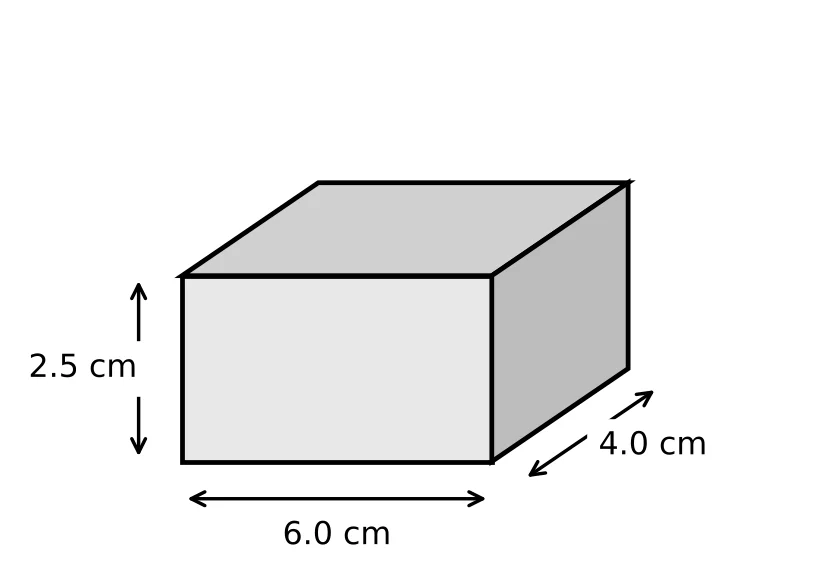
    The metal block shown has a mass of 162 g.

    (a) Calculate the volume of the block. [1]

    (b) Calculate the density of the metal in g cm⁻³. [2]
    Diagram for a Density practice questionPractise this subtopic
  4. States of matter and kinetic theory[2 marks]
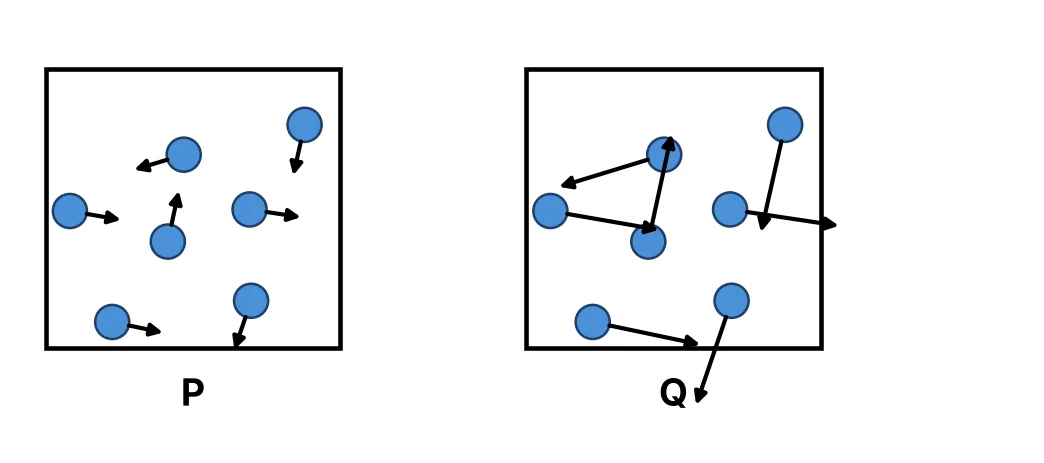
    The diagram shows the same gas in two sealed containers, P and Q. The arrow on each particle shows how fast it is moving. A longer arrow means a faster particle.

    (a) State which container, P or Q, holds the gas at the higher temperature. [1]

    (b) State what happens to the average kinetic energy of the particles when the temperature of a gas increases. [1]
    Diagram for a States of matter and kinetic theory practice questionPractise this subtopic
  5. Specific heat capacity[4 marks]
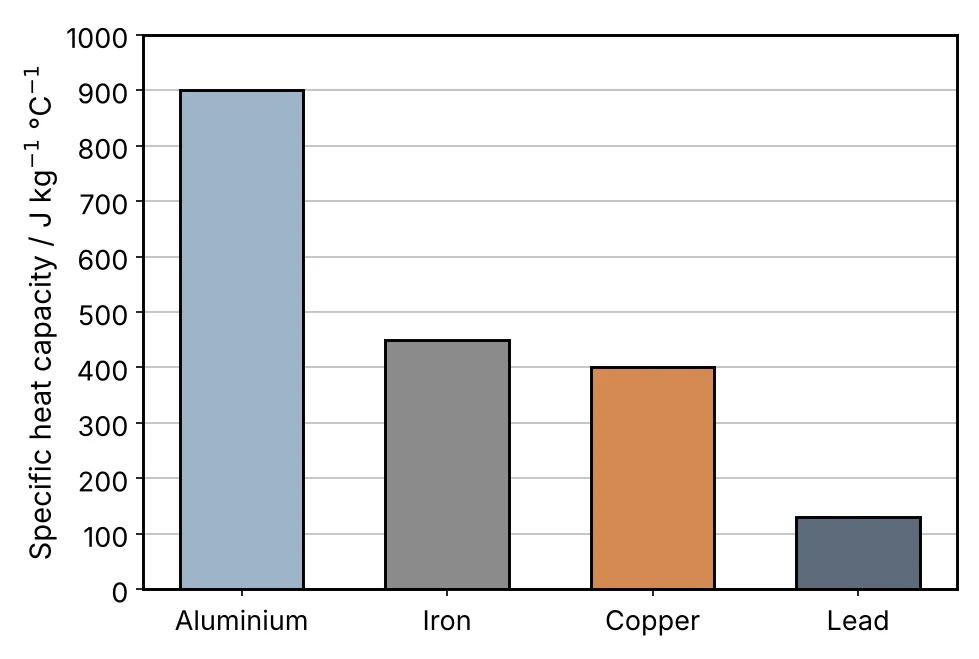
    The bar chart shows the specific heat capacity of four metals.

    (a) Identify the metal that warms up fastest when equal masses of the four metals receive the same amount of energy. Explain your answer. [2]

    (b) Use the chart to calculate the energy needed to warm 0.50 kg of copper by 40 °C. [2]
    Diagram for a Specific heat capacity practice questionPractise this subtopic
  6. Latent heat and changes of state[4 marks]
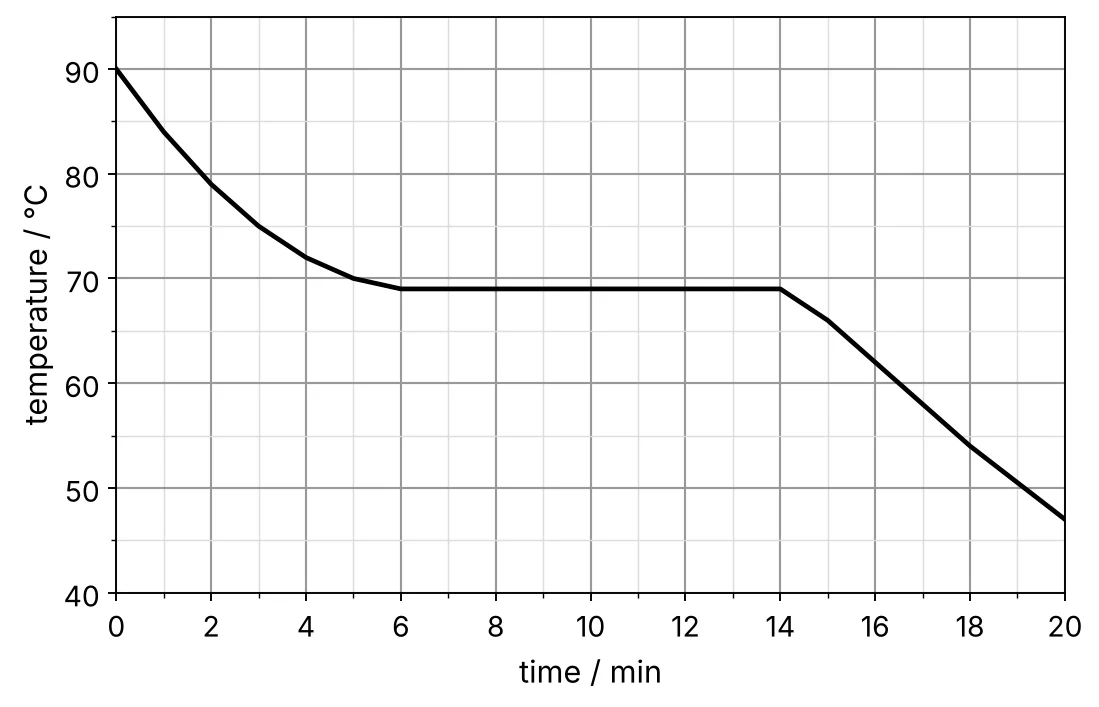
    Stearic acid is a solid that melts at a fixed temperature. A test tube of molten stearic acid is left to cool and its temperature is recorded every minute. The graph shows the results.

    (a) Use the graph to state the freezing point of stearic acid. [1]

    (b) Explain why the temperature stays constant between 6 and 14 minutes even though the stearic acid is still losing energy to the surroundings. [3]
    Diagram for a Latent heat and changes of state practice questionPractise this subtopic

Every question, revision note and worksheet for Matter and Thermal Physics — with Premium.

Unlock Full Access