You're viewing free preview questions — 6 questions previewing here — subscribe to unlock 24 more, plus the Full Question Bank, Mock Papers & Worksheets.Upgrade
Back

Specific heat capacity — Free MYP5 Physics Practice Questions

Free questions

Open in full, with answers, mark scheme and examiner insights.

Question 1Criterion A + C · Band 3-4 · Easy · 4 marksrevisionprep.com

Specific heat capacity: E = mcΔT

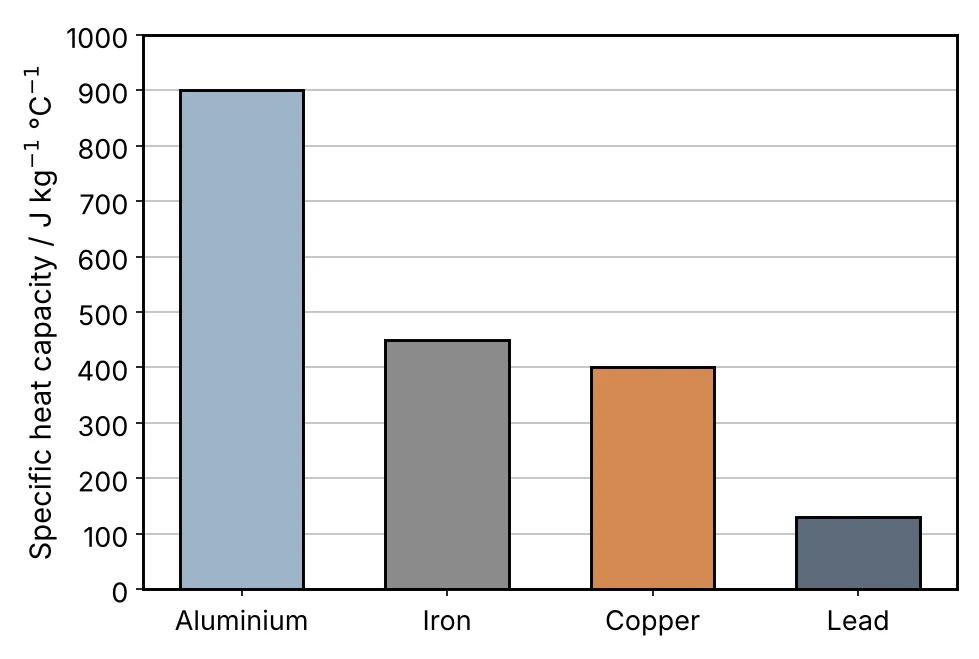
The bar chart shows the specific heat capacity of four metals.
Question diagram
(a)
Identify the metal that warms up fastest when equal masses of the four metals receive the same amount of energy. Explain your answer. [2]Criterion A (ii) · Level 3-4
(b)
Use the chart to calculate the energy needed to warm 0.50 kg of copper by 40 °C. [2]Criterion C (i) · Level 3-4

revisionprep.com

Summary Answer

Not available for this question.

Model Answer

Not available for this question.

Marking Scheme

Not available for this question.

Examiner Insights

Not available for this question.

Question 2Criterion A · Band 3-4 · Easy · 4 marksrevisionprep.com

Measuring specific heat capacity (practical)
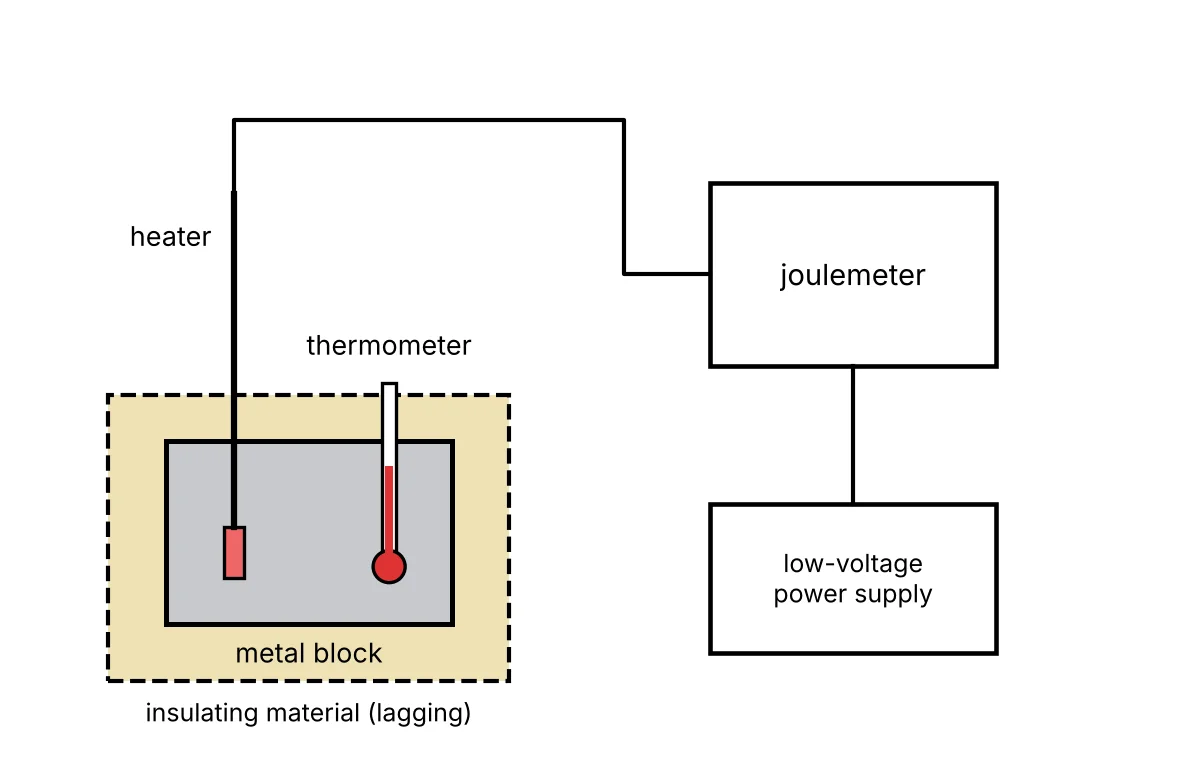
A 40 W heater is used to warm a 0.50 kg metal block. The heater is switched on for 5.0 minutes and the temperature of the block rises from 20 °C to 45 °C. Assume that all of the energy from the heater is transferred to the block.
(a)
Calculate the energy supplied by the heater. [2]Criterion A (ii) · Level 3-4
(b)
Calculate the specific heat capacity of the metal. [2]Criterion A (ii) · Level 3-4

revisionprep.com

Summary Answer

Not available for this question.

Model Answer

Not available for this question.

Marking Scheme

Not available for this question.

Examiner Insights

Not available for this question.

Question 3Criterion C + A · Band 3-6 · Medium · 7 marksrevisionprep.com

Specific heat capacity: E = mcΔT

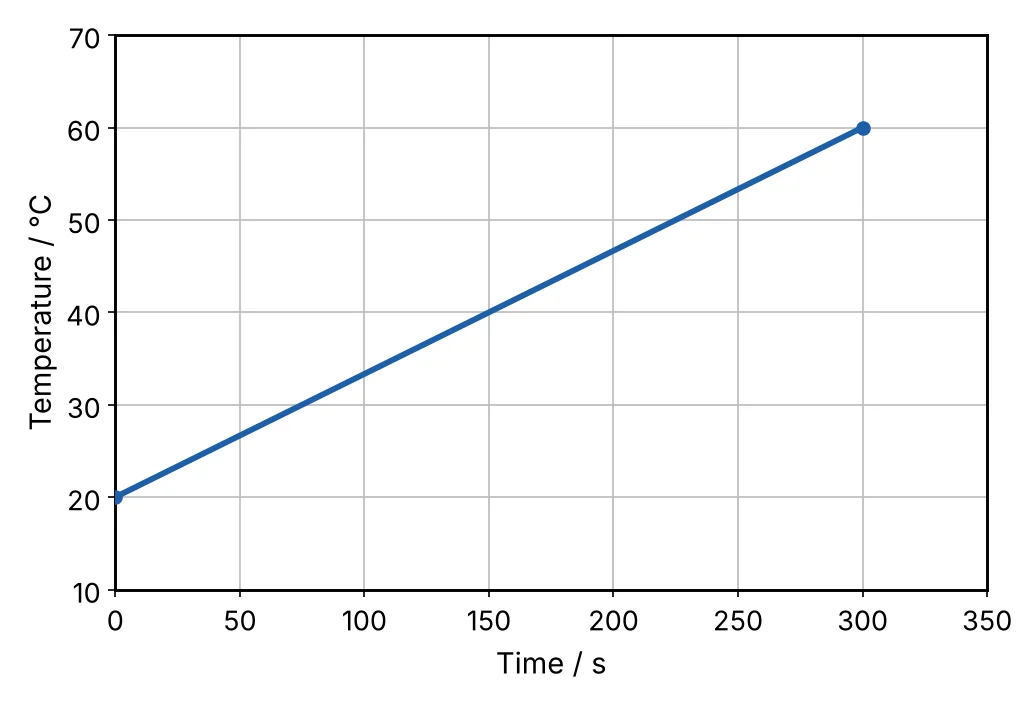
A student heats a 0.50 kg block of metal with a 60 W electric heater. Assume that all of the energy from the heater is transferred to the block. The graph shows how the temperature of the block changes with time.
Question diagram
(a)
Calculate the gradient of the graph. [2]Criterion C (i) · Level 3-4
(b)
Calculate the specific heat capacity of the metal. [3]Criterion A (ii) · Level 5-6
(c)
The student repeats the experiment with a 120 W heater. Predict the gradient of the new graph and justify your prediction. [2]Criterion C (ii) · Level 5-6

revisionprep.com

Summary Answer

Not available for this question.

Model Answer

Not available for this question.

Marking Scheme

Not available for this question.

Examiner Insights

Not available for this question.

Question 4Criterion B · Band 3-6 · Medium · 6 marksrevisionprep.com

Measuring specific heat capacity (practical)
A student uses the apparatus shown to find the specific heat capacity of a metal block.
Question diagram
(a)
A few drops of oil are put in the hole for the thermometer. Explain why. [2]Criterion B (iv) · Level 3-4
(b)
Explain why the block is surrounded by insulating material. [2]Criterion B (iv) · Level 3-4
(c)
List the measurements the student must take and state the equation used to calculate the specific heat capacity. [2]Criterion B (iii) · Level 5-6

revisionprep.com

Summary Answer

Not available for this question.

Model Answer

Not available for this question.

Marking Scheme

Not available for this question.

Examiner Insights

Not available for this question.

Question 5Criterion A + D · Band 3-8 · Challenge · 8 marksrevisionprep.com

Specific heat capacity: E = mcΔT

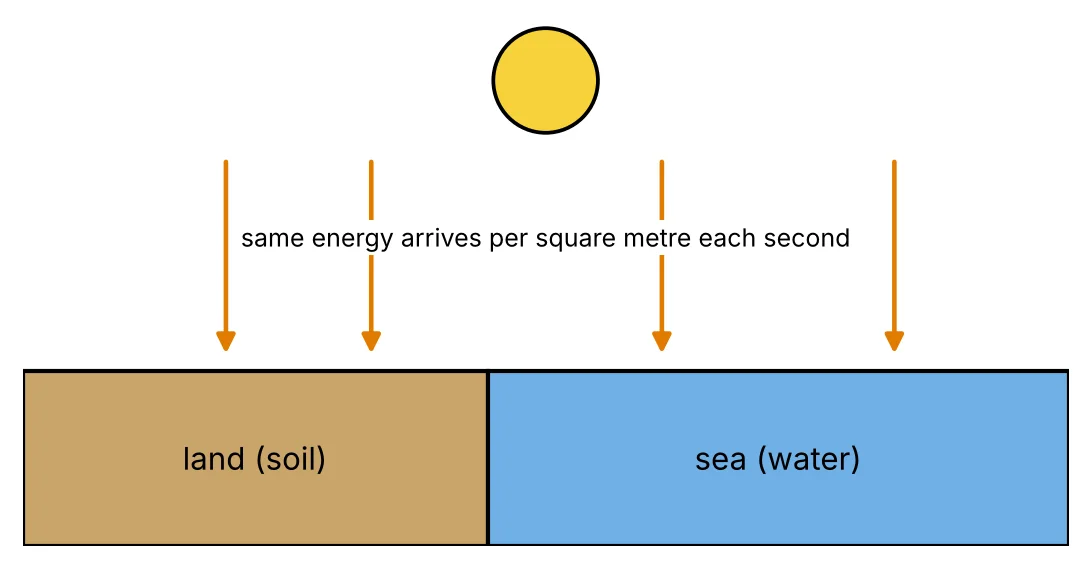
The picture shows land and sea on a sunny day. The same amount of energy from the Sun reaches each square metre of land and each square metre of sea every second. The specific heat capacity of water is 4200 J kg⁻¹ °C⁻¹ and of soil is 800 J kg⁻¹ °C⁻¹.
Question diagram
(a)
Explain, using specific heat capacity, why the land becomes hotter than the sea during the day. [2]Criterion A (ii) · Level 3-4
(b)
Calculate the temperature rise of 2.0 kg of water and of 2.0 kg of soil when each absorbs 12000 J. [2]Criterion A (ii) · Level 5-6
(c)
Evaluate the statement: people who live next to a large sea need less energy for heating and cooling their homes than people who live far inland. [4]Criterion D (ii) · Level 7-8

revisionprep.com

Summary Answer

Not available for this question.

Model Answer

Not available for this question.

Marking Scheme

Not available for this question.

Examiner Insights

Not available for this question.

Question 6Criterion D + A · Band 5-8 · Challenge · 8 marksrevisionprep.com

Measuring specific heat capacity (practical)

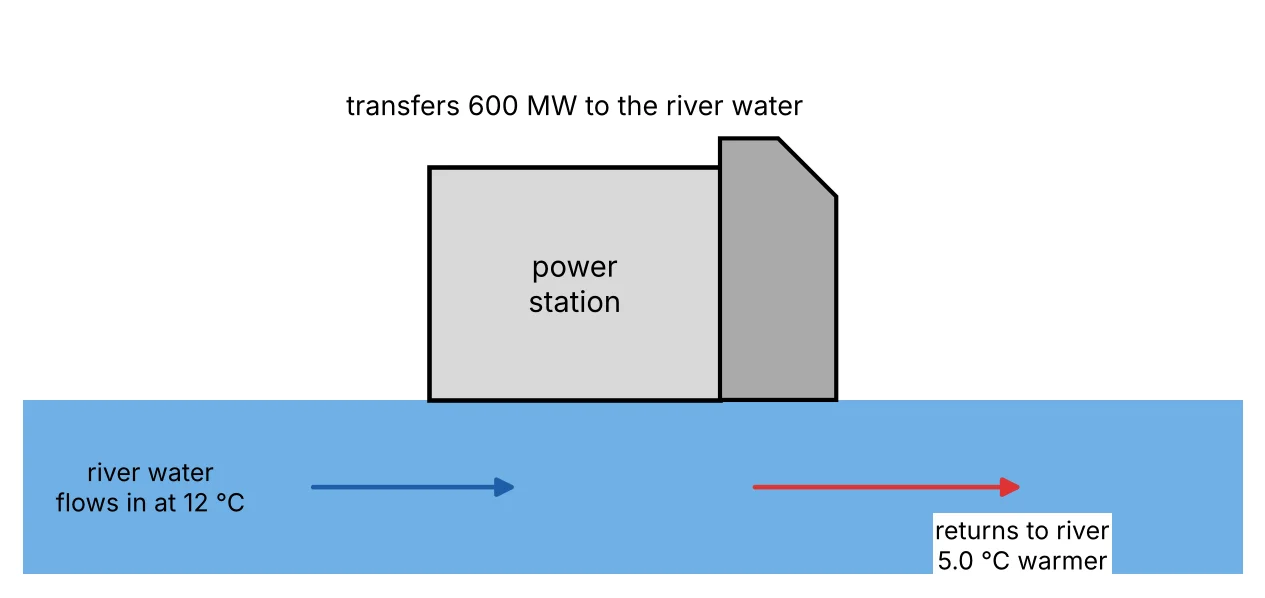
A power station transfers 600 MW (6.0 × 10⁸ J every second) to the water it takes from a river, as shown. The river water returns 5.0 °C warmer. The specific heat capacity of water is 4200 J kg⁻¹ °C⁻¹.
Question diagram
(a)
Calculate the mass of river water that must pass through the power station every second. [2]Criterion A (ii) · Level 5-6
(b)
Describe how returning warmer water can harm the ecosystem of the river. [3]Criterion D (ii) · Level 5-6
(c)
Evaluate the use of cooling towers, instead of river water, to remove energy from the power station. [3]Criterion D (ii) · Level 7-8

revisionprep.com

Summary Answer

Not available for this question.

Model Answer

Not available for this question.

Marking Scheme

Not available for this question.

Examiner Insights

Not available for this question.

That's every free question here — 6 of 30.

+24 more questions, plus Mock Papers & Worksheets, are waiting in Premium.

Upgrade