You're viewing free preview questions — 5 questions previewing here — subscribe to unlock 73 more, plus the Full Question Bank, Mock Papers & Worksheets.Upgrade
Forms and Conservation of Energy — Free MYP5 Physics Practice Questions

1QuestionEnergy Transformations and Real-Life ExamplesConcept Practice
2 marks~3 minCriterion A
An incandescent lightbulb is connected to a mains power supply. The filament glows white-hot, producing visible light, while the glass bulb becomes too hot to touch.
a
State the main form of energy entering the lightbulb. [1]
b
The lightbulb is described as inefficient. Identify the two main forms of energy that exit the lightbulb and explain why their relative proportions make the bulb inefficient. [1]


Solutions
2QuestionDifferent Forms of Energy Kinetic Potential Thermal etcAssessment Practice
3 marks~5 minCriterion A
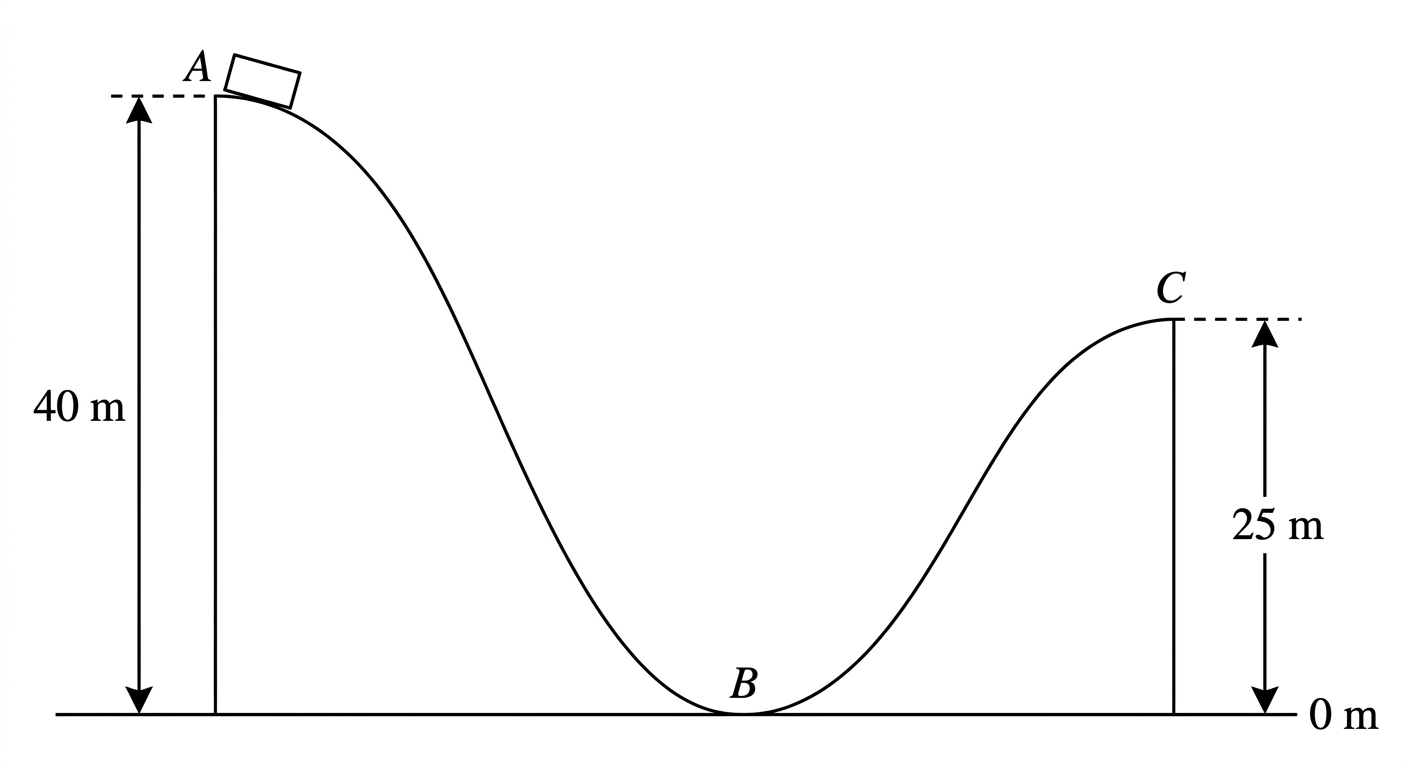
A roller coaster car of mass 800 kg starts from rest at point A, height 40 m above the ground. It descends to point B at ground level, then rises to point C at height 25 m. Assume no energy is lost to friction.
a
Calculate the gravitational potential energy of the car at point A. Use . [1]
b
Explain how kinetic energy and gravitational potential energy change as the car moves from A to B to C. [1]
c
Point C is lower than point A. Analyse what this difference in height tells us about the total mechanical energy of the car in a real roller coaster, where friction acts. [1]
Solutions
3QuestionDifferent Forms of Energy Kinetic Potential Thermal etcAssessment Practice
7 marks~11 minCriterion D
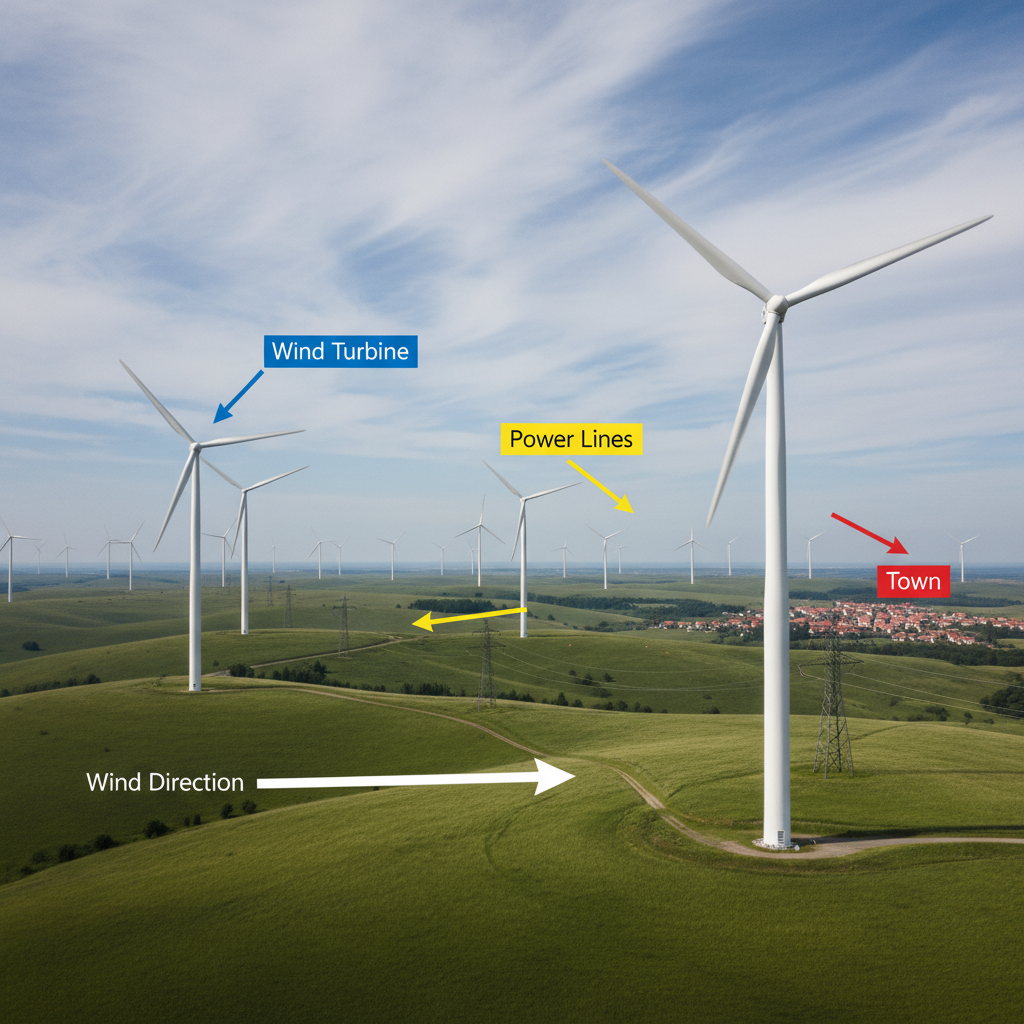
A wind farm supplies electricity to a small town. Each turbine has a rotor diameter of 80 m and operates at an efficiency of 35%. At a wind speed of 12 m/s, the mass of air passing through one turbine per second is 72 000 kg.
a
State the sequence of energy conversions that occur from moving air to electricity delivered to homes. [2]
b
The kinetic energy of air passing through one turbine per second is 5 184 000 J. Calculate the electrical power output of one turbine at this wind speed. [2]
c
Evaluate the suitability of this wind farm as the town's sole electricity source, considering both the variability of wind and one additional factor of your choice. [3]
Solutions
4QuestionEnergy Transformations and Real-Life ExamplesAssessment Practice
10 marks~15 minCriterion D
A community is considering building a wind farm along a known migratory corridor for several bird species. Wind turbines transform the kinetic energy of wind into electrical energy, providing a renewable alternative to fossil fuels. Environmental groups warn that spinning blades pose a direct collision risk to birds, and that turbine noise may alter migration behaviour. The community must weigh the long-term climate benefits of renewable energy against immediate, localised harm to wildlife.
a
Discuss two potential negative environmental impacts the wind farm could have on migratory bird populations. [2]
b
Analyse the ethical tension between the benefits of renewable energy and the risks posed to wildlife, referring to both sides of the argument. [3]
c
Evaluate two mitigation strategies that could reduce harm to bird populations, discussing the effectiveness and limitations of each. [5]

Solutions
5QuestionEnergy Flow in SystemsAssessment Practice
12 marks~18 minCriterion B
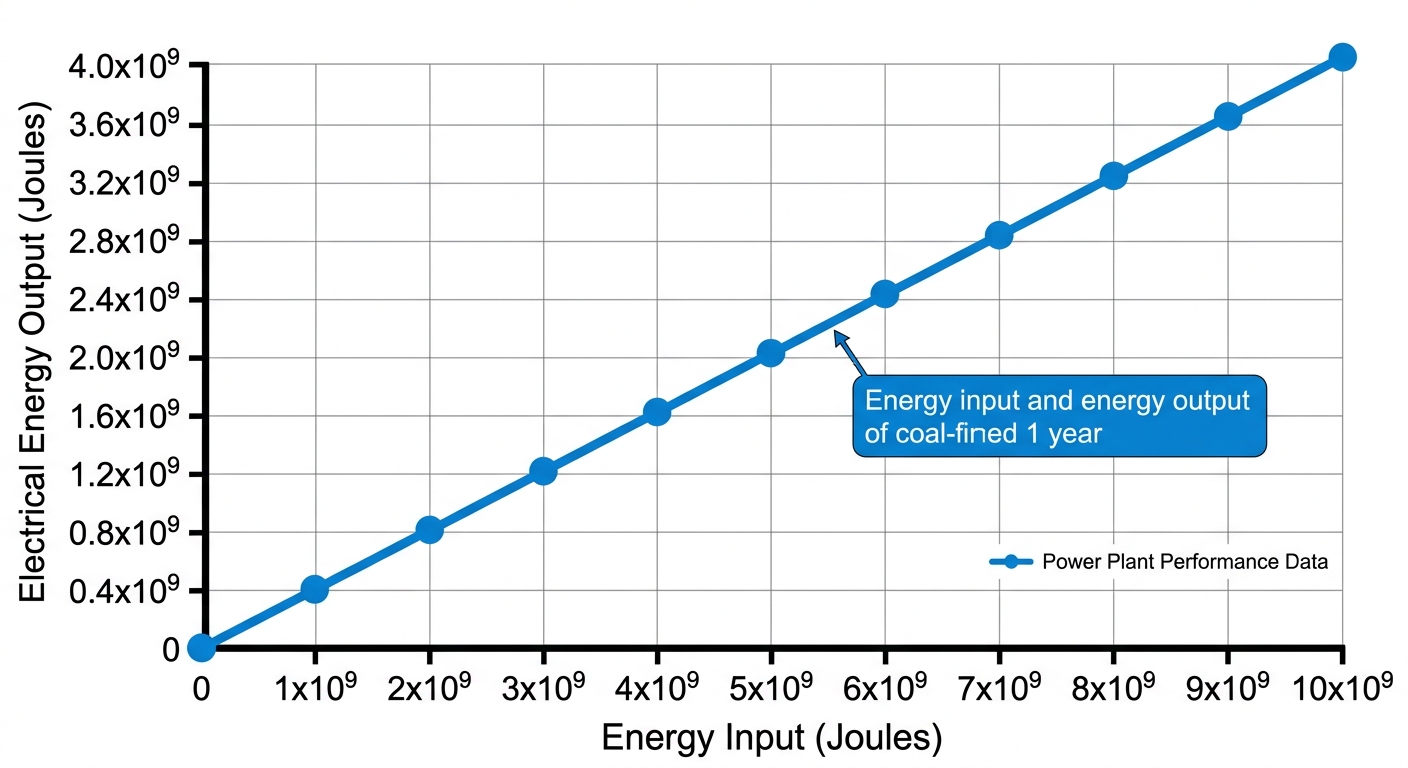
A coal-fired power plant burns coal to generate electrical energy. Energy is lost as heat during the process. The graph below shows electrical energy output against energy input over one year.
Energy Input ( J): 0, 1, 2, 3, 4, 5, 6, 7, 8, 9, 10
Electrical Energy Output ( J): 0, 0.4, 0.8, 1.2, 1.6, 2.0, 2.4, 2.8, 3.2, 3.6, 4.0
Energy Input ( J): 0, 1, 2, 3, 4, 5, 6, 7, 8, 9, 10
Electrical Energy Output ( J): 0, 0.4, 0.8, 1.2, 1.6, 2.0, 2.4, 2.8, 3.2, 3.6, 4.0
a
State the formula for efficiency. [1]
b
Use the graph to calculate the efficiency of the power plant at an energy input of J. Show your working. [3]
c
The plant operates at a higher load, with an energy input of J. Calculate the heat energy lost at this input and deduce whether the fraction of energy lost has changed compared to your result in part (b). [4]
d
Analyse the graph to evaluate whether the efficiency of the power plant is constant across all operating levels. Justify your conclusion using at least two data points not used in parts (b) or (c). [4]
Solutions
That's every free question here — 5 of 78.
+73 more questions, plus Mock Papers & Worksheets, are waiting in Premium.