You're viewing free preview questions — 5 questions previewing here — subscribe to unlock 65 more, plus the Full Question Bank, Mock Papers & Worksheets.Upgrade
Heat Transfer Conduction Convection Radiation — Free MYP5 Physics Practice Questions

1QuestionInsulation Techniques and Practical ApplicationsConcept Practice
3 marks~5 minCriterion A
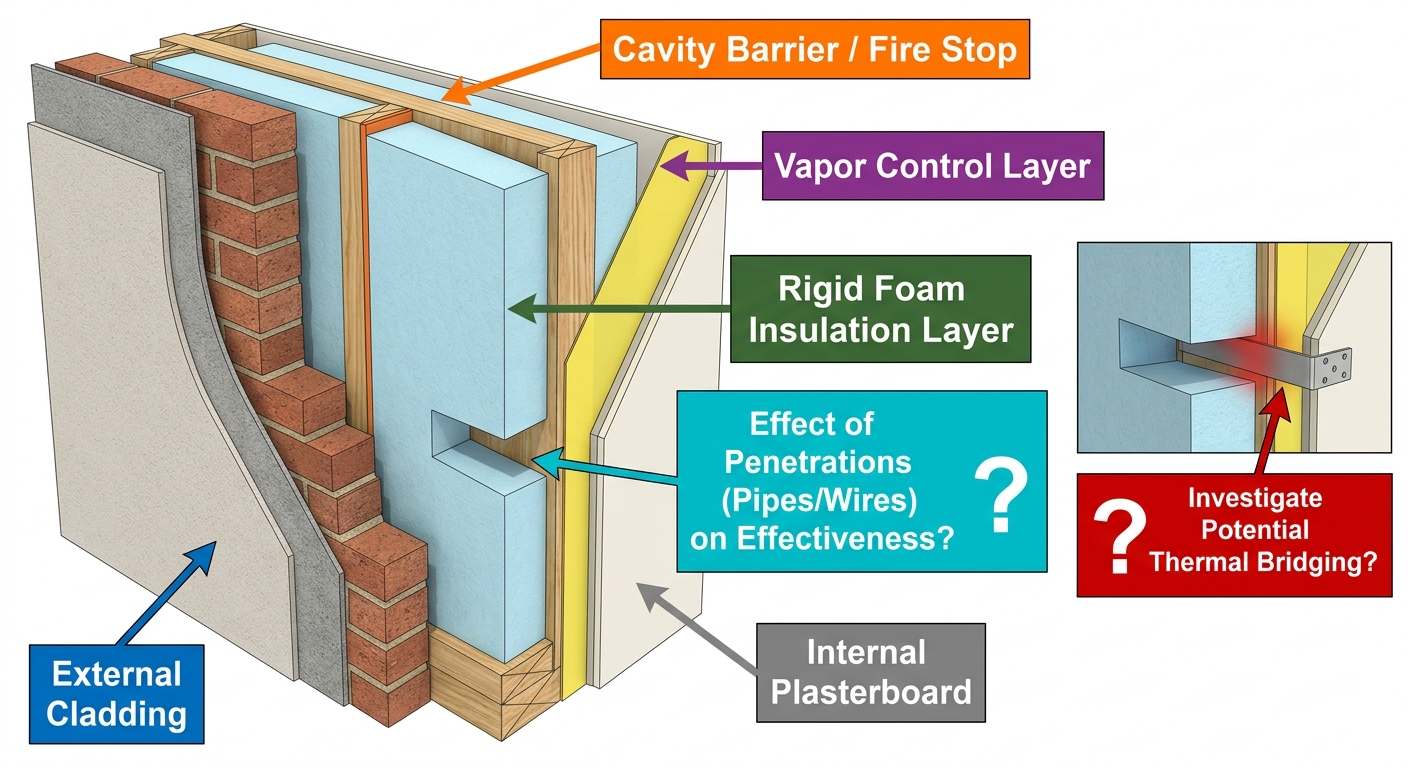
Modern buildings use cavity wall insulation, where mineral wool or rigid foam panels are fitted between the inner and outer brick layers to reduce heat loss.
a
Identify the primary heat transfer process that cavity wall insulation is designed to reduce, and state one property of the insulating material that makes it effective. [1]
b
Explain how trapped air within the insulating material reduces heat transfer through the wall. [1]
c
Discuss one limitation that reduces the long-term effectiveness of cavity wall insulation in a real building. [1]

Solutions
2QuestionConduction in Solids and Thermal ConductorsAssessment Practice
4 marks~6 minCriterion D
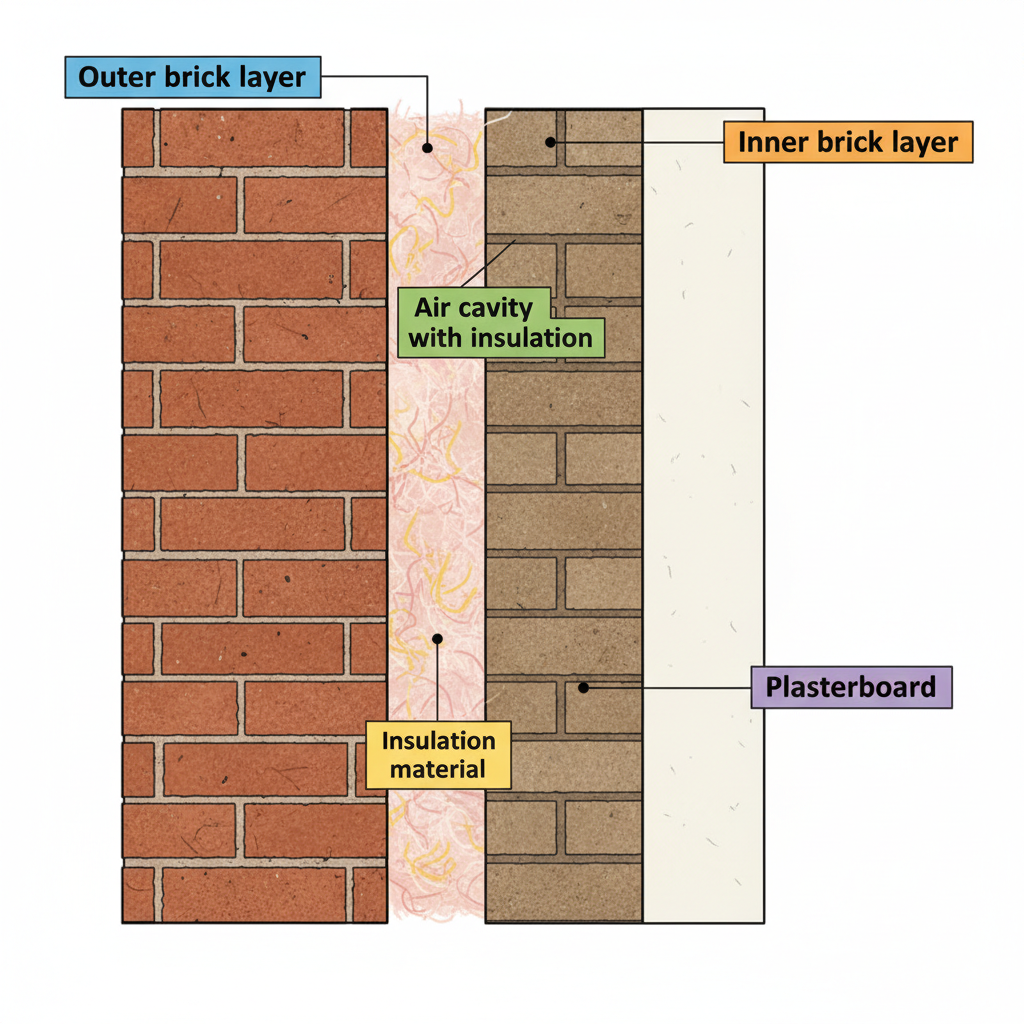
A house wall consists of four layers: outer brick, an air cavity filled with insulation, inner brick, and plasterboard. Three insulation materials are available:
Fiberglass: thermal conductivity , low cost, energy-intensive to manufacture.
Spray foam: , highest cost, seals air gaps completely, uses ozone-depleting blowing agents.
Recycled denim: , moderate cost, made from post-consumer waste.
Fiberglass: thermal conductivity , low cost, energy-intensive to manufacture.
Spray foam: , highest cost, seals air gaps completely, uses ozone-depleting blowing agents.
Recycled denim: , moderate cost, made from post-consumer waste.
a
Explain how thermal conductivity determines the rate of heat transfer through the insulation layer. [1]
b
Using the -values, explain which material reduces heat transfer most effectively and why eliminating air gaps further improves insulation. [2]
c
Evaluate the trade-offs between spray foam and recycled denim, considering environmental impact, cost, and long-term energy savings. [1]
Solutions
3QuestionRadiation and Emission of Infrared EnergyAssessment Practice
5 marks~8 minCriterion B
A student heats a small metal cube and records its surface temperature and the power radiated from its surface.
(K): 300, 400, 500, 600
(W): 8.1, 25.6, 62.5, 129.6
(K): 300, 400, 500, 600
(W): 8.1, 25.6, 62.5, 129.6
a
Calculate for each data point. [2]
b
Deduce the relationship between and for this cube, expressing it as an equation. [2]
c
The student claims the cube will radiate more than 250 W at 700 K. Evaluate this claim using your equation from part (b). [1]
Solutions
4QuestionConvection in Liquids and GasesAssessment Practice
10 marks~15 minCriterion A
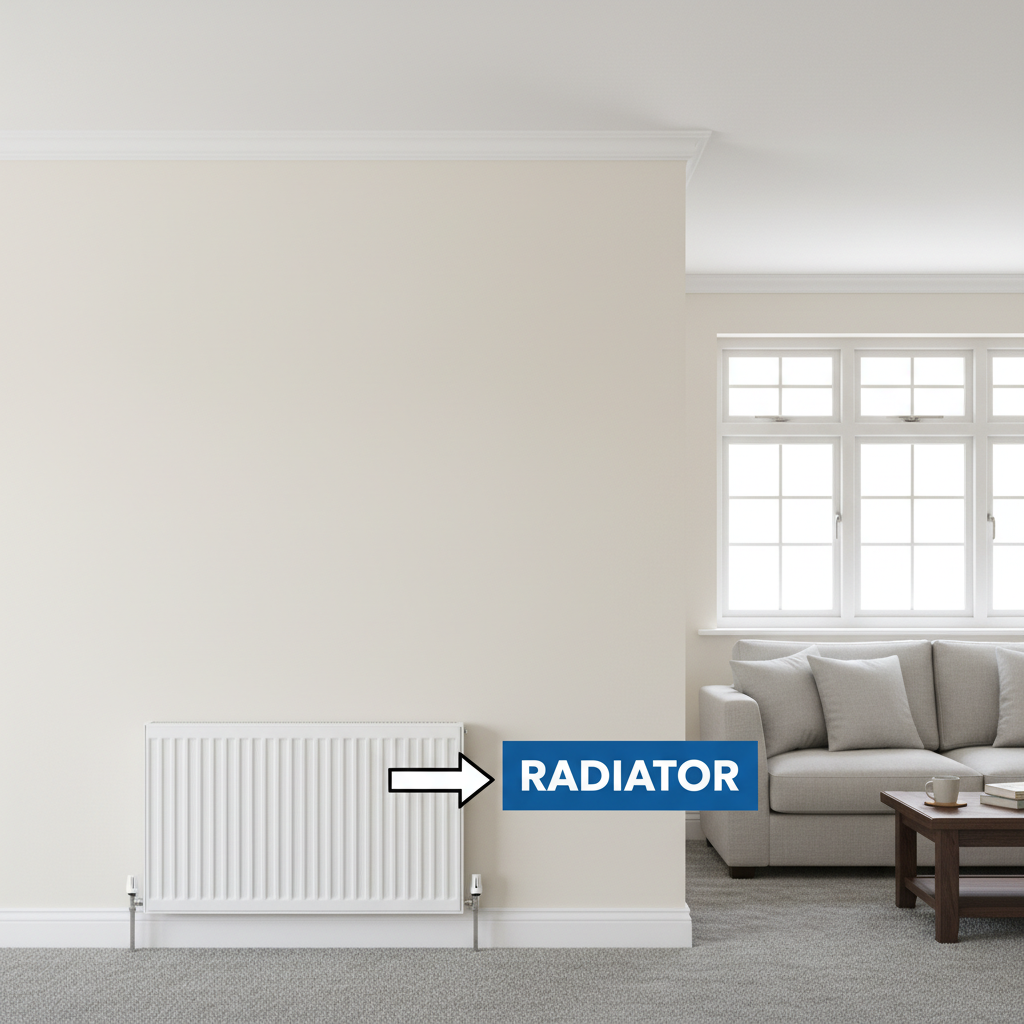
A room is heated by a radiator placed near the floor beneath a window. A thermal camera reveals the following: air near the radiator warms first; warm air rises toward the ceiling; cooler air near the window sinks toward the floor; a circulating current of air forms throughout the room.
a
Explain why radiators are placed near the floor rather than near the ceiling. [2]
b
Describe how convection currents transfer thermal energy around the room. In your answer, refer to how the air near the radiator changes, how density is involved, and how warm and cool air move. [4]
c
Explain why convection does not occur in solids. Use particle theory in your answer. [2]
d
Identify one real-world application of convection currents other than room heating. Explain how convection is involved. [2]
(e) A student states: "Heating a room mainly by convection is more effective than heating it only by conduction." Evaluate this statement, considering how thermal energy spreads through the room and one limitation of convection heating. [2]
(e) A student states: "Heating a room mainly by convection is more effective than heating it only by conduction." Evaluate this statement, considering how thermal energy spreads through the room and one limitation of convection heating. [2]
Solutions
5QuestionConvection in Liquids and GasesAssessment Practice
12 marks~18 minCriterion C
A student heats a beaker of water using a hot plate placed beneath the beaker. Three temperature probes are positioned at different depths:
Probe A: near the bottom, close to the hot plate
Probe B: in the middle of the water
Probe C: near the top surface
Over 10 minutes, the recorded temperature changes are:
Probe A: 20 °C → 70 °C (rapid increase)
Probe B: 20 °C → 50 °C (steady increase)
Probe C: 20 °C → 30 °C (slow increase)
Probe A: near the bottom, close to the hot plate
Probe B: in the middle of the water
Probe C: near the top surface
Over 10 minutes, the recorded temperature changes are:
Probe A: 20 °C → 70 °C (rapid increase)
Probe B: 20 °C → 50 °C (steady increase)
Probe C: 20 °C → 30 °C (slow increase)
a
Analyse the temperature–time data for all three probes. In your answer, compare the rates of temperature increase and describe the overall trend shown by the data. [3]
b
Explain how the temperature differences observed between the probes produce convection currents in the water. In your answer, refer to particle motion, density changes, and the resulting movement of warm and cool water. [4]
c
A student claims: "Probe C will eventually reach the same temperature as Probe A if heating continues long enough, so the position of the probe does not matter." Evaluate this claim. In your answer, consider the role of convection, the position of the heat source, and any factors that would limit the temperature at Probe C. [5]
Solutions
That's every free question here — 5 of 70.
+65 more questions, plus Mock Papers & Worksheets, are waiting in Premium.