You're viewing free preview questions — 5 questions previewing here — subscribe to unlock 60 more, plus the Full Question Bank, Mock Papers & Worksheets.Upgrade
Renewable and Non-Renewable Resources — Free MYP5 Physics Practice Questions

1QuestionAdvantages and Disadvantages of Energy ResourcesConcept Practice
2 marks~3 minCriterion A
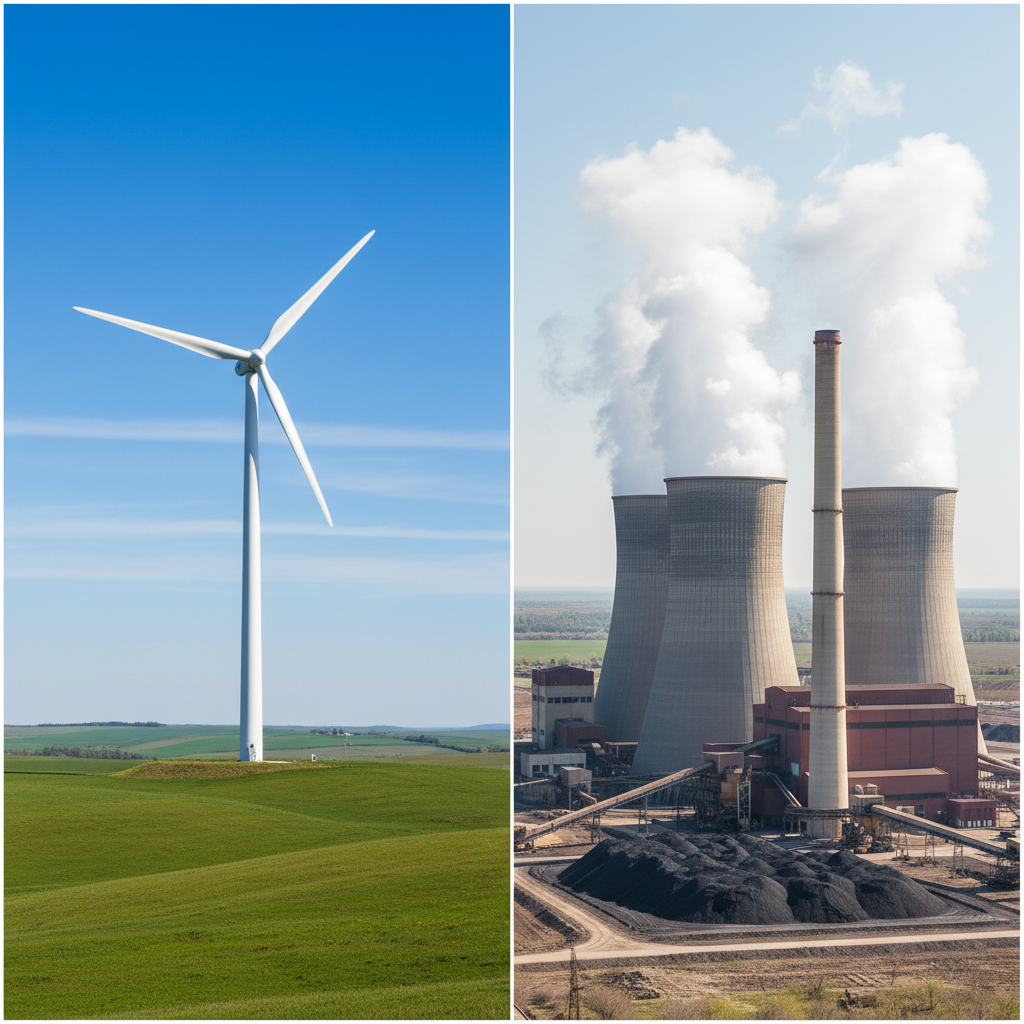
A wind farm and a coal-fired power station both generate electricity for a national grid. A student claims that one source will eventually run out while the other will not.
a
State which energy source is renewable and which is non-renewable. [1]
b
Explain one environmental disadvantage of using coal rather than wind to generate electricity. [1]

Solutions
2QuestionFossil Fuels and Their Environmental ImpactAssessment Practice
3 marks~5 minCriterion C
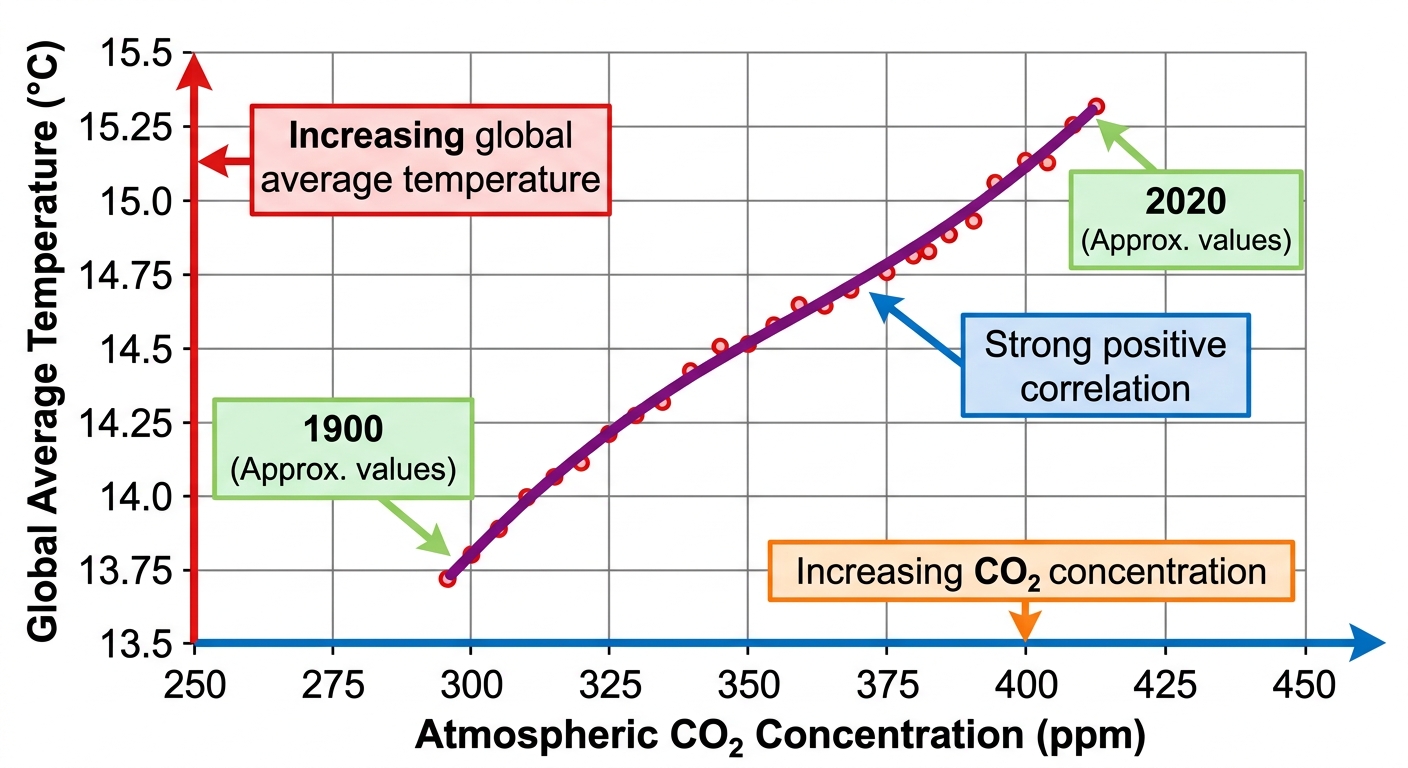
The graph below shows atmospheric concentration (ppm) and global average temperature (°C) from 1900 to 2020. Both quantities rise over this period.
a
Describe the relationship between concentration and global average temperature shown in the graph. [1]
b
Explain how molecules in the atmosphere interact differently with incoming solar radiation and outgoing radiation from Earth's surface. [1]
c
Explain how increasing concentration causes the temperature trend shown in the graph. [1]
Solutions
3QuestionTypes of Renewable Energy SourcesAssessment Practice
8 marks~12 minCriterion A
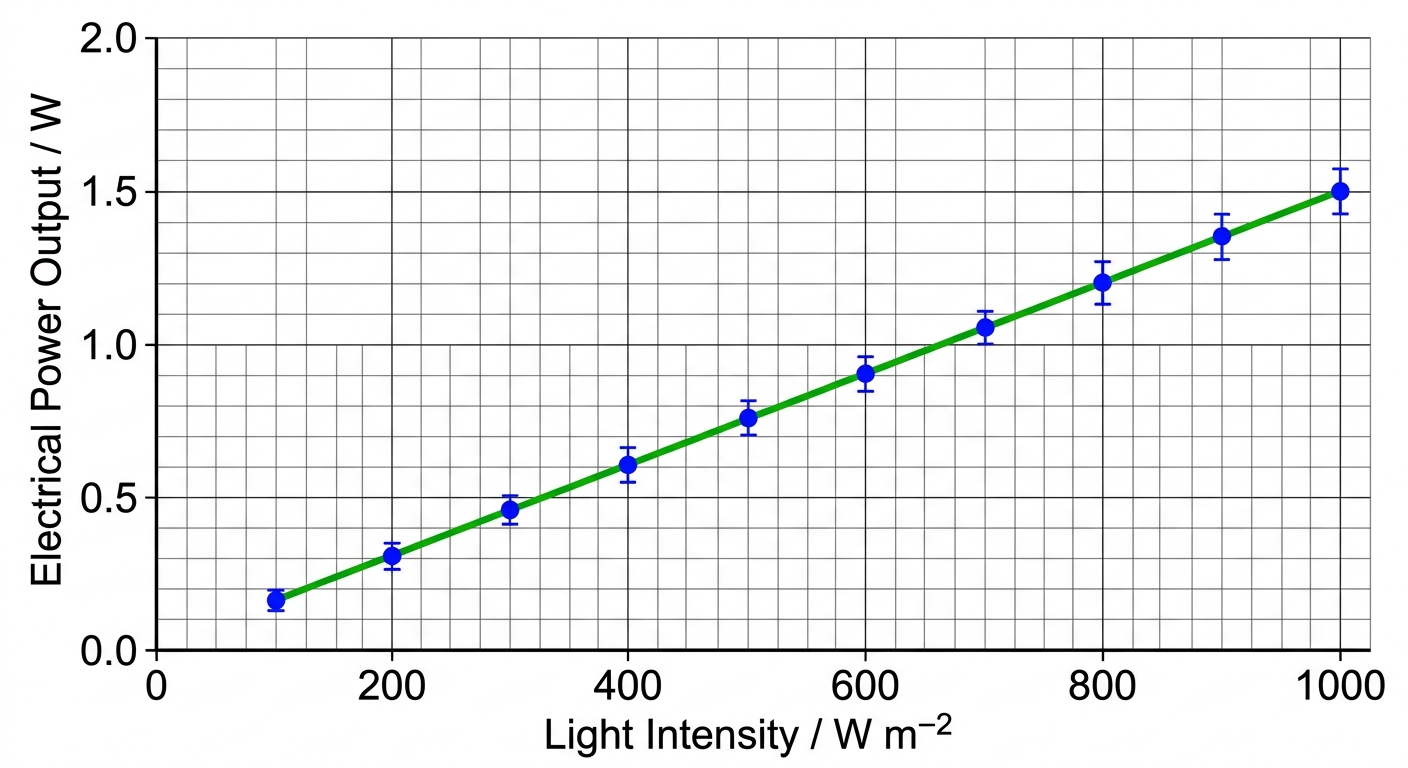
A photovoltaic (PV) cell of area is tested at different light intensities. A student records the electrical power output using a calibrated power meter. The results are plotted on the graph below.
a
Deduce the electrical power output of the PV cell at a light intensity of . [2]
b
Calculate the efficiency of the PV cell at a light intensity of , given that
where . [2]
where . [2]
c
Analyse the graph to explain how efficiency changes with increasing light intensity and evaluate one physical cause of this trend. [4]
Solutions
4QuestionAdvantages and Disadvantages of Energy ResourcesAssessment Practice
12 marks~18 minCriterion D
Data
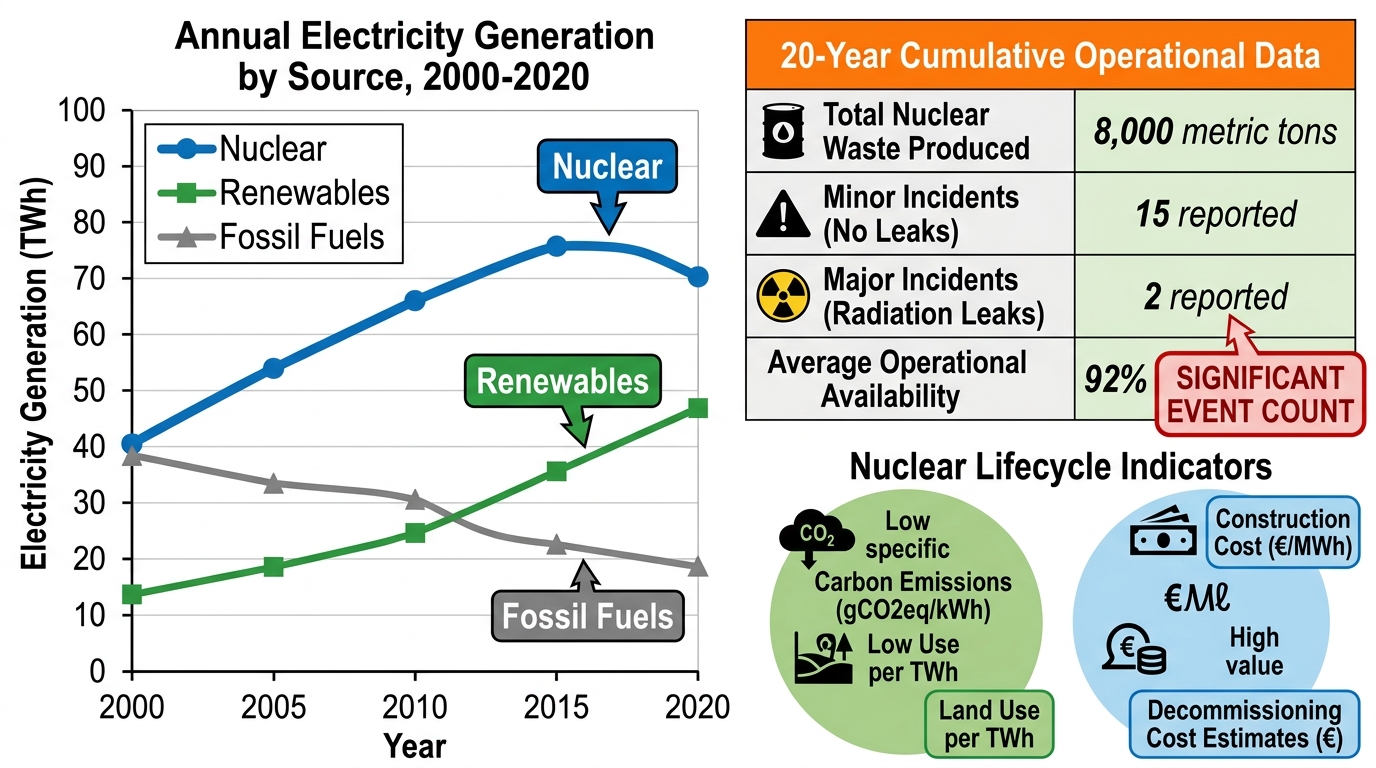
Total nuclear waste produced: 8 000 metric tonsMinor incidents (no radiation release): 15
Major incidents (radiation release): 2
A country operates a nuclear power station for 20 years. The data below summarises its performance.
Annual electricity generation (TWh):
Years 1–10: rising from 80 TWh to 250 TWh
Years 11–20: stable between 240 TWh and 260 TWh
Additional
Annual electricity generation (TWh):
Years 1–10: rising from 80 TWh to 250 TWh
Years 11–20: stable between 240 TWh and 260 TWh
Additional
a
Analyse the trend in annual electricity generation over the 20-year period. [2]
b
Identify two advantages of nuclear power and justify each using evidence from the data. [4]
c
Identify two disadvantages of nuclear power and justify each using evidence from the data. [4]
d
Evaluate the extent to which this dataset alone is sufficient to make a comprehensive judgment about nuclear power as an energy source. [2]
Solutions
5QuestionAdvantages and Disadvantages of Energy ResourcesAssessment Practice
12 marks~18 minCriterion D
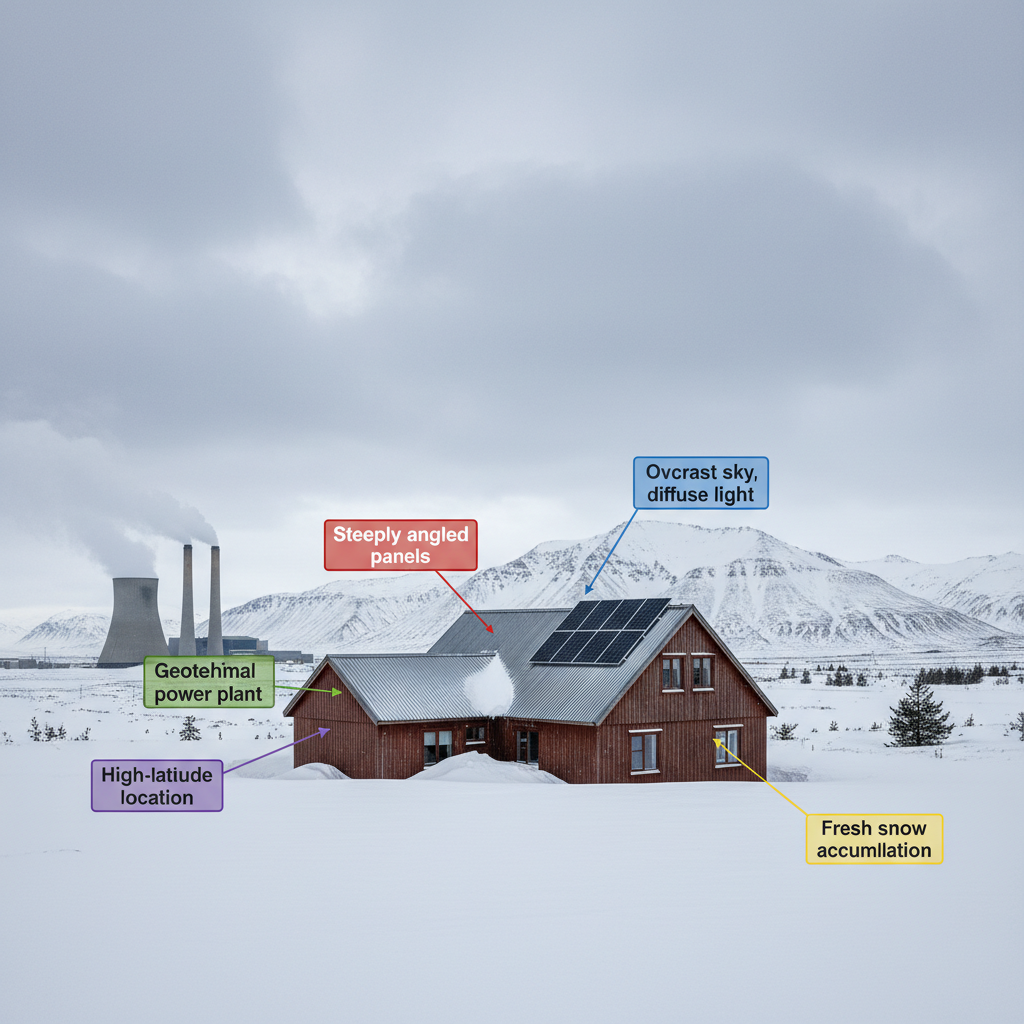
A homeowner in Iceland is considering installing solar panels. Iceland experiences up to 20 hours of darkness per winter day and an annual average solar irradiance of approximately 90 W m⁻², compared with 200 W m⁻² in southern Europe. Iceland already generates over 99% of its electricity from geothermal and hydropower sources.
a
State two advantages of solar panels as an electricity source. [2]
b
Explain the limitations of solar panel technology specifically in Iceland, including the role and cost implications of energy storage systems. [4]
c
Discuss the environmental impacts of solar panels across their full lifecycle: manufacturing, operation, and disposal. [3]
d
Evaluate whether solar panels represent a cost-effective and sustainable electricity solution for Iceland, given its climatic conditions and existing energy infrastructure. [3]
Solutions
That's every free question here — 5 of 65.
+60 more questions, plus Mock Papers & Worksheets, are waiting in Premium.