You're viewing free preview questions — 5 questions previewing here — subscribe to unlock 64 more, plus the Full Question Bank, Mock Papers & Worksheets.Upgrade
Work Power and Efficiency — Free MYP5 Physics Practice Questions

1QuestionImproving Efficiency in Machines and DevicesAssessment Practice
4 marks~6 minCriterion D
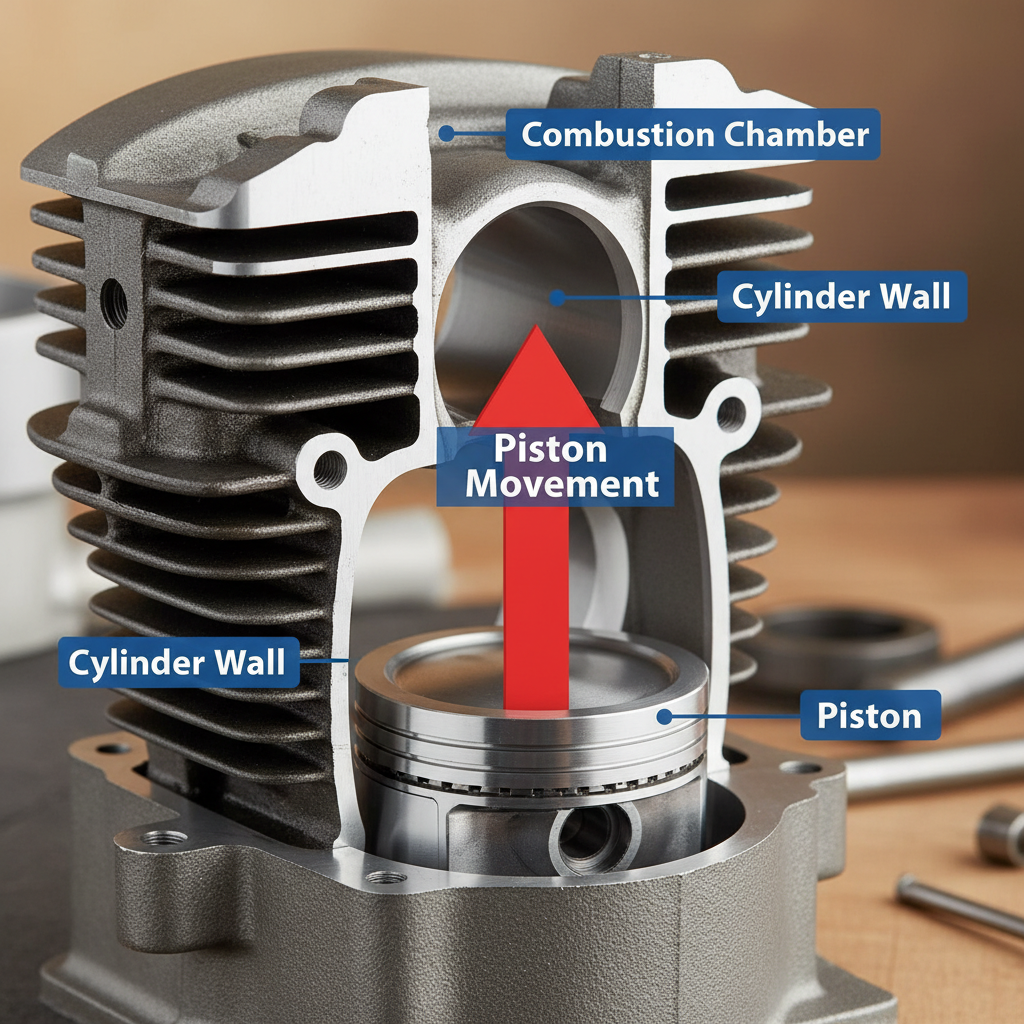
Low-friction coatings applied to engine pistons and cylinder walls reduce the friction force acting between moving surfaces. These coatings may contain per- and polyfluoroalkyl substances (PFAS), which are chemically persistent compounds.
a
Explain how reducing friction between the piston and cylinder wall improves the engine's efficiency. [1]
b
Explain one benefit to the engine itself of reduced friction between these surfaces. [1]
c
Discuss the environmental risks associated with the production, use, and disposal of PFAS-based low-friction coatings, considering chemical leaching at each stage. [2]

Solutions
2QuestionImproving Efficiency in Machines and DevicesAssessment Practice
8 marks~12 minCriterion C
A student investigates a pulley system by measuring the work input and work output for four different loads.
| Load (N) | 5 | 10 | 15 | 20 |
|---|---|---|---|---|
| Work input (J) | 20 | 42 | 65 | 89 |
| Work output (J) | 15 | 30 | 45 | 60 |
a
Calculate the efficiency of the pulley system for each load. [4]
b
Deduce how the efficiency of the pulley system changes as the load increases. Justify your answer with reference to the data. [2]
c
A student claims that redesigning the pulley with sealed, lubricated bearings and a lighter rope would increase efficiency. Evaluate this claim by identifying the energy loss mechanisms it addresses and one it does not. [2]
Solutions
3QuestionImproving Efficiency in Machines and DevicesAssessment Practice
11 marks~17 minCriterion C
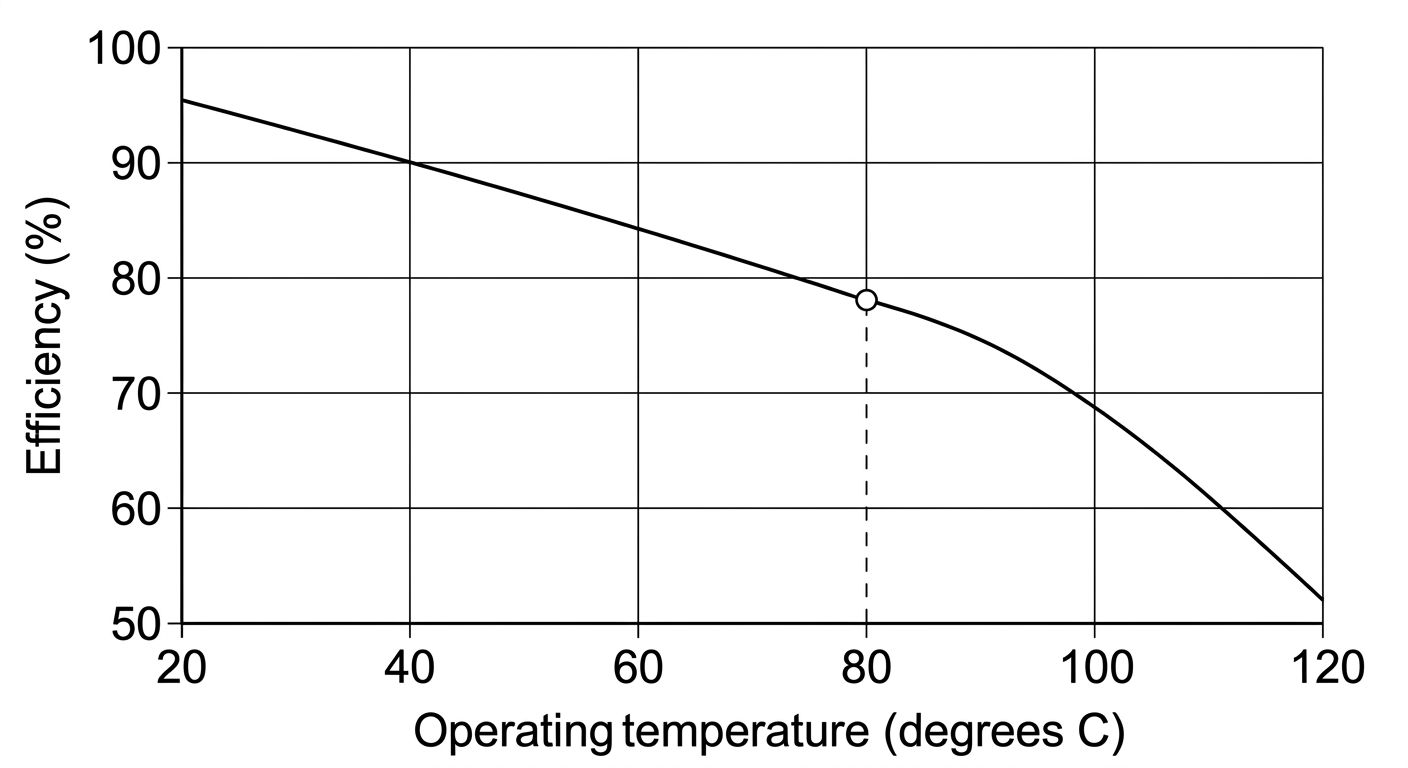
An electric motor operating in an industrial facility is tested across a range of temperatures. The graph below shows how its efficiency varies with operating temperature.
The x-axis shows operating temperature (°C); the y-axis shows efficiency (%). Efficiency decreases gradually from 20 °C to 80 °C, then declines more sharply above 80 °C.
The x-axis shows operating temperature (°C); the y-axis shows efficiency (%). Efficiency decreases gradually from 20 °C to 80 °C, then declines more sharply above 80 °C.
a
Describe the relationship between operating temperature and efficiency shown in the graph. Reference at least two distinct regions in your answer. [2]
b
Explain why increasing operating temperature causes the motor's efficiency to decrease. In your answer, refer to electrical resistance, wasted heat energy, and useful mechanical output. [4]
c
Evaluate one engineering method used to limit efficiency losses in motors that operate continuously above 80 °C. In your answer, discuss one advantage and one limitation of the method, and judge whether the method is likely to be worthwhile for an industrial operator. [5]
---
---
Solutions
4QuestionEfficiency = Useful Output Total Input x 100Assessment Practice
12 marks~18 minCriterion A
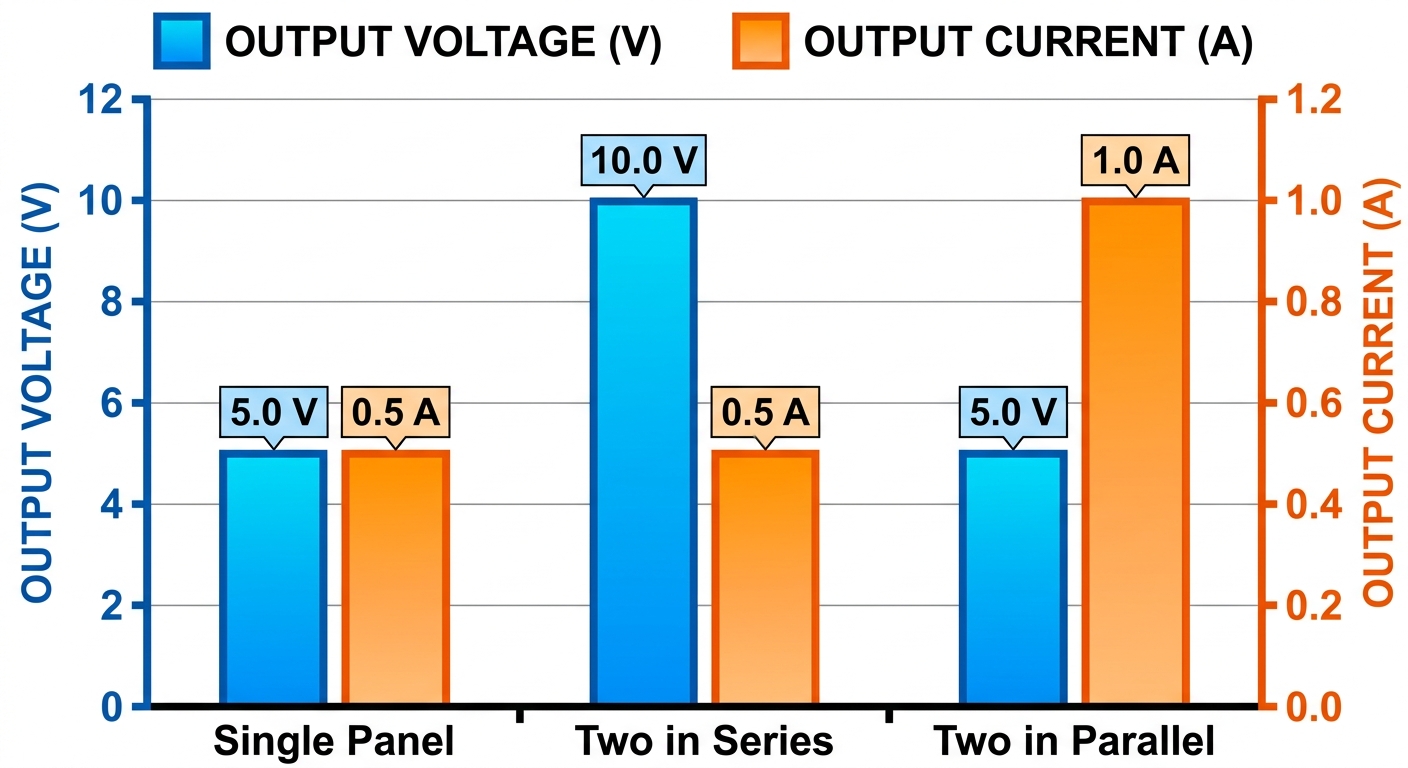
A student investigates the efficiency of solar panels under constant light intensity. A single panel and two identical panels connected in series and in parallel are each tested at their optimal load resistance. The wire resistance in each configuration is . Measured output values are:
Single panel — Voltage: , Current:
Two in series — Voltage: , Current:
Two in parallel — Voltage: , Current:
Single panel — Voltage: , Current:
Two in series — Voltage: , Current:
Two in parallel — Voltage: , Current:
a
Calculate the useful power output for each configuration. [3]
b
Deduce which configuration — series or parallel — delivers more power to the load per panel used, and explain why the values are equal or unequal. [3]
c
Analyse how heat losses in the wires affect the efficiency of the series and parallel configurations differently, and justify which configuration is more efficient. [6]
Solutions
5QuestionDefinition and Formula for Work DoneAssessment Practice
12 marks~18 minCriterion D
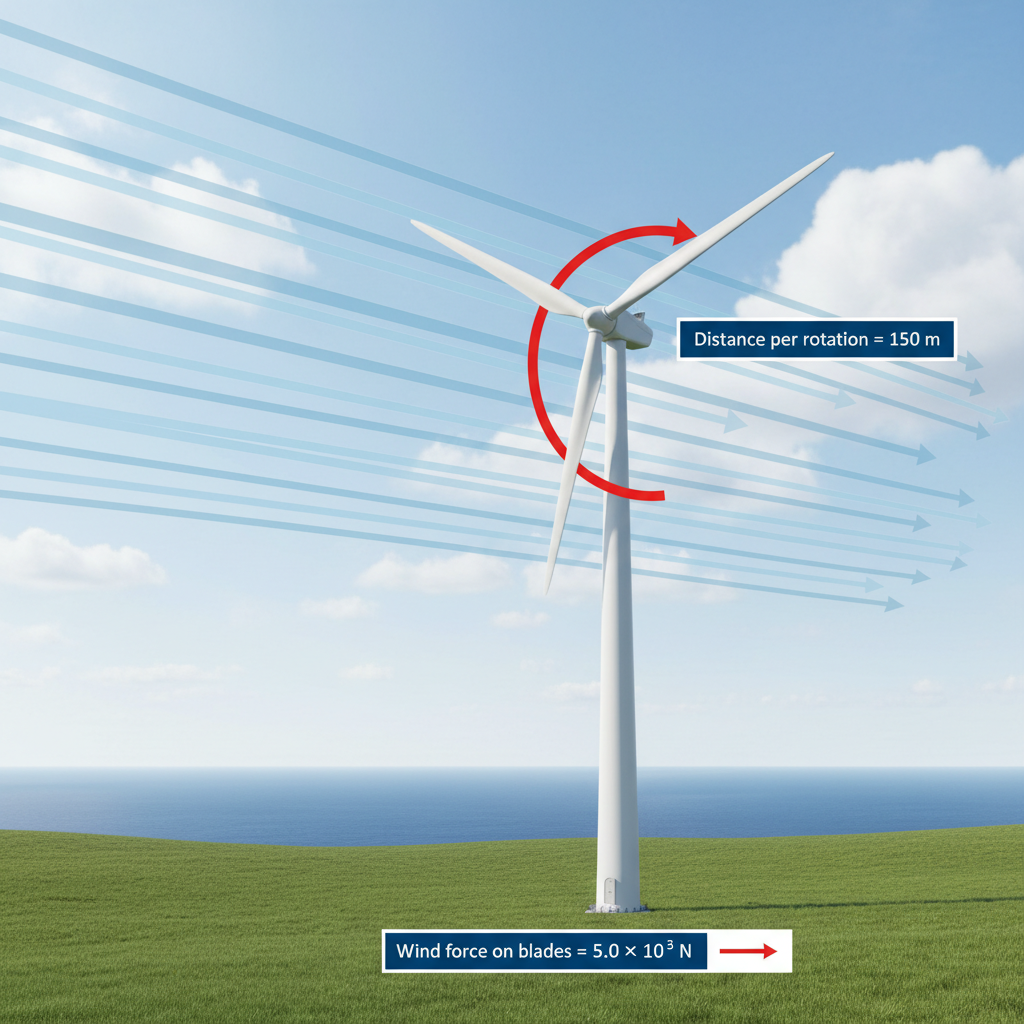
A coastal community is evaluating a proposed wind turbine farm. Each turbine blade sweeps a circular path of radius 40 m, and the average force exerted by the wind on the blades is N. The blades complete one full rotation every 3.0 s, and the turbine operates for 8.0 hours each day.
a
Calculate the work done by the wind on the turbine blades during one full rotation. [2]
b
Calculate the total energy transferred by the wind to one turbine in a single day of operation, and explain how this value relates to the concept of power. [4]
c
Evaluate the ethical considerations involved in siting the wind turbine farm in a coastal habitat, discussing the trade-offs between renewable energy generation and potential harm to local wildlife, and proposing mitigation strategies. [6]
Solutions
That's every free question here — 5 of 69.
+64 more questions, plus Mock Papers & Worksheets, are waiting in Premium.