RevisionPrep
Log inGo Premium

Physics

Free Version

Work, Energy and Power

4 subtopics · 306 exam-style questions

“Pick a subtopic to start practising.”
Forms and Conservation of EnergyWork, power and efficiencyEnergy in electrical and everyday devicesRenewable and Non-Renewable Resources

Sample questions from Work, Energy and Power

  1. Energy in electrical and everyday devices[5 marks]
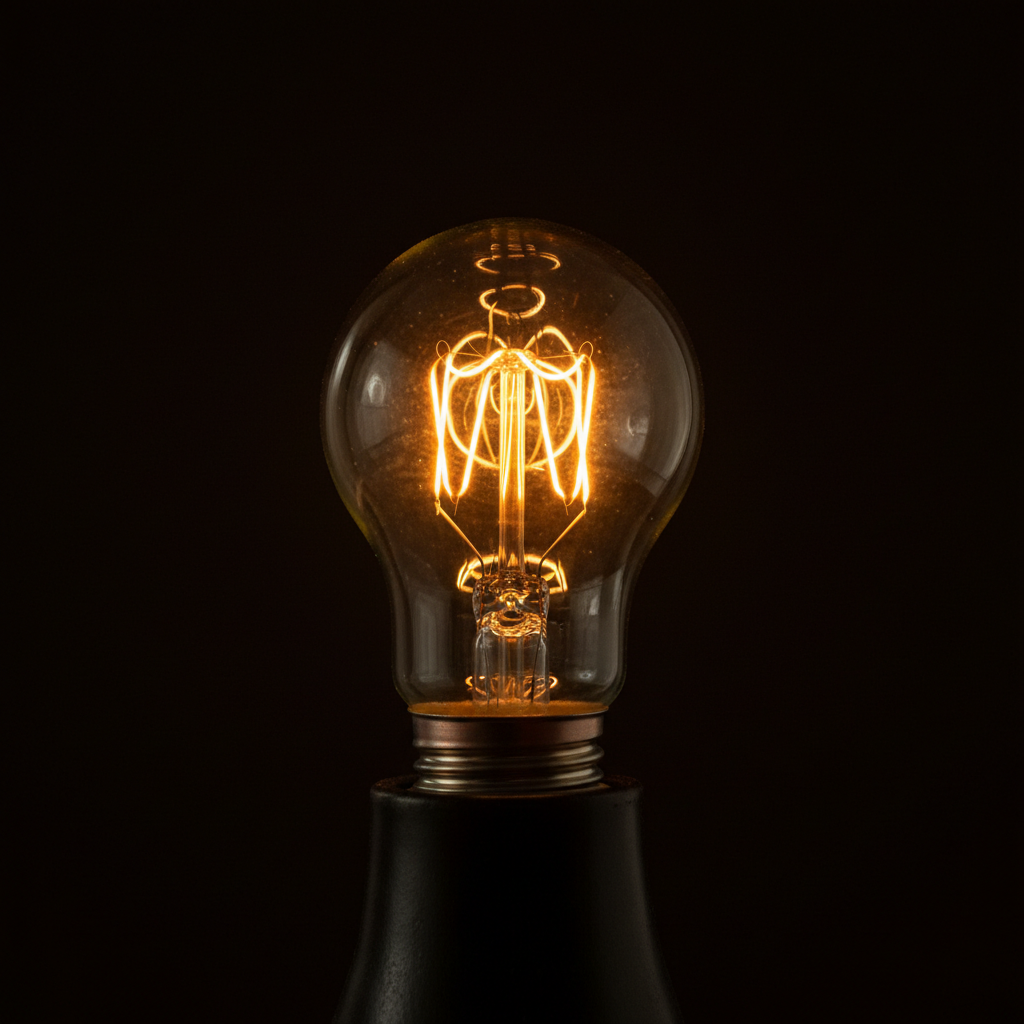
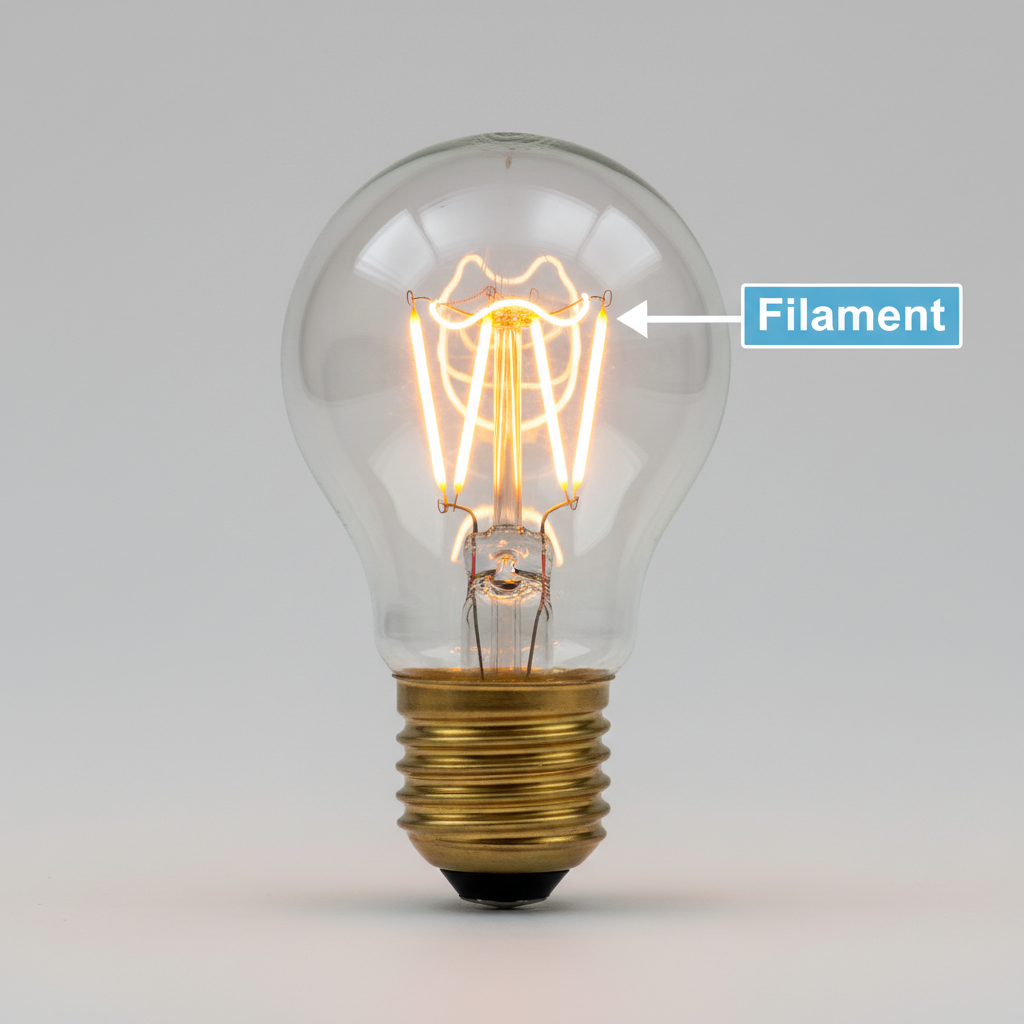
    The photograph shows a filament lamp. The lamp is rated at 60 W. When it is switched on, the filament reaches a temperature of about 2500 °C. Only 5% of the electrical energy supplied is transferred as visible light.

    (a) State the useful energy output of the lamp. [1]

    (b) Calculate the energy wasted by the lamp in 1.0 minute. [2]

    (c) Explain why a filament lamp must run at such a high temperature to give out light, and why this makes it inefficient. [2]
    Diagram for a Energy in electrical and everyday devices practice questionPractise this subtopic
  2. Forms and Conservation of Energy[6 marks]
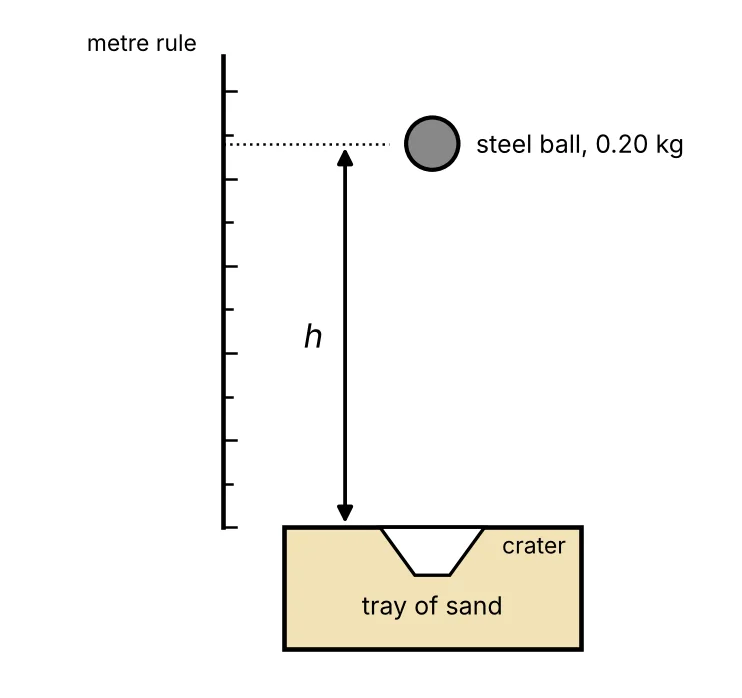
    A student drops a steel ball of mass 0.20 kg from different heights into a tray of sand and measures the depth of the crater it makes, as shown. Take g = 9.8 N kg⁻¹.

    (a) Calculate the gravitational potential energy of the ball when it is released from a height of 0.80 m. [2]

    (b) Identify the independent variable and the dependent variable in this investigation. [2]

    (c) Suggest one change to the method that would make the results more reliable, and explain why it helps. [2]
    Diagram for a Forms and Conservation of Energy practice questionPractise this subtopic
  3. Work, power and efficiency[4 marks]
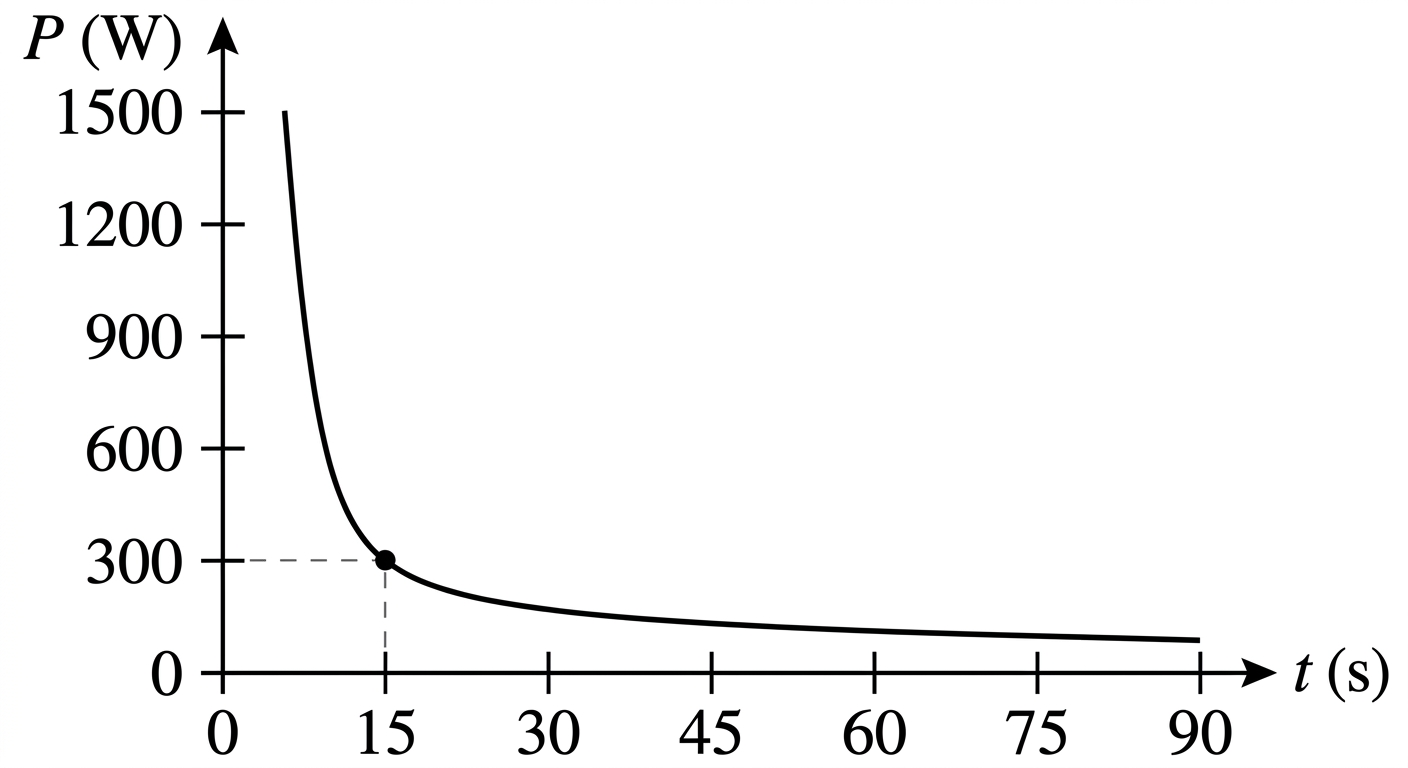
    A harbour crane lifts identical shipping containers. Each lift needs 4500 J of work. The graph shows how the crane's power output PP depends on the time tt taken for one lift.

    (a) State the equation linking power, work done and time. [1]

    (b) Calculate the power output when a lift takes 45 s, and check your answer against the graph. [1]

    (c) Explain the shape of the graph. [2]
    Diagram for a Work, power and efficiency practice questionPractise this subtopic
  4. Renewable and Non-Renewable Resources[4 marks]
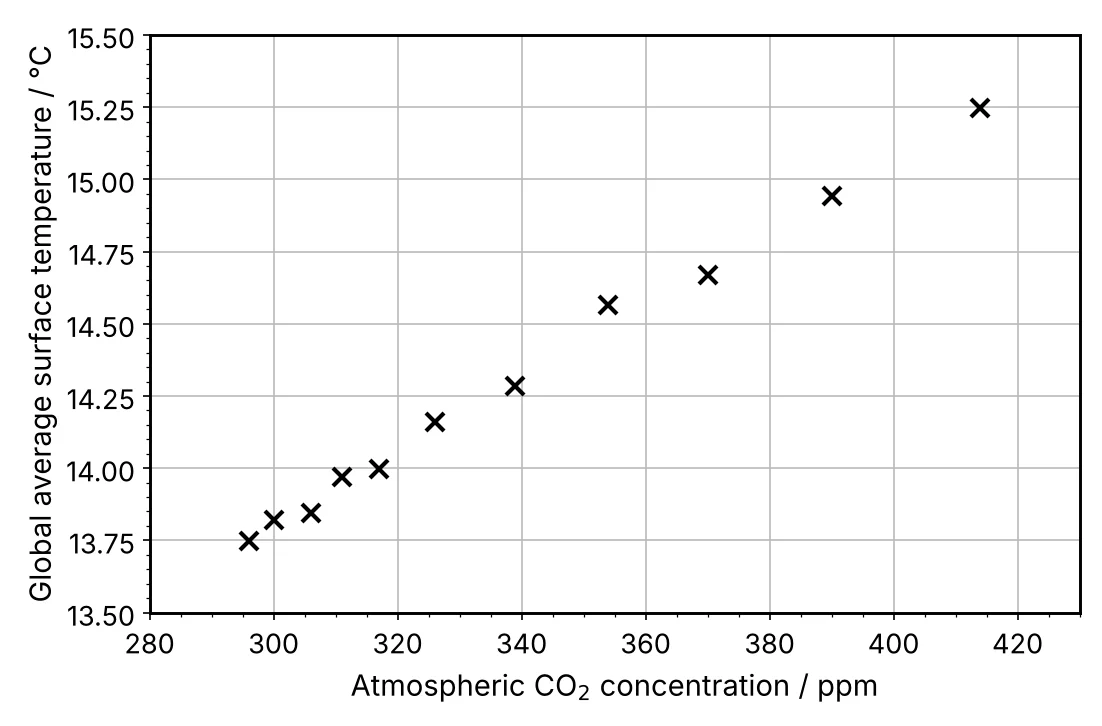
    The graph shows the global average surface temperature plotted against the concentration of carbon dioxide in the atmosphere, for years from 1900 to 2020.

    (a) Describe the relationship shown by the graph. [2]

    (b) Use the graph to estimate the rise in global average temperature as the CO₂ concentration increased from 300 ppm to 400 ppm. [2]
    Diagram for a Renewable and Non-Renewable Resources practice questionPractise this subtopic
  5. Energy in electrical and everyday devices[4 marks]
    The photograph shows a 60 W, 230 V filament lamp, which is 5.0% efficient. A designer of an energy-efficient desk light is comparing it with a 7.5 W LED lamp that gives the same light output. The LED lamp has an aluminium heat sink with fins.

    (a) Calculate the current in the filament lamp. [2]

    (b) Explain why the LED lamp still needs a heat sink, even though it is much more efficient. [2]
    Diagram for a Energy in electrical and everyday devices practice questionPractise this subtopic
  6. Forms and Conservation of Energy[4 marks]
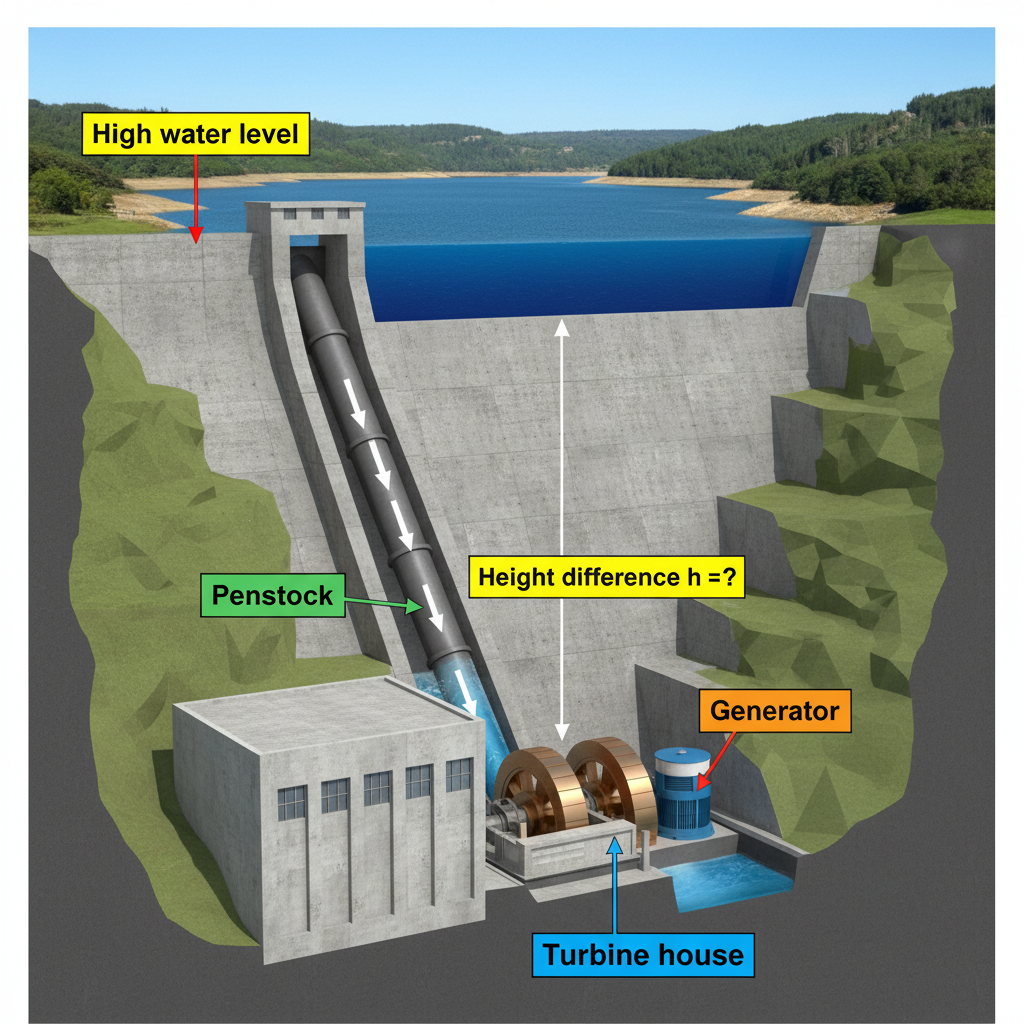
    The diagram shows a cross-section of a dam. Water from the reservoir flows down a pipe (penstock) to the turbines in the turbine house. For this dam the height difference h between the water surface and the turbines is 221 m. Take g = 9.8 N kg⁻¹.

    (a) Calculate the gravitational potential energy lost by each kilogram of water as it falls 221 m. [2]

    (b) Calculate the speed the water would have at the turbines if no energy were dissipated. [2]
    Diagram for a Forms and Conservation of Energy practice questionPractise this subtopic

Every question, revision note and worksheet for Work, Energy and Power — with Premium.

Unlock Full Access