You're viewing free preview questions — 6 questions previewing here — subscribe to unlock 73 more, plus the Full Question Bank, Mock Papers & Worksheets.Upgrade
Back

Energy in electrical and everyday devices — Free MYP5 Physics Practice Questions

Free questions

Open in full, with answers, mark scheme and examiner insights.

Question 1Criterion A · Band 1-4 · Easy · 5 marksrevisionprep.com

Energy changes in bulbs, motors and heaters
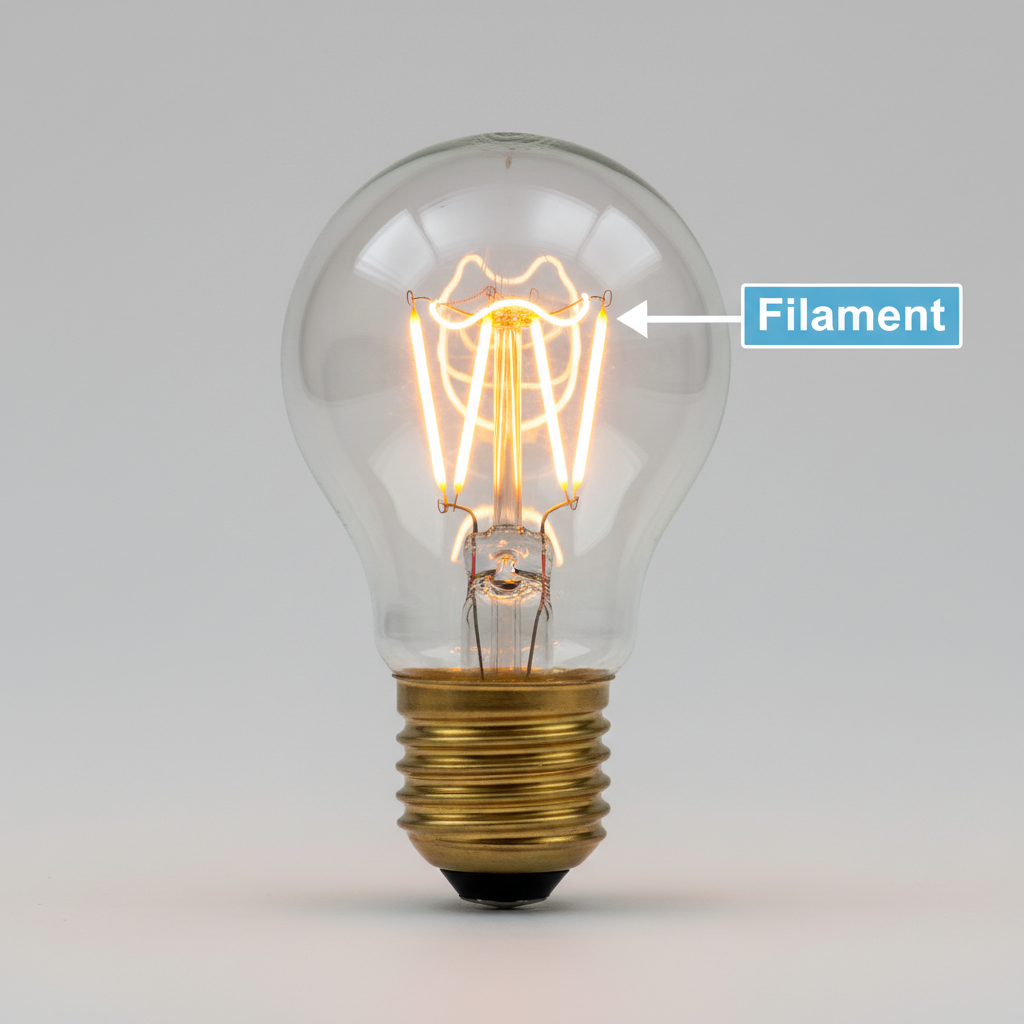
The photograph shows a filament lamp. The lamp is rated at 60 W. When it is switched on, the filament reaches a temperature of about 2500 °C. Only 5% of the electrical energy supplied is transferred as visible light.
Question diagram
(a)
State the useful energy output of the lamp. [1]Criterion A (i) · Level 1-2
(b)
Calculate the energy wasted by the lamp in 1.0 minute. [2]Criterion A (ii) · Level 3-4
(c)
Explain why a filament lamp must run at such a high temperature to give out light, and why this makes it inefficient. [2]Criterion A (i) · Level 3-4

revisionprep.com

Summary Answer

Not available for this question.

Model Answer

Not available for this question.

Marking Scheme

Not available for this question.

Examiner Insights

Not available for this question.

Question 2Criterion A · Band 1-4 · Easy · 4 marksrevisionprep.com

Designing Energy-Efficient Systems

The photograph shows a 60 W, 230 V filament lamp, which is 5.0% efficient. A designer of an energy-efficient desk light is comparing it with a 7.5 W LED lamp that gives the same light output. The LED lamp has an aluminium heat sink with fins.
Question diagram
(a)
Calculate the current in the filament lamp. [2]Criterion A (ii) · Level 1-2
(b)
Explain why the LED lamp still needs a heat sink, even though it is much more efficient. [2]Criterion A (iii) · Level 3-4

revisionprep.com

Summary Answer

Not available for this question.

Model Answer

Not available for this question.

Marking Scheme

Not available for this question.

Examiner Insights

Not available for this question.

Question 3Criterion C + A · Band 1-6 · Medium · 7 marksrevisionprep.com

Energy transfers in the human body (physics)
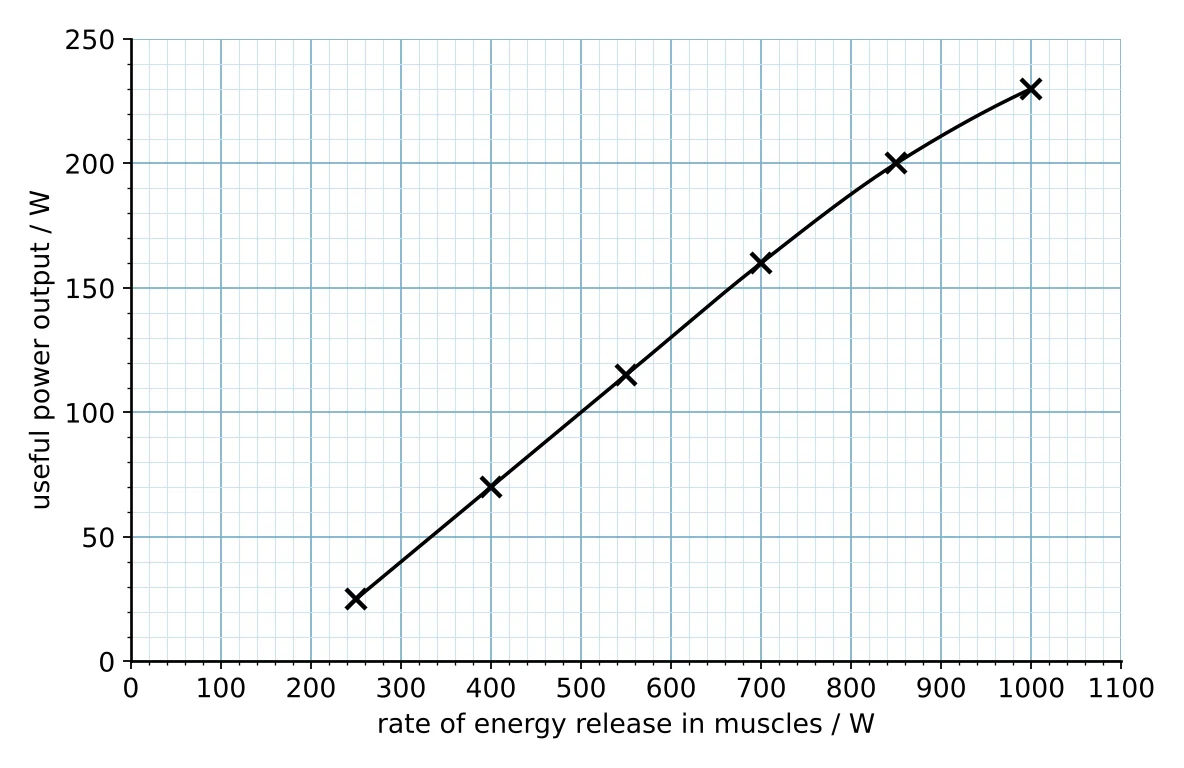
A cyclist on an exercise bike is tested at different workloads. A laboratory measures the rate at which energy is released in her muscles and the useful power she delivers to the pedals. The graph shows the results.
Question diagram
(a)
Use the graph to determine the useful power output when energy is released in her muscles at 700 W. [1]Criterion C (ii) · Level 1-2
(b)
Calculate her efficiency at 250 W, 700 W and 1000 W. [3]Criterion A (ii) · Level 3-4
(c)
Describe how her efficiency changes as the workload increases and suggest an explanation. [3]Criterion C (ii) · Level 5-6

revisionprep.com

Summary Answer

Not available for this question.

Model Answer

Not available for this question.

Marking Scheme

Not available for this question.

Examiner Insights

Not available for this question.

Question 4Criterion D + A · Band 1-6 · Medium · 6 marksrevisionprep.com

Identifying Input and Output Energy Forms
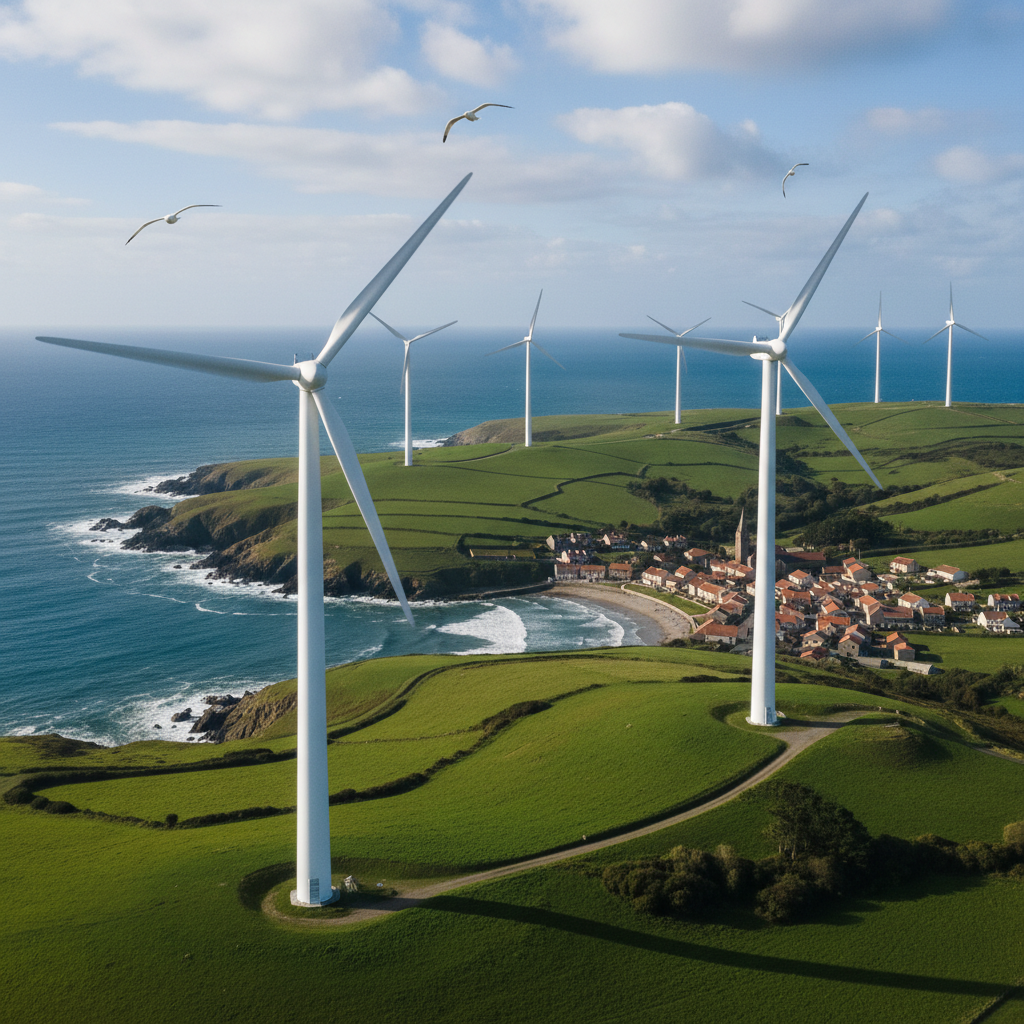
The photograph shows a proposed site for a wind farm near a coastal town. The site lies on a known migration route for birds and bats. Residents want cleaner energy but are worried about wildlife, noise and the landscape.
Question diagram
(a)
Outline the energy transformations in a wind turbine. [2]Criterion A (i) · Level 1-2
(b)
Evaluate whether the town should build the wind farm on this site, suggesting one way to reduce harm to wildlife. [4]Criterion D (ii), D (iii) · Level 5-6

revisionprep.com

Summary Answer

Not available for this question.

Model Answer

Not available for this question.

Marking Scheme

Not available for this question.

Examiner Insights

Not available for this question.

Question 5Criterion A · Band 3-8 · Challenge · 10 marksrevisionprep.com

Energy changes in bulbs, motors and heaters
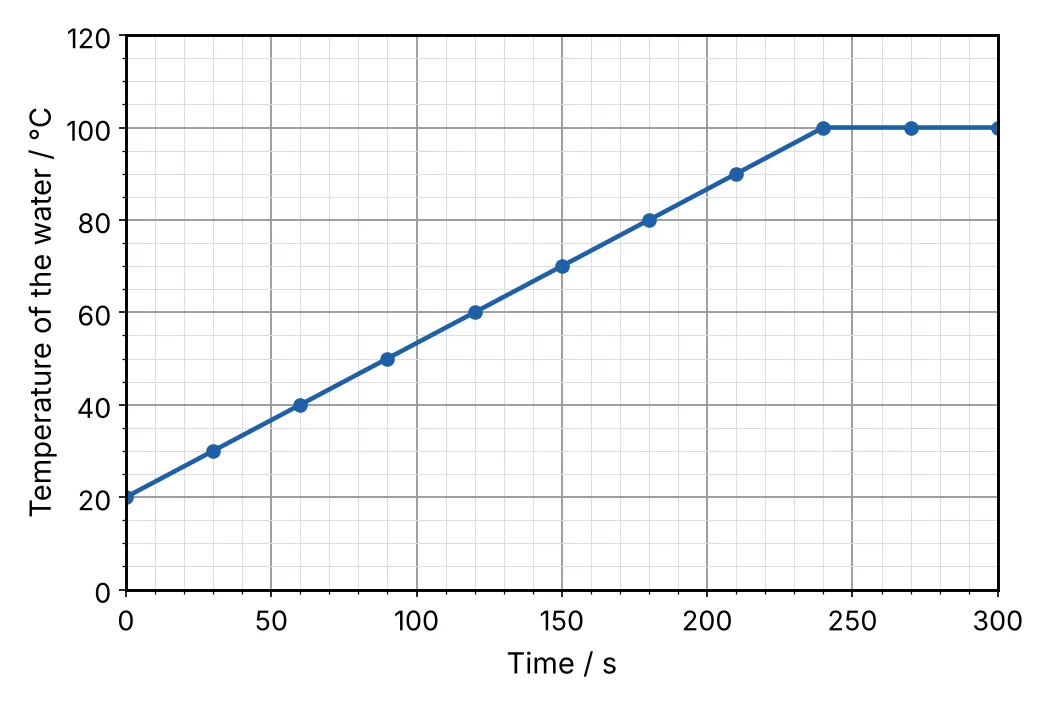
An electric kettle contains 1.2 kg of water at 20 °C. The heating element has a power of 2.0 kW. The graph shows how the temperature of the water changes after the kettle is switched on. The specific heat capacity of water is 4200 J kg⁻¹ °C⁻¹.
Question diagram
(a)
Use the graph to find the time at which the water starts to boil, and calculate the electrical energy supplied to the kettle up to that time. [2]Criterion A (ii) · Level 3-4
(b)
Calculate the useful energy gained by the water and the efficiency of the kettle. [3]Criterion A (ii) · Level 5-6
(c)
The kettle is left on after 240 s and still takes 2.0 kW, but the graph is flat from 240 s to 300 s. Explain why the temperature does not rise. [2]Criterion A (i) · Level 5-6
(d)
A manufacturer says that a 3.0 kW kettle is 'more efficient' because it boils the same water faster. Assume that for this kettle the wasted energy is lost to the surroundings at a steady rate while the water is heating. Calculate the efficiency of a 3.0 kW kettle and evaluate the manufacturer's claim. [3]Criterion A (iii) · Level 7-8

revisionprep.com

Summary Answer

Not available for this question.

Model Answer

Not available for this question.

Marking Scheme

Not available for this question.

Examiner Insights

Not available for this question.

Question 6Criterion B · Band 3-8 · Challenge · 10 marksrevisionprep.com

Battery to Mechanical Energy Conversion
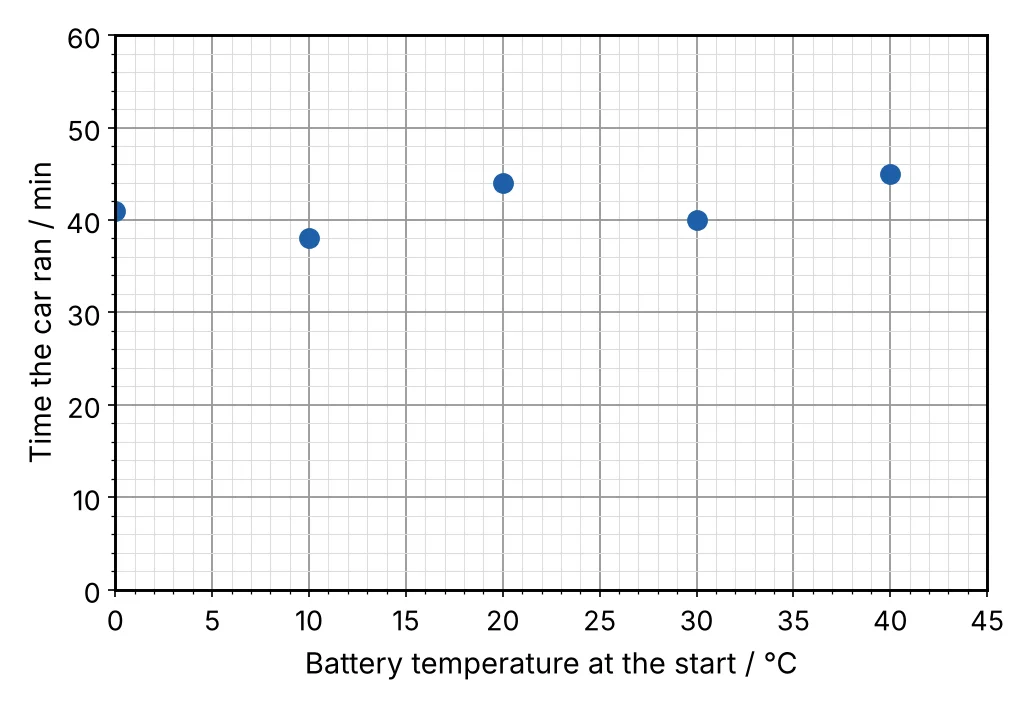
A student wants to find out whether the temperature of a battery changes how long a battery-powered toy car runs. She runs a pilot test with one trial at each temperature, using a stopwatch to time how long the car runs on a level track. The graph shows her results.
Question diagram
(a)
State a hypothesis for how battery temperature changes the running time of the car, and give a physics reason. [2]Criterion B (ii) · Level 3-4
(b)
Identify the independent variable, the dependent variable, and two variables that must be kept the same. [2]Criterion B (iii) · Level 5-6
(c)
Use the graph to explain why the pilot test cannot show whether temperature affects the running time. [3]Criterion B (iii) · Level 5-6
(d)
Design a method that would give reliable data, including how the temperature is controlled, how many readings are taken, and one safety precaution. [3]Criterion B (iv) · Level 7-8

revisionprep.com

Summary Answer

Not available for this question.

Model Answer

Not available for this question.

Marking Scheme

Not available for this question.

Examiner Insights

Not available for this question.

That's every free question here — 6 of 79.

+73 more questions, plus Mock Papers & Worksheets, are waiting in Premium.

Upgrade