You're viewing free preview questions — 6 questions previewing here — subscribe to unlock 87 more, plus the Full Question Bank, Mock Papers & Worksheets.Upgrade
Back

Forms and Conservation of Energy — Free MYP5 Physics Practice Questions

Free questions

Open in full, with answers, mark scheme and examiner insights.

Question 1Criterion A · Band 1-4 · Easy · 4 marksrevisionprep.com

Energy Flow in Systems

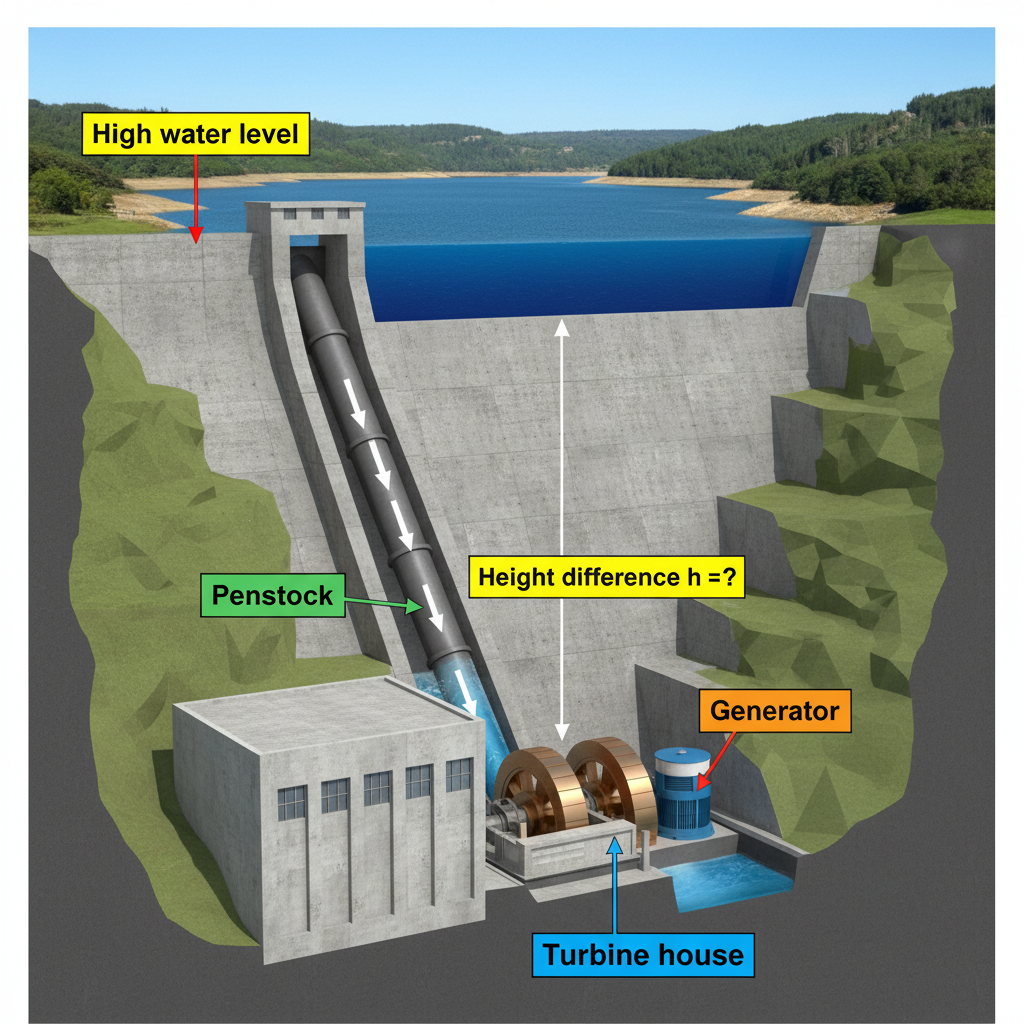
The diagram shows a cross-section of a dam. Water from the reservoir flows down a pipe (penstock) to the turbines in the turbine house. For this dam the height difference h between the water surface and the turbines is 221 m. Take g = 9.8 N kg⁻¹.
Question diagram
(a)
Calculate the gravitational potential energy lost by each kilogram of water as it falls 221 m. [2]Criterion A (ii) · Level 1-2
(b)
Calculate the speed the water would have at the turbines if no energy were dissipated. [2]Criterion A (ii) · Level 3-4

revisionprep.com

Summary Answer

Not available for this question.

Model Answer

Not available for this question.

Marking Scheme

Not available for this question.

Examiner Insights

Not available for this question.

Question 2Criterion B + A · Band 3-4 · Easy · 6 marksrevisionprep.com

Kinetic and gravitational potential energy: Ek = ½mv², Ep = mgh
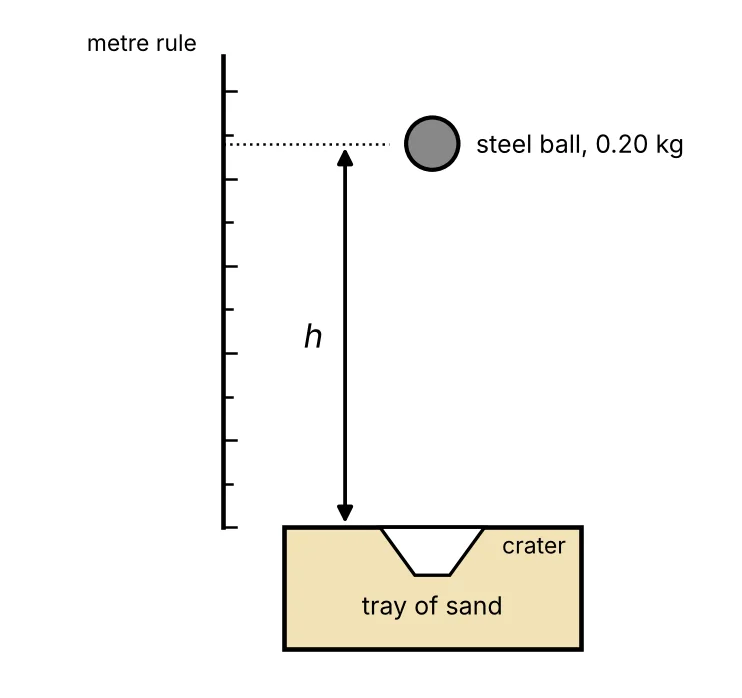
A student drops a steel ball of mass 0.20 kg from different heights into a tray of sand and measures the depth of the crater it makes, as shown. Take g = 9.8 N kg⁻¹.
Question diagram
(a)
Calculate the gravitational potential energy of the ball when it is released from a height of 0.80 m. [2]Criterion A (ii) · Level 3-4
(b)
Identify the independent variable and the dependent variable in this investigation. [2]Criterion B (iii) · Level 3-4
(c)
Suggest one change to the method that would make the results more reliable, and explain why it helps. [2]Criterion B (iv) · Level 3-4

revisionprep.com

Summary Answer

Not available for this question.

Model Answer

Not available for this question.

Marking Scheme

Not available for this question.

Examiner Insights

Not available for this question.

Question 3Criterion A · Band 1-6 · Medium · 7 marksrevisionprep.com

Law of Conservation of Energy

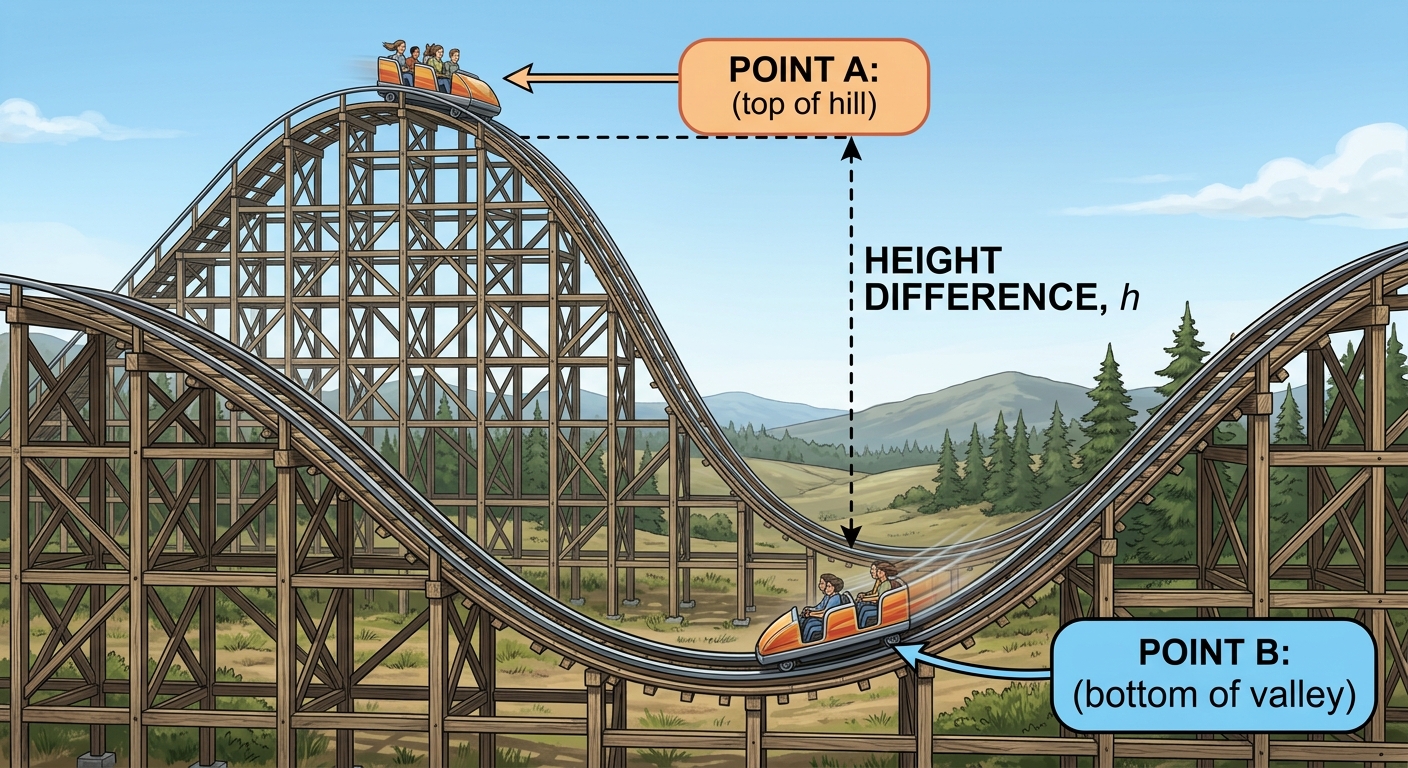
The image shows a roller-coaster car and riders, of total mass 650 kg, at rest at point A at the top of a hill. Point A is 32 m above point B at the bottom of the valley. The length of track from A to B is 60 m. Take g = 9.8 N kg⁻¹.
Question diagram
(a)
Calculate the gravitational potential energy lost by the car between A and B. [2]Criterion A (ii) · Level 1-2
(b)
Calculate the speed at B if no energy were dissipated. [2]Criterion A (ii) · Level 3-4
(c)
The measured speed at B is 22 m s⁻¹. Calculate the energy dissipated between A and B and the average resistive force on the car. [3]Criterion A (ii), A (iii) · Level 5-6

revisionprep.com

Summary Answer

Not available for this question.

Model Answer

Not available for this question.

Marking Scheme

Not available for this question.

Examiner Insights

Not available for this question.

Question 4Criterion C · Band 3-6 · Medium · 7 marksrevisionprep.com

Useful vs Wasted Energy and Sankey Diagrams
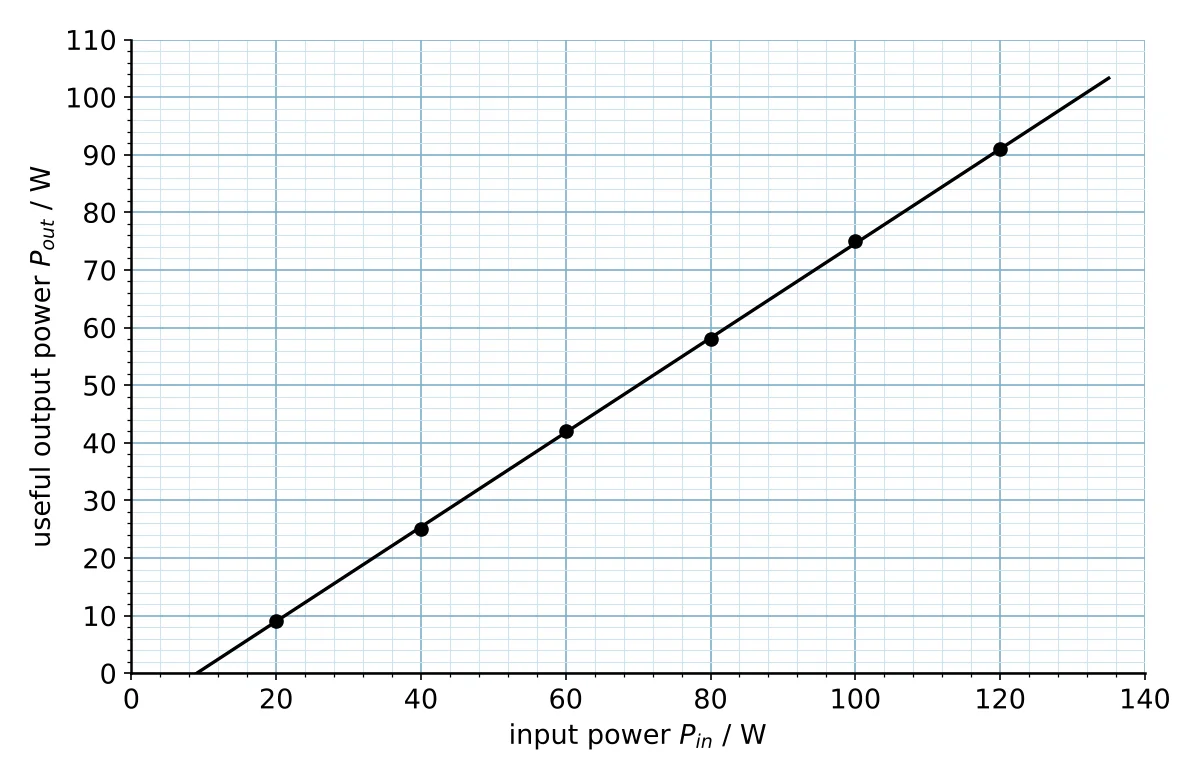
An electric motor lifts loads. A student measures the input power and the useful output power for different loads, and plots the results on the graph.
Question diagram
(a)
Use the graph to determine the efficiency of the motor when the input power is 60 W. [2]Criterion C (i), C (ii) · Level 3-4
(b)
Determine the efficiency when the input power is 120 W. [2]Criterion C (i), C (ii) · Level 3-4
(c)
The best-fit line meets the input power axis at about 9 W. Explain what this shows, and use it to explain why the efficiency changes with input power. [3]Criterion C (ii) · Level 5-6

revisionprep.com

Summary Answer

Not available for this question.

Model Answer

Not available for this question.

Marking Scheme

Not available for this question.

Examiner Insights

Not available for this question.

Question 5Criterion A + B · Band 3-8 · Challenge · 10 marksrevisionprep.com

Energy stores and transfers

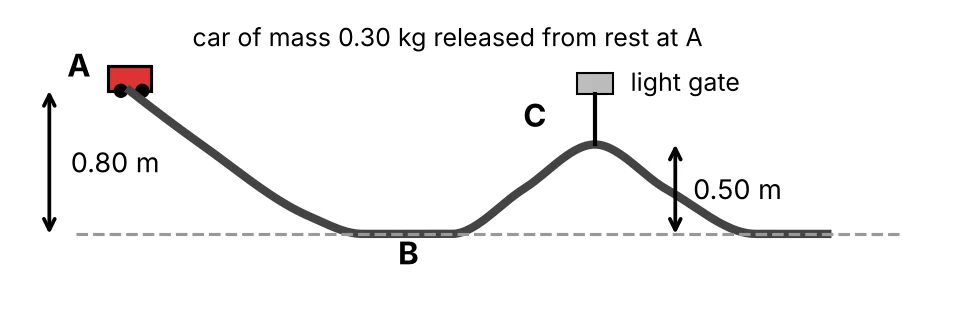
A toy car of mass 0.30 kg is released from rest at A on the track shown. Its speed is measured by a light gate at the top of the hump C and is 1.8 m s⁻¹. Use g=9.8g = 9.8 N kg⁻¹.
Question diagram
(a)
Calculate the gravitational potential energy the car loses between A and the bench level at B. [2]Criterion A (ii) · Level 3-4
(b)
Calculate the amount of energy transferred to the surroundings as the car moves from A to C. [3]Criterion A (ii) · Level 5-6
(c)
The student now wants to test whether the energy transferred to the surroundings depends on the length of track between A and C. State the independent variable, the dependent variable, one variable that must be kept the same, and how the dependent variable is found. [3]Criterion B (iii) · Level 5-6
(d)
A student claims: "A car released from rest at A would reach another hump 0.80 m high, because it starts 0.80 m above the bench." Evaluate this claim using your answer to (b), and calculate the greatest height the car could reach if no more energy were transferred to the surroundings after C. [2]Criterion A (iii) · Level 7-8

revisionprep.com

Summary Answer

Not available for this question.

Model Answer

Not available for this question.

Marking Scheme

Not available for this question.

Examiner Insights

Not available for this question.

Question 6Criterion D + A · Band 3-8 · Challenge · 10 marksrevisionprep.com

Energy Transformations and Real-Life Examples
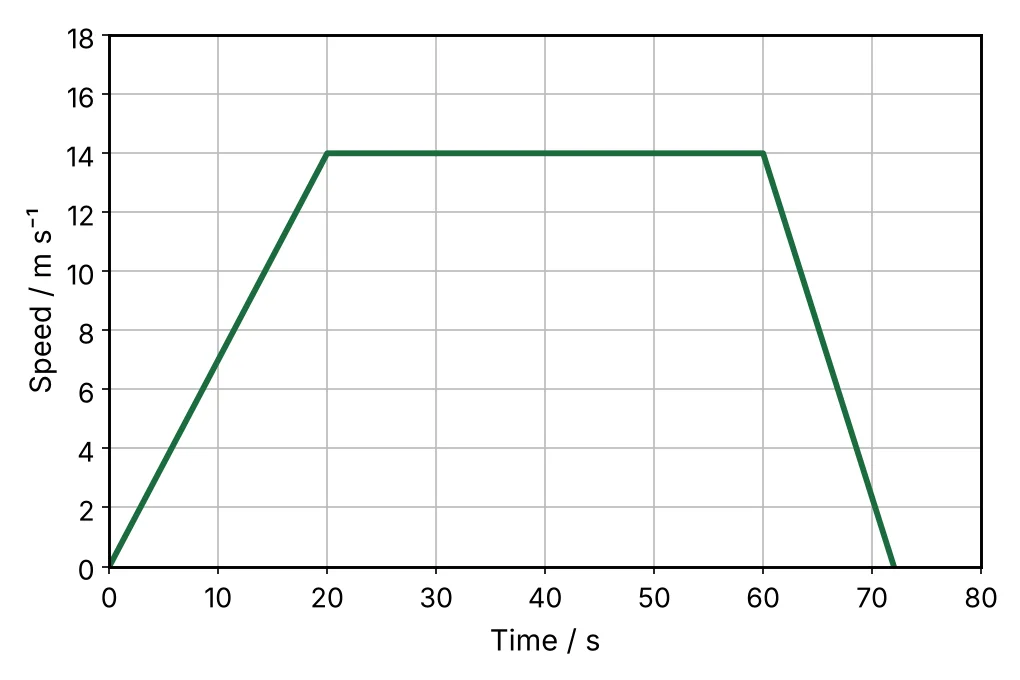
A city tram of mass 18 000 kg has regenerative braking: when it brakes, 35% of its kinetic energy is returned to the overhead supply. The graph shows one journey between two stops.
Question diagram
(a)
Use the graph to find the maximum speed of the tram, and calculate its kinetic energy at that speed. [2]Criterion A (ii) · Level 3-4
(b)
The tram makes 120 stops a day. Calculate the energy returned to the supply each day, in kWh. [2]Criterion A (ii) · Level 5-6
(c)
Electricity costs 0.14 dollars per kWh and the tram runs 300 days a year. Fitting the regenerative system to an old tram costs 12000 dollars. Calculate the money saved in one year and the payback time. [3]Criterion D (i) · Level 5-6
(d)
Each tram has a service life of 30 years. Discuss whether the city should fit the system to all its old trams. Refer to an economic implication and an environmental or social implication. [3]Criterion D (ii) · Level 7-8

revisionprep.com

Summary Answer

Not available for this question.

Model Answer

Not available for this question.

Marking Scheme

Not available for this question.

Examiner Insights

Not available for this question.

That's every free question here — 6 of 93.

+87 more questions, plus Mock Papers & Worksheets, are waiting in Premium.

Upgrade