Neural Signaling · Paper 1 — Free Biology SL Practice Questions
Free questions
Open in full, with answers, mark scheme and examiner insights.
Structure of neurons
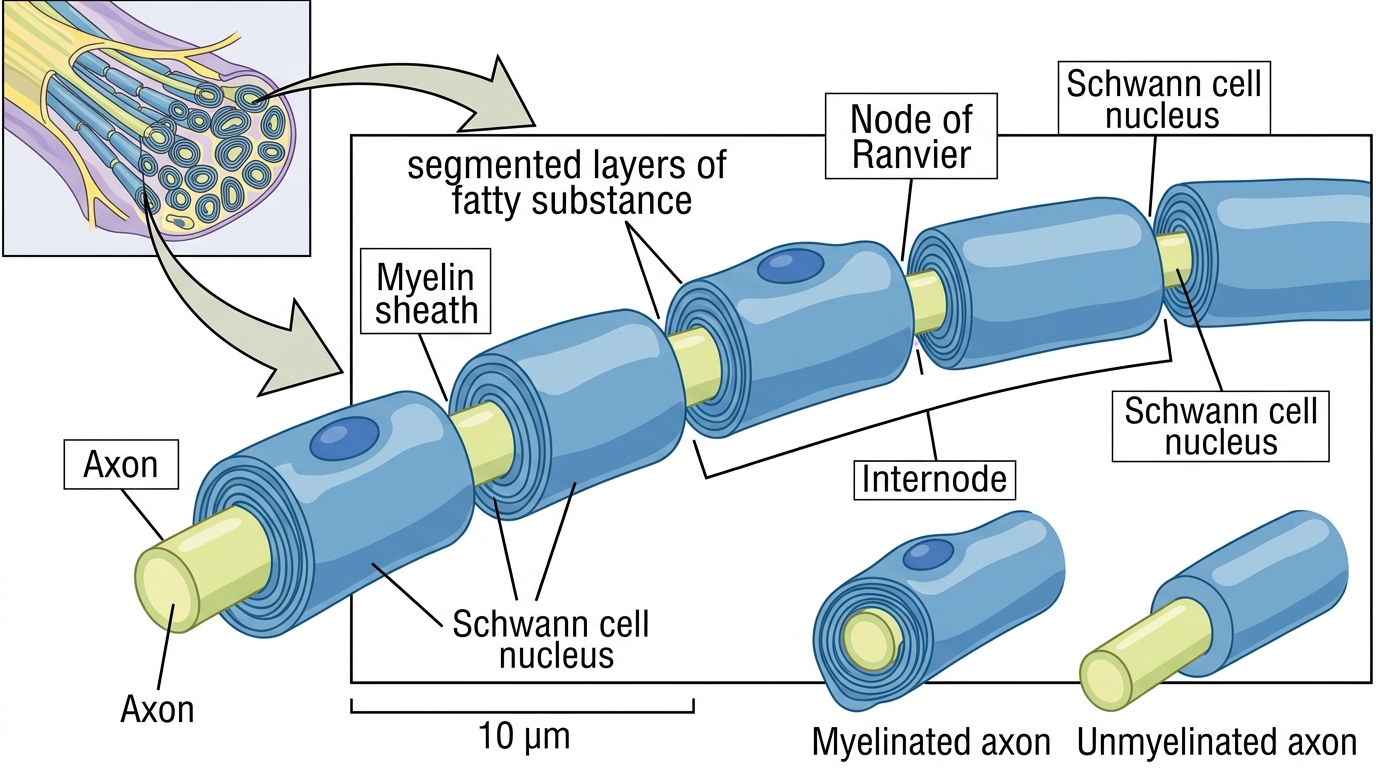
The shows a myelinated axon and an unmyelinated axon of the same diameter. Which statement correctly compares conduction in the two axons?
revisionprep.com
Summary Answer
Not available for this question.
Model Answer
Not available for this question.
Marking Scheme
Not available for this question.
Examiner Insights
Not available for this question.
Action potential and neurotransmission
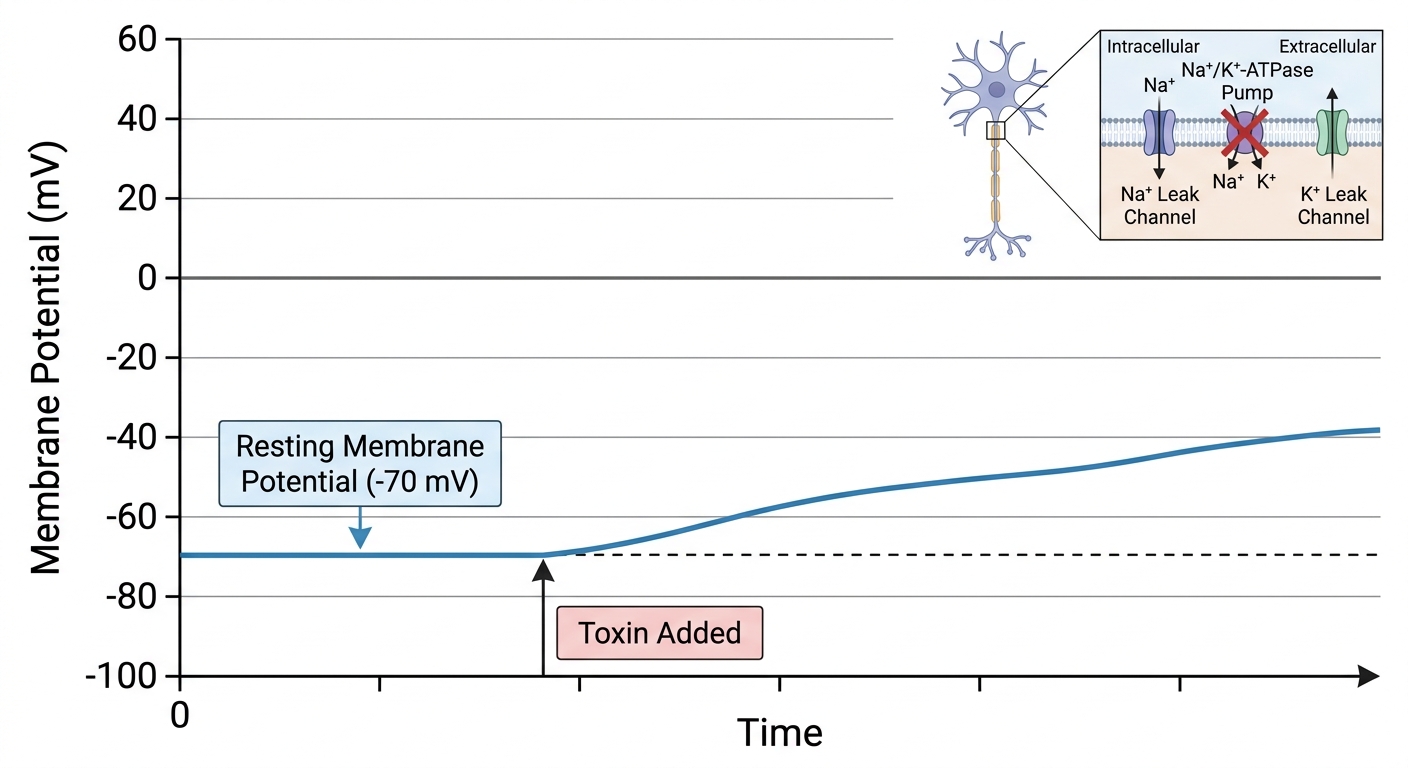
A cultured neuron is treated with a toxin that permanently blocks all Na/K ATPase pumps. Assuming leak channels remain functional, which of the following best describes the change in resting membrane potential over time?
revisionprep.com
Summary Answer
Not available for this question.
Model Answer
Not available for this question.
Marking Scheme
Not available for this question.
Examiner Insights
Not available for this question.
Structure of neurons
The graph shows conduction speed against axon diameter for myelinated and unmyelinated mammalian nerve fibres.
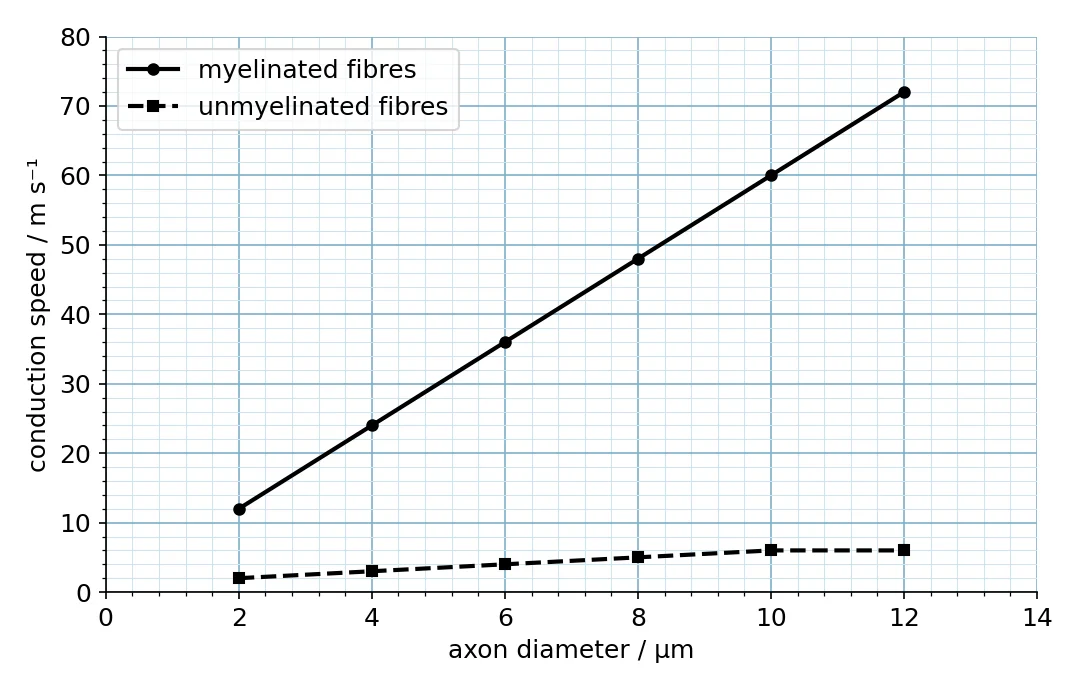
Determine the conduction speed of a myelinated fibre of diameter .
Compare the effect of axon diameter on conduction speed in the two types of fibre.
Calculate how many times faster a myelinated fibre conducts than an unmyelinated fibre, both of diameter .
For the myelinated fibres ; for the unmyelinated fibres . Explain what these values show.
revisionprep.com
Summary Answer
Not available for this question.
Model Answer
Not available for this question.
Marking Scheme
Not available for this question.
Examiner Insights
Not available for this question.
Action potential and neurotransmission
A neuron kept at was cooled to at 10 minutes and rewarmed to at 40 minutes. The graph shows its resting potential.
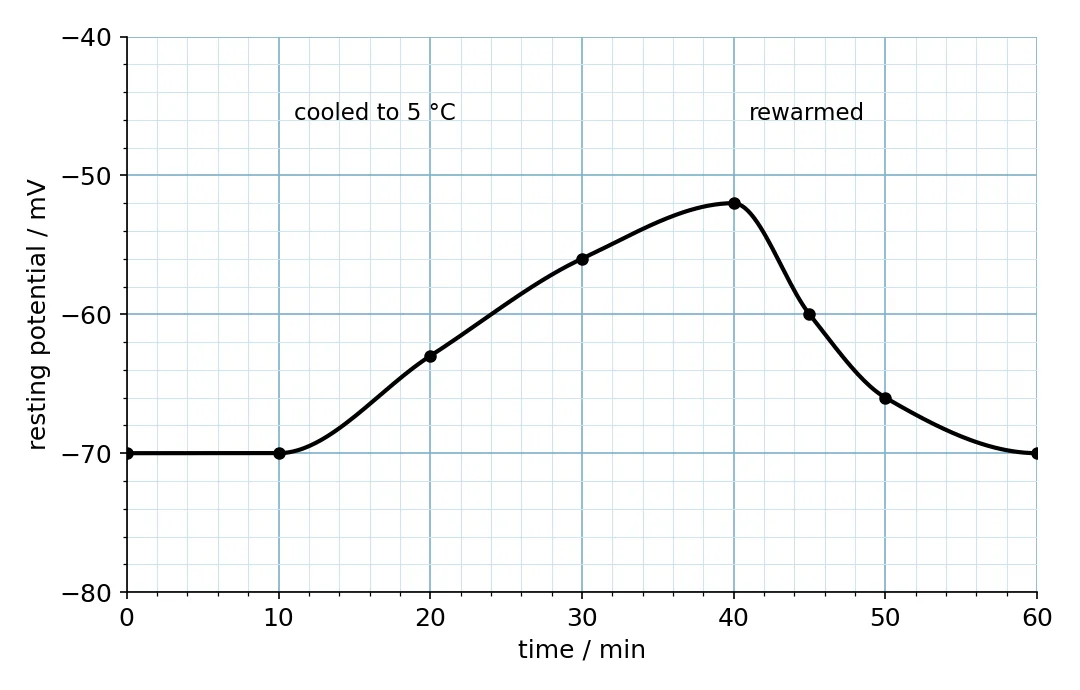
State the resting potential before cooling.
Describe the change in resting potential while the neuron was cold.
Explain this change in terms of the sodium–potassium pump.
Suggest why the resting potential returned to its original value after rewarming.
State two variables, other than time, that should be kept constant in this investigation.
revisionprep.com
Summary Answer
Not available for this question.
Model Answer
Not available for this question.
Marking Scheme
Not available for this question.
Examiner Insights
Not available for this question.
Structure of neurons
The figure compares motor neurons from a healthy individual (control) and from a patient with a demyelinating disorder. Both have an axon diameter of . The control myelin is thick and conducts at ; the patient's myelin is thick and conducts at .
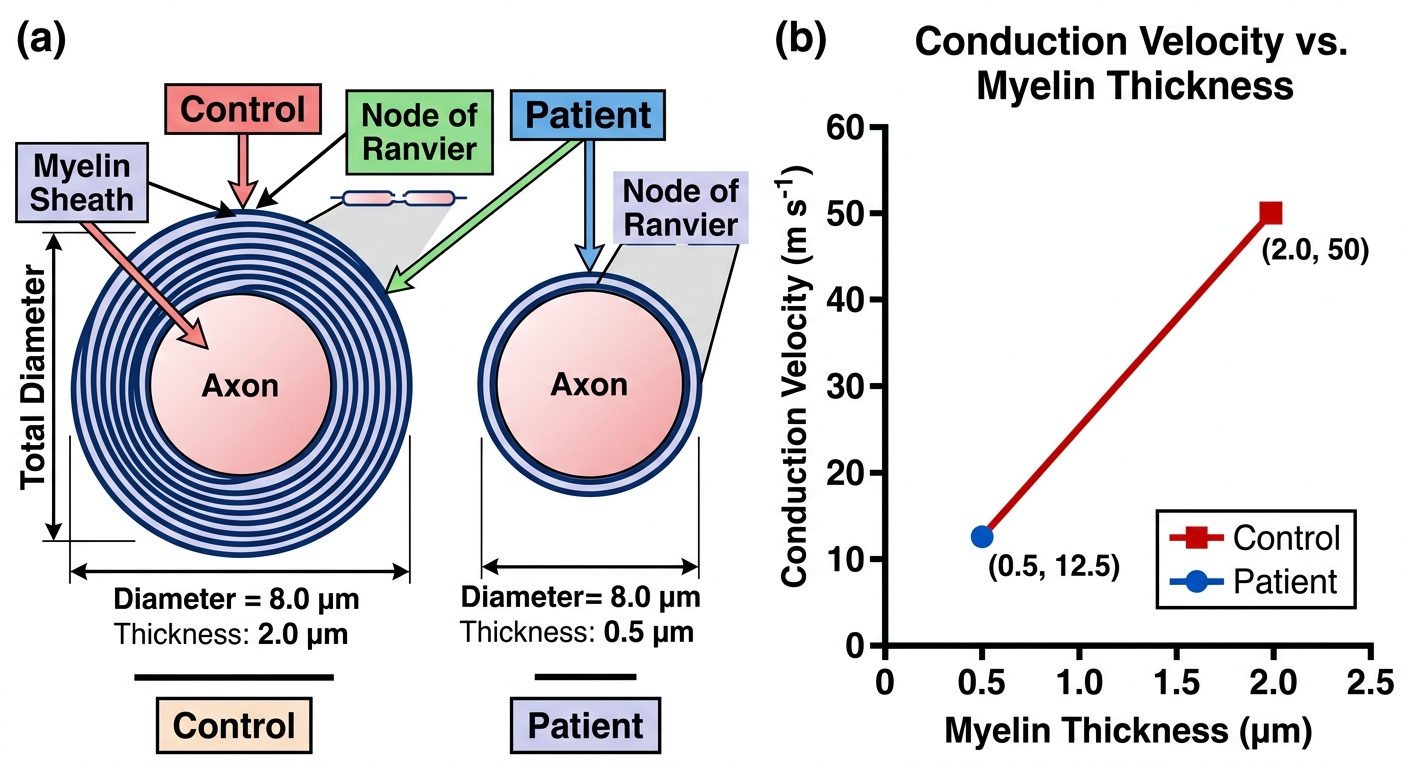
Calculate the percentage decrease in conduction velocity in the patient.
Explain how the thinner myelin sheath leads to the lower conduction velocity.
A student proposes that conduction velocity is directly proportional to total fibre diameter (axon diameter myelin thickness). Evaluate this proposal using the data.
State why data from only one control and one patient cannot show a general relationship between myelin thickness and conduction velocity.
revisionprep.com
Summary Answer
Not available for this question.
Model Answer
Not available for this question.
Marking Scheme
Not available for this question.
Examiner Insights
Not available for this question.
Synaptic transmission
A researcher investigates the effect of calcium ion concentration on synaptic transmission at neuromuscular junctions in Drosophila melanogaster. The presynaptic neuron is stimulated and the amplitude of the postsynaptic potential (PSP) in the muscle fibre is recorded. The table shows the results.
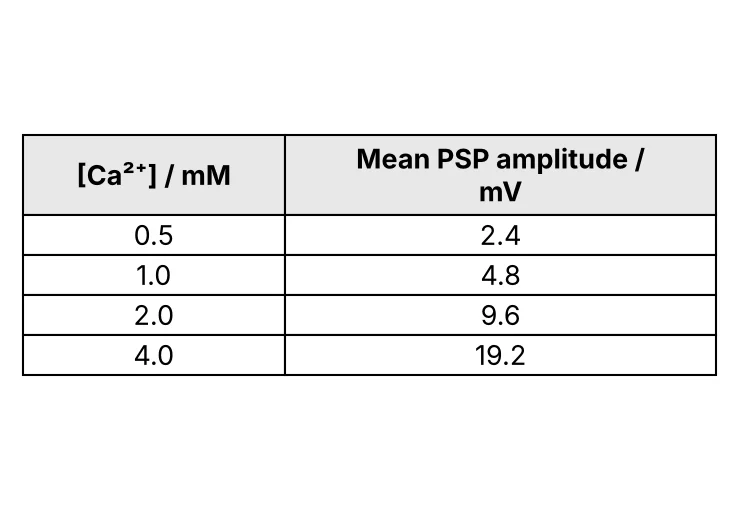
Describe the role of calcium ions in synaptic transmission.
Calculate the percentage increase in PSP amplitude when is increased from to .
Evaluate the hypothesis that PSP amplitude is directly proportional to , using the data provided. State one limitation of this conclusion.
Predict the mean PSP amplitude at a Ca²⁺ concentration of 3.0 mM, assuming the relationship shown continues.
State one change to the method that would show how reliable each mean value is.
Suggest why the researcher kept the temperature of the preparation constant.
revisionprep.com
Summary Answer
Not available for this question.
Model Answer
Not available for this question.
Marking Scheme
Not available for this question.
Examiner Insights
Not available for this question.
That's every free question here — 6 of 110.
+104 more questions, plus Mock Papers & Worksheets, are waiting in Premium.