You're viewing 3 free preview questions for Biology SL — subscribe to unlock 61 more, plus the Full Question Bank, Mock Papers & Worksheets.Upgrade
Cell Respiration · Paper 2 — Free Biology SL Practice Questions
1MasterySAQ-SGlycolysis, Krebs cycle, and oxidative phosphorylation5 marksPaper 2~8 min

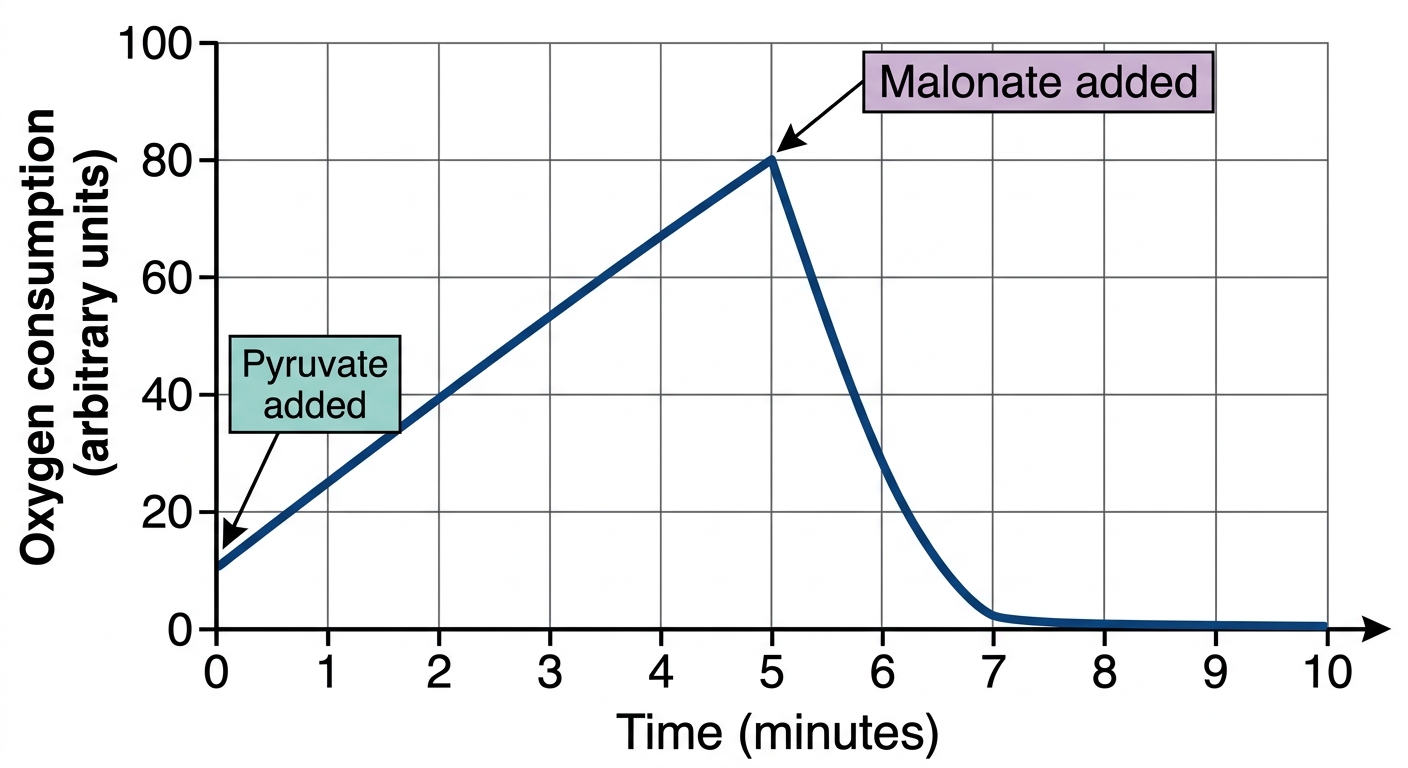
The graph below shows the rate of oxygen consumption by isolated mitochondria when different substrates are added to the medium.
(a)
State the role of the Krebs cycle in supplying substrates for oxidative phosphorylation. [1 mark]
(b)
Explain why the addition of malonate causes a decrease in oxygen consumption. [2 marks]
(c)
Malonate is a competitive inhibitor of succinate dehydrogenase. Predict and explain what would happen to the rate of oxygen consumption if a large excess of succinate were added to the medium at minutes. [2 marks]

Solutions
2MasterySAQ-SRole of mitochondria in energy production5 marksPaper 2~8 min
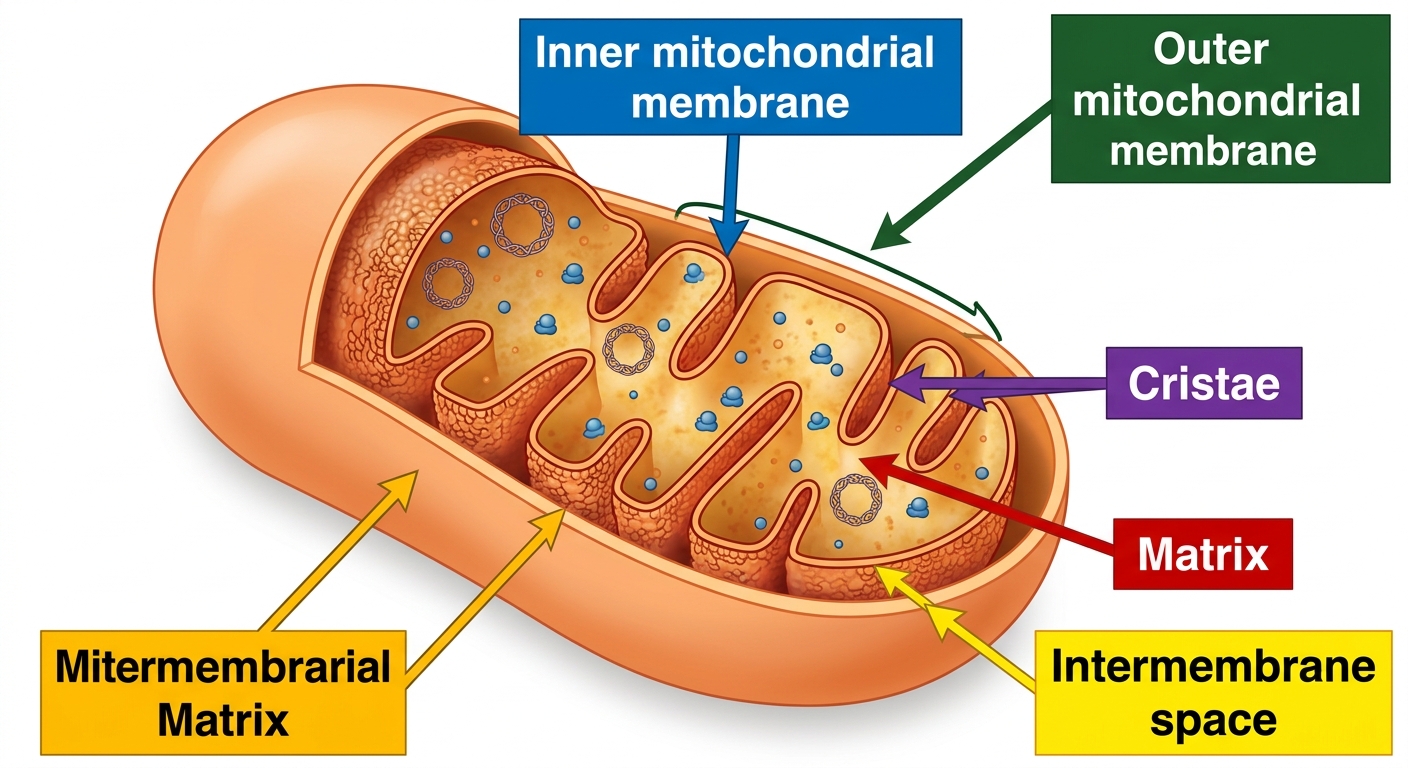
A of a mitochondrion is shown below.
(a)
State the location of the electron transport chain within the mitochondrion. [1 mark]
(b)
Using the ATP yields below, calculate the percentage of total ATP produced per molecule of glucose that is generated by oxidative phosphorylation. Show your working.
Stage — ATP yield
Glycolysis —
Link reaction —
Krebs cycle —
Oxidative phosphorylation — [2 marks]
(c)
Explain how the structure of the inner mitochondrial membrane contributes to the high ATP yield from oxidative phosphorylation. [2 marks]
Solutions
3ChallengeSAQ-LRole of mitochondria in energy production7 marksPaper 2~11 min
Data
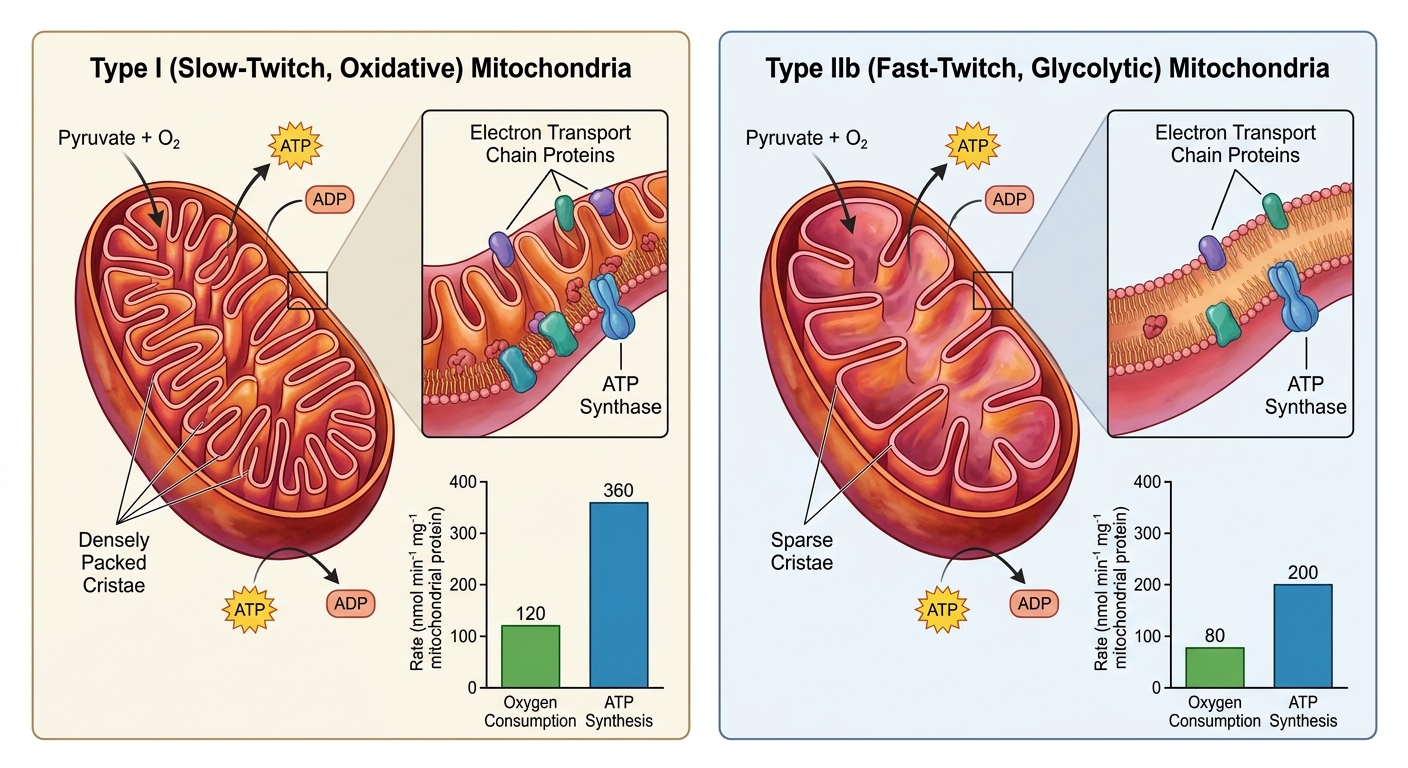
- Type I mitochondria: oxygen consumption mitochondrial protein; ATP synthesis mitochondrial protein.
- Type IIb mitochondria: oxygen consumption mitochondrial protein; ATP synthesis mitochondrial protein.
- The theoretical maximum P/O ratio (ATP molecules produced per oxygen atom consumed) for complete oxidation of pyruvate via the electron transport chain is approximately .
In a study of metabolic adaptation, scientists compare the efficiency of ATP production in two types of human muscle cells: slow-twitch (Type I, oxidative) and fast-twitch (Type IIb, glycolytic). They isolate mitochondria from both cell types and measure oxygen consumption and ATP synthesis under identical conditions (excess pyruvate, ADP, and oxygen).
(a)
Calculate the actual P/O ratio for each mitochondrial type. [2 marks]
(b)
Both P/O ratios are below theoretical maximum of . Suggest one reason for this discrepancy. [1 mark]
(c)
Explain how differences in cristae density between Type I and Type IIb mitochondria could account for the observed differences in oxygen consumption and ATP synthesis rates. [2 marks]
(d)
Evaluate the claim that "Type IIb muscle cells rely primarily on glycolysis for ATP production, making their mitochondria less efficient." In your answer, use the calculated P/O ratios and identify one limitation of the experimental evidence in assessing this claim. [2 marks]
Solutions
That's every free question here — 3 of 64.
+61 more questions, plus Mock Papers & Worksheets, are waiting in Premium.