You're viewing 4 free preview questions for Chemistry HL — subscribe to unlock 113 more, plus the Full Question Bank, Mock Papers & Worksheets.Upgrade
Energy Cycles in Reactions · Paper 1 — Free Chemistry HL Practice Questions

1FoundationMCQThermochemistry and enthalpy diagrams1 markPaper 1~2 min
A student mixes of hydrochloric acid with of sodium hydroxide solution in a polystyrene cup. Both solutions have an initial temperature of , and the maximum temperature recorded after mixing is . The specific heat capacity of the solution is and its density is . What is the molar enthalpy change of neutralisation, in ?
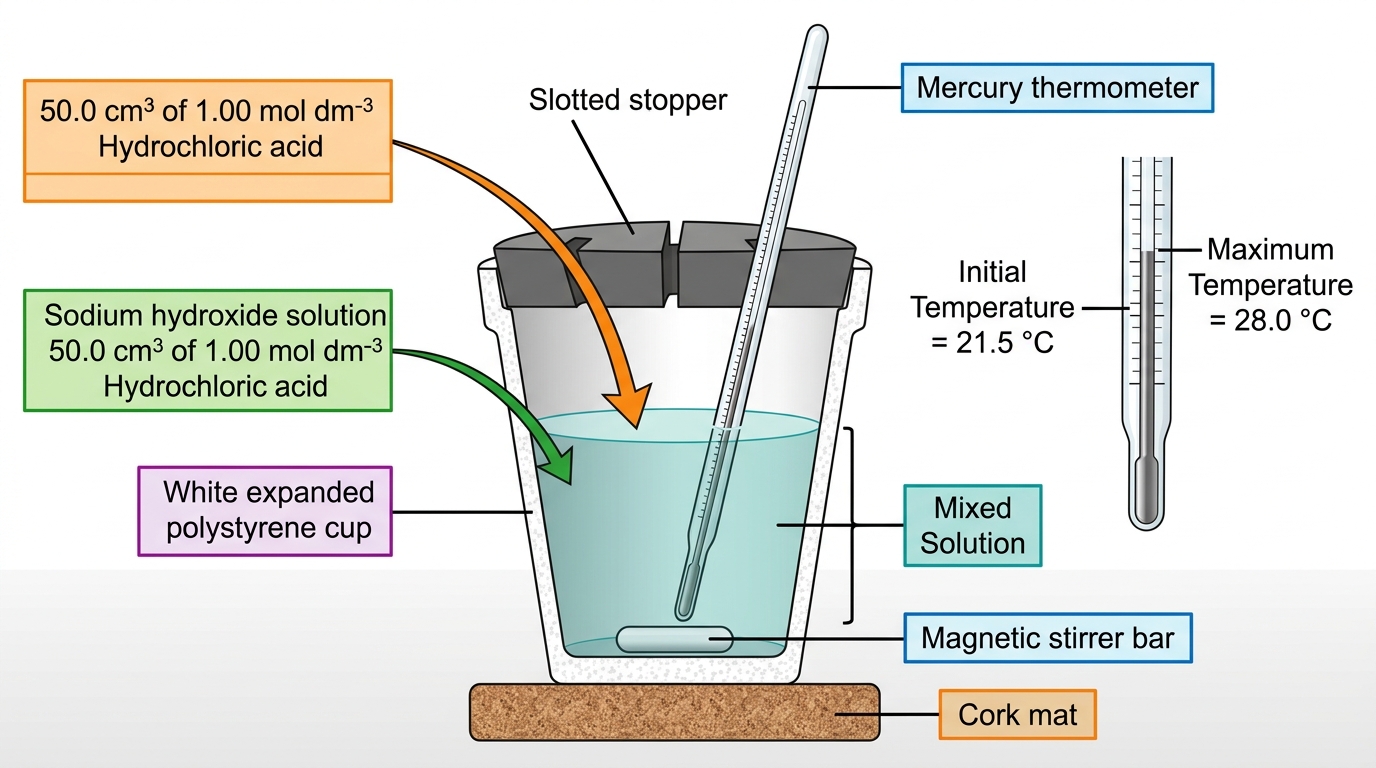

Solutions
2FoundationMCQThermochemistry and enthalpy diagrams1 markPaper 1~2 min
The standard enthalpy of combustion of hydrogen is . An enthalpy profile is drawn for the reaction , with the reactants set at the reference level of . Which statement correctly describes this reaction and its enthalpy profile?
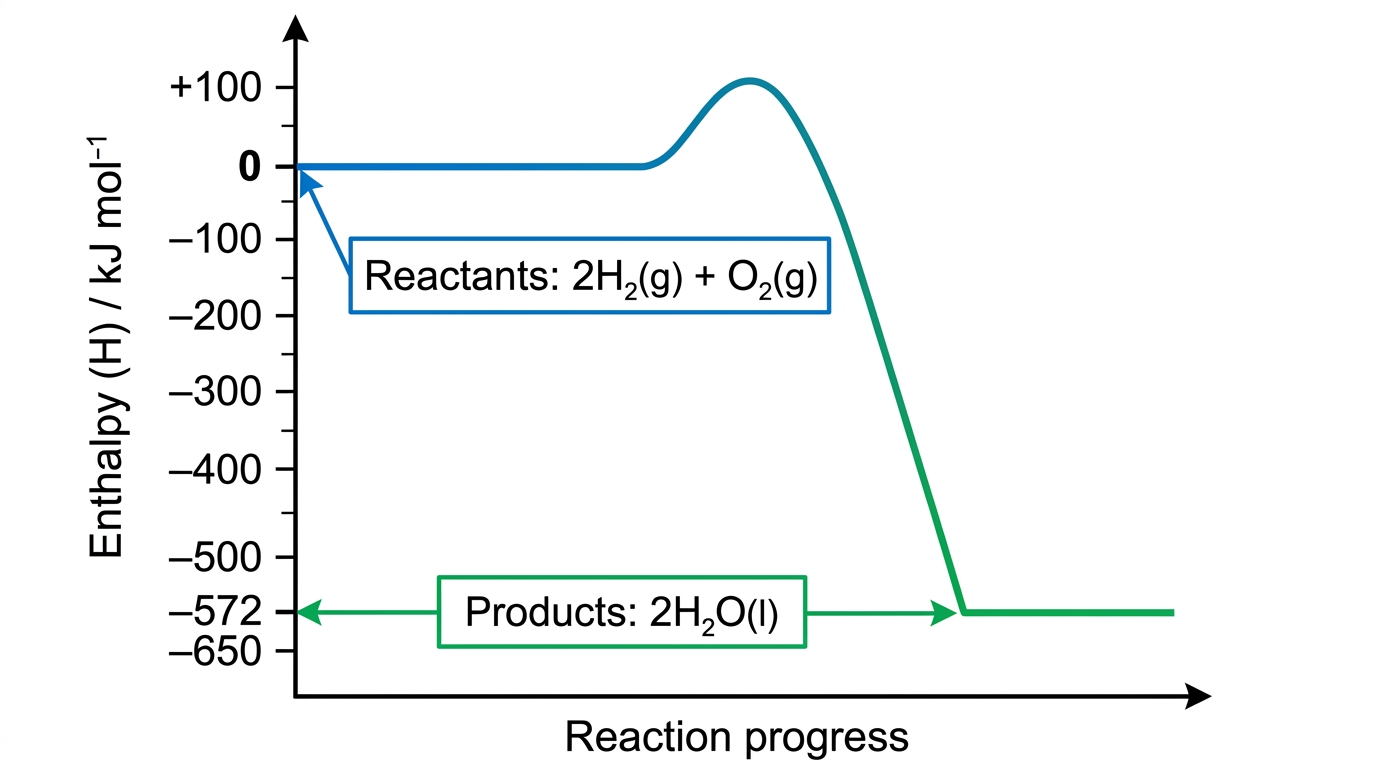
Solutions
3FoundationMCQThermochemistry and enthalpy diagrams1 markPaper 1~2 min
The Haber process reaction is carried out in a thermally insulated (adiabatic) reactor. Which observation would best provide experimental evidence that the forward reaction is exothermic?
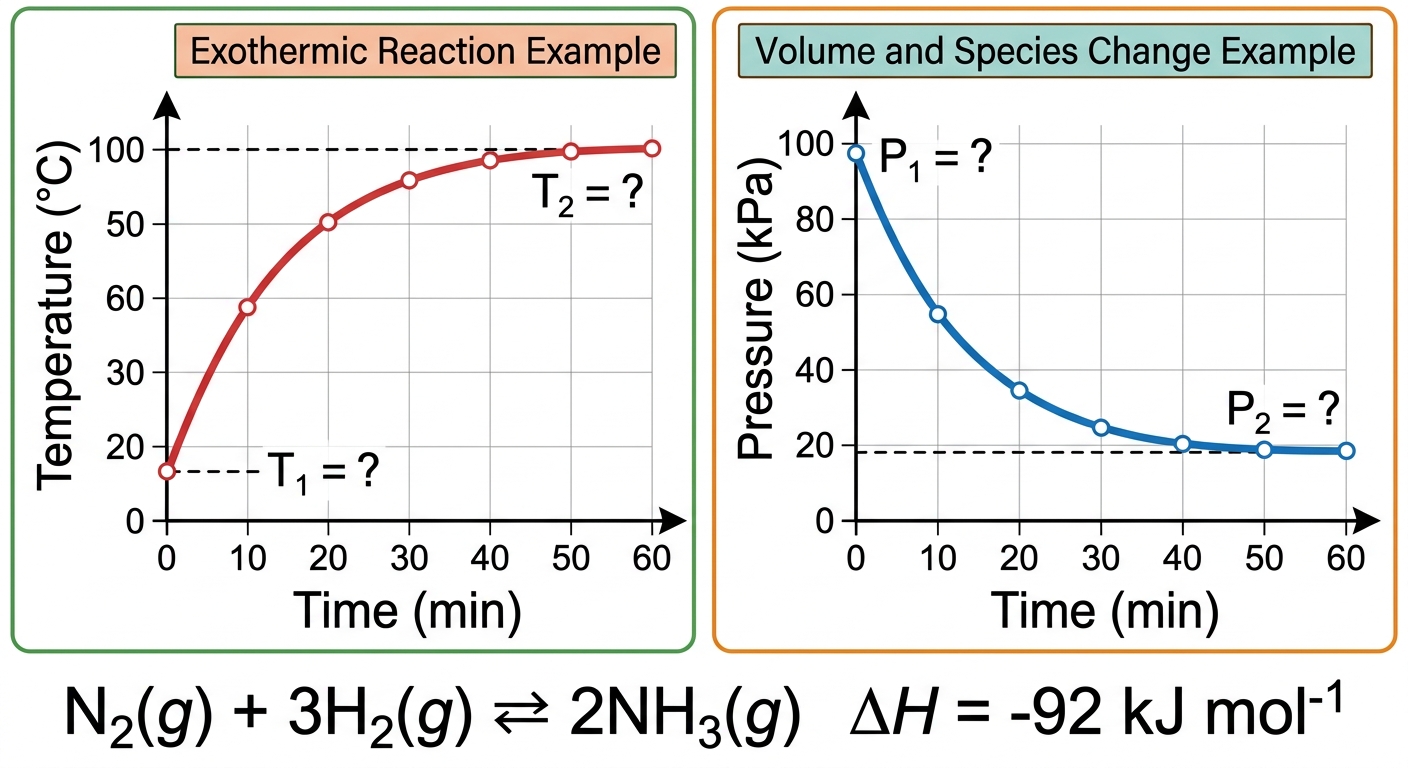
Solutions
4MasteryMCQThermochemistry and enthalpy diagrams1 markPaper 1~2 min
A student mixes of hydrochloric acid with of sodium hydroxide in a polystyrene cup of heat capacity . The temperature rises by . Using with and solution density , but neglecting the heat absorbed by the cup, what is the error in the student's calculated enthalpy change per mole of water formed?
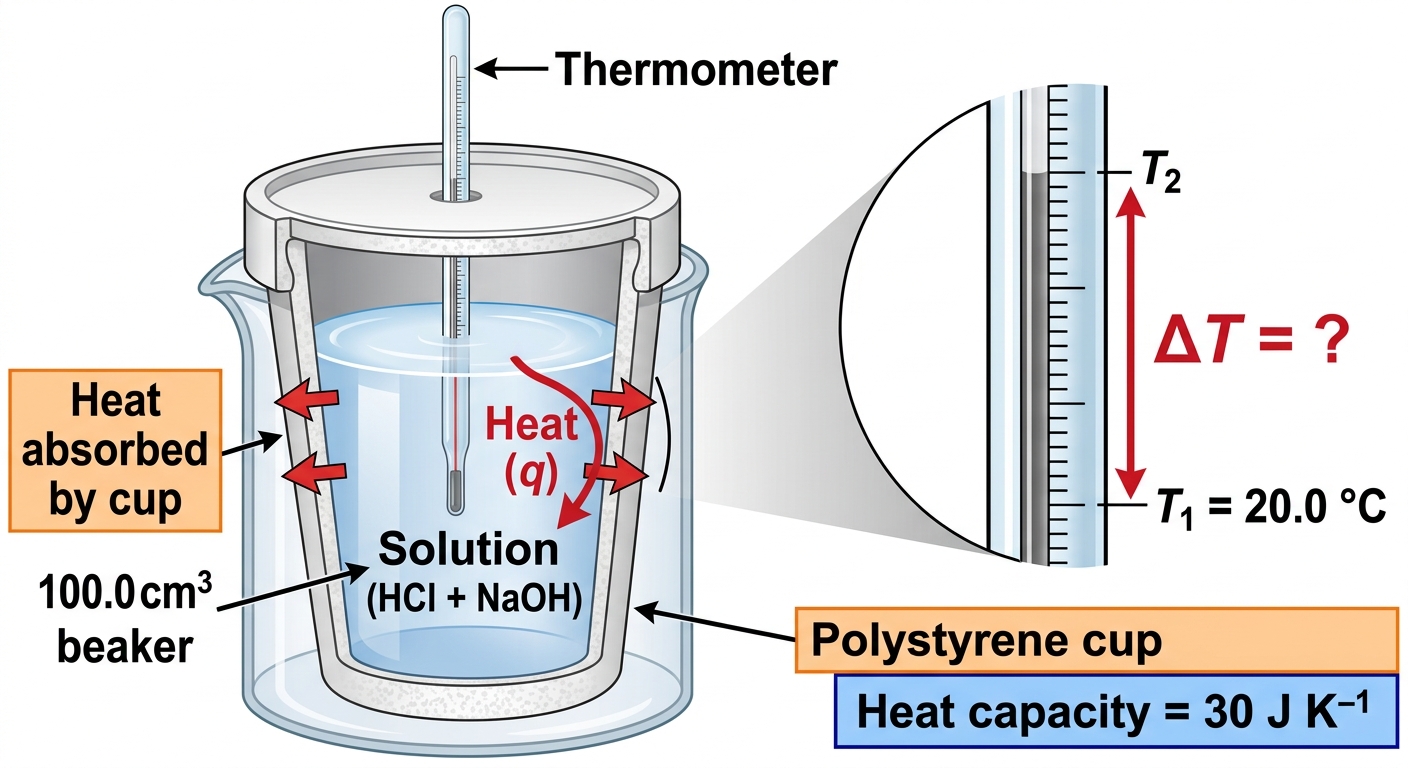
Solutions
That's every free question here — 4 of 117.
+113 more questions, plus Mock Papers & Worksheets, are waiting in Premium.