You're viewing 4 free preview questions for Chemistry HL — subscribe to unlock 92 more, plus the Full Question Bank, Mock Papers & Worksheets.Upgrade
Entropy and Spontaneity (Additional Higher Level) · Paper 1 — Free Chemistry HL Practice Questions

1FoundationMCQSpontaneous vs non-spontaneous processes1 markPaper 1~2 min
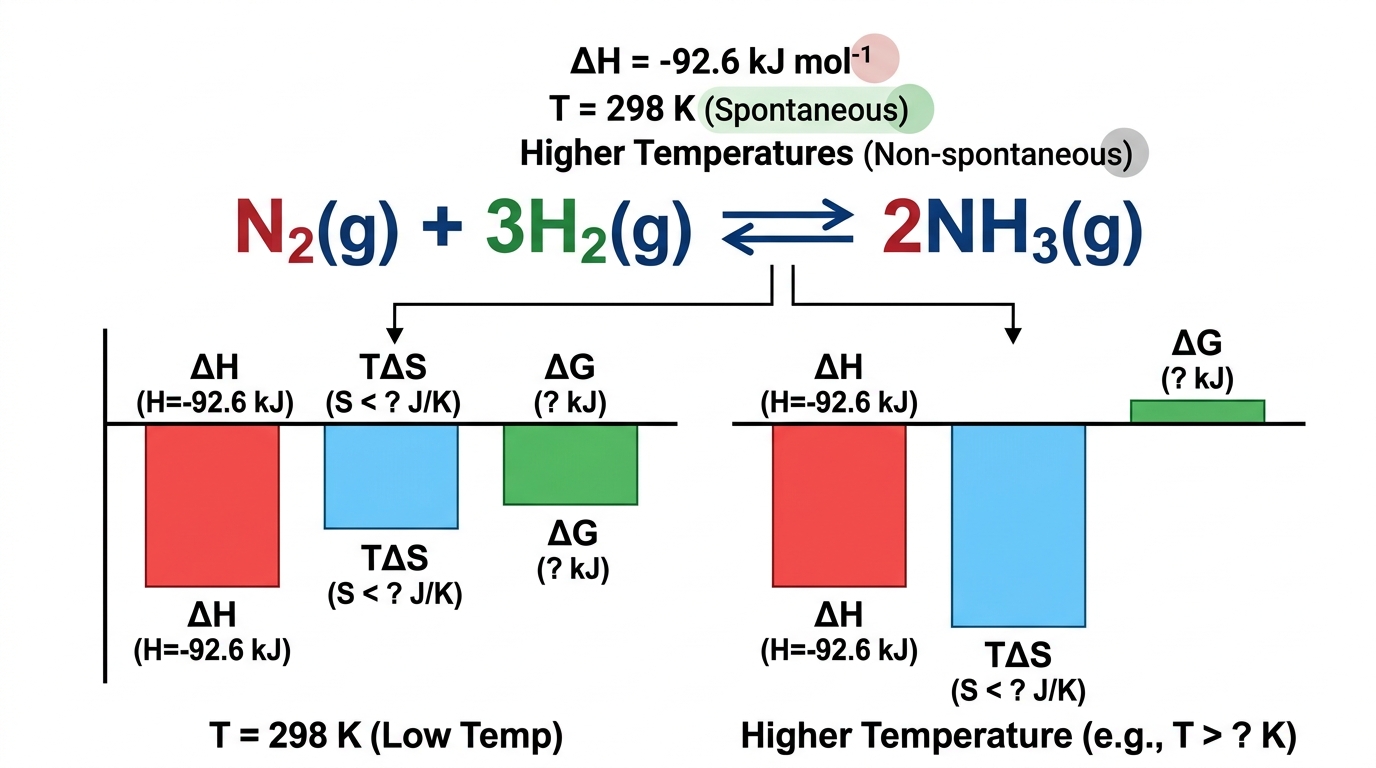
For the Haber process, , . The reaction is spontaneous at 298 K but becomes non-spontaneous at sufficiently high temperatures. Which statement correctly accounts for this behaviour?

Solutions
2FoundationMCQSpontaneous vs non-spontaneous processes1 markPaper 1~2 min
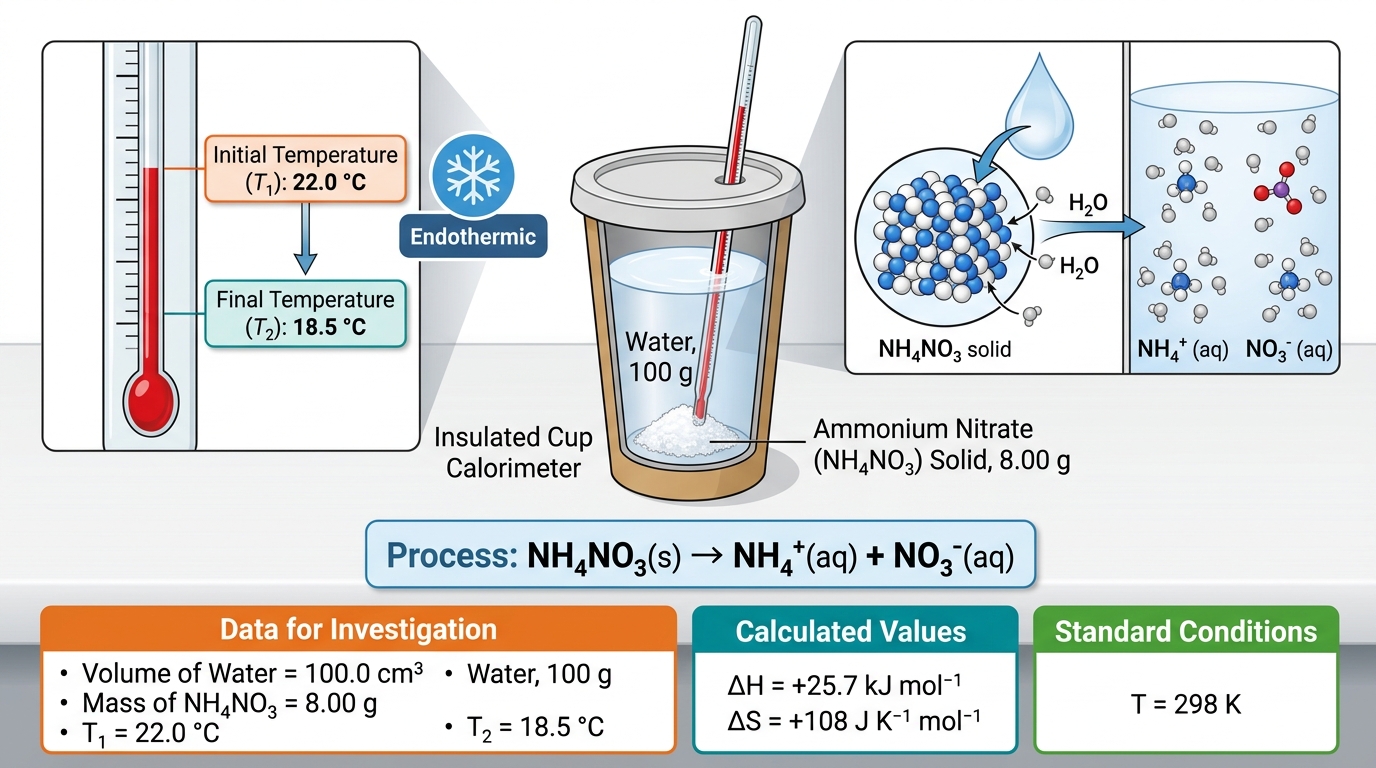
At 298 K, ammonium nitrate dissolves endothermically in water: , with and . Which statement about the spontaneity of this process at 298 K is correct?
Solutions
3FoundationMCQSpontaneous vs non-spontaneous processes1 markPaper 1~2 min
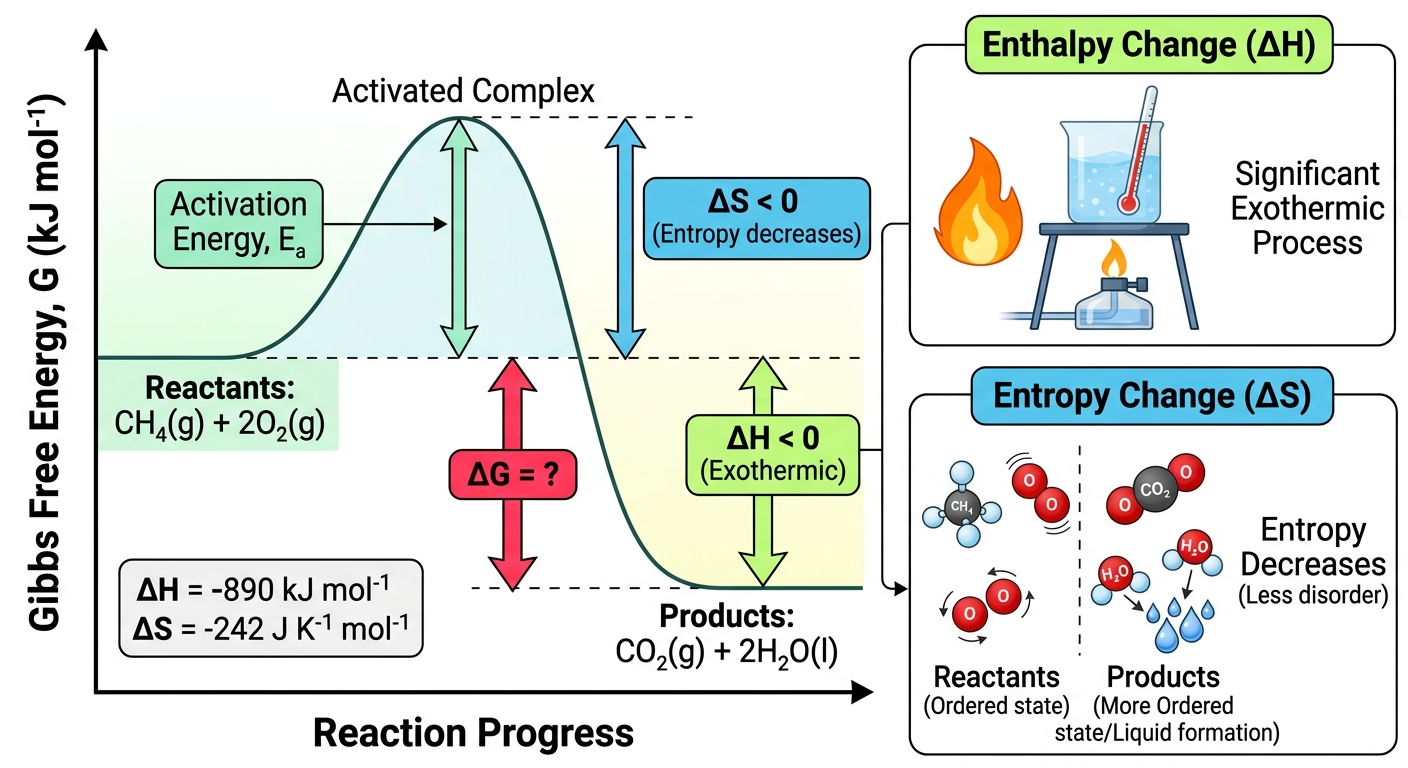
At 298 K, the combustion of methane has and . What is the value of at this temperature, and what does it indicate about spontaneity?
Solutions
4MasteryMCQEntropy and the second law of thermodynamics1 markPaper 1~2 min
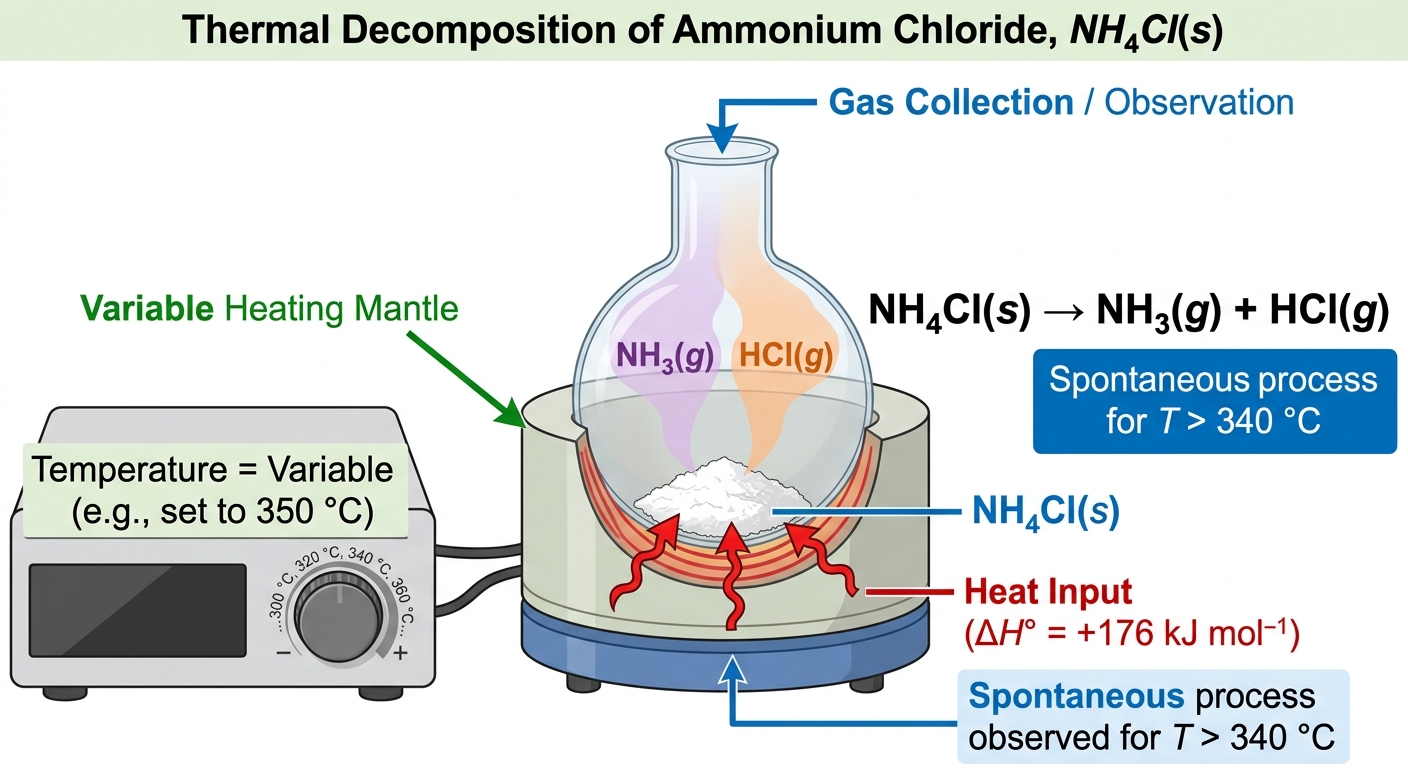
The thermal decomposition of ammonium chloride is represented by the equation:
The reaction is non-spontaneous below approximately 340 °C but becomes spontaneous above this temperature. Which statement correctly explains this behaviour in terms of entropy changes?
Solutions
That's every free question here — 4 of 96.
+92 more questions, plus Mock Papers & Worksheets, are waiting in Premium.