You're viewing 4 free preview questions for Chemistry HL — subscribe to unlock 113 more, plus the Full Question Bank, Mock Papers & Worksheets.Upgrade
Measuring Enthalpy Change · Paper 1 — Free Chemistry HL Practice Questions

1FoundationMCQExothermic vs endothermic reactions1 markPaper 1~2 min
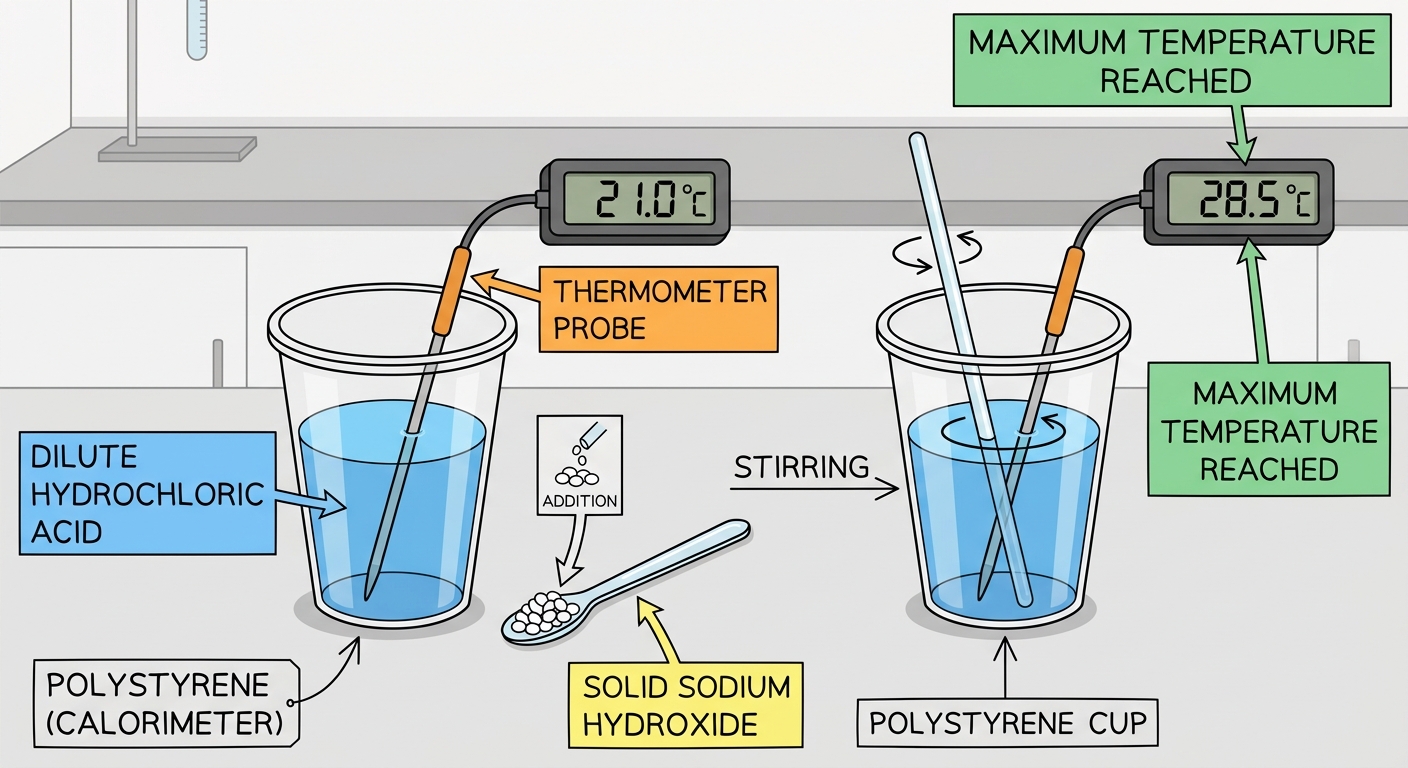
A student reacts solid sodium hydroxide with dilute hydrochloric acid and records the temperature of the mixture rising from to . However, the student notes that dissolving solid NaOH in water is itself exothermic. Which statement correctly identifies the overall thermal observation and its thermochemical interpretation for the neutralisation experiment?

Solutions
2FoundationMCQExothermic vs endothermic reactions1 markPaper 1~2 min
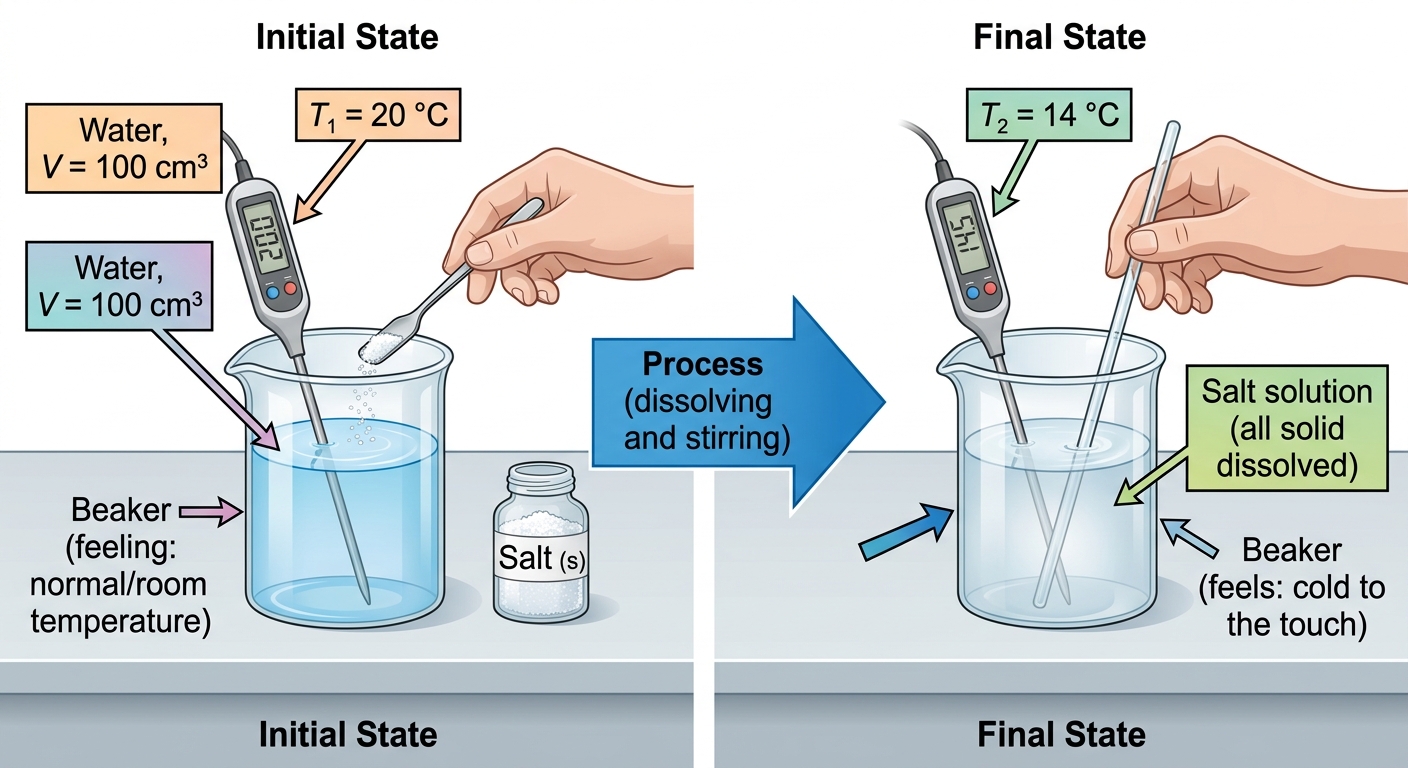
A student dissolves a solid salt in water at . After stirring, the solution temperature falls to . Which statement correctly describes thermochemistry of the dissolving process?
Solutions
3FoundationMCQExothermic vs endothermic reactions1 markPaper 1~2 min
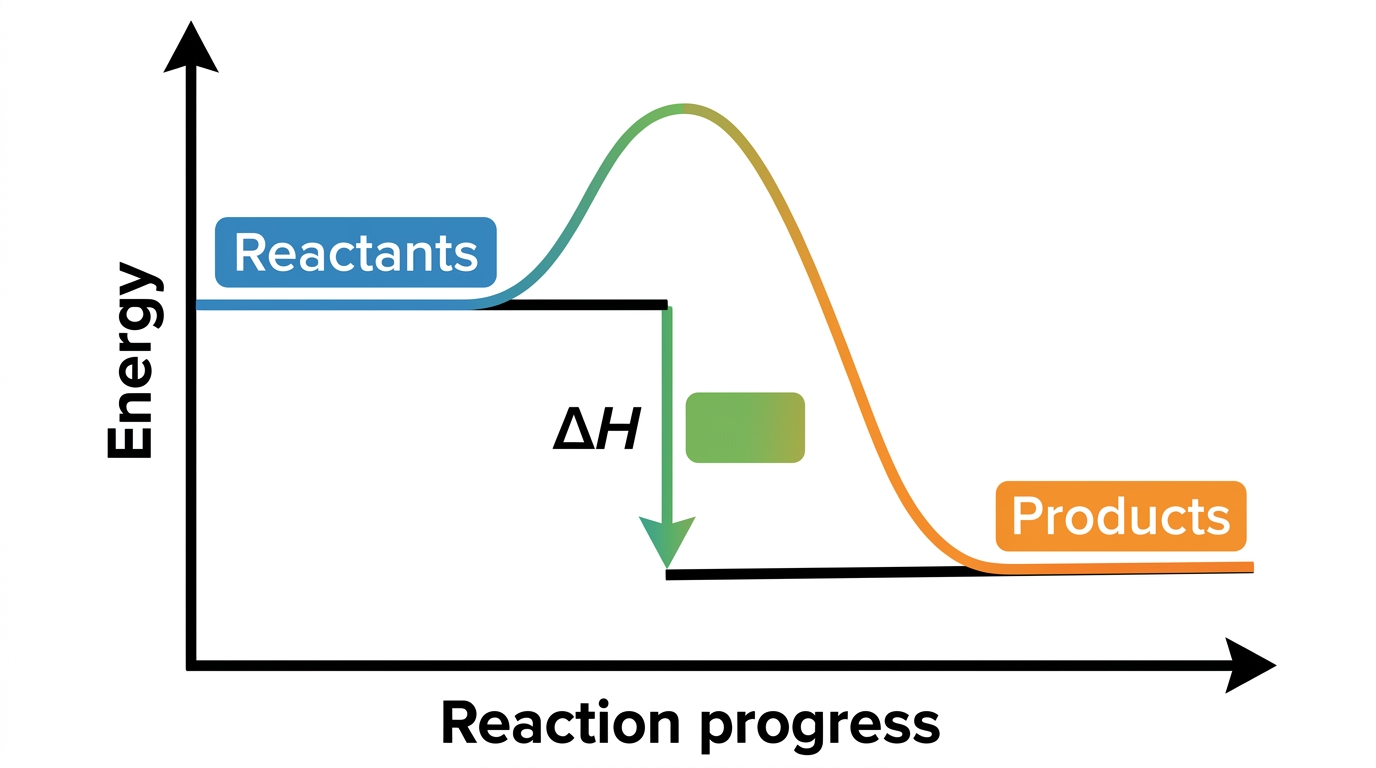
An energy profile for a reaction shows the reactants at a higher energy level than the products, with the arrow representing pointing downward from reactants to products. Which statement correctly describes this reaction?
Solutions
4MasteryMCQEnthalpy of reaction, heat capacity, and calorimetry1 markPaper 1~2 min
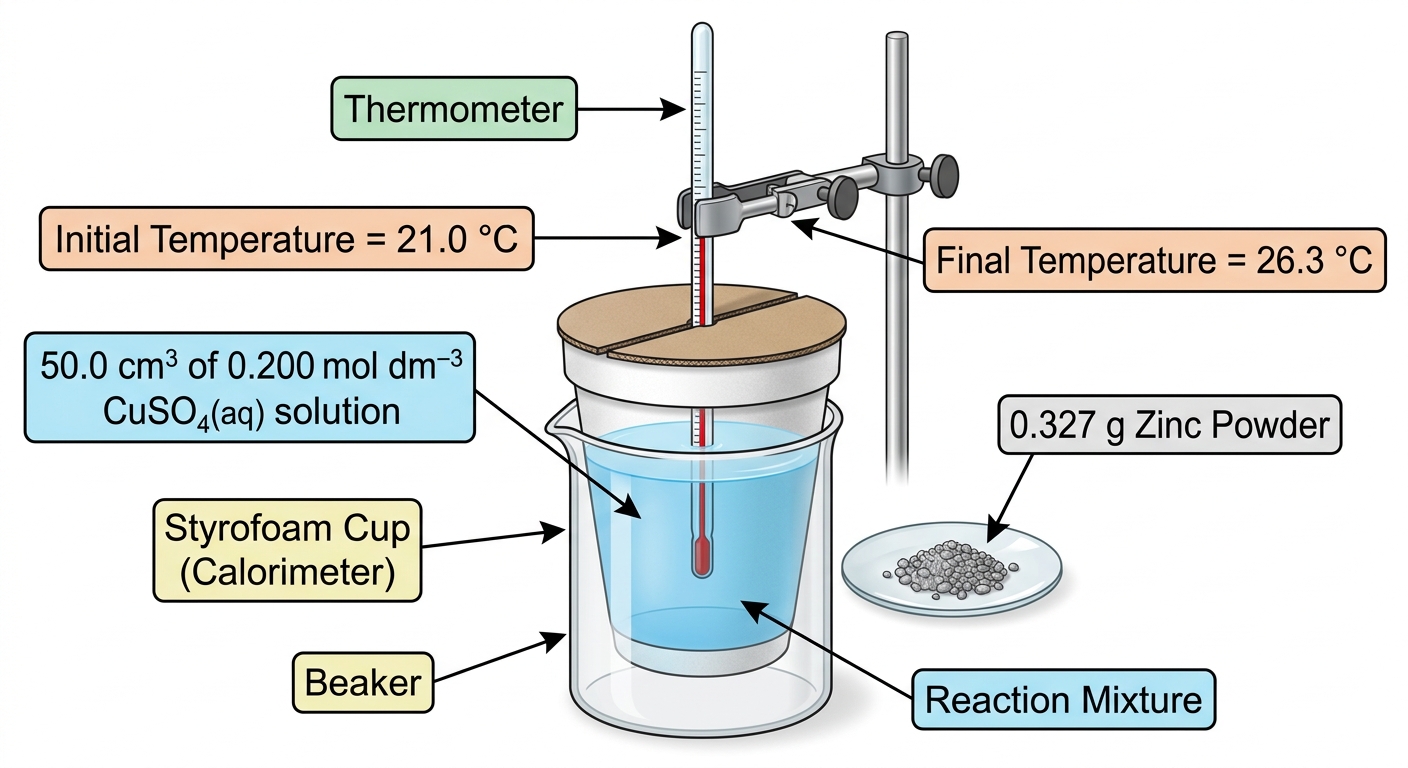
A student adds of zinc powder () to of copper(II) sulfate solution in a calorimetry experiment. The initial temperature is and the final temperature is . The specific heat capacity and density of the solution are and respectively. What is the enthalpy change, in , for the reaction below?
Solutions
That's every free question here — 4 of 117.
+113 more questions, plus Mock Papers & Worksheets, are waiting in Premium.