You're viewing 1 free preview question for Chemistry HL — subscribe to unlock 112 more, plus the Full Question Bank, Mock Papers & Worksheets.Upgrade
Energy from Fuels · Paper 2 — Free Chemistry HL Practice Questions
1ChallengeSAQ-LCombustion reactions and energy release7 marksPaper 2~11 min

Data
Methane () is a common fuel used in domestic heating. The complete combustion of methane is represented by:
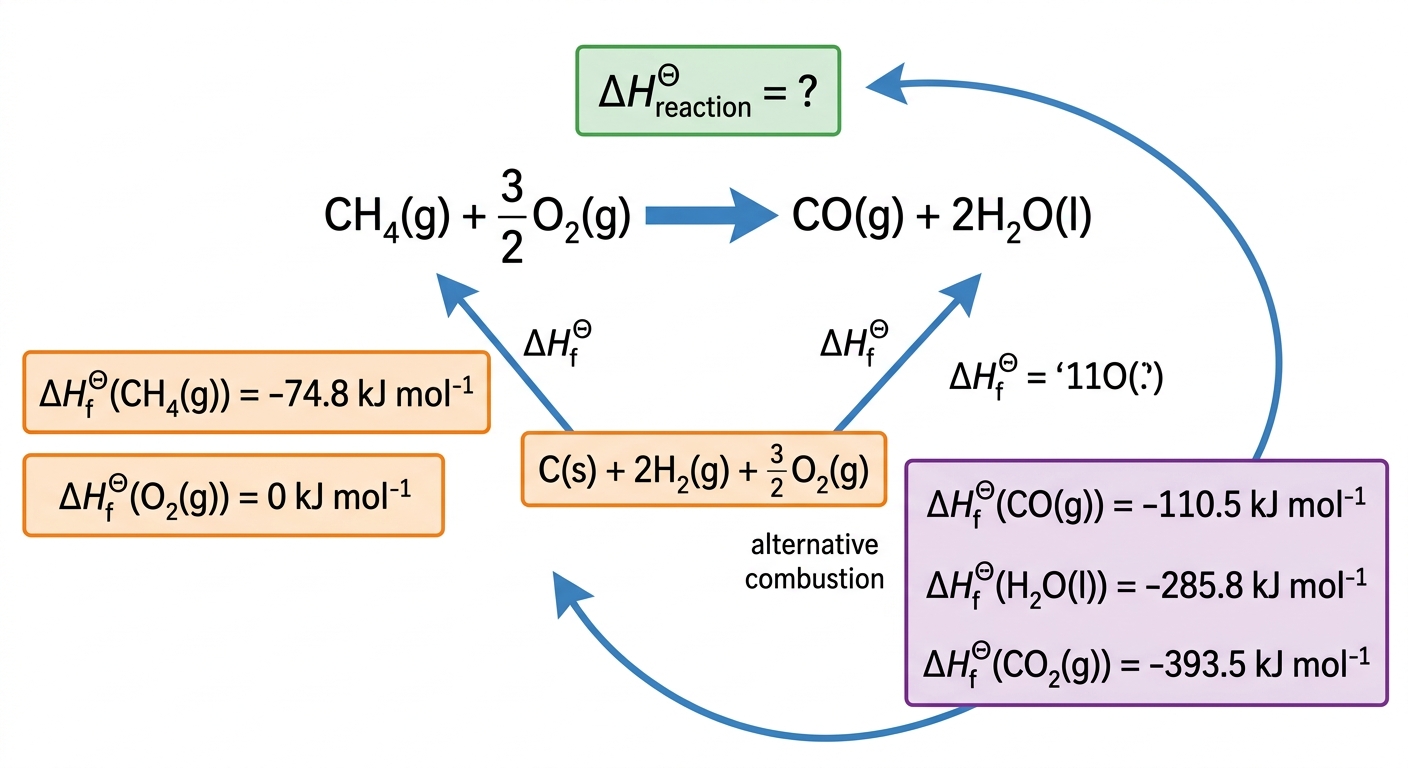
In poorly ventilated gas heaters, incomplete combustion occurs, producing carbon monoxide:
(a)
Calculate the enthalpy change, in , for the incomplete combustion of methane using the standard enthalpies of formation below. [3 marks]
(b)
Explain, in terms of bond breaking and bond forming, why incomplete combustion of methane releases less energy per mole than complete combustion. [2 marks]
(c)
A household uses a gas heater in a poorly ventilated room. Evaluate whether the reduced energy output and the nature of the combustion products make incomplete combustion more hazardous than simply being less efficient. [2 marks]

Solutions
That's every free question here — 1 of 113.
+112 more questions, plus Mock Papers & Worksheets, are waiting in Premium.