Energy Cycles in Reactions · Paper 1 — Free Chemistry SL Practice Questions
Free questions
Open in full, with answers, mark scheme and examiner insights.
Thermochemistry and enthalpy diagrams
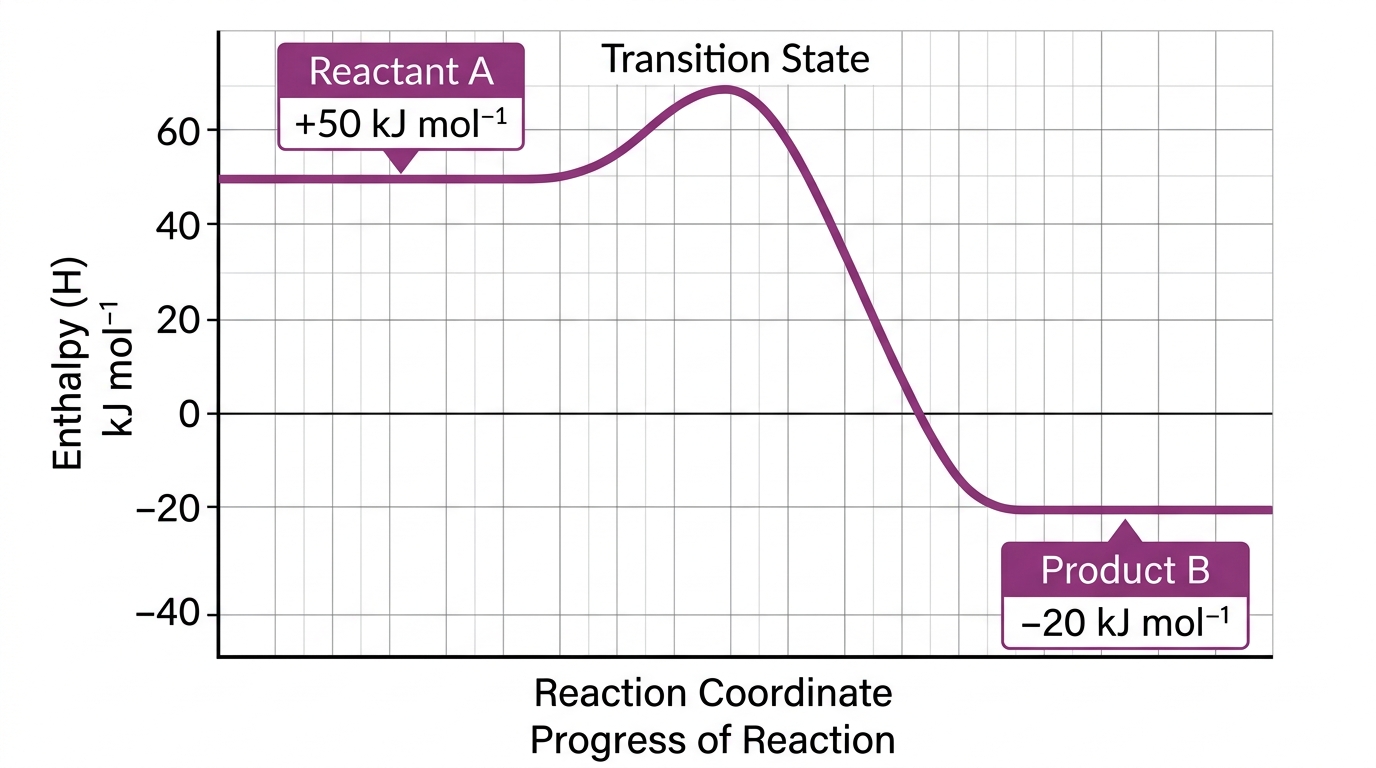
The shows the enthalpy profile for the reaction . The enthalpy of A is and the enthalpy of B is . Which statement describes this reaction?
revisionprep.com
Summary Answer
Not available for this question.
Model Answer
Not available for this question.
Marking Scheme
Not available for this question.
Examiner Insights
Not available for this question.
Hess's law and enthalpy cycles
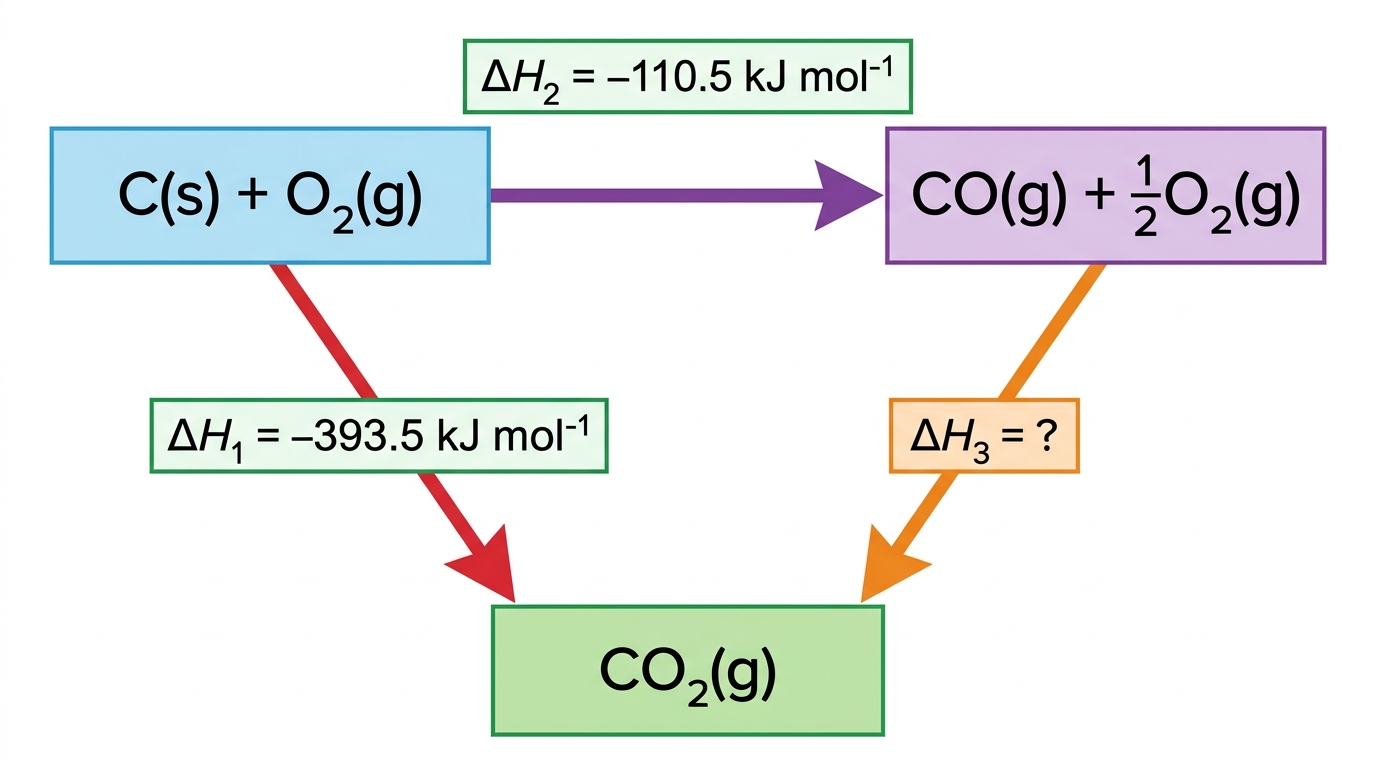
The standard enthalpies of formation of and CO(g) are and . Using the enthalpy cycle, what is the standard enthalpy change, in , for the combustion of carbon monoxide?
revisionprep.com
Summary Answer
Not available for this question.
Model Answer
Not available for this question.
Marking Scheme
Not available for this question.
Examiner Insights
Not available for this question.
Thermochemistry and enthalpy diagrams
A student dissolves solid sodium hydroxide in water in a polystyrene cup and records the results in Table 1. Assume that the solution has a density of and a specific heat capacity of . Each temperature reading has an uncertainty of .
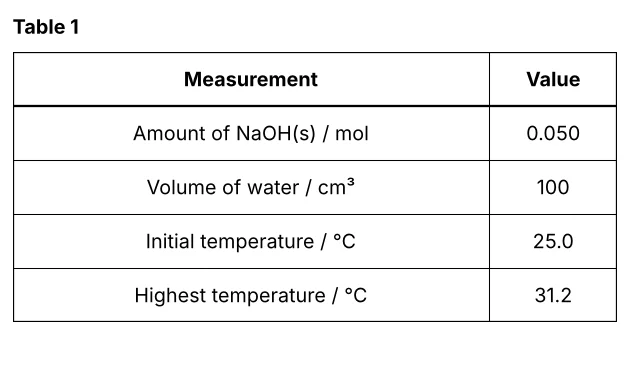
Determine the temperature change, with its absolute uncertainty.
Calculate the enthalpy change, in , per mole of NaOH(s) dissolved.
Suggest one improvement that would reduce the percentage uncertainty in the temperature change.
revisionprep.com
Summary Answer
Not available for this question.
Model Answer
Not available for this question.
Marking Scheme
Not available for this question.
Examiner Insights
Not available for this question.
Hess's law and enthalpy cycles
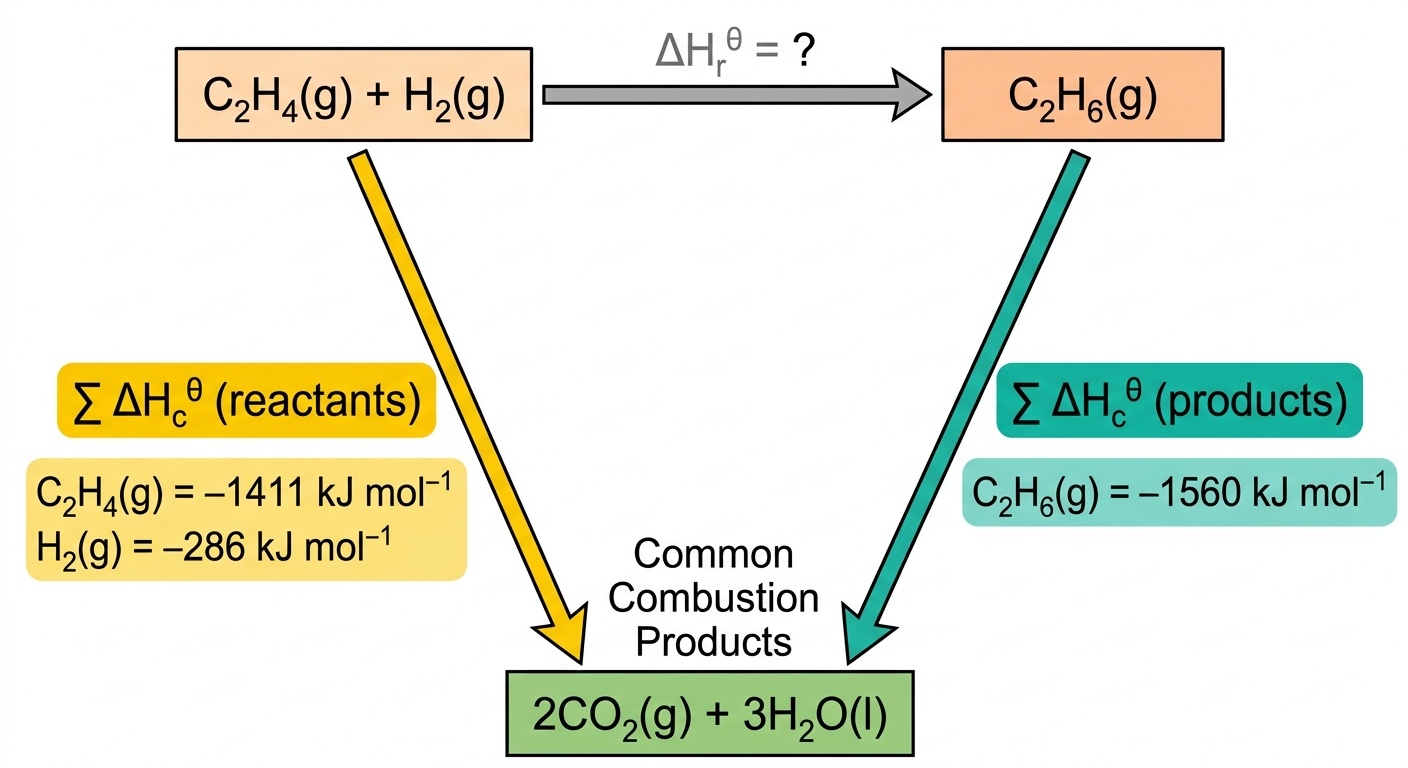
The standard enthalpies of combustion are , and . Which expression gives , in , for the formation of methane?
revisionprep.com
Summary Answer
Not available for this question.
Model Answer
Not available for this question.
Marking Scheme
Not available for this question.
Examiner Insights
Not available for this question.
Thermochemistry and enthalpy diagrams
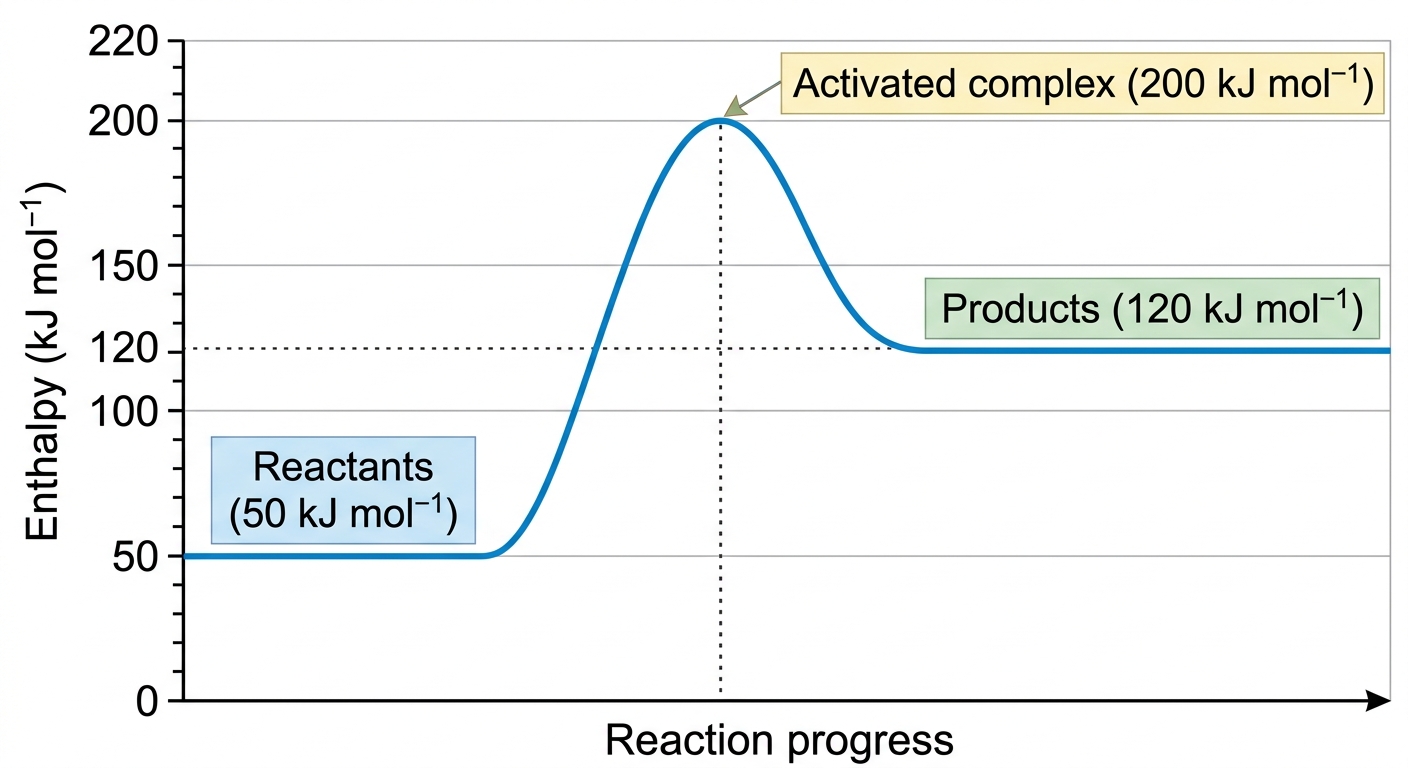
The enthalpy profile shown is for a gas-phase reaction. The reactants are at , the activated complex at and the products at .
Which statement about the energy changes in this reaction is correct?
revisionprep.com
Summary Answer
Not available for this question.
Model Answer
Not available for this question.
Marking Scheme
Not available for this question.
Examiner Insights
Not available for this question.
Hess's law and enthalpy cycles
A student finds the standard enthalpy of formation of magnesium oxide indirectly. In each experiment the solid is added to of hydrochloric acid, which is in excess, in a lidded polystyrene cup. The results are in the table. Each temperature reading has an uncertainty of .
Assume the density of the solution is and its specific heat capacity is . , and .

Calculate the enthalpy change, in , for experiment 1.
Calculate the enthalpy change, in , for experiment 2.
Determine the standard enthalpy of formation of magnesium oxide, using your answers to (a) and (b) and the enthalpy of formation of water.
Determine the percentage uncertainty in the temperature change in experiment 2.
The literature value is . Treat the uncertainty in the temperature readings as the only significant uncertainty. Evaluate whether it can account for the difference between your answer to (c) and the literature value.
Suggest one change to experiment 2 that would reduce the percentage uncertainty in its temperature change. Give a reason.
revisionprep.com
Summary Answer
Not available for this question.
Model Answer
Not available for this question.
Marking Scheme
Not available for this question.
Examiner Insights
Not available for this question.
That's every free question here — 6 of 124.
+118 more questions, plus Mock Papers & Worksheets, are waiting in Premium.