You're viewing 4 free preview questions for Chemistry SL — subscribe to unlock 85 more, plus the Full Question Bank, Mock Papers & Worksheets.Upgrade
Measuring Enthalpy Change · Paper 1 — Free Chemistry SL Practice Questions

1FoundationMCQExothermic vs endothermic reactions1 markPaper 1~2 min
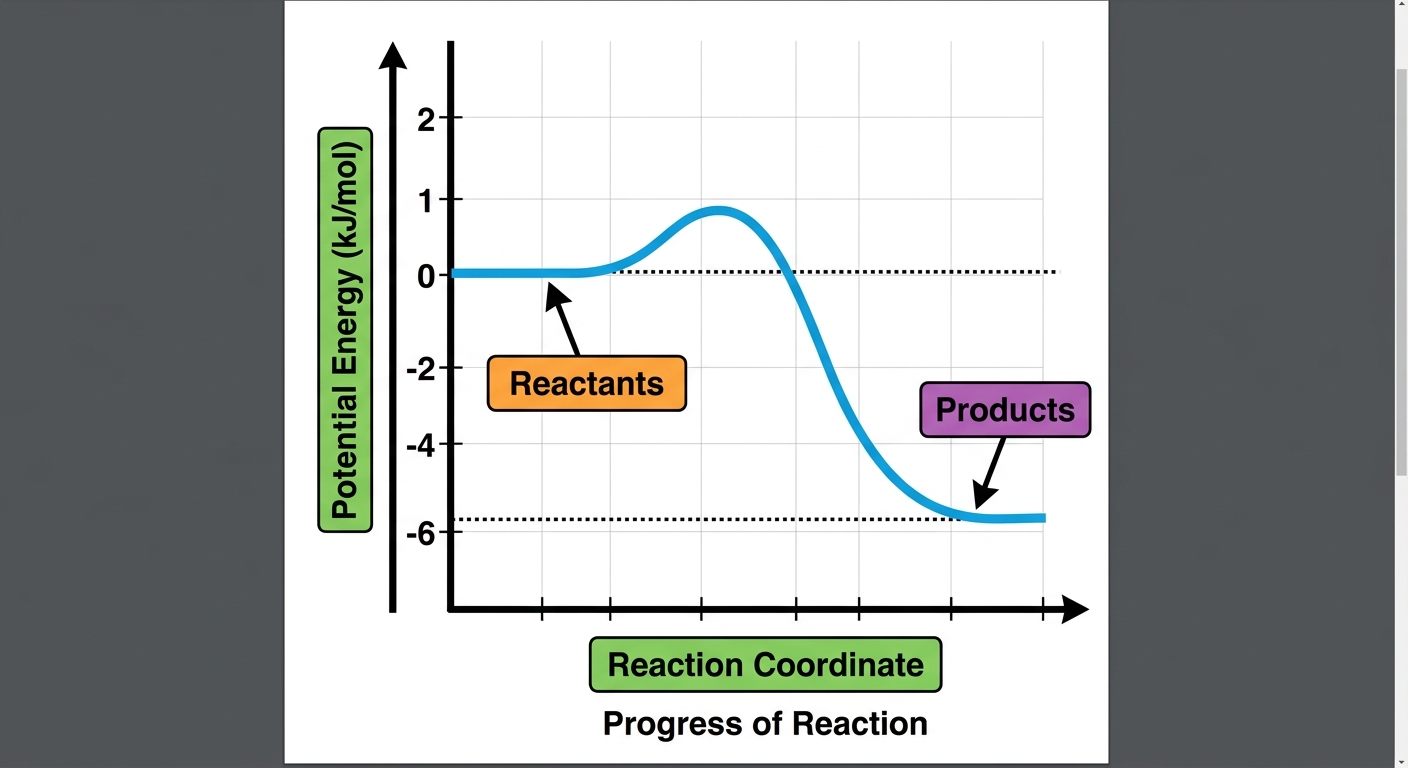
In an energy level for a chemical reaction, the reactants are positioned at a higher energy level than the products. Which statement correctly describes this reaction?

Solutions
2FoundationMCQExothermic vs endothermic reactions1 markPaper 1~2 min
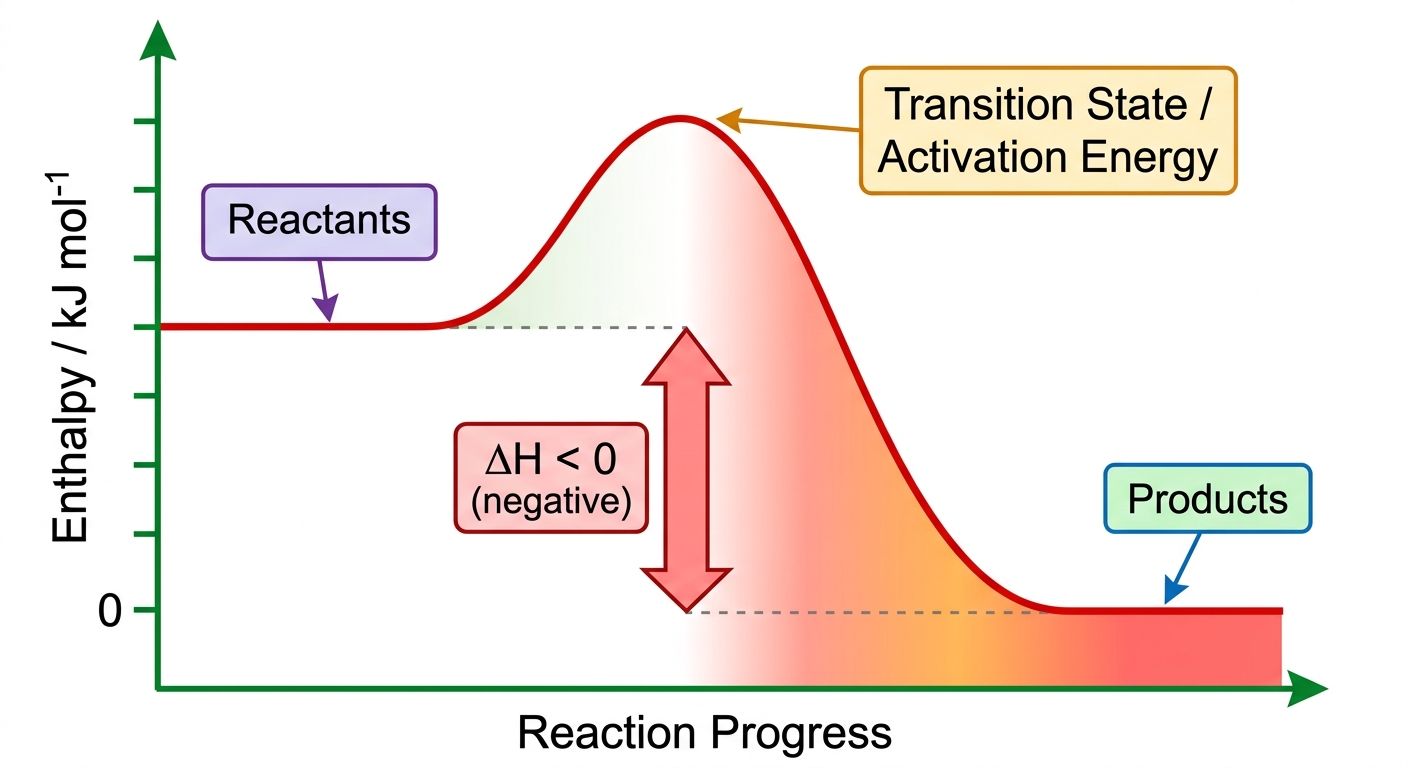
A student measures the temperature of a reaction mixture and observes a rise in temperature during a chemical reaction. Which statement correctly explains why this observation indicates an exothermic reaction?
Solutions
3MasteryMCQEnthalpy of reaction, heat capacity, and calorimetry1 markPaper 1~2 min
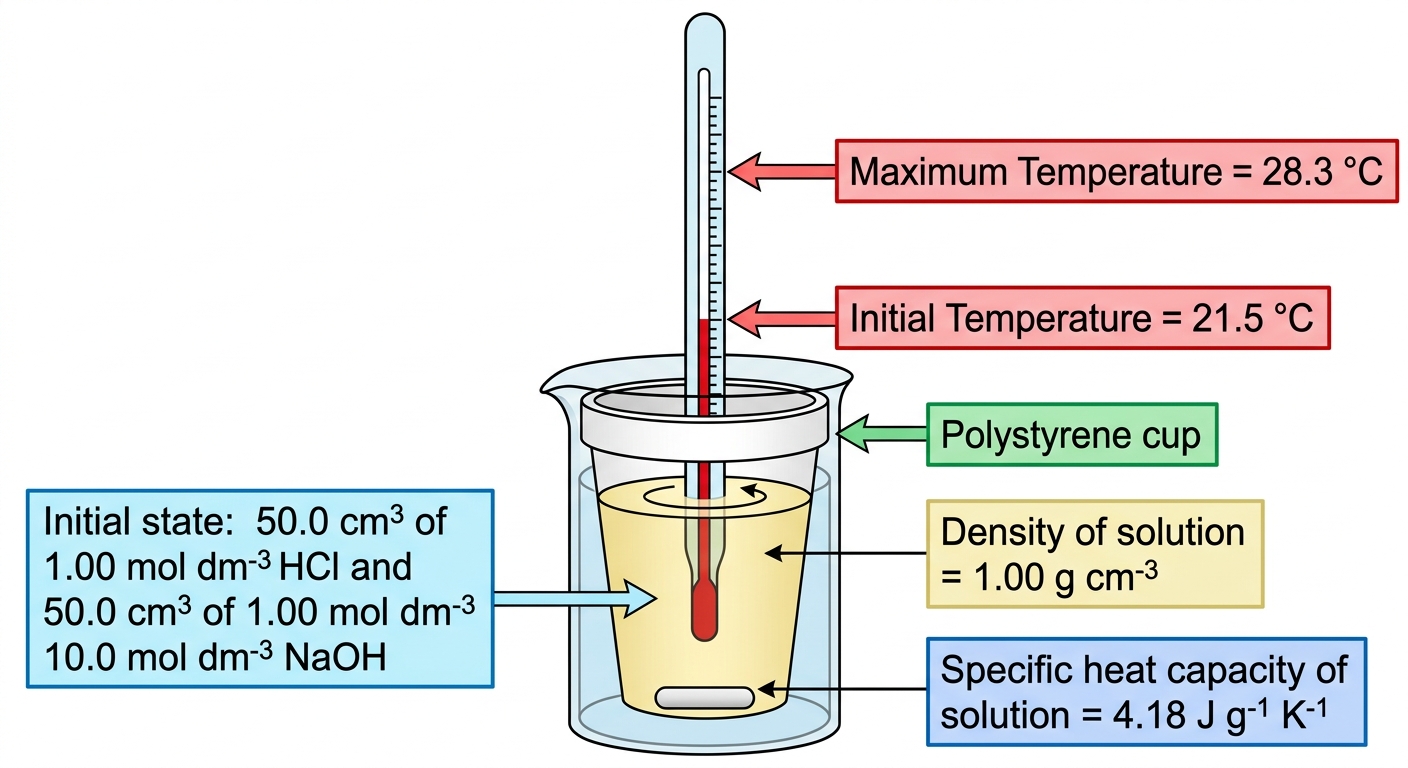
A student mixes of hydrochloric acid with of sodium hydroxide in a polystyrene cup. Both solutions have an initial temperature of . The maximum temperature recorded after mixing is . The specific heat capacity of the solution is and its density is . What is the molar enthalpy change of neutralisation, in ?
Solutions
4MasteryMCQEnthalpy of reaction, heat capacity, and calorimetry1 markPaper 1~2 min
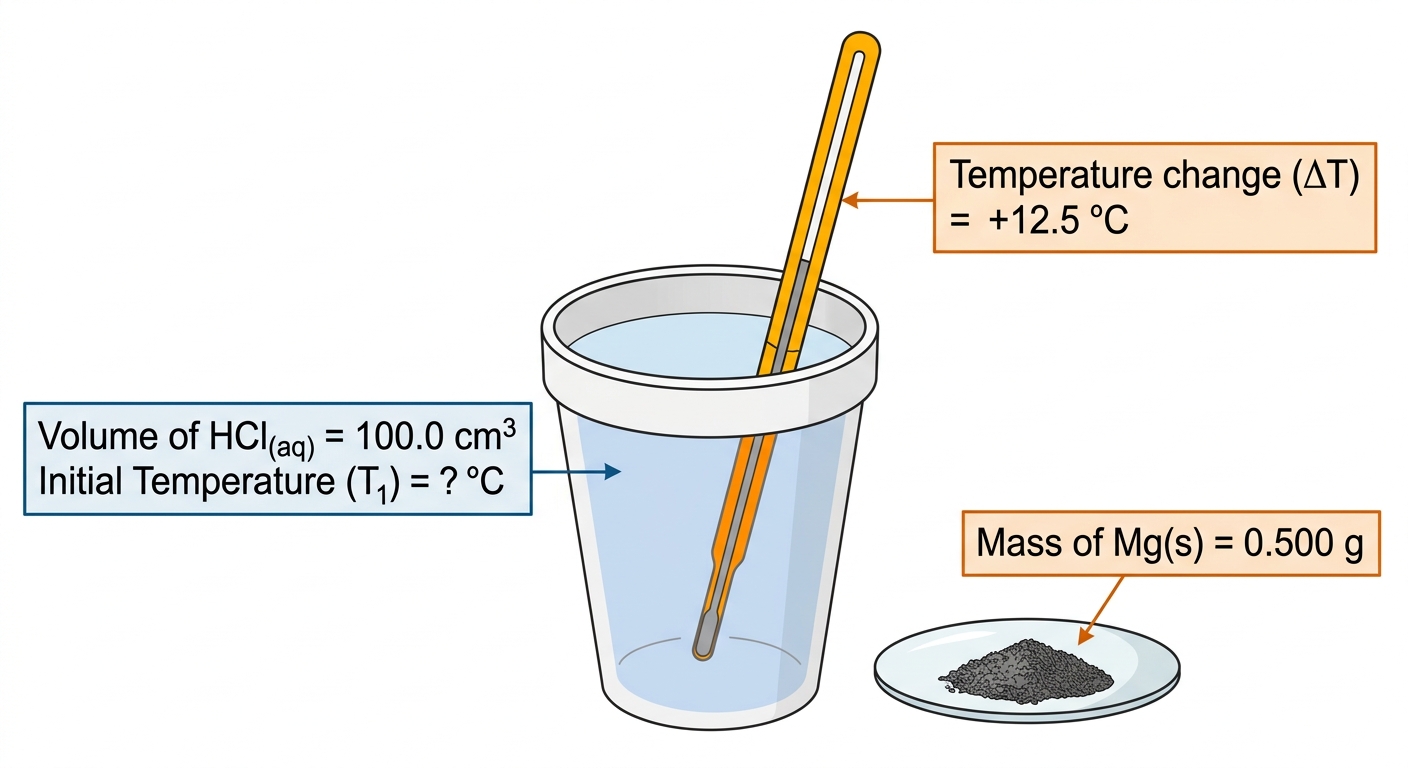
In a calorimetry experiment, of magnesium is added to of hydrochloric acid in a polystyrene cup. The reaction is:
The density of the solution is and its specific heat capacity is . The temperature rises by . Which statement best explains why the enthalpy change calculated from this experiment is likely to be less exothermic than the true value?
Solutions
That's every free question here — 4 of 89.
+85 more questions, plus Mock Papers & Worksheets, are waiting in Premium.