You're viewing free preview questions — 6 questions previewing here — subscribe to unlock 59 more, plus the Full Question Bank, Mock Papers & Worksheets.Upgrade
Back

Everyday Chemical Changes — Free MYP1 Sciences Practice Questions

Free questions

Open in full, with answers, mark scheme and examiner insights.

Question 1Criterion A · Band 1-4 · Easy · 3 marksrevisionprep.com

Chemical Reactions in Cooking

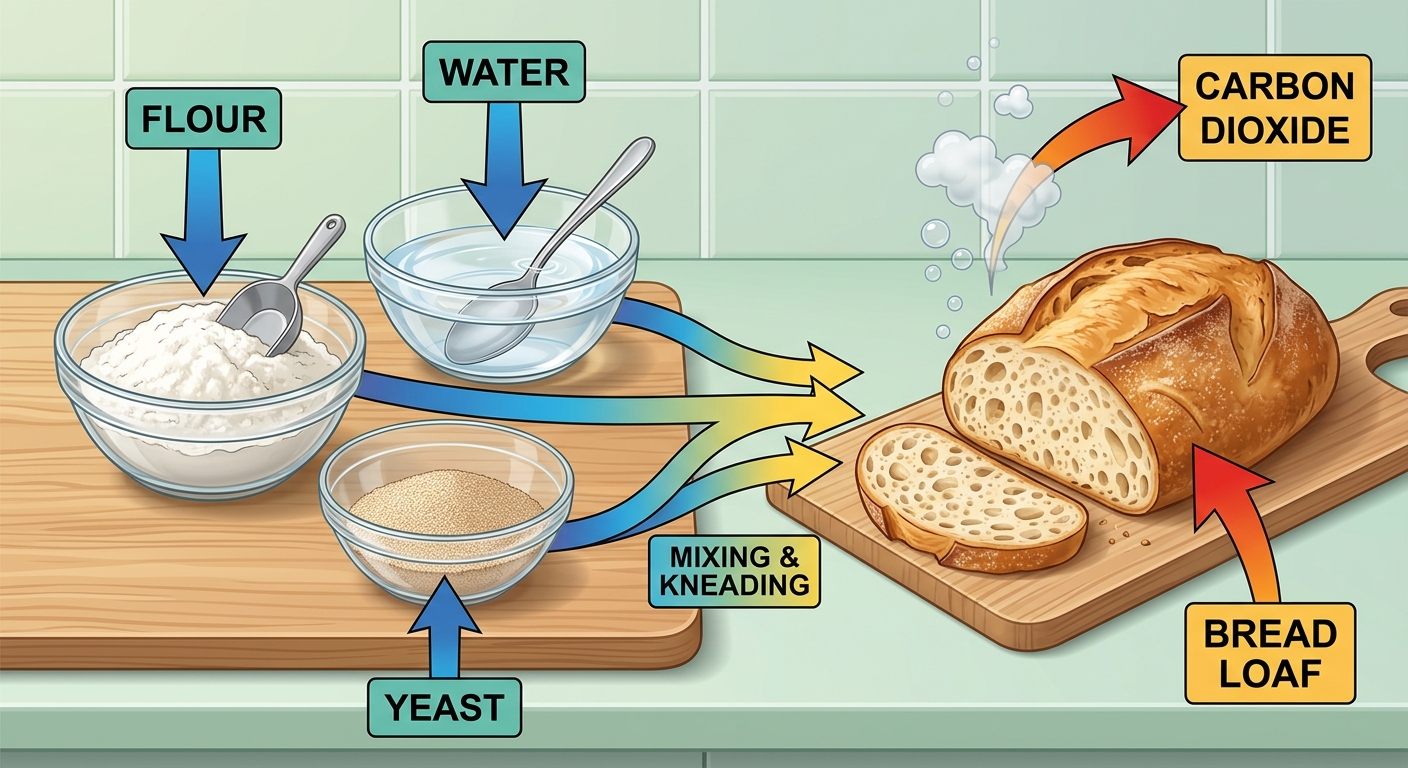
The picture shows bread being made. Flour, water and yeast are mixed into dough, left to rise, and then baked.
Question diagram
(a)
Name the gas that makes the dough rise. [1]Criterion A (i) · Level 1-2
(b)
Identify the ingredient that makes this gas. [1]Criterion A (i) · Level 1-2
(c)
Explain why baking bread is a chemical change. [1]Criterion A (ii) · Level 3-4

revisionprep.com

Summary Answer

Not available for this question.

Model Answer

Not available for this question.

Marking Scheme

Not available for this question.

Examiner Insights

Not available for this question.

Question 2Criterion D · Band 3-4 · Easy · 3 marksrevisionprep.com

Photosynthesis and Respiration Simplified

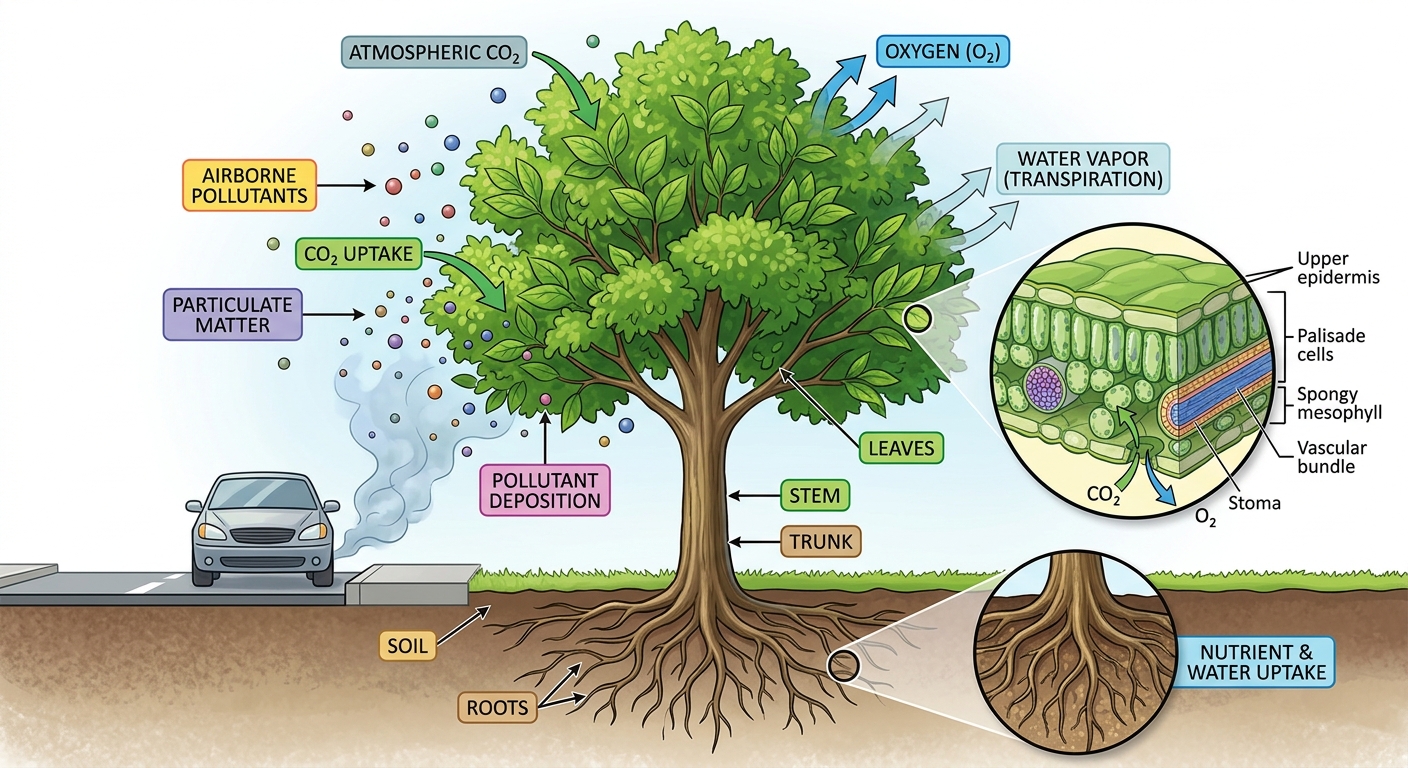
The picture shows a tree beside a busy road.

Cities plant trees along busy roads.
Question diagram
(a)
The picture shows carbon dioxide going into the tree and oxygen coming out. Explain why this helps people walking along the busy road. [2]Criterion D (ii) · Level 3-4
(b)
Suggest one other benefit of street trees for people. [1]Criterion D (iii) · Level 3-4

revisionprep.com

Summary Answer

Not available for this question.

Model Answer

Not available for this question.

Marking Scheme

Not available for this question.

Examiner Insights

Not available for this question.

Question 3Criterion C · Band 1-6 · Medium · 4 marksrevisionprep.com

Chemical Reactions in Cooking

Sam makes pancakes with the same flour, egg and milk each time. He changes the baking soda and measures each pancake's height.
Baking soda (g)0246
Height (cm)1.22.53.83.8

Sam says: "More baking soda always makes fluffier pancakes."
(a)
State the height with 2 g of baking soda. [1]Criterion C (iii) · Level 1-2
(b)
Describe the pattern. [1]Criterion C (iii) · Level 3-4
(c)
Discuss Sam's claim and suggest one way to make the results more reliable. [2]Criterion C (iv) · Level 5-6

revisionprep.com

Summary Answer

Not available for this question.

Model Answer

Not available for this question.

Marking Scheme

Not available for this question.

Examiner Insights

Not available for this question.

Question 4Criterion C · Band 3-6 · Medium · 7 marksrevisionprep.com

Rusting and Preventive Measures

A town by the sea tests ways to protect bike chains from rust. Each method is tried on 3 chains for one month. The rust is scored from 0 (none) to 10 (very rusty).
No protection897
Oil342
Grease120
Plastic cover010
(a)
Calculate the mean rust score for each method. [2]Criterion C (iii) · Level 3-4
(b)
Present the means in a table with headings and units. [2]Criterion C (ii) · Level 3-4
(c)
Explain why the town by the sea needs good protection, and how grease works. [2]Criterion C (iv) · Level 5-6
(d)
Suggest why a cyclist might choose oil over a plastic cover even though it scored worse. [1]Criterion C (iv) · Level 5-6

revisionprep.com

Summary Answer

Not available for this question.

Model Answer

Not available for this question.

Marking Scheme

Not available for this question.

Examiner Insights

Not available for this question.

Question 5Criterion B · Band 3-6 · Medium · 7 marksrevisionprep.com

Chemistry in Cleaning Products

Kettles build up white limescale. Ibrahim wants to find out which kitchen liquid removes limescale best: lemon juice, vinegar or water. He uses small pieces of chalk, because chalk is the same substance as limescale. He has a balance, beakers and a timer.
(a)
State a question he could investigate. [1]Criterion B (i) · Level 3-4
(b)
Predict which liquid will work best, and explain why. [2]Criterion B (ii) · Level 3-4
(c)
Outline a fair method, including what to measure. [3]Criterion B (iii) · Level 5-6
(d)
Explain why he includes a beaker of water. [1]Criterion B (iii) · Level 5-6

revisionprep.com

Summary Answer

Not available for this question.

Model Answer

Not available for this question.

Marking Scheme

Not available for this question.

Examiner Insights

Not available for this question.

Question 6Criterion C · Band 3-8 · Challenge · 8 marksrevisionprep.com

Fireworks and Explosions

Fire needs three things: fuel, heat and oxygen. Ana's teacher lights three identical candles and covers each with a glass jar of a different size. She times how long each flame lasts.
Small jar (250 mL)6 s7 s5 s
Medium jar (500 mL)13 s12 s14 s
Large jar (1000 mL)25 s27 s26 s
(a)
Calculate the mean burning time for each jar. [2]Criterion C (iii) · Level 3-4
(b)
Draw a bar chart of the means, with labelled axes. [2]Criterion C (ii) · Level 3-4
(c)
Explain the pattern using the fire triangle, and use it to predict the burning time under a 2000 mL jar, with a reason. [3]Criterion C (ii) · Level 7-8
(d)
Use the fire triangle to explain why a fire blanket puts out a pan fire. [1]Criterion C (iv) · Level 5-6

revisionprep.com

Summary Answer

Not available for this question.

Model Answer

Not available for this question.

Marking Scheme

Not available for this question.

Examiner Insights

Not available for this question.

That's every free question here — 6 of 65.

+59 more questions, plus Mock Papers & Worksheets, are waiting in Premium.

Upgrade