You're viewing free preview questions — 4 questions previewing here — subscribe to unlock 78 more, plus the Full Question Bank, Mock Papers & Worksheets.Upgrade
Forms of Energy — Free MYP1 Sciences Practice Questions

1QuestionEnergy in Daily Life ApplicationsConcept Practice
2 marks~3 minCriterion D
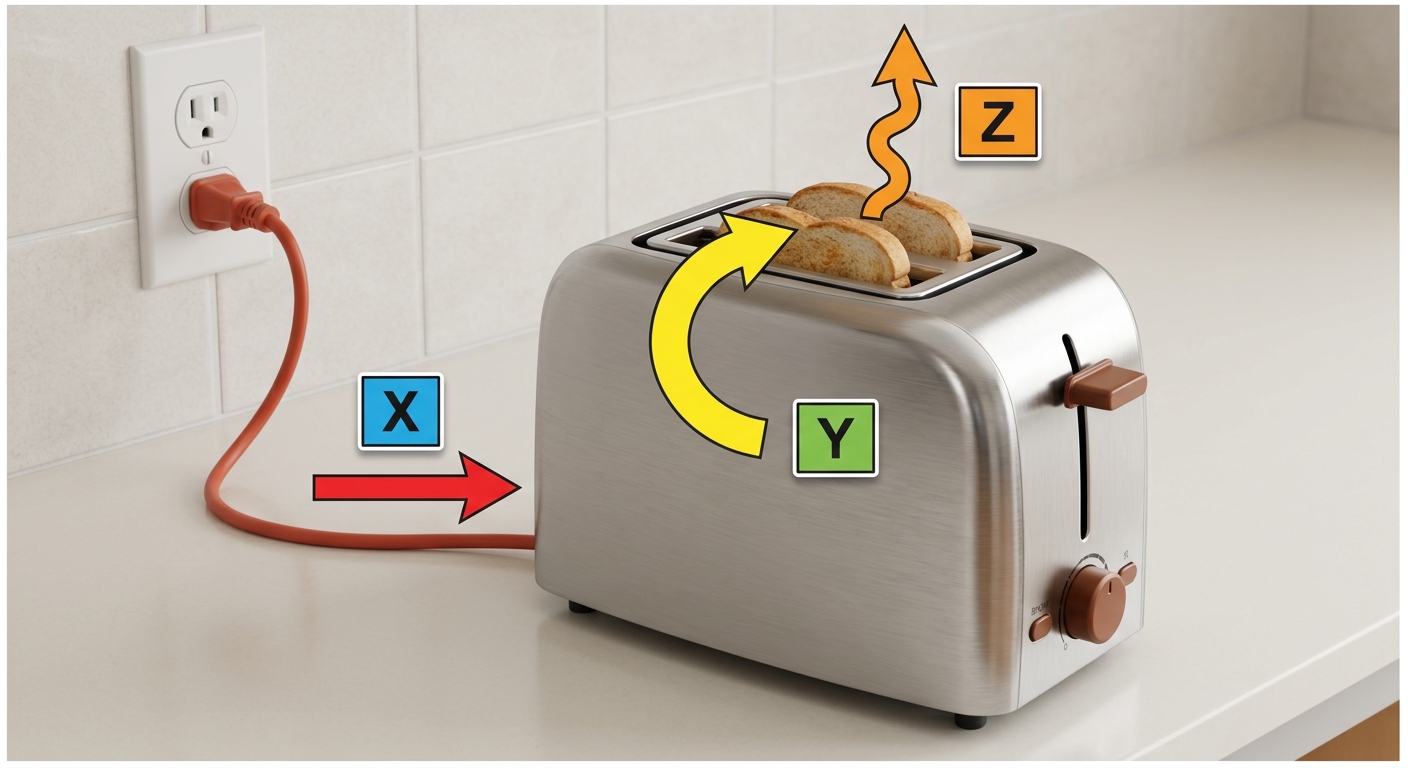
The diagram shows a toaster with three arrows. Arrow X points from the electrical outlet into the toaster. Arrow Y points from the toaster to the toast. Arrow Z points from the toaster into the air above.
a
Identify which arrow shows the useful thermal energy output. [1]
b
Describe why that arrow represents useful energy. [1]

Solutions
2QuestionDefinition and Examples of Different Energy TypesConcept Practice
4 marks~6 minCriterion A
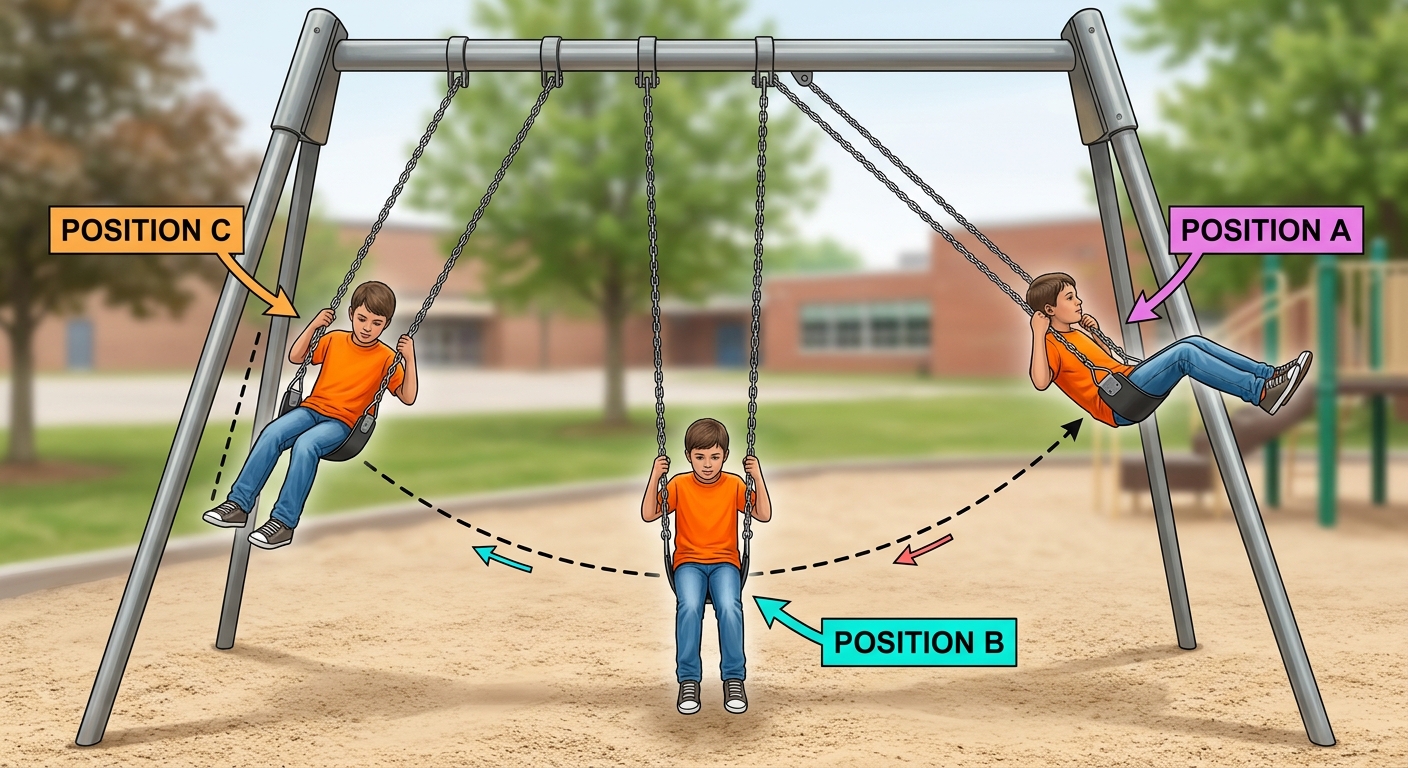
The diagram shows a child on a swing at three positions: A (high back), B (lowest point), and C (high front).
a
Identify the main type of energy the child has at position A. [1]
b
Describe what happens to the child's energy as they swing from position A down to position B. [2]
c
Compare the child's movement at position A with their movement at position B, and explain how this difference is linked to their energy. [1]
Solutions
3QuestionMechanical and Nuclear EnergyConcept Practice
5 marks~8 minCriterion C
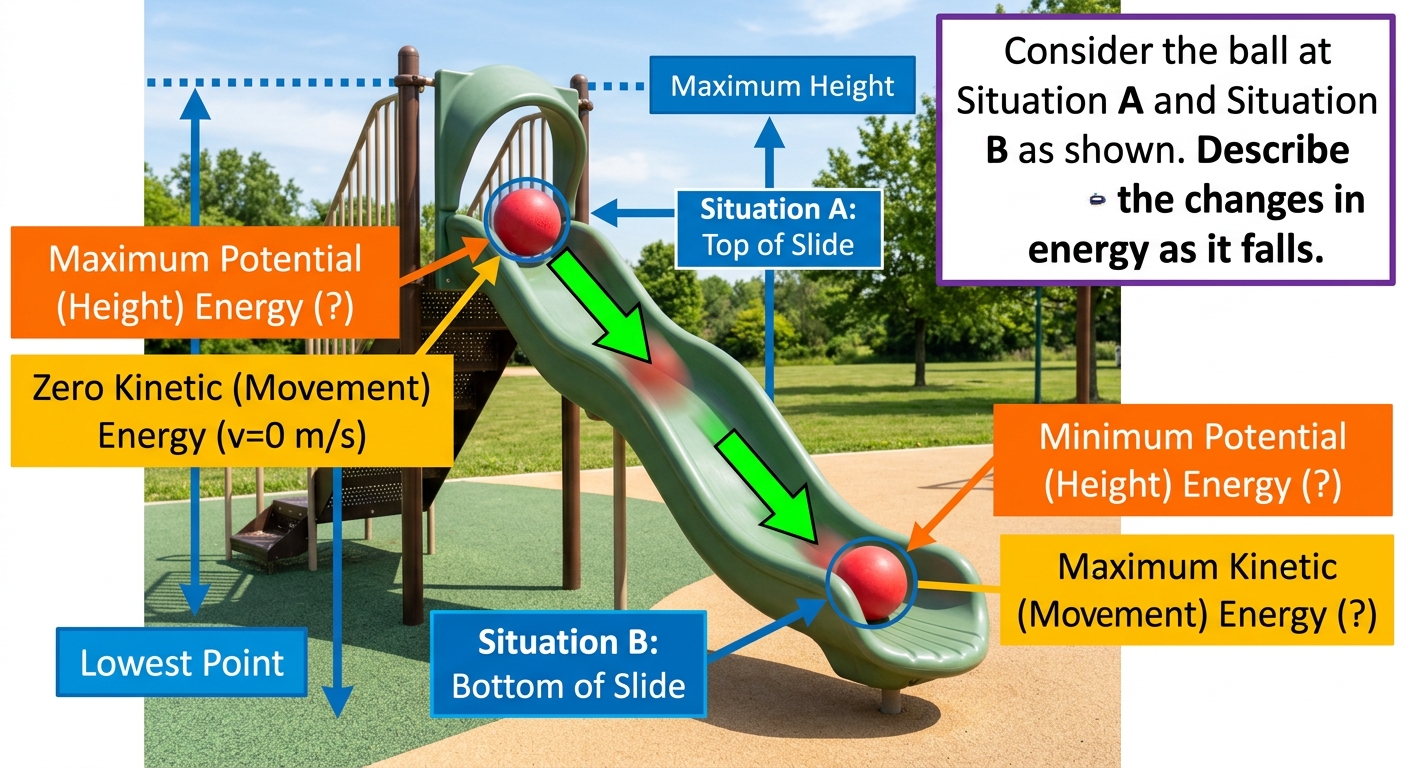
Sam holds a rubber ball at the top of a playground slide, then lets it go. The ball is still at the top, then moves fast at the bottom.
a
Name the type of energy the ball has at the top because it is high up. [1]
b
Describe what happens to the ball's height energy and movement energy as it falls from the top to the bottom of the slide. [2]
c
Sam says: "The ball has less total energy at the bottom than at the top because it lost its height energy." Do you agree? Explain your answer by comparing the ball's total energy at the top and at the bottom. [2]
Solutions
4QuestionMechanical and Nuclear EnergyConcept Practice
2 marks~3 minCriterion B
A student drops a rubber ball from three heights: 10 cm, 20 cm, and 30 cm. Each time, the student measures how high the ball bounces back up.
a
Identify the independent variable in this experiment. [1]
b
Identify the dependent variable in this experiment. [1]
Solutions
That's every free question here — 4 of 82.
+78 more questions, plus Mock Papers & Worksheets, are waiting in Premium.