You're viewing free preview questions — 6 questions previewing here — subscribe to unlock 98 more, plus the Full Question Bank, Mock Papers & Worksheets.Upgrade
Back

Elements Compounds and Mixtures — Free MYP1 Sciences Practice Questions

Free questions

Open in full, with answers, mark scheme and examiner insights.

Question 1Criterion A · Band 1-4 · Easy · 3 marksrevisionprep.com

Solutions and Pure Substances

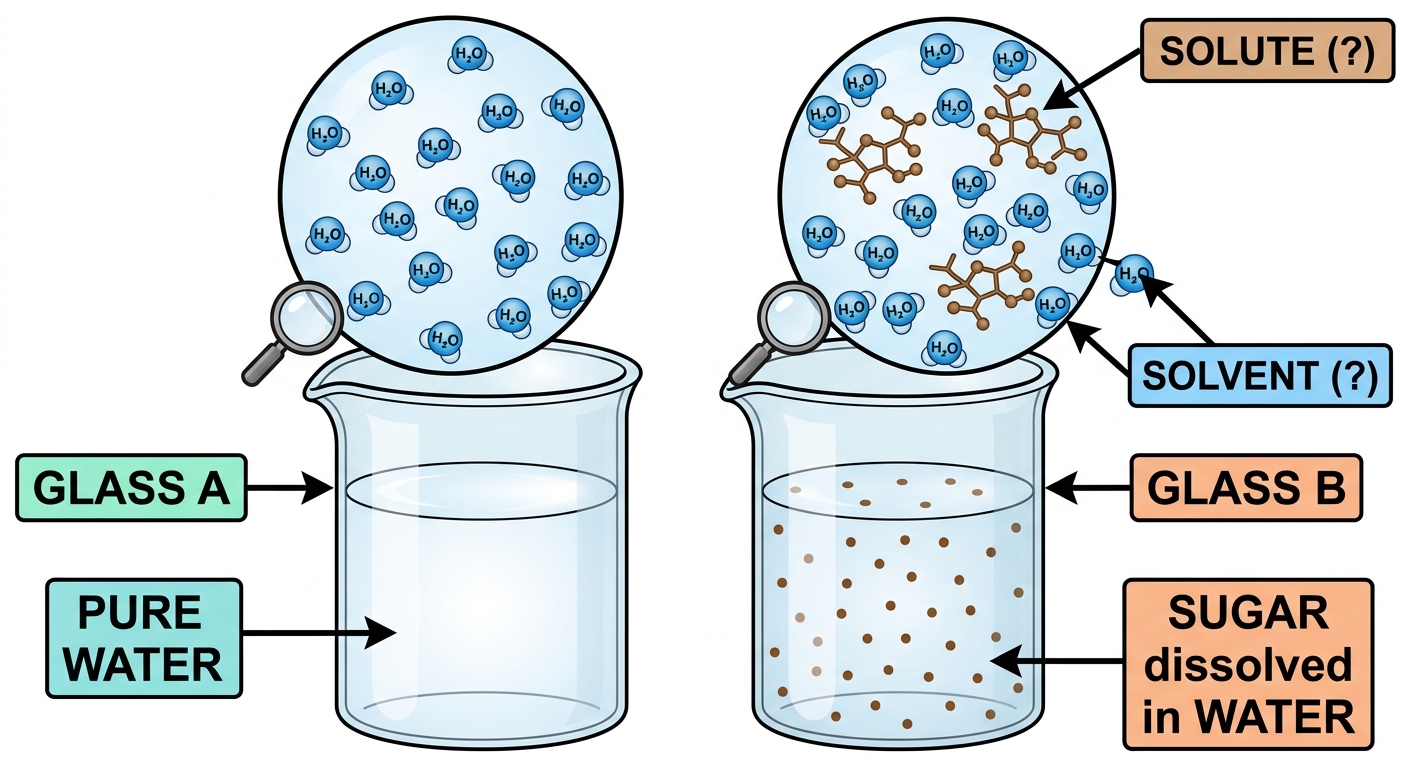
The picture shows Glass A with pure water and Glass B with sugar completely dissolved in water.
Question diagram
(a)
Identify which glass is a solution. [1]Criterion A (ii) · Level 1-2
(b)
Name the solute and the solvent in Glass B. [1]Criterion A (i) · Level 1-2
(c)
Describe a test that would tell the two glasses apart without tasting. [1]Criterion A (ii) · Level 3-4

revisionprep.com

Summary Answer

Not available for this question.

Model Answer

Not available for this question.

Marking Scheme

Not available for this question.

Examiner Insights

Not available for this question.

Question 2Criterion D · Band 3-4 · Easy · 2 marksrevisionprep.com

Suspensions

The picture shows calamine lotion, a medicine that is a suspension, before and after shaking. The label says 'Shake well before use.'

(a) Describe why the bottle must be shaken. [2]
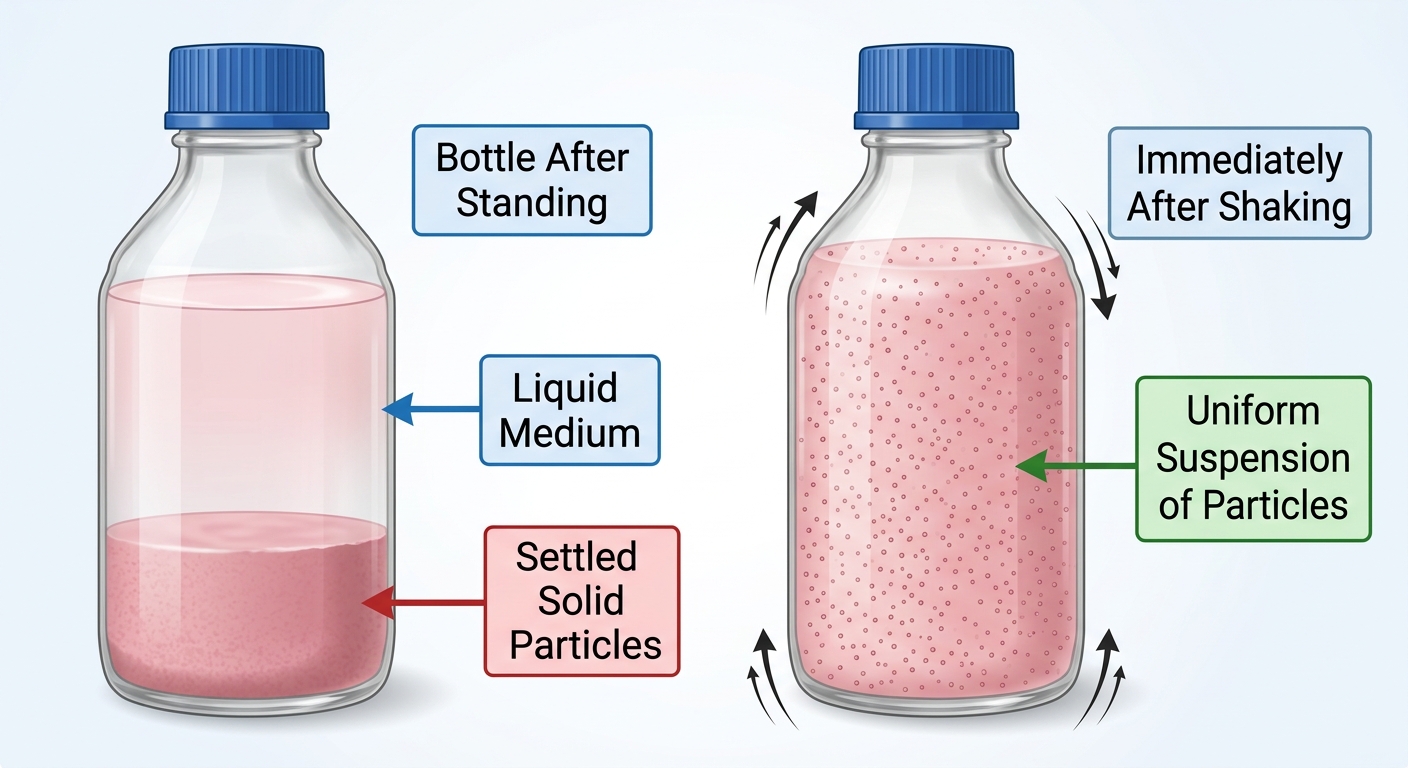
Question diagram

revisionprep.com

Summary Answer

Not available for this question.

Model Answer

Not available for this question.

Marking Scheme

Not available for this question.

Examiner Insights

Not available for this question.

Question 3Criterion A · Band 1-6 · Medium · 6 marksrevisionprep.com

Definition of Elements and Symbols

Three unknown elements:
X: melts at 98 °C; shiny; conducts electricity as a solid
Y: melts at −7 °C; dull; does not conduct
Z: melts at 660 °C; shiny; conducts
(a)
Identify the non-metal. [1]Criterion A (iii) · Level 1-2
(b)
Describe two properties the metals share. [2]Criterion A (iii) · Level 3-4
(c)
Element W is dull, brittle and does not conduct. Classify W and explain using the data. [2]Criterion A (iii) · Level 3-4
(d)
Explain why melting point alone cannot tell a metal from a non-metal. [1]Criterion A (iii) · Level 5-6

revisionprep.com

Summary Answer

Not available for this question.

Model Answer

Not available for this question.

Marking Scheme

Not available for this question.

Examiner Insights

Not available for this question.

Question 4Criterion A · Band 1-4 · Medium · 5 marksrevisionprep.com

Compounds and Chemical Formulae

Iron and sulfur are heated together:
Iron (g)71421
Sulfur (g)4812
Iron sulfide (g)112233
(a)
State the ratio of iron to sulfur by mass. [1]Criterion A (iii) · Level 1-2
(b)
Name the compound and state the mass made from 28 g of iron with enough sulfur. [2]Criterion A (ii) · Level 3-4
(c)
Describe two ways the compound differs from a simple mixture of iron and sulfur. [2]Criterion A (ii) · Level 3-4

revisionprep.com

Summary Answer

Not available for this question.

Model Answer

Not available for this question.

Marking Scheme

Not available for this question.

Examiner Insights

Not available for this question.

Question 5Criterion B · Band 1-6 · Medium · 7 marksrevisionprep.com

Differences Between Compounds and Mixtures

Your teacher gives you a mixture of salt, sand and iron filings. You must get back each substance on its own.
Equipment: magnet in a plastic bag, beaker, water, filter funnel and paper, evaporating dish, heat source.
(a)
Outline the property of each substance you will use to separate it. [2]Criterion B (i) · Level 3-4
(b)
Describe the steps in order. [2]Criterion B (iii) · Level 3-4
(c)
Explain why the magnet must be used before adding water. [1]Criterion B (iii) · Level 3-4
(d)
Describe how you would check that the method worked well. [1]

(e) State one safety precaution. [1]
Criterion B (iii) · Level 5-6

revisionprep.com

Summary Answer

Not available for this question.

Model Answer

Not available for this question.

Marking Scheme

Not available for this question.

Examiner Insights

Not available for this question.

Question 6Criterion C · Band 1-8 · Challenge · 7 marksrevisionprep.com

Collides

A class tests five mixtures. They shine a torch beam through each, leave it for one hour, then pour it through filter paper.
Salt water: beam not seen; no settling; nothing left on filter
Milk: beam seen; no settling; nothing left on filter
Muddy water: beam seen; settles; solid left on filter
Washing-up liquid foam: beam seen; no settling; nothing left on filter
Sugar water: beam not seen; no settling; nothing left on filter
Ravi says: 'A torch test alone is enough to tell a colloid from a suspension.'
(a)
Present the results as a table that classifies each mixture as a solution, colloid or suspension. [2]Criterion C (i) · Level 1-2
(b)
Describe the pattern that separates colloids from solutions. [1]Criterion C (ii) · Level 3-4
(c)
Evaluate Ravi's claim using the data. Then describe the set of tests that would identify any mixture as a solution, a colloid or a suspension. [3]Criterion C (iii) · Level 7-8
(d)
Suggest one improvement to the torch test. [1]Criterion C (iv) · Level 3-4

revisionprep.com

Summary Answer

Not available for this question.

Model Answer

Not available for this question.

Marking Scheme

Not available for this question.

Examiner Insights

Not available for this question.

That's every free question here — 6 of 104.

+98 more questions, plus Mock Papers & Worksheets, are waiting in Premium.

Upgrade