You're viewing free preview questions — 4 questions previewing here — subscribe to unlock 116 more, plus the Full Question Bank, Mock Papers & Worksheets.Upgrade
Separation Techniques — Free MYP1 Sciences Practice Questions

1QuestionChoosing Appropriate Separation MethodsConcept Practice
2 marks~3 minCriterion A
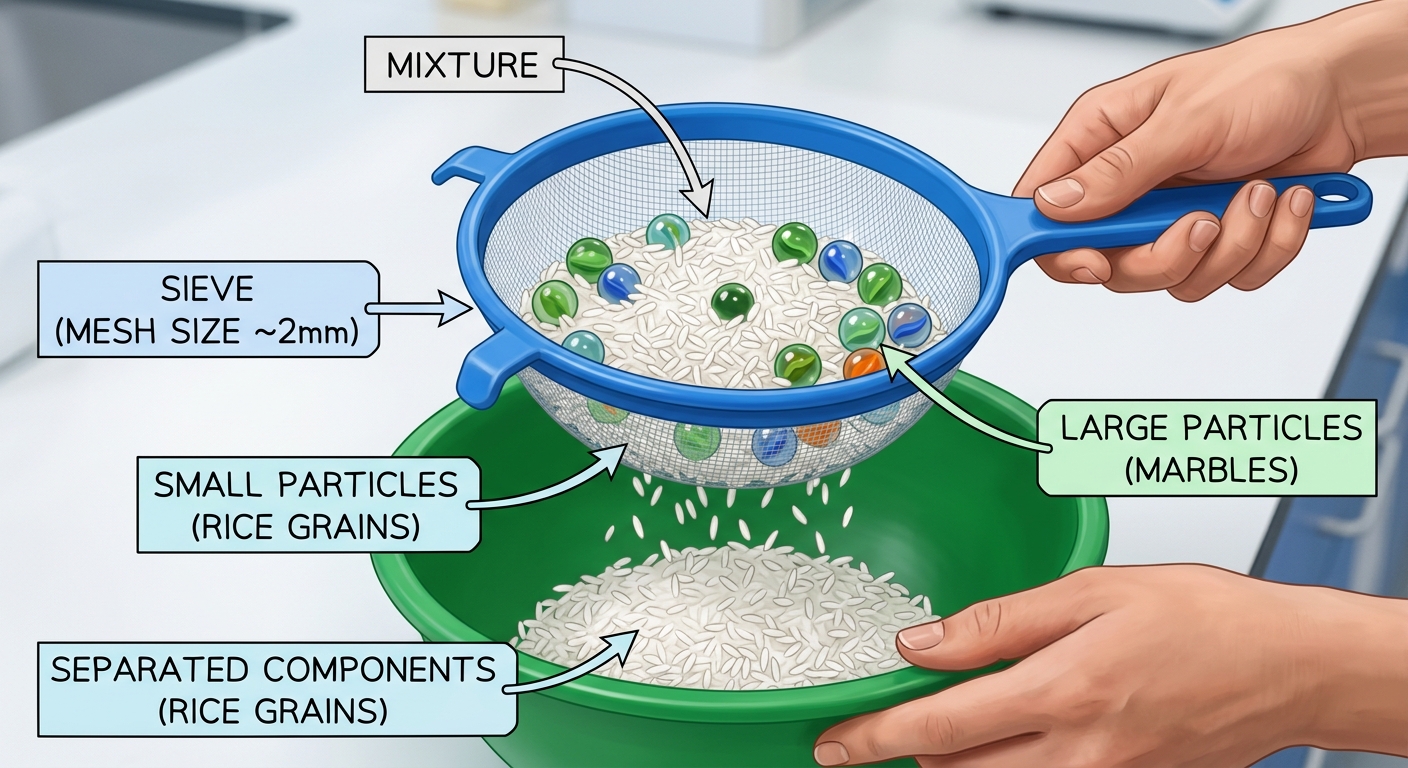
A student has a mixture of rice grains and marbles. She uses a sieve to separate them. The smaller rice grains fall through the holes, and the larger marbles stay on top.
a
Name the separation method the student is using. [1]
b
Describe why this method works for this mixture. [1]

Solutions
2QuestionFiltration and EvaporationAssessment Practice
6 marks~9 minCriterion D
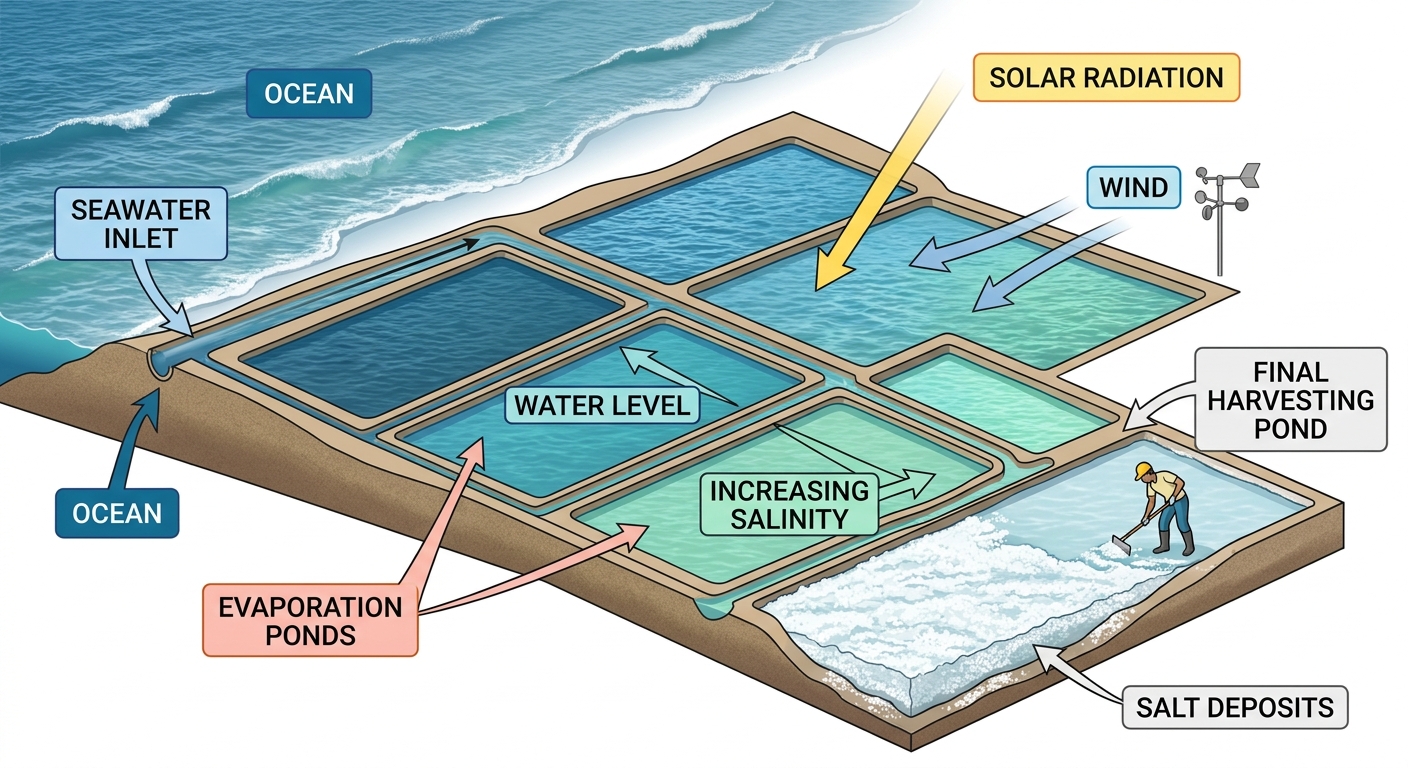
A family makes salt by leaving seawater in shallow ponds. The sun and wind slowly remove the water, leaving salt crystals behind.
a
Name the method the family uses to separate salt from seawater. [1]
b
Describe why filtration would not work for separating salt from seawater. [2]
c
Describe one problem with using sunlight and wind to evaporate water, and suggest one way the family could solve this problem. [3]
Solutions
3QuestionDissolvingConcept Practice
3 marks~5 minCriterion B
A sugar cube is placed in water at different temperatures. The results are shown below.
| Temperature () | 20 | 30 | 40 | 50 | 60 |
|---|---|---|---|---|---|
| Dissolving time (seconds) | 120 | 85 | 60 | 40 | 25 |
a
Identify the temperature at which the sugar cube dissolved the fastest. [1]
b
Describe what happens to the dissolving time as the water temperature increases. [1]
c
Compare how quickly the sugar dissolves in water at with water at , and suggest one reason for the difference. [1]
Solutions
4QuestionDistillation and Chromatography IntroductoryConcept Practice
6 marks~9 minCriterion C
A student tested three black markers — A, B, and C — using paper chromatography with water. The results are shown below.
Marker A: 2 spots — blue and yellow
Marker B: 3 spots — red, blue, and yellow
Marker C: 1 spot — black
Marker A: 2 spots — blue and yellow
Marker B: 3 spots — red, blue, and yellow
Marker C: 1 spot — black
a
Identify which marker contains the most pigments and which contains the fewest. [1]
b
Describe how you could use Marker A to make a green ink. [2]
c
Compare Marker A and Marker C. Describe one way they are similar and one way they are different, based on the chromatography results. [3]
Solutions
That's every free question here — 4 of 120.
+116 more questions, plus Mock Papers & Worksheets, are waiting in Premium.