You're viewing free preview questions — 4 questions previewing here — subscribe to unlock 56 more, plus the Full Question Bank, Mock Papers & Worksheets.Upgrade
Excretion and Homeostasis Introductory — Free MYP1 Sciences Practice Questions

1QuestionConcept of Excretion and Examples in HumansConcept Practice
2 marks~3 minCriterion A
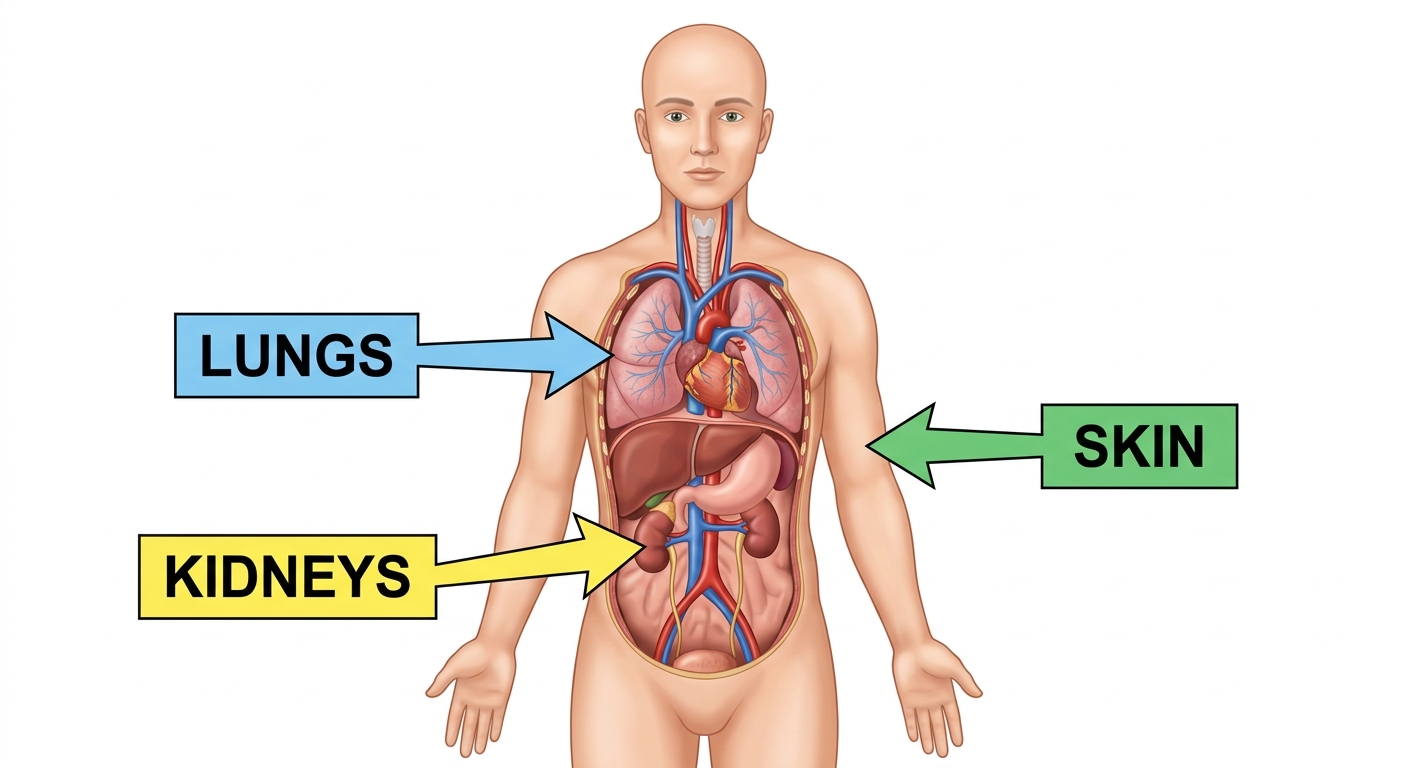
The diagram shows the human body with three organs labelled: lungs, kidneys, and skin.
a
Identify the organ that removes carbon dioxide from the blood. [1]
b
Describe why the body needs to remove carbon dioxide. [1]

Solutions
2QuestionConcept of Excretion and Examples in HumansAssessment Practice
7 marks~11 minCriterion D
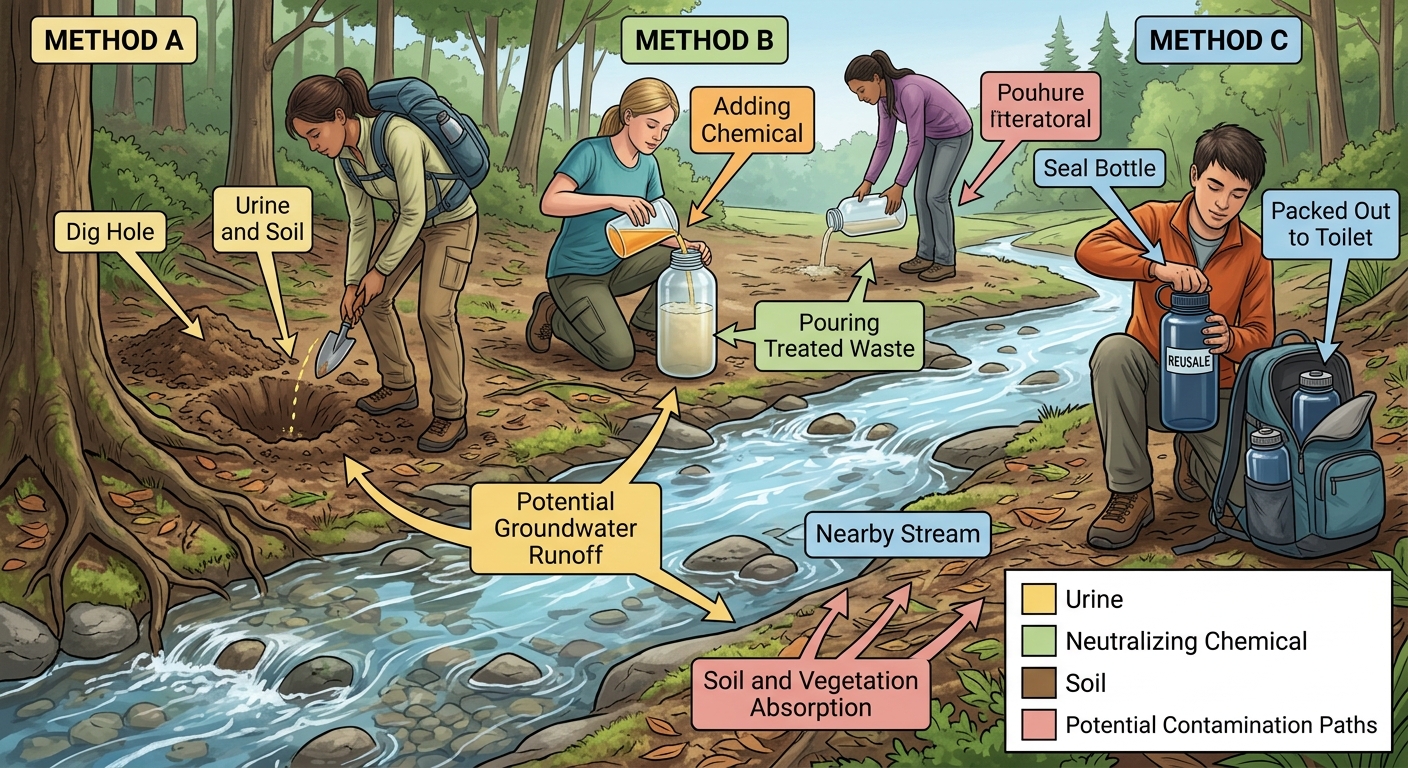
Your science club goes camping near a stream used for drinking water. When someone needs to urinate, your teacher suggests three methods:
Method A: Dig a hole, urinate in it, and cover it with soil.
Method B: Urinate in a bottle, seal it, and carry it home to flush down a toilet.
Method C: Urinate directly onto the ground near the stream.
Method A: Dig a hole, urinate in it, and cover it with soil.
Method B: Urinate in a bottle, seal it, and carry it home to flush down a toilet.
Method C: Urinate directly onto the ground near the stream.
a
Name the main waste product found in urine that the body needs to remove. [1]
b
Describe one way Method C could affect the drinking water in the nearby stream. [2]
c
Identify which method — A or B — is better for the environment and describe one reason why it is better than the other. [4]
Solutions
3QuestionSweating and Carbon Dioxide RemovalConcept Practice
5 marks~8 minCriterion B
The table below shows how much sweat a person produces each hour at different room temperatures.
| Room temperature (°C) | 20 | 25 | 30 | 35 |
|---|---|---|---|---|
| Sweat produced (mL/hour) | 100 | 200 | 300 | ? |
a
Identify the amount of sweat produced at 20°C. [1]
b
Describe the pattern shown in the table between room temperature and sweat produced. [2]
c
Calculate the amount of sweat produced at 35°C. Show your working. [2]
Solutions
4QuestionImportance of Maintaining Internal BalanceAssessment Practice
5 marks~8 minCriterion C
Three people each drank a glass of cold water. Their body temperatures (°C) were recorded every 10 minutes.
Time (min): 0 / 10 / 20 / 30 / 40
Person A (healthy): 37.0 / 36.2 / 36.8 / 37.1 / 37.0
Person B (fever): 38.5 / 37.9 / 37.4 / 37.1 / 37.0
Person C (low body fat): 37.0 / 35.8 / 36.5 / 37.2 / 37.0
Time (min): 0 / 10 / 20 / 30 / 40
Person A (healthy): 37.0 / 36.2 / 36.8 / 37.1 / 37.0
Person B (fever): 38.5 / 37.9 / 37.4 / 37.1 / 37.0
Person C (low body fat): 37.0 / 35.8 / 36.5 / 37.2 / 37.0
a
Identify the lowest temperature recorded for Person A. [1]
b
Describe what happens to Person A's body temperature after it reaches its lowest point. [2]
c
Compare how quickly Person A and Person C return to 37.0 °C after their temperature drops. What does this suggest about how body fat affects temperature control? [2]
Solutions
That's every free question here — 4 of 60.
+56 more questions, plus Mock Papers & Worksheets, are waiting in Premium.