You're viewing free preview questions — 4 questions previewing here — subscribe to unlock 46 more, plus the Full Question Bank, Mock Papers & Worksheets.Upgrade
Compound Shapes and Nets — Free MYP2 Mathematics Practice Questions

1QuestionArea and Perimeter of Compound ShapesConcept Practice
2 marks~3 minCriterion A
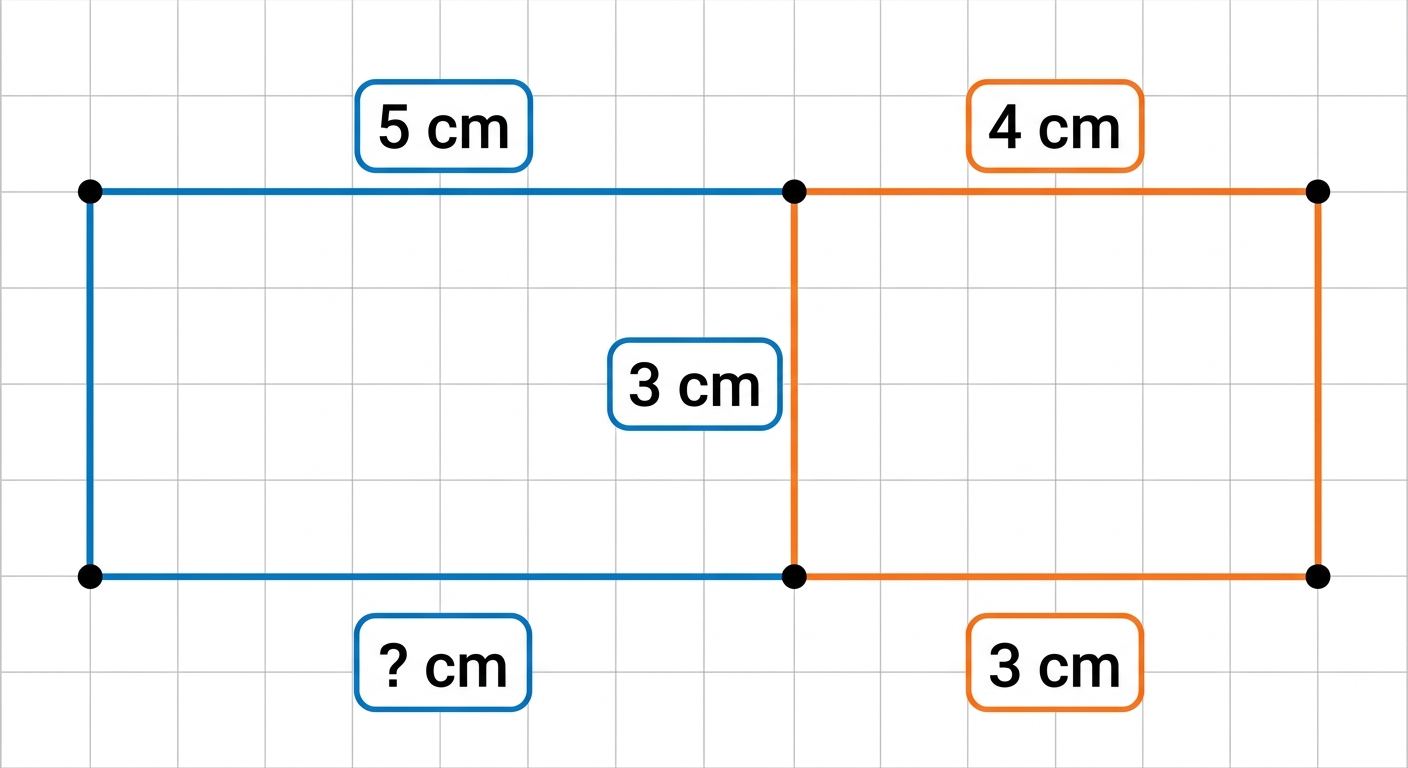
The diagram shows a compound shape made from two rectangles joined side by side. The left rectangle has a top side of cm and a height of cm. The right rectangle has a top side of cm and a height of cm. The bottom side of the left rectangle is marked with a question mark.
a
Identify the missing side length. [1]
b
Explain the geometric property that allows you to find it. [1]

Solutions
2QuestionArea and Perimeter of Compound ShapesAssessment Practice
6 marks~9 minCriterion D
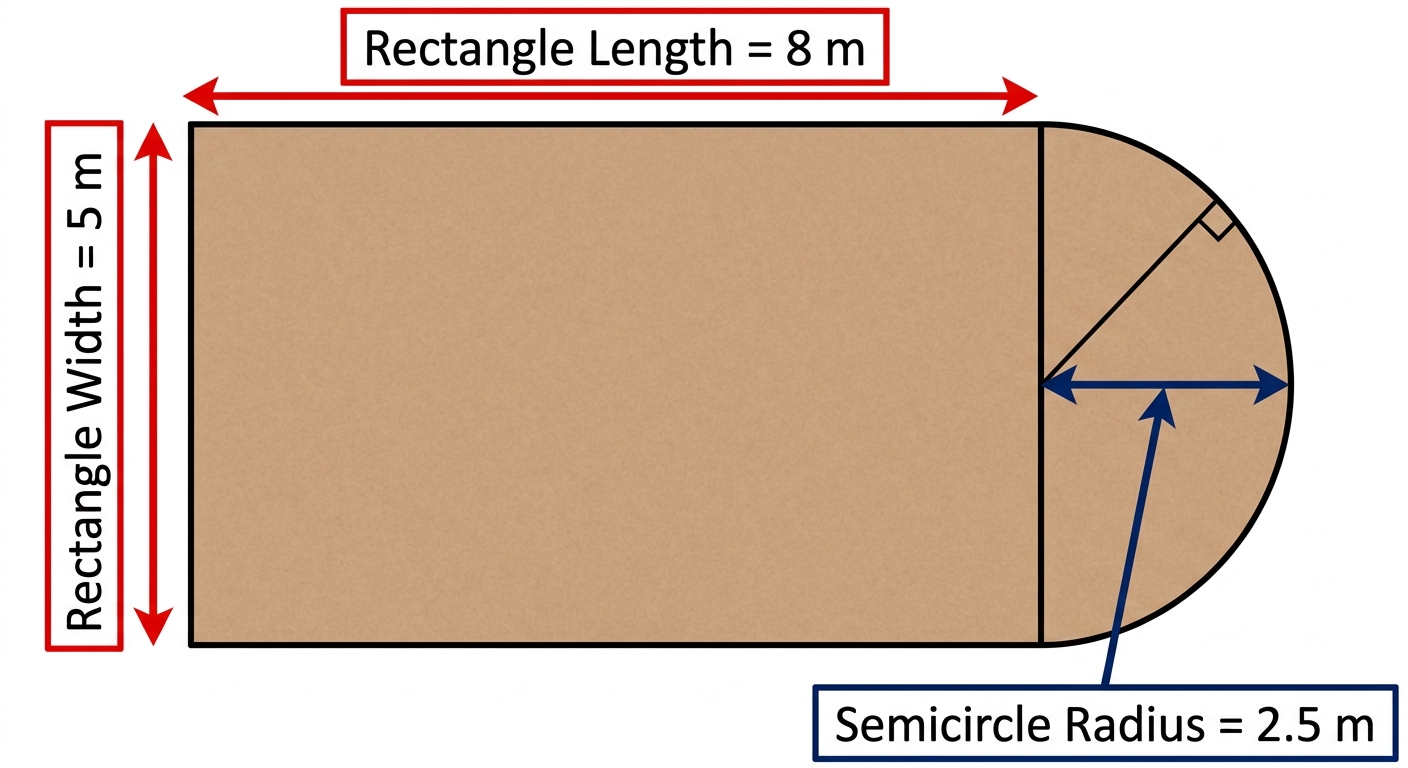
A gardener plans a flower bed made of a rectangle (length 8 m, width 5 m) with a semicircle (radius 2.5 m) attached to one shorter side.
a
Calculate the total area of the flower bed. [2]
b
Describe two ways the real garden soil could make the gardener's calculated area inaccurate. [2]
c
The gardener also needs to fence the entire boundary of the flower bed. Calculate the total length of fencing required. [2]
Solutions
3QuestionDrawing and Interpreting Nets of 3D ShapesAssessment Practice
6 marks~9 minCriterion C
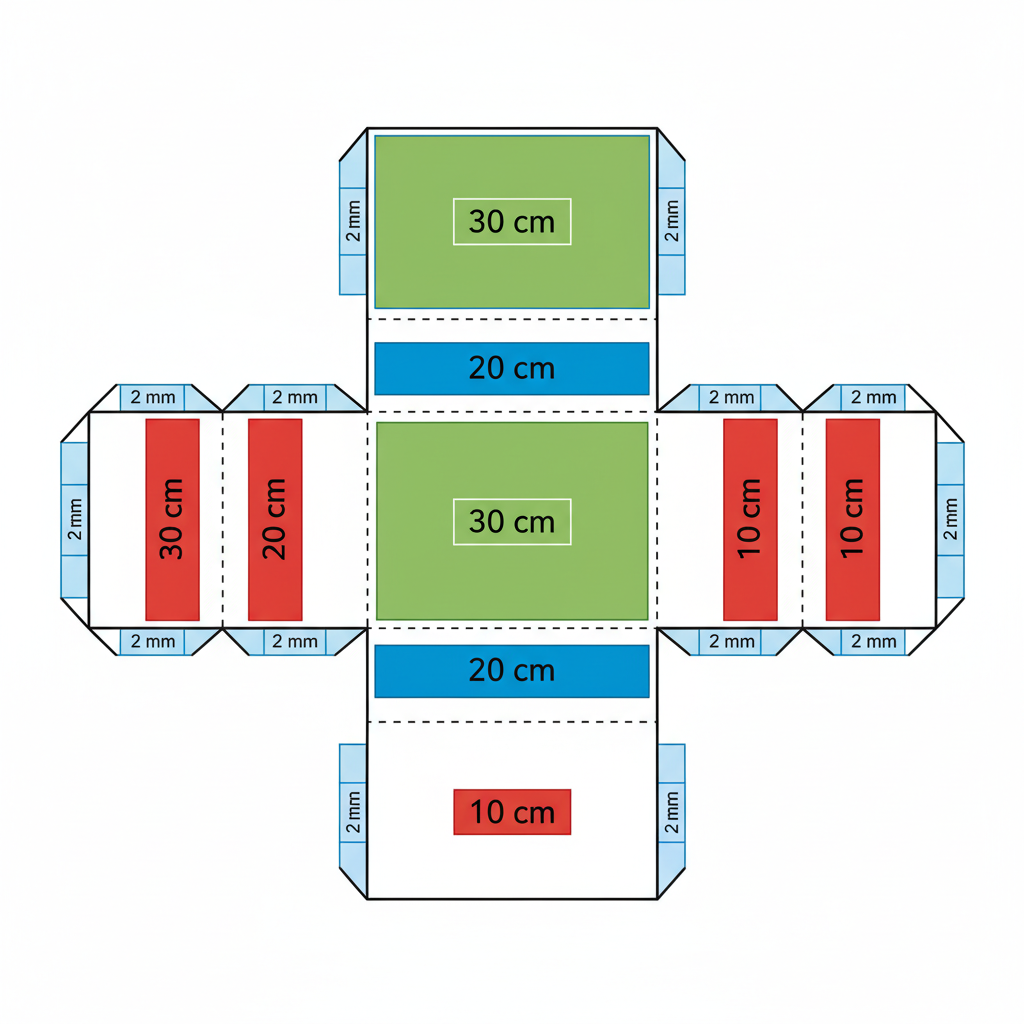
A cereal company makes a cardboard box that is a cuboid measuring 30 cm × 20 cm × 10 cm. When the flat net is folded and glued, each joined edge has a flap (a narrow strip used for gluing) that is 1 cm wide.
a
Calculate the total surface area of the cuboid. [2]
b
A cuboid net has 7 flaps. Calculate the total area of the flaps in cm². [2]
c
The company claims the net's total area (surface area + flap area) equals the exact amount of cardboard used. Compare this claim with what actually happens when the box is assembled. [2]
Solutions
4QuestionArea and Perimeter of Compound ShapesAssessment Practice
6 marks~9 minCriterion B
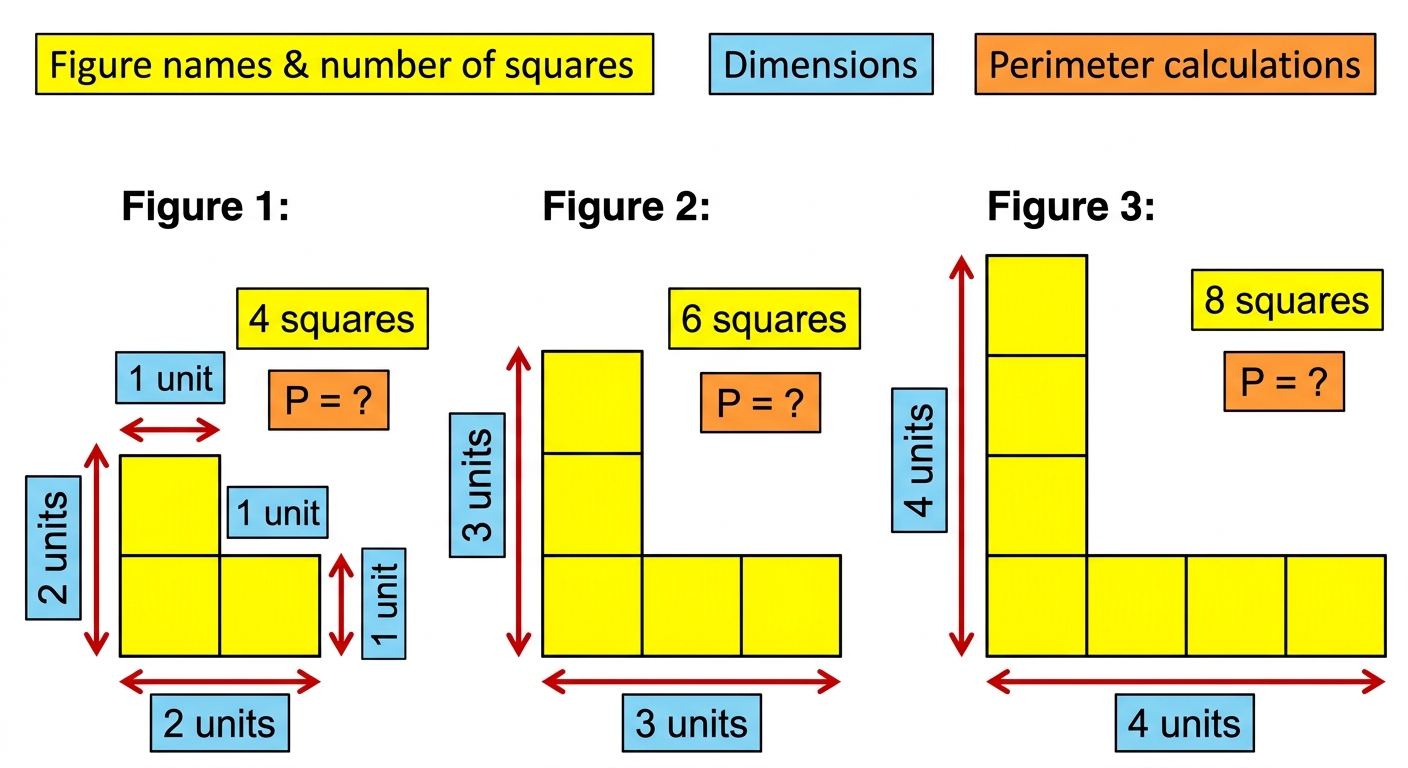
The table shows the perimeters of L-shaped figures made from unit squares.
| Figure number | 1 | 2 | 3 |
|---|---|---|---|
| Arm length (units) | 2 | 3 | 4 |
| Perimeter (units) | 8 | 12 | 16 |
a
State the perimeter of Figure 4. [1]
b
Calculate the perimeter of Figure 10. Show your working. [2]
c
Write a formula for the perimeter of Figure . Use your formula to find when the arm length is 15 units, and explain why your answer is correct by breaking the L-shape into two rectangles and accounting for any shared sides. [3]
Solutions
That's every free question here — 4 of 50.
+46 more questions, plus Mock Papers & Worksheets, are waiting in Premium.