You're viewing free preview questions — 4 questions previewing here — subscribe to unlock 73 more, plus the Full Question Bank, Mock Papers & Worksheets.Upgrade
Scale Drawings Maps and Bearings — Free MYP2 Mathematics Practice Questions

1QuestionCreating and Interpreting Scale DiagramsConcept Practice
2 marks~3 minCriterion A
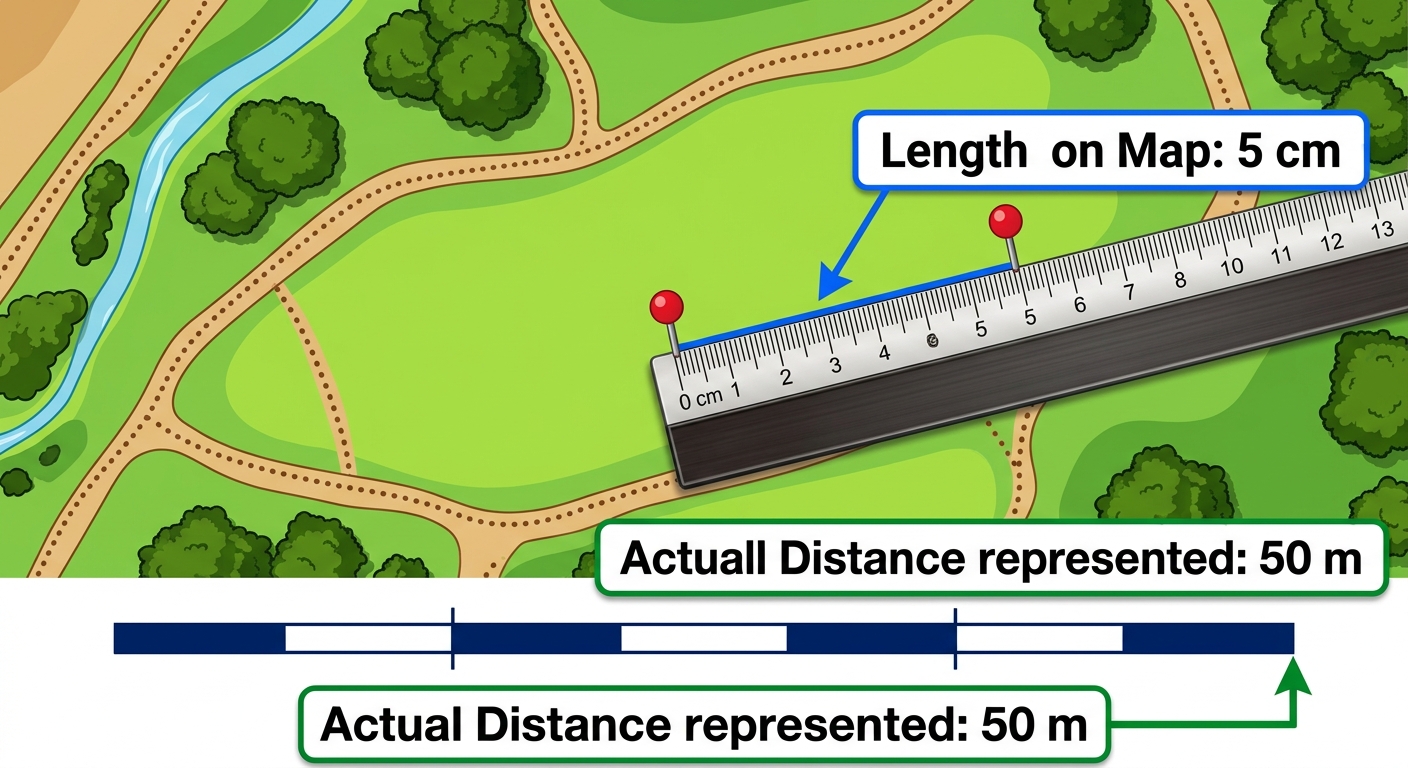
A map shows a line of cm representing a real distance of m.
a
Identify the map distance and the real distance in the same unit. [1]
b
Calculate the scale of the map. Express your answer as a ratio in the form , showing all working. [1]

Solutions
2QuestionUnderstanding Scale in Maps and BlueprintsAssessment Practice
4 marks~6 minCriterion D
A student measures a classroom floor: length m, width m. She draws a floor plan at a scale of using a ruler with a precision of mm ( cm).
a
Calculate the scale dimensions (in cm) of the floor plan. [1]
b
Explain how the ruler's precision creates a range of possible areas for the floor plan. Use the minimum and maximum possible scale dimensions in your answer. [2]
c
Identify one limitation of using this floor plan to order carpet for the classroom. [1]
Solutions
3QuestionReading Bearings and Compass DirectionsAssessment Practice
4 marks~6 minCriterion C
A bearing is an angle measured clockwise from north, written as a three-digit number from to .
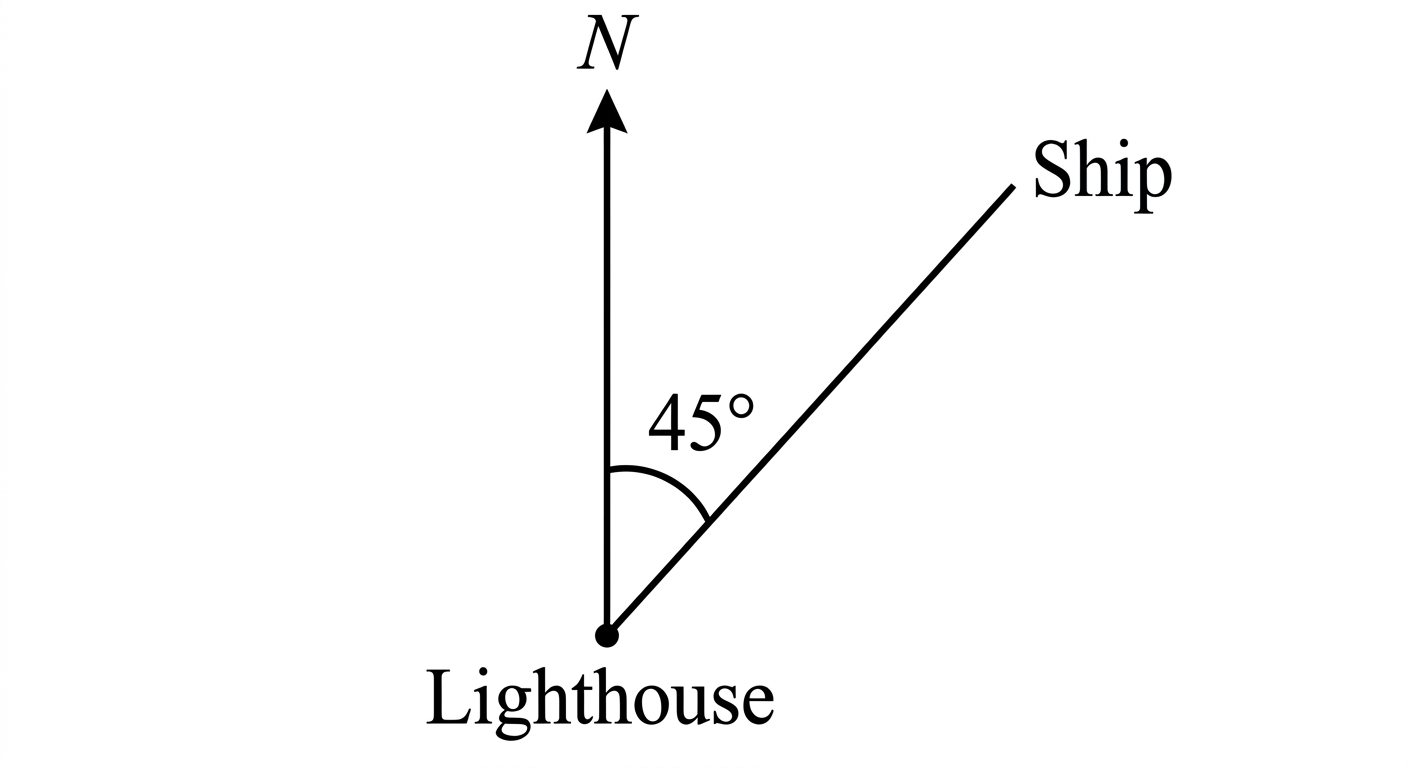
A student says a ship is at a bearing of from a lighthouse. The angle measured clockwise from the north line to the ship is .
A student says a ship is at a bearing of from a lighthouse. The angle measured clockwise from the north line to the ship is .
a
State the correct three-digit bearing for an angle of clockwise from north. [1]
b
On the diagram, mark and label the north line, the angle, and the direction of the ship from the lighthouse. Use your diagram to explain why the student's bearing is incorrect. [2]
c
A bearing of places a ship in the southeast direction. Compare this position with the actual position of the ship, and explain the difference. [1]
Solutions
4QuestionMeasuring Bearings with a ProtractorAssessment Practice
8 marks~12 minCriterion B
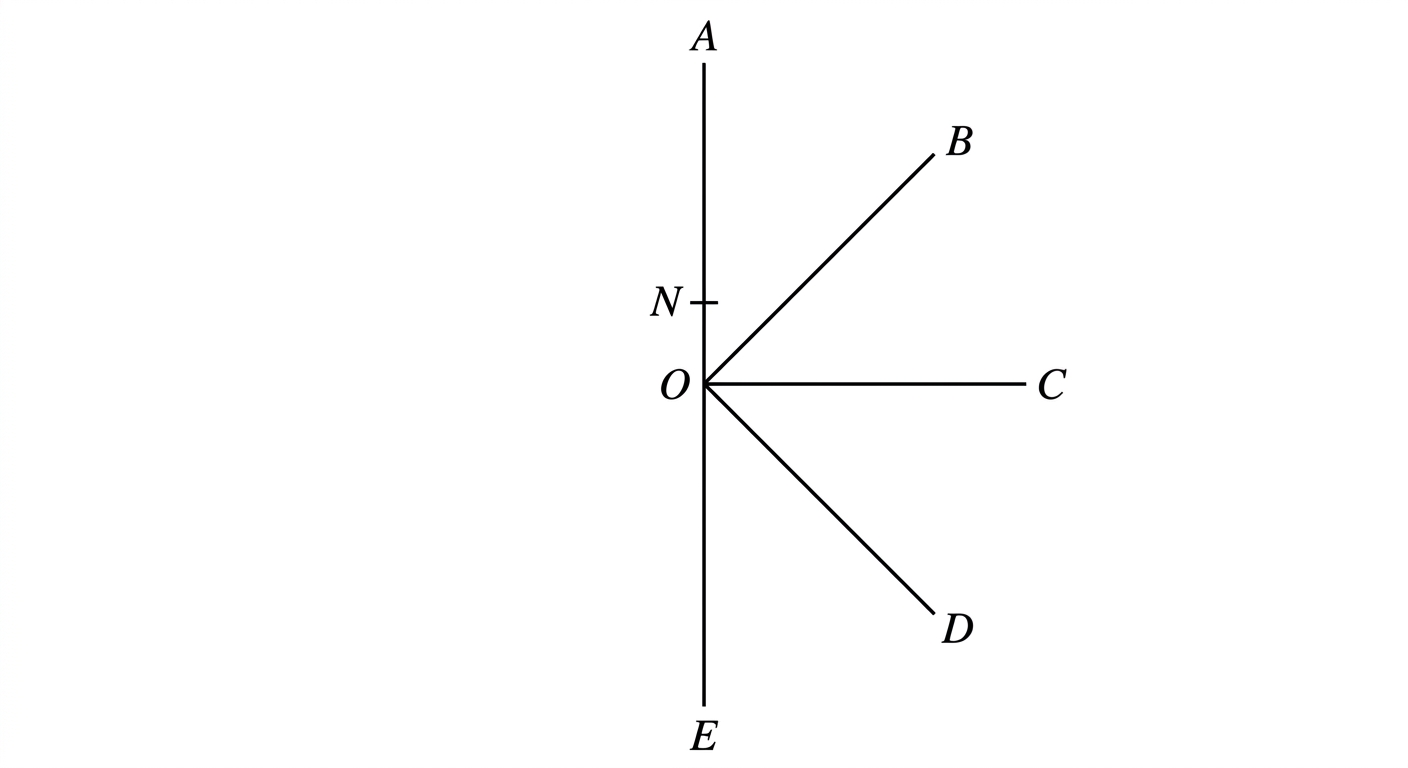
The diagram shows five rays from point O to towns A, B, C, D, and E. Town A has a bearing of from O (due north). Town E has a bearing of from O (due south).
A (°): (given) — B (°): ___ — C (°): ___ — D (°): ___ — E (°): (given)
A (°): (given) — B (°): ___ — C (°): ___ — D (°): ___ — E (°): (given)
a
Measure and record the bearings of towns B, C, and D from point O. [3]
b
Describe the pattern in the bearings of towns A, B, C, D, and E. Use the pattern to calculate the bearing of town C without measuring. [3]
c
Compare your measured bearing of town C with your calculated value. Explain one reason why the two values might differ. [2]
Solutions
That's every free question here — 4 of 77.
+73 more questions, plus Mock Papers & Worksheets, are waiting in Premium.