You're viewing free preview questions — 4 questions previewing here — subscribe to unlock 63 more, plus the Full Question Bank, Mock Papers & Worksheets.Upgrade
Volume of Cubes Prisms and Cylinders — Free MYP2 Mathematics Practice Questions

1QuestionIntroduction to Volume of CylindersConcept Practice
2 marks~3 minCriterion A
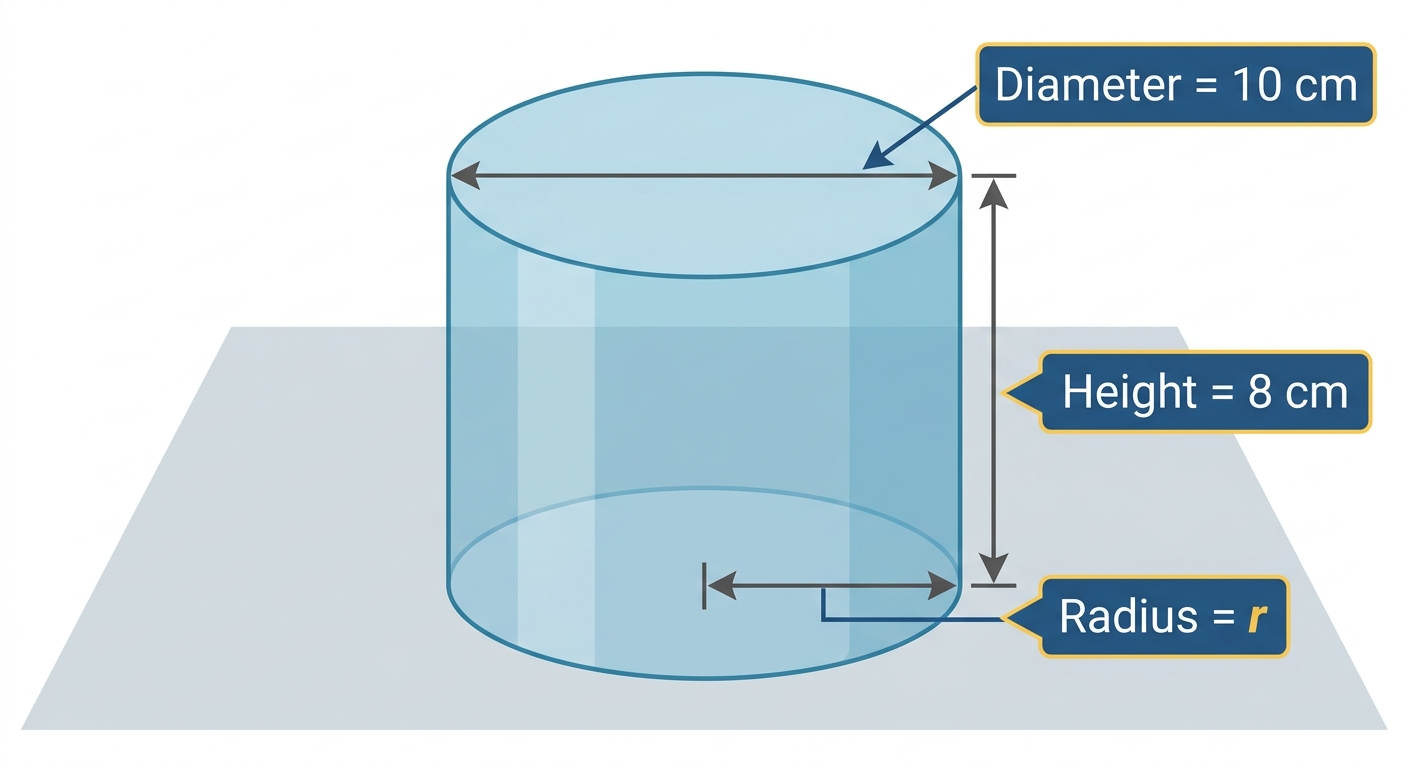
A cylinder has a diameter of 10 cm and a height of 8 cm.
a
Identify the radius of the cylinder. [1]
b
Calculate the volume of the cylinder using . [1]

Solutions
2QuestionIntroduction to Volume of CylindersAssessment Practice
3 marks~5 minCriterion C
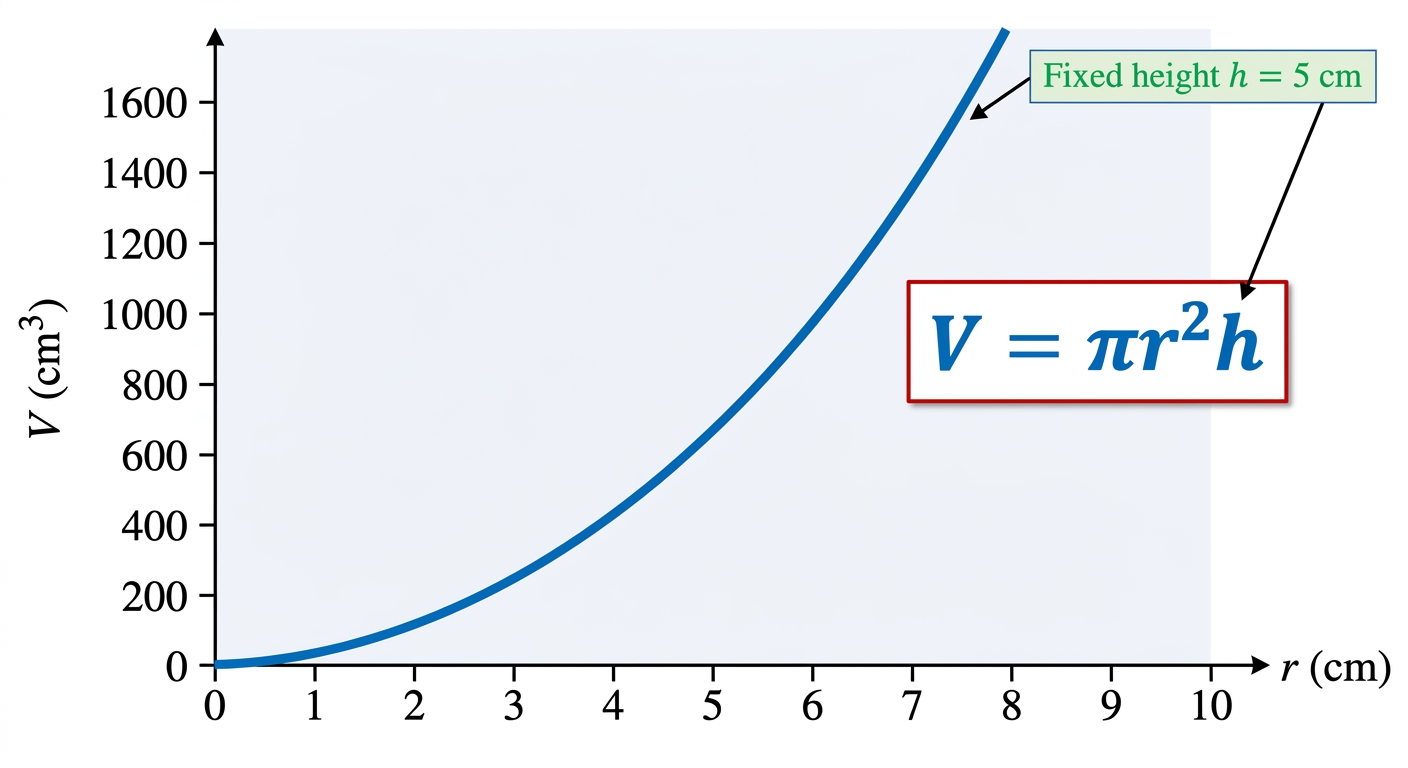
A cylinder has a fixed height of 5 cm. Its volume is given by
where is the radius and is the height.
where is the radius and is the height.
a
Identify the part of the formula that shows volume is not directly proportional to the radius. [1]
b
Explain why the graph of against is a curve rather than a straight line. [1]
c
Two cylinders both have height 5 cm. Cylinder A has radius 2 cm and Cylinder B has radius 4 cm. The radius of B is twice the radius of A. Compare the volumes and explain why the volume of B is not simply twice the volume of A. [1]
Solutions
3QuestionVolume of a CubeAssessment Practice
3 marks~5 minCriterion B
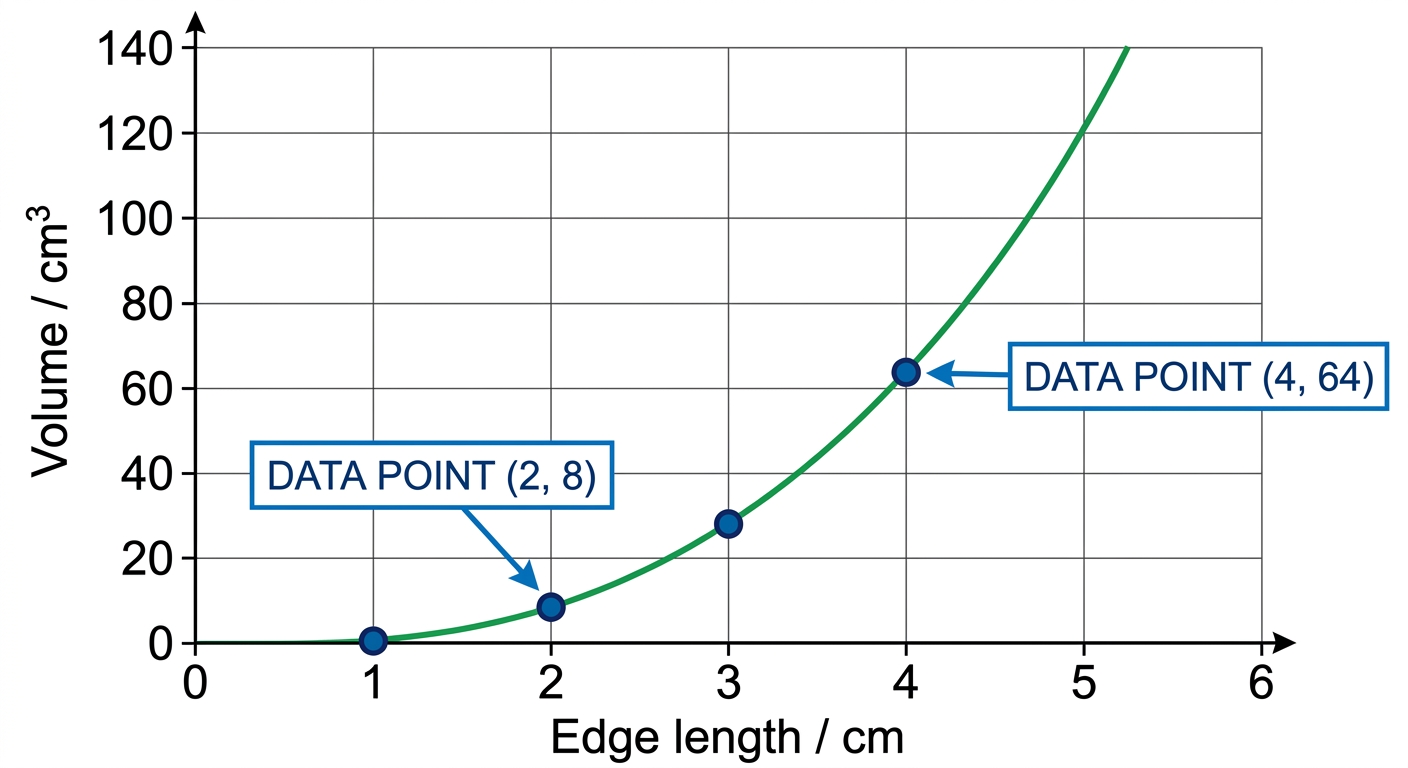
The table shows the volume of cubes with different edge lengths.
| Edge length (cm) | 1 | 2 | 3 | 4 |
|---|---|---|---|---|
| Volume (cm³) | 1 | 8 | 27 | 64 |
a
Identify the relationship between the edge length and the volume of a cube. [1]
b
Calculate the volume of a cube with an edge length of 5 cm. [1]
c
A second cube has a volume of 64 cm³ and a third cube has a volume of 125 cm³. Compare the edge lengths of these two cubes. [1]
Solutions
4QuestionIntroduction to Volume of CylindersAssessment Practice
4 marks~6 minCriterion D
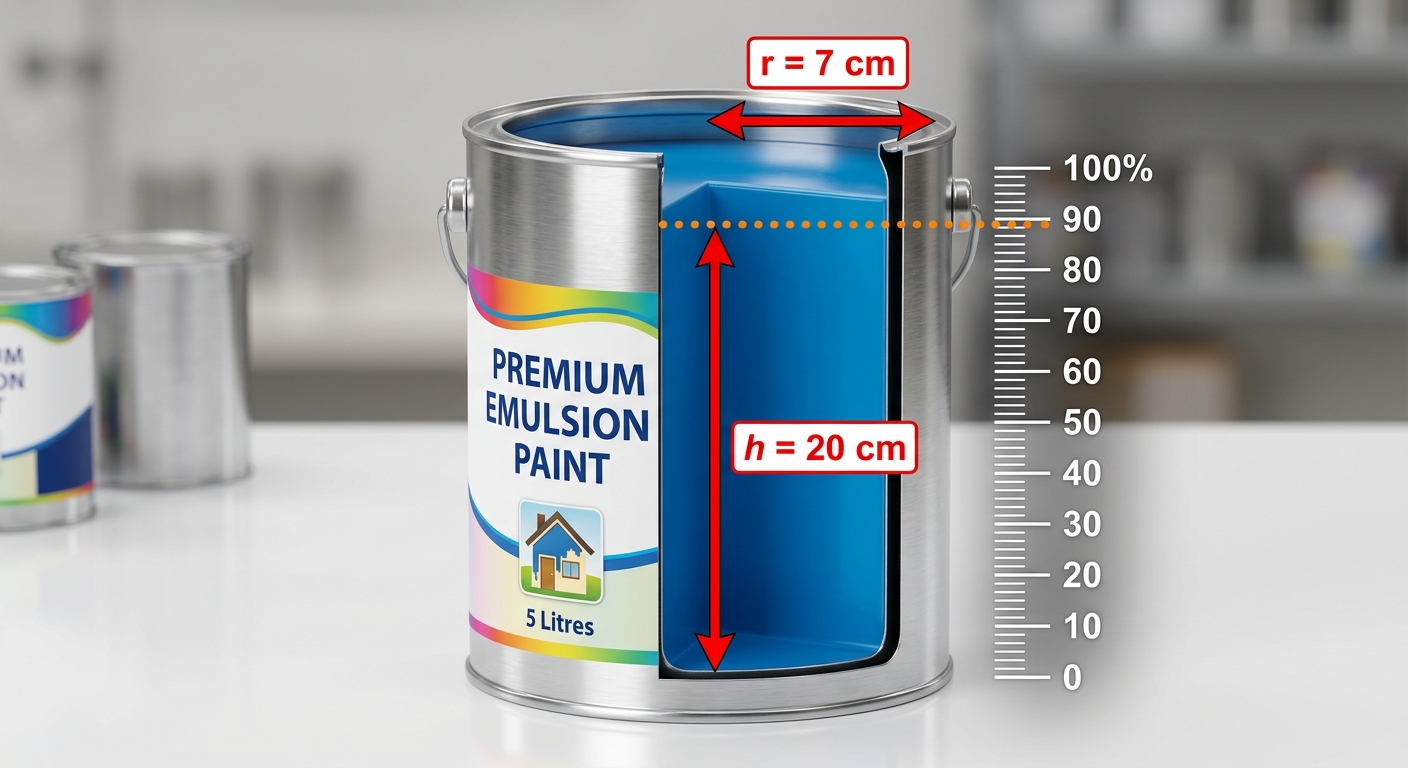
A paint factory fills cylindrical cans using the formula
Each can has a radius of 7 cm and a height of 20 cm. Use .
Each can has a radius of 7 cm and a height of 20 cm. Use .
a
Calculate the volume of one can. [1]
b
Each can is filled to only 90% of its full capacity. Calculate the volume of paint in one can. [1]
c
Explain whether the formula overestimates or underestimates the actual volume of paint in the can, and identify one real-world reason why leaving an air gap is necessary. [2]
Solutions
That's every free question here — 4 of 67.
+63 more questions, plus Mock Papers & Worksheets, are waiting in Premium.