You're viewing free preview questions — 4 questions previewing here — subscribe to unlock 58 more, plus the Full Question Bank, Mock Papers & Worksheets.Upgrade
Angle Rules and Proofs — Free MYP2 Mathematics Practice Questions

1QuestionAlternate Interior and Exterior AnglesConcept Practice
2 marks~3 minCriterion A
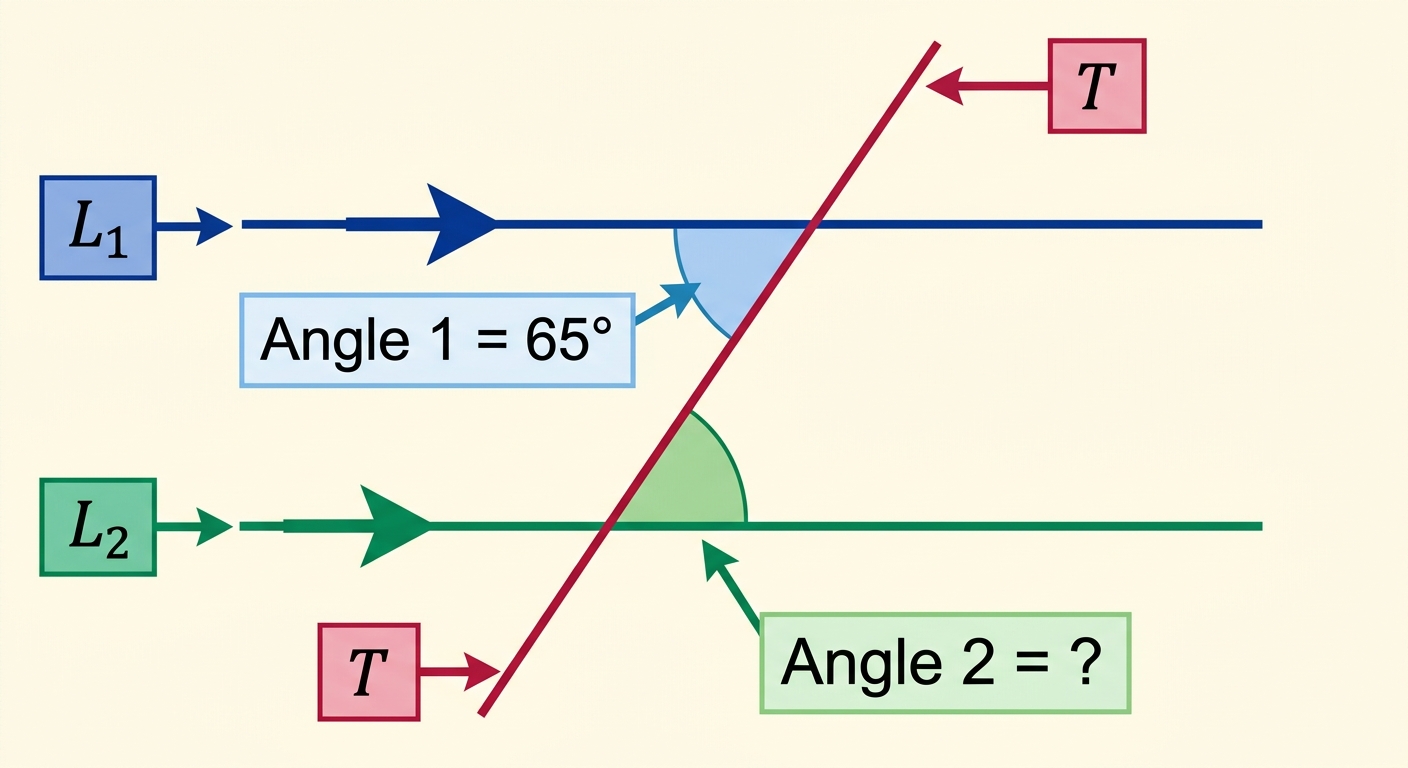
In the diagram, two parallel lines are cut by a transversal (a line that crosses both parallel lines). One alternate interior angle measures .
a
State the measure of the other alternate interior angle. [1]
b
Identify the geometric property that justifies your answer in part (a). [1]

Solutions
2QuestionAngle Sum in a Triangle and QuadrilateralAssessment Practice
4 marks~6 minCriterion D
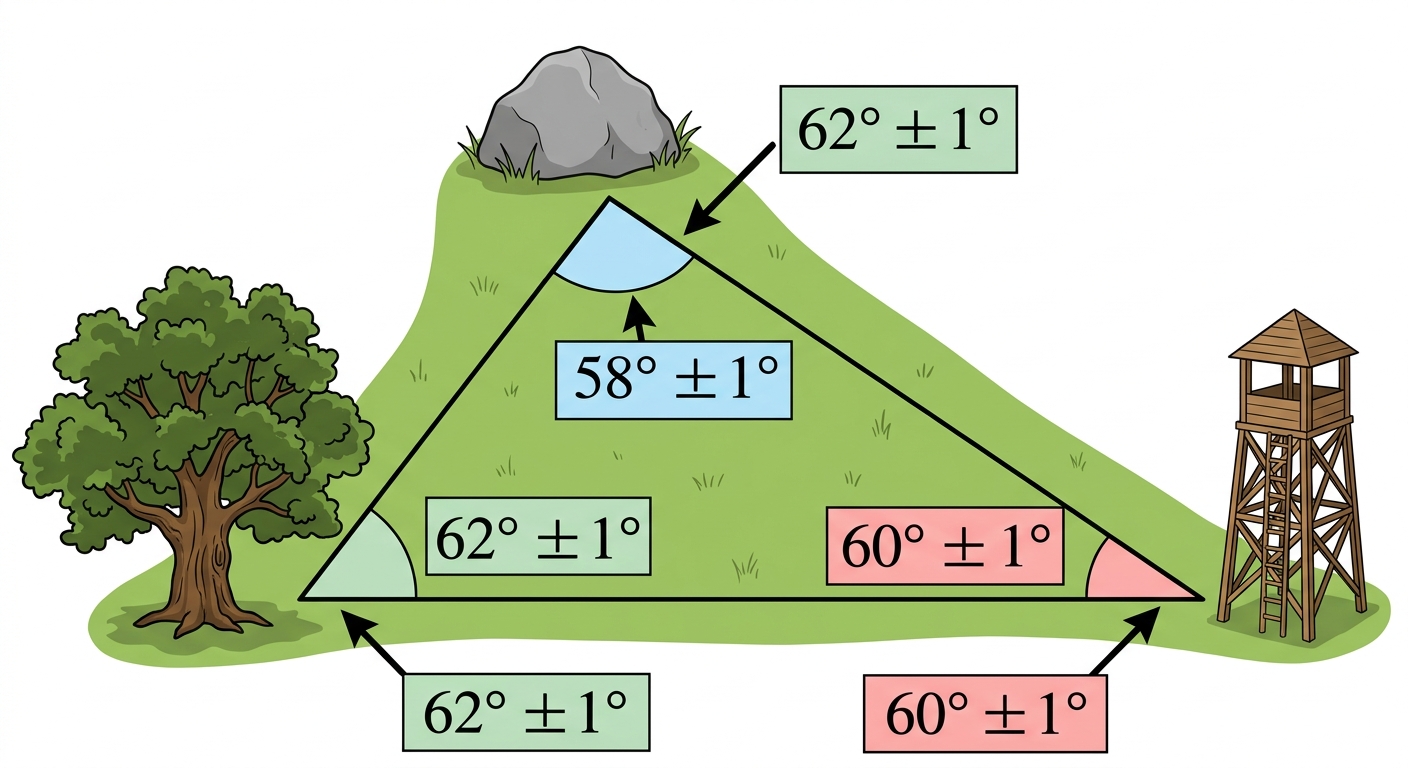
A park ranger measures the three angles of a triangular plot of land as , , and . Each measurement has a possible error of .
a
State the measured sum of the three angles. [1]
b
Calculate the minimum possible sum and the maximum possible sum of the angles, accounting for the measurement error. [2]
c
Explain why the ranger's claim that the map is accurate cannot be fully trusted, and identify one limitation of using only the angle sum rule to check a triangle's accuracy. [1]
Solutions
3QuestionSolving Problems with Justification and ProofConcept Practice
3 marks~5 minCriterion B
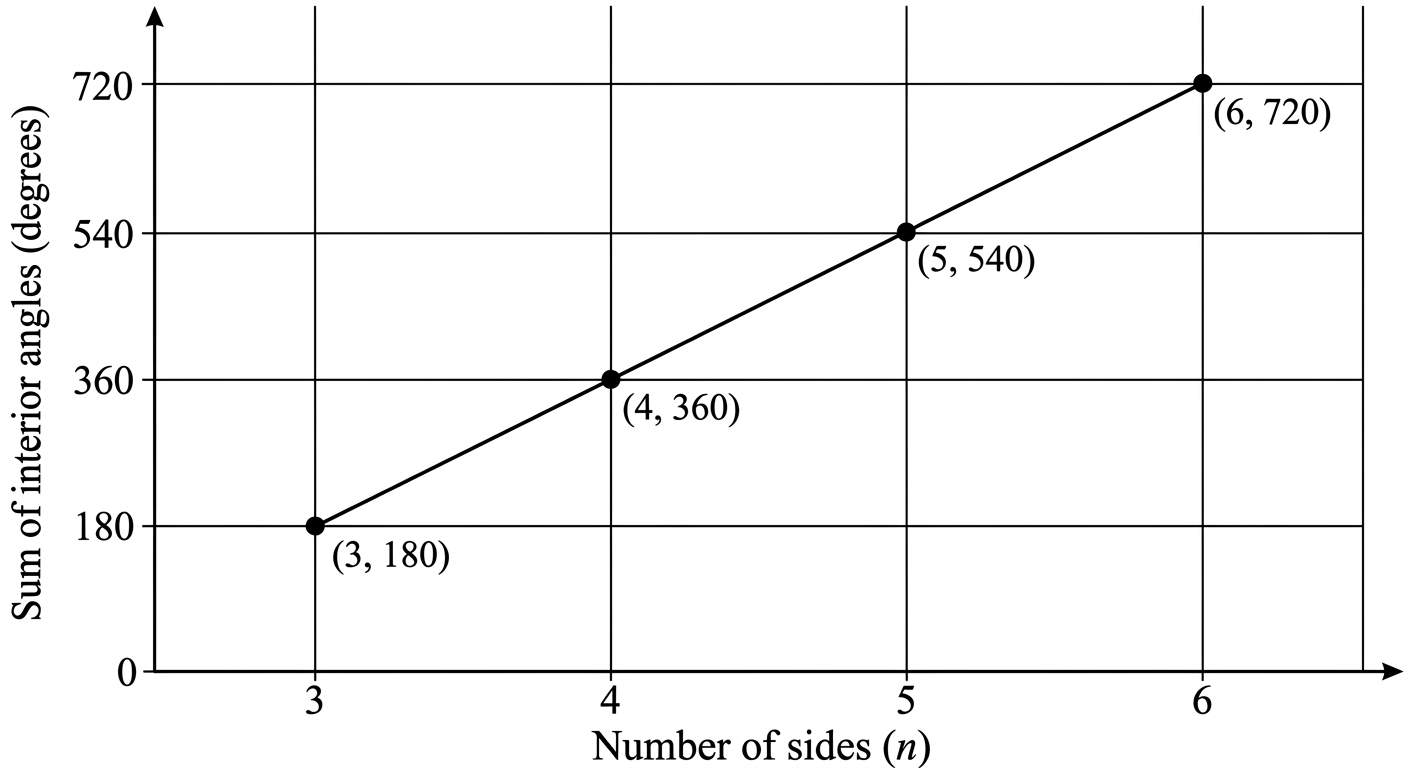
The graph shows the sum of interior angles for regular polygons with 3, 4, 5, and 6 sides.
a
State the sum of interior angles of a triangle. [1]
b
Explain the pattern shown in the graph. [1]
c
Calculate the sum of interior angles of an octagon (8 sides). [1]
Solutions
4QuestionVertically Opposite and Corresponding AnglesConcept Practice
5 marks~8 minCriterion C
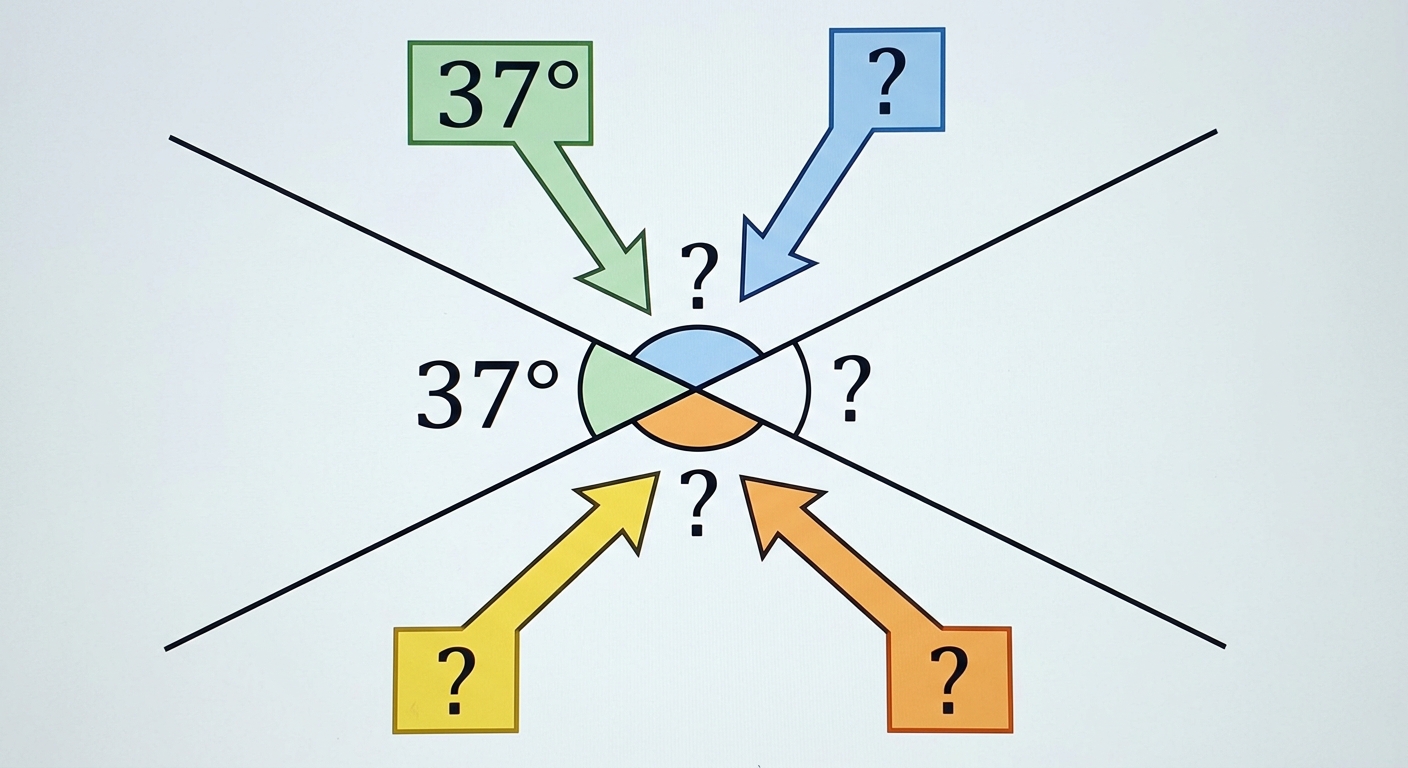
Two straight lines intersect, forming four angles. One angle is .
Vertically opposite angles are the equal angles directly across from each other at an intersection.
Vertically opposite angles are the equal angles directly across from each other at an intersection.
a
State the size of the angle vertically opposite to . [1]
b
Calculate the sizes of the other two angles formed at the intersection. [2]
c
A student claims: "If one angle in a pair of vertically opposite angles is acute (less than ), the other must also be acute." Using your results, explain whether this claim is correct. [2]
Solutions
That's every free question here — 4 of 62.
+58 more questions, plus Mock Papers & Worksheets, are waiting in Premium.