You're viewing free preview questions — 4 questions previewing here — subscribe to unlock 59 more, plus the Full Question Bank, Mock Papers & Worksheets.Upgrade
Lines, Angles, and Their Properties — Free MYP2 Mathematics Practice Questions

1QuestionAngle Relationships in Parallel Lines and TransversalsConcept Practice
2 marks~3 minCriterion A
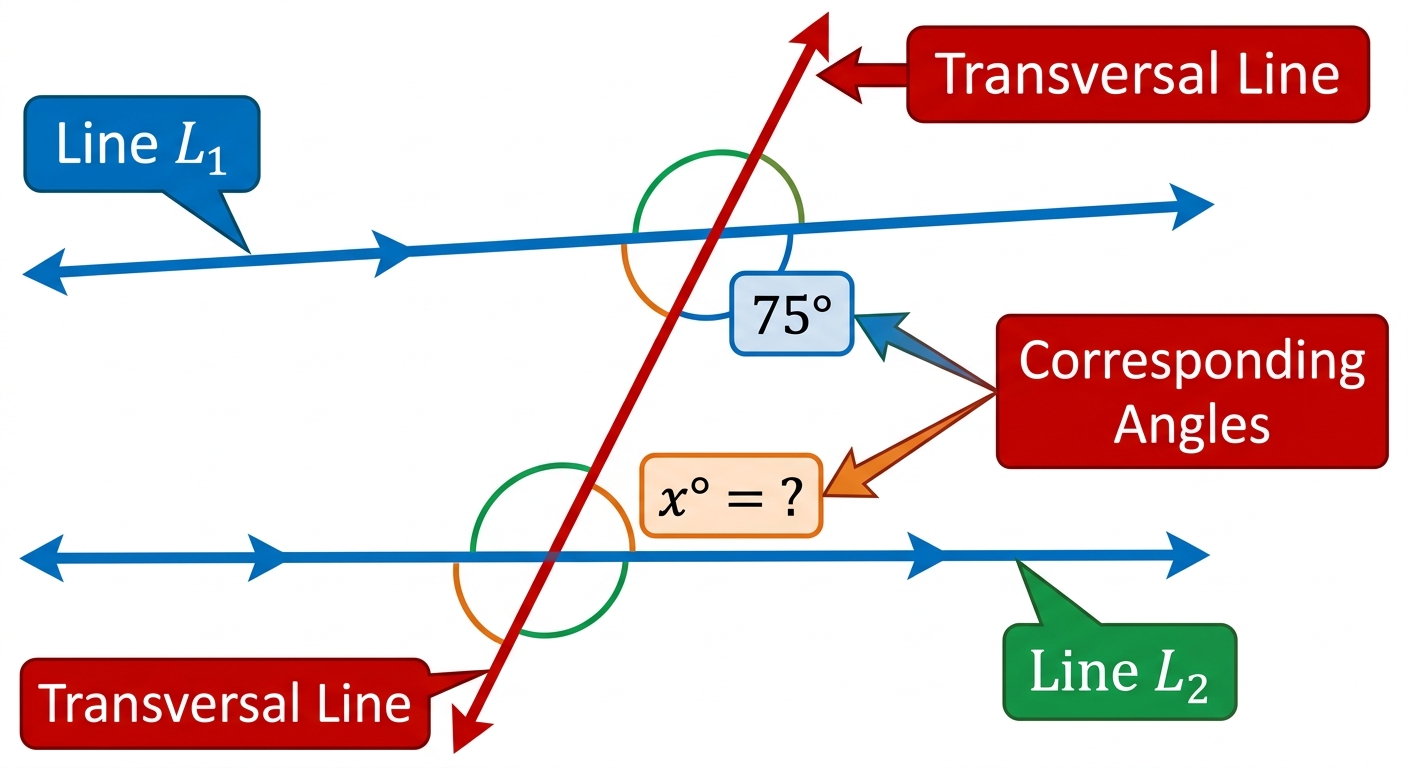
The diagram shows two parallel lines cut by a transversal (a line crossing both). One pair of corresponding angles is marked: one angle measures and the other is unknown.
a
State the relationship between corresponding angles when two parallel lines are cut by a transversal. [1]
b
Calculate the unknown angle. [1]

Solutions
2QuestionAngles on a Straight Line and Around a PointAssessment Practice
4 marks~6 minCriterion D
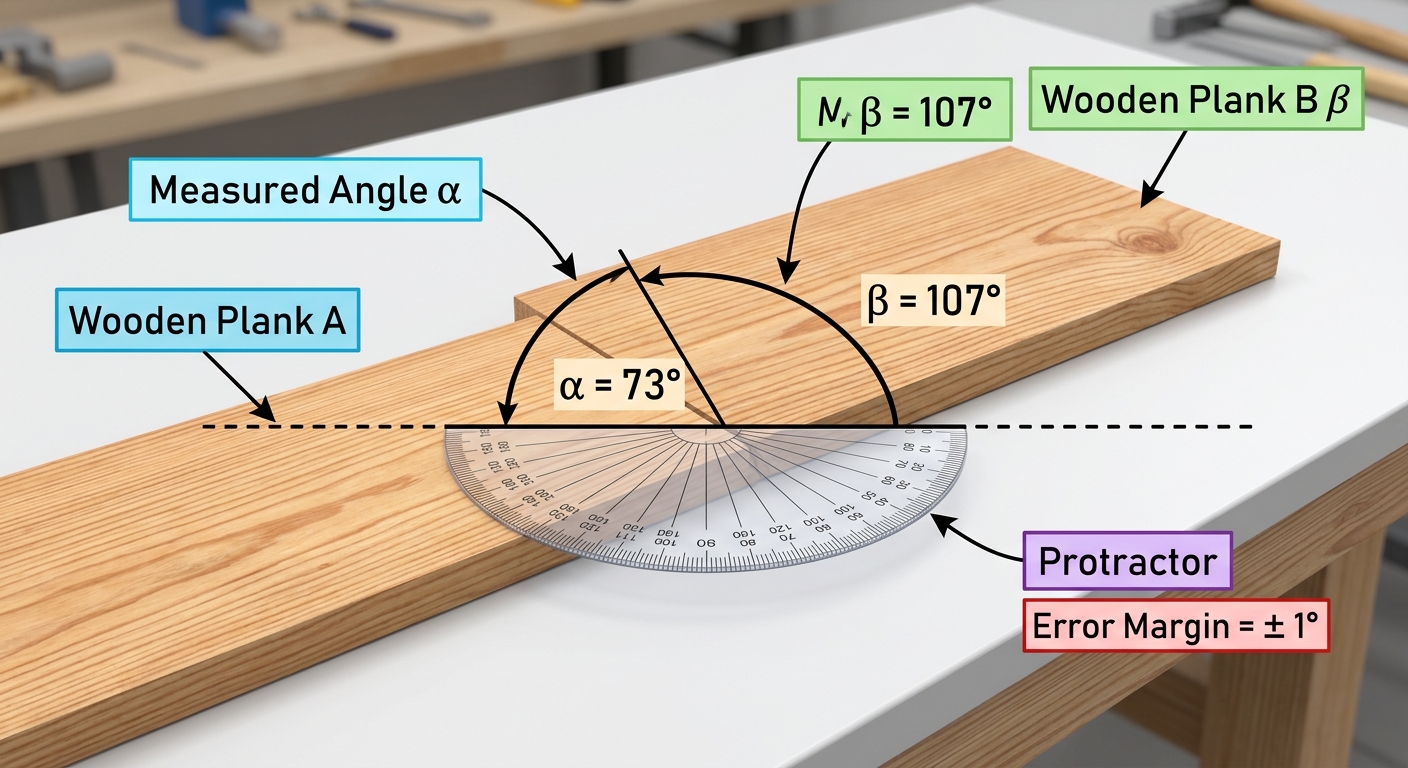
A carpentry student measures two angles formed where two wooden planks meet along a straight edge. The recorded angles are and . The protractor used has a margin of error (the range within which the true value may lie) of .
a
Calculate the sum of the two measured angles. [1]
b
The student claims the angles are supplementary (summing to exactly ). Using the margin of error, identify the smallest and largest possible sums, and explain whether the student's claim is fully valid. [2]
c
Describe one limitation of using only a protractor to check that a carpentry joint is straight. [1]
Solutions
3QuestionConstructing and Measuring Angles with ProtractorConcept Practice
5 marks~8 minCriterion B
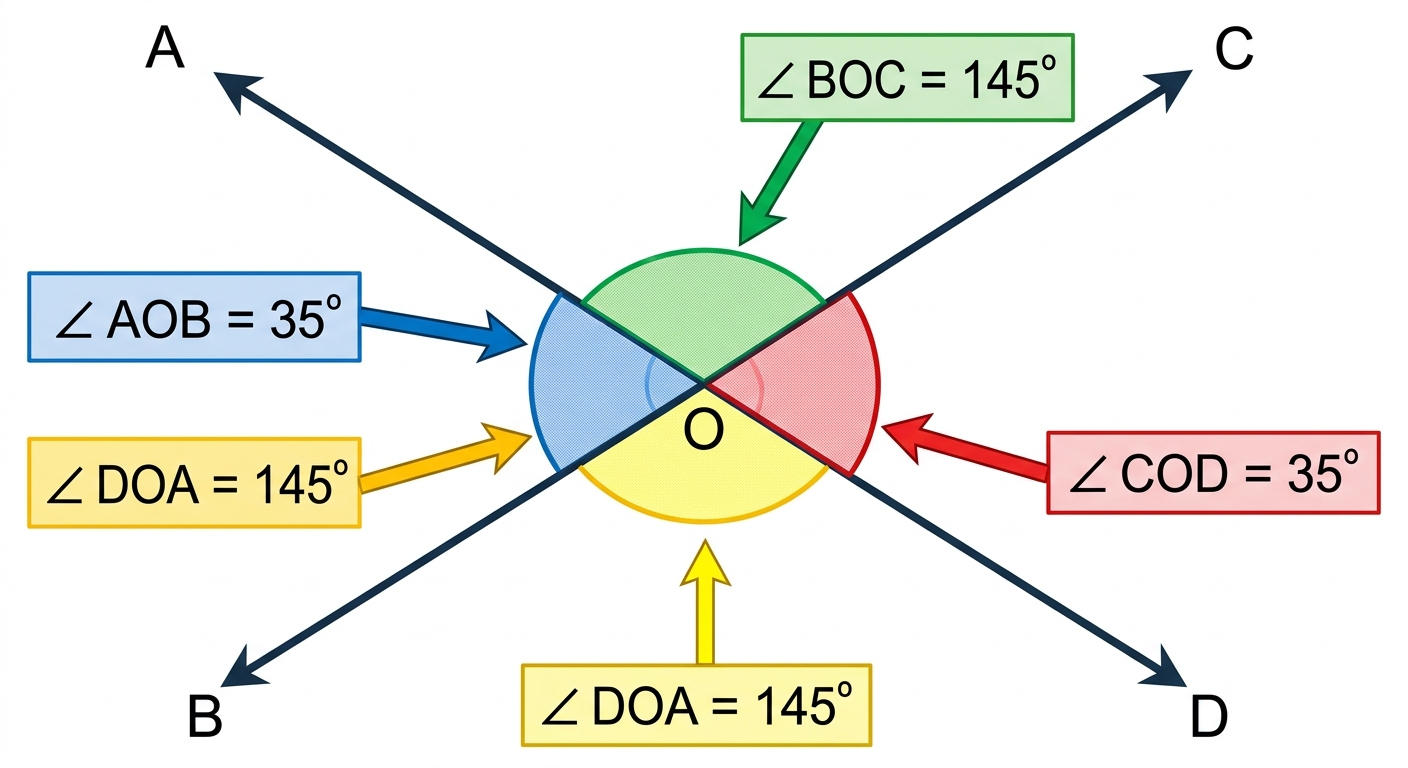
Two straight lines, and , intersect at point , forming four angles: , , , and .
a
Identify the relationship between and . [1]
b
Calculate using the straight-line property (angles on a straight line sum to ). Show your working. [2]
c
Compare and . Explain why they must always be equal for any two intersecting lines. [2]
Solutions
4QuestionAngle Relationships in Parallel Lines and TransversalsAssessment Practice
5 marks~8 minCriterion C
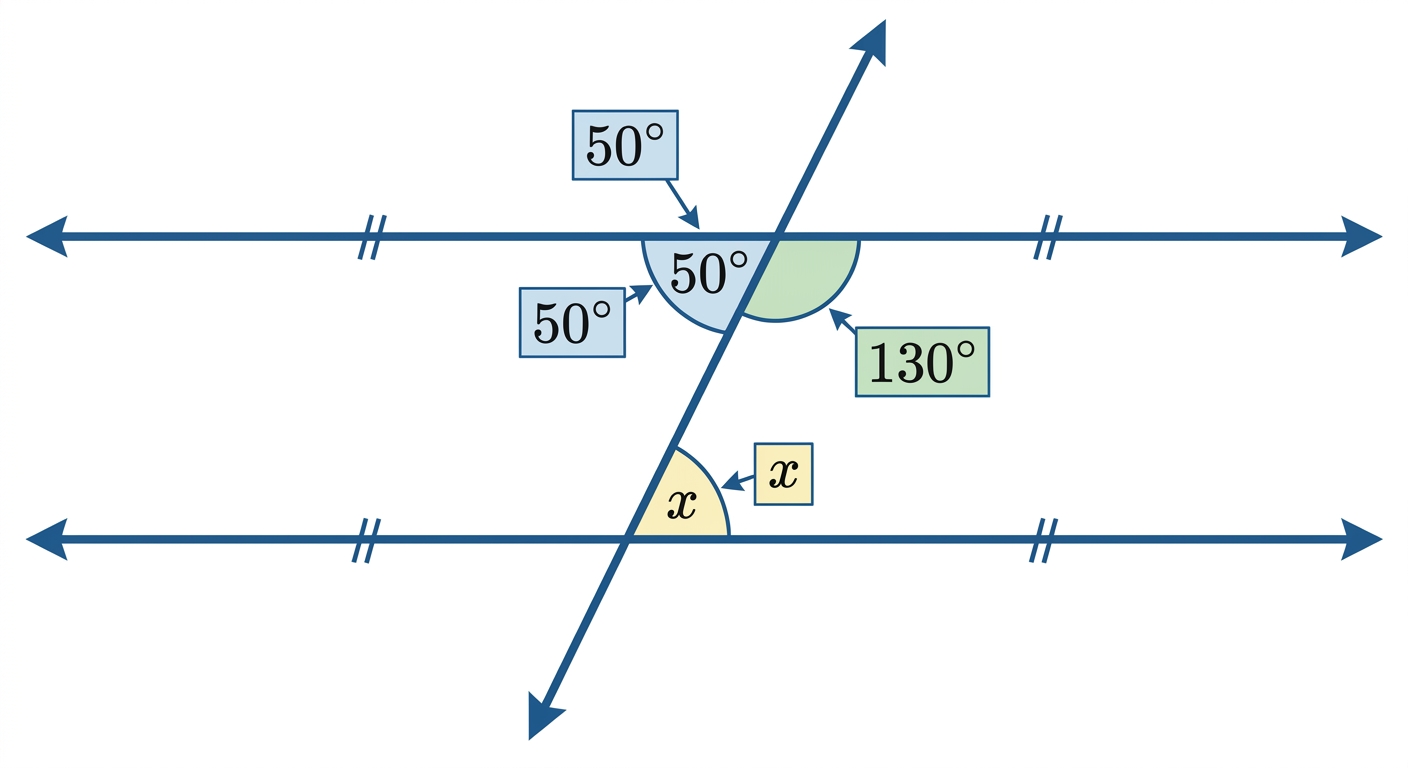
Two parallel lines are cut by a transversal, forming the angles shown in the diagram.
Angle , Angle , Angle .
Angle , Angle , Angle .
a
Identify the relationship between Angle and Angle . [1]
b
Calculate the value of , showing the angle relationship you used. [3]
c
A classmate says could equal instead. Explain why they are incorrect. [1]
Solutions
That's every free question here — 4 of 63.
+59 more questions, plus Mock Papers & Worksheets, are waiting in Premium.