You're viewing free preview questions — 4 questions previewing here — subscribe to unlock 53 more, plus the Full Question Bank, Mock Papers & Worksheets.Upgrade
Triangles, Quadrilaterals, and Polygons — Free MYP2 Mathematics Practice Questions

1QuestionClassifying Triangles by Sides and AnglesConcept Practice
3 marks~5 minCriterion A
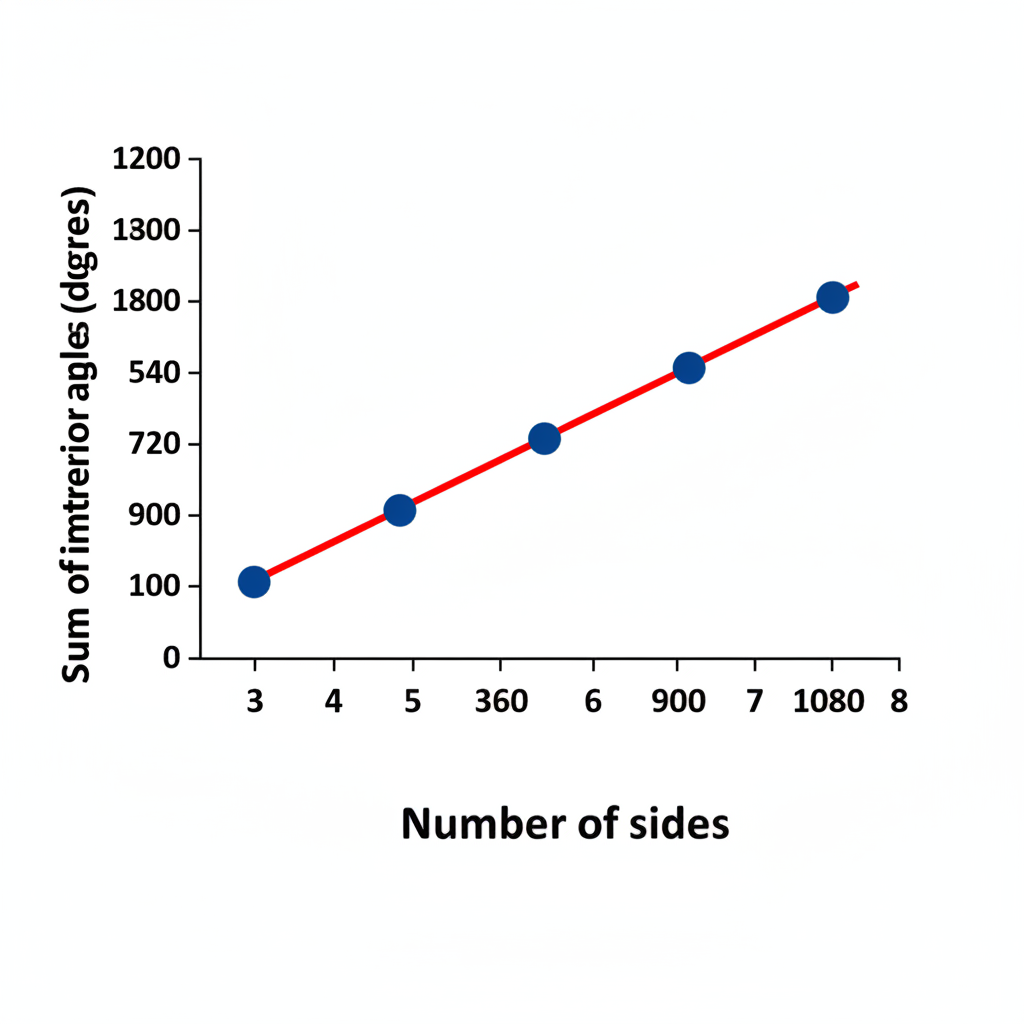
The graph shows the relationship between the number of sides of a regular polygon and the sum of its interior angles.
a
Identify the increase in the sum of interior angles each time the number of sides increases by 1. [1]
b
Calculate the sum of interior angles for a regular polygon with 9 sides. [1]
c
A regular polygon has a sum of interior angles of 900°. Explain whether it could also be classified as a quadrilateral. [1]

Solutions
2QuestionProperties of Squares Rectangles Parallelograms and TrapeziumsAssessment Practice
5 marks~8 minCriterion D
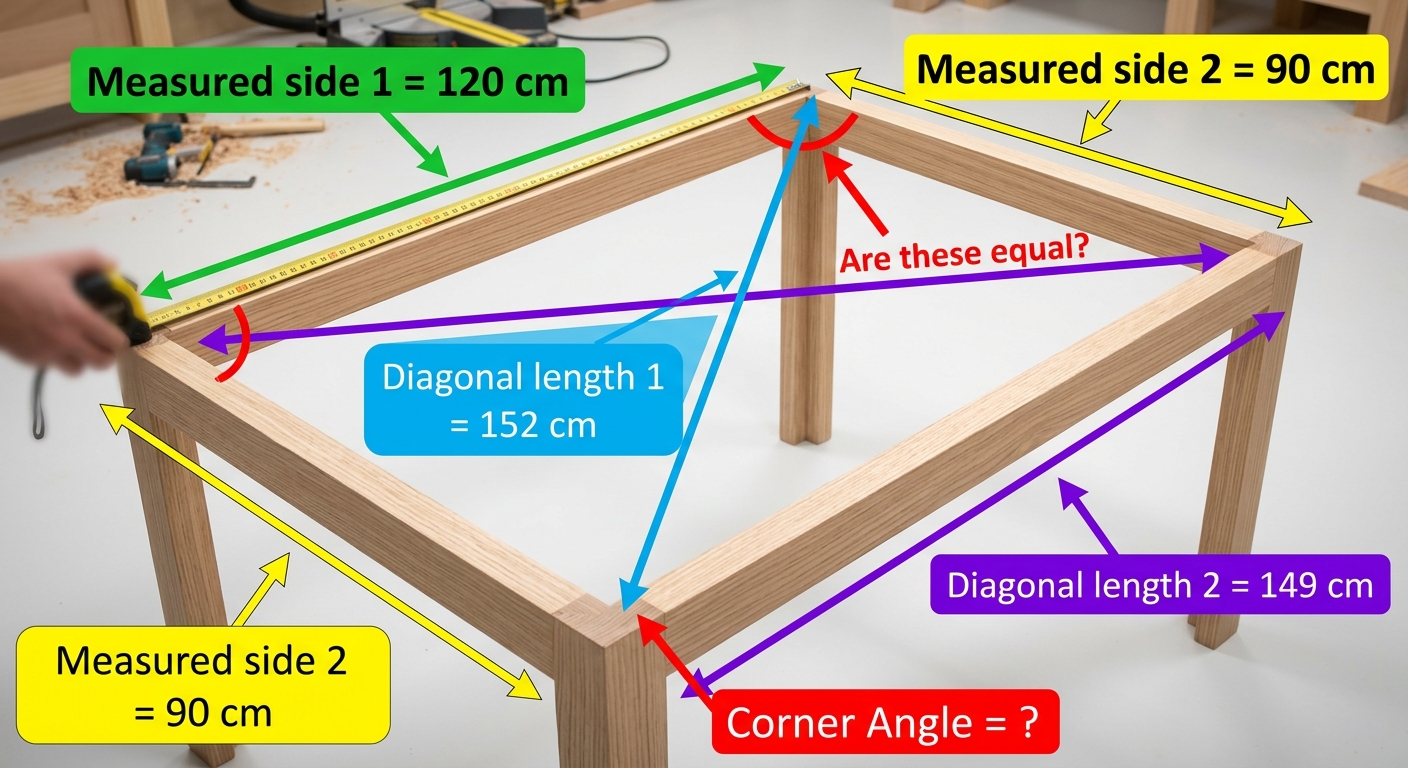
A carpenter builds a rectangular table frame with sides of 120 cm and 90 cm. When measured, the two diagonals are 152 cm and 149 cm.
a
State the property of rectangles that relates to their diagonals. [1]
b
Calculate the expected diagonal length of a perfect rectangle with sides 120 cm and 90 cm. [2]
c
Compare the measured diagonals with your calculated value and decide whether the frame is a perfect rectangle. Include one reason why the measurements might differ from the expected value. [2]
Solutions
3QuestionUnderstanding Interior Angles of PolygonsConcept Practice
3 marks~5 minCriterion B
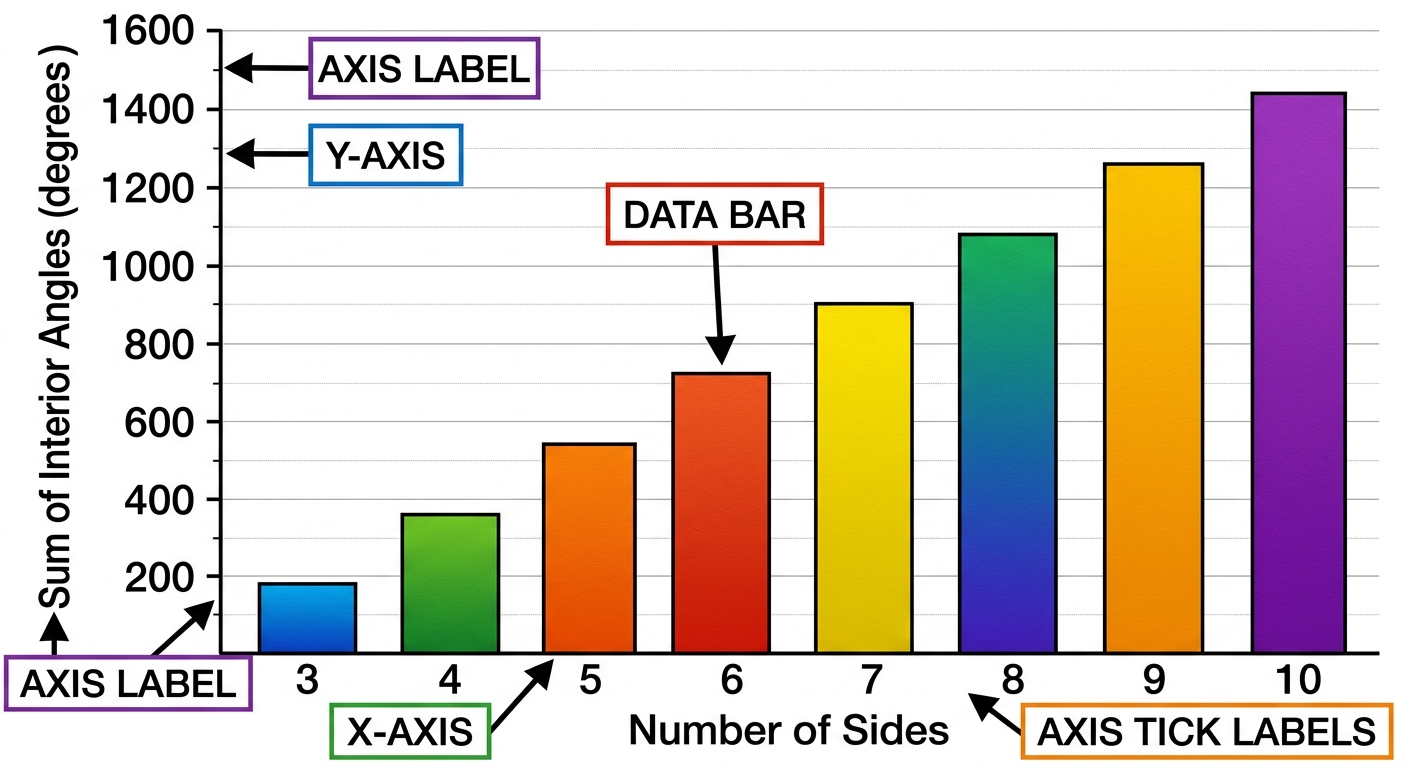
The table below shows the sum of interior angles for polygons with 3 to 10 sides.
| Number of sides | 3 | 4 | 5 | 6 | 7 | 8 | 9 | 10 |
|---|---|---|---|---|---|---|---|---|
| Sum of interior angles (°) | 180 | 360 | 540 | 720 | 900 | 1080 | 1260 | 1440 |
a
Using , calculate the sum of interior angles of a pentagon (). [1]
b
Describe the relationship between the number of sides and the sum of interior angles shown in the table. [1]
c
A polygon has an interior angle sum of 1800°. Explain how you can find the number of sides, and state your answer. [1]
Solutions
4QuestionProperties of Isosceles Equilateral and Right TrianglesAssessment Practice
6 marks~9 minCriterion C
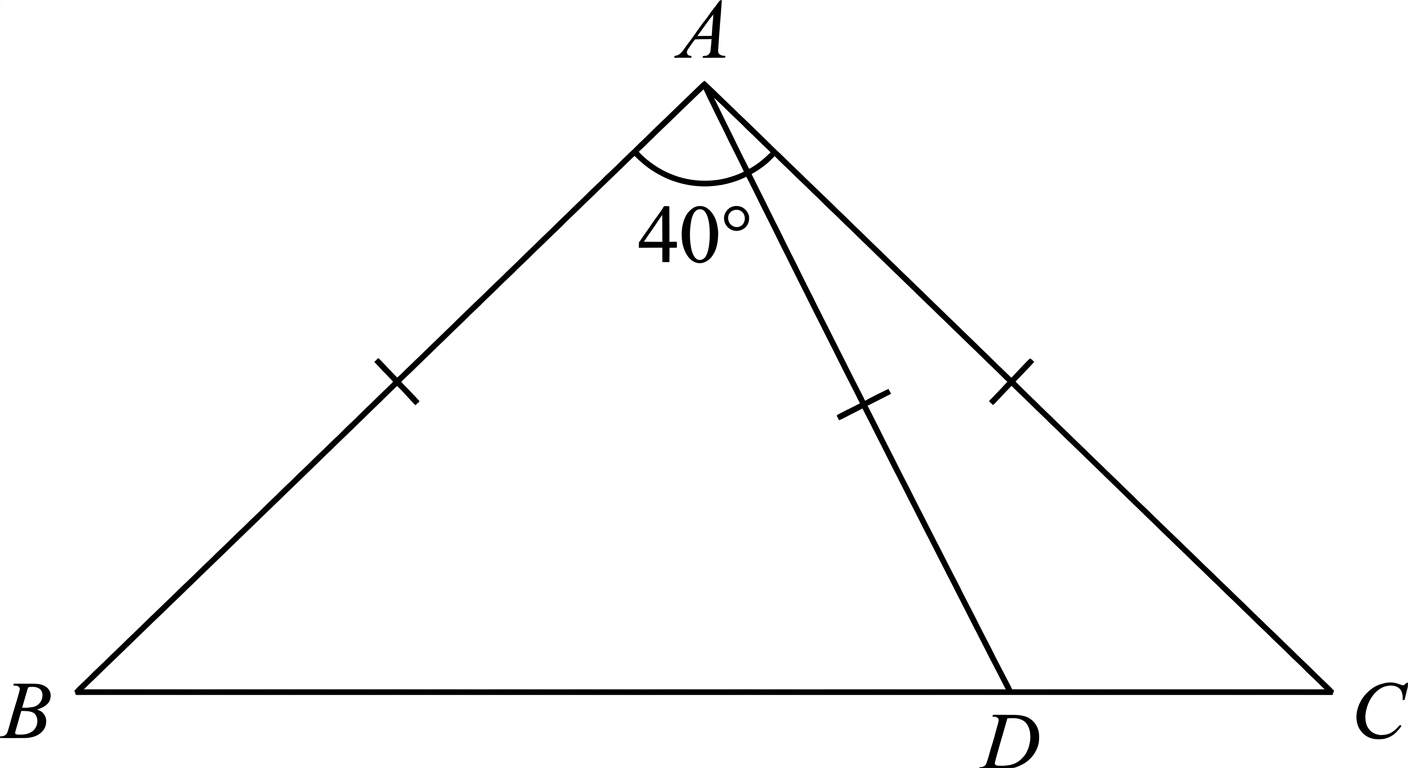
In isosceles triangle , and . Point lies on such that .
a
State the size of . [1]
b
Calculate the size of , showing your working. [2]
c
Triangle has two equal sides. Explain what this tells you about and , and what this reveals about point . [3]
Solutions
That's every free question here — 4 of 57.
+53 more questions, plus Mock Papers & Worksheets, are waiting in Premium.