You're viewing free preview questions — 4 questions previewing here — subscribe to unlock 56 more, plus the Full Question Bank, Mock Papers & Worksheets.Upgrade
Probability with Dice Coins and Spinners — Free MYP2 Mathematics Practice Questions

1QuestionUsing Spinners to Model ProbabilityConcept Practice
2 marks~3 minCriterion A
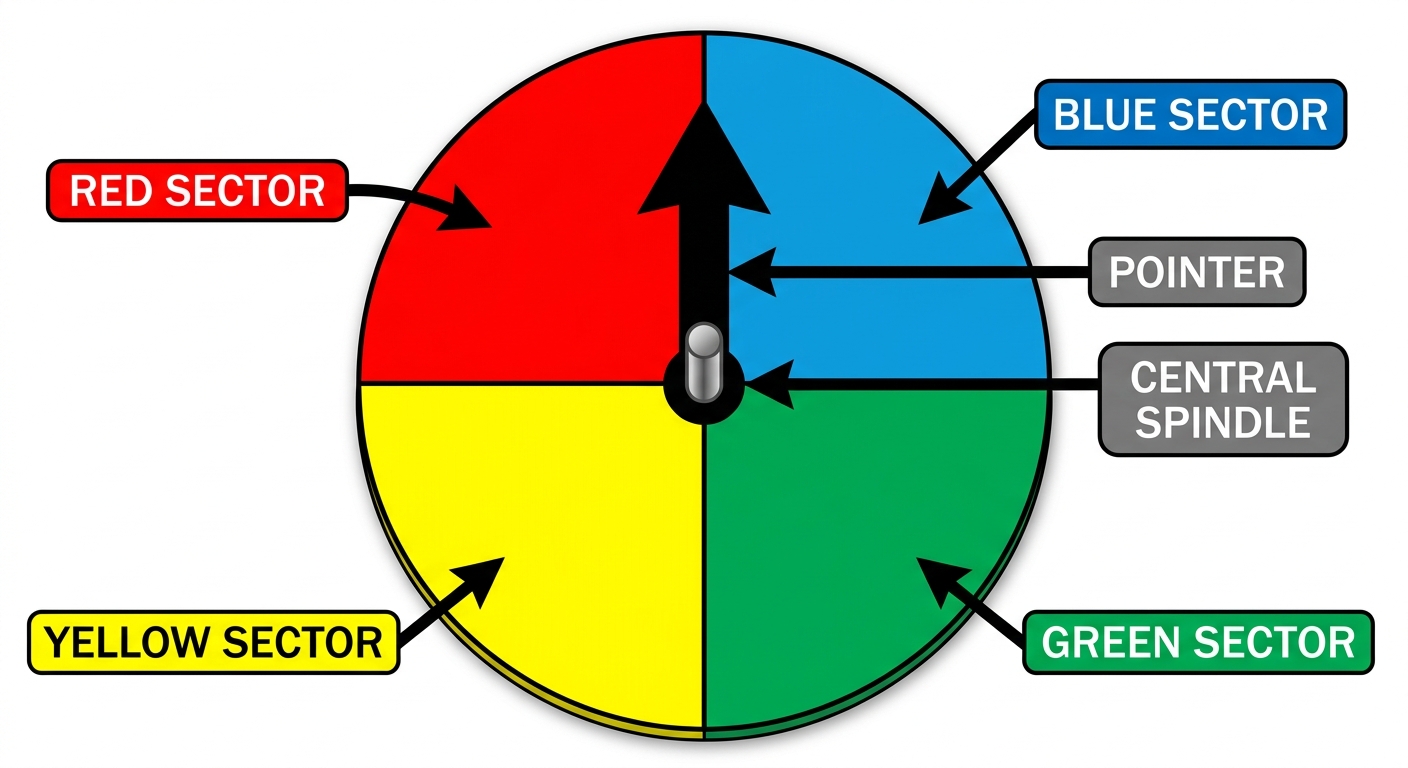
A spinner is divided into 6 equal sectors: 2 red, 1 blue, 2 green, and 1 yellow.
a
State the probability of landing on blue as a fraction in its simplest form. [1]
b
Explain why the probability of landing on red is greater than the probability of landing on yellow. [1]

Solutions
2QuestionCreating Fair and Biased ModelsAssessment Practice
2 marks~3 minCriterion D
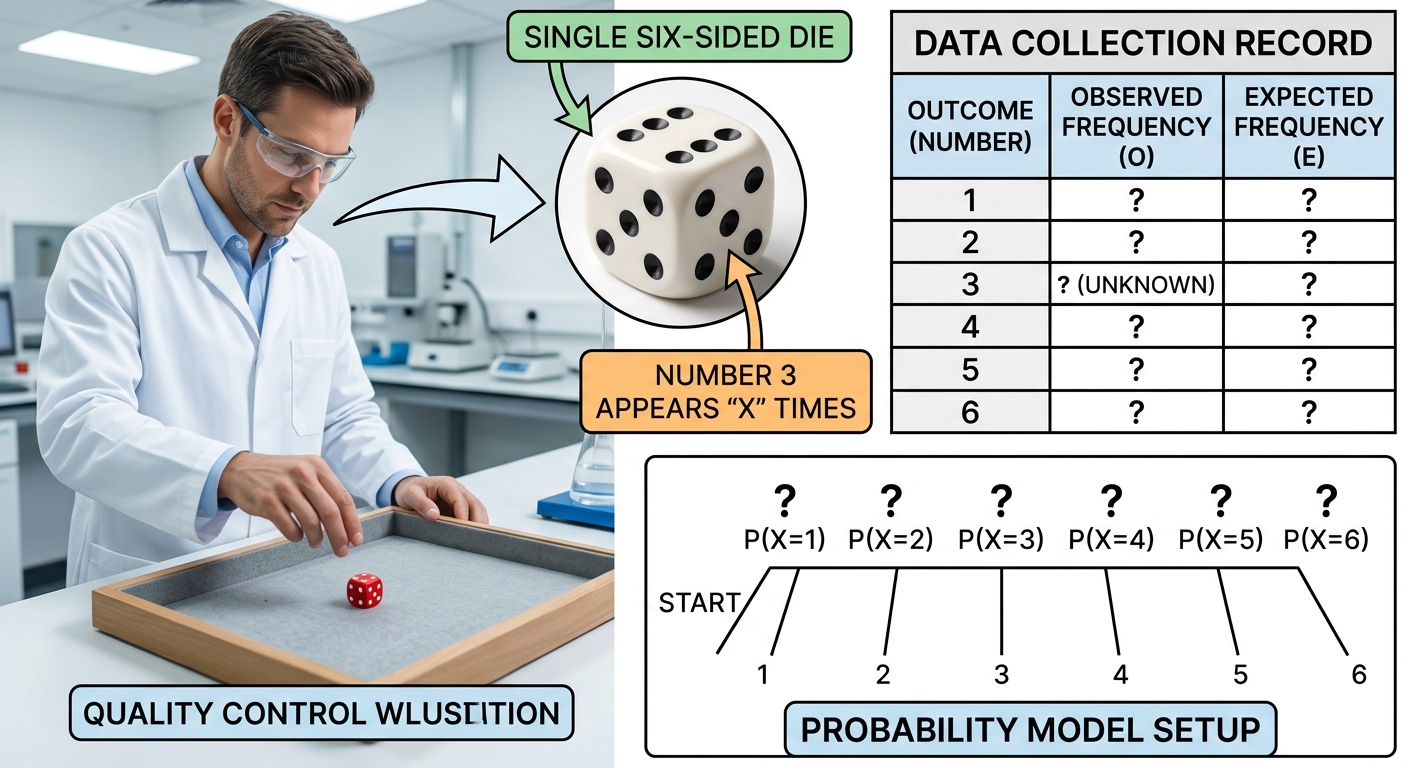
A quality control worker rolls a six-sided die 600 times. The number 3 appears 90 times.
a
Calculate the expected number of times 3 should appear if the die is fair. [1]
b
Using your answer to part (a), explain whether 600 rolls is enough to conclude that the die is biased. [1]
Solutions
3QuestionProbability of Flipping a CoinAssessment Practice
4 marks~6 minCriterion C
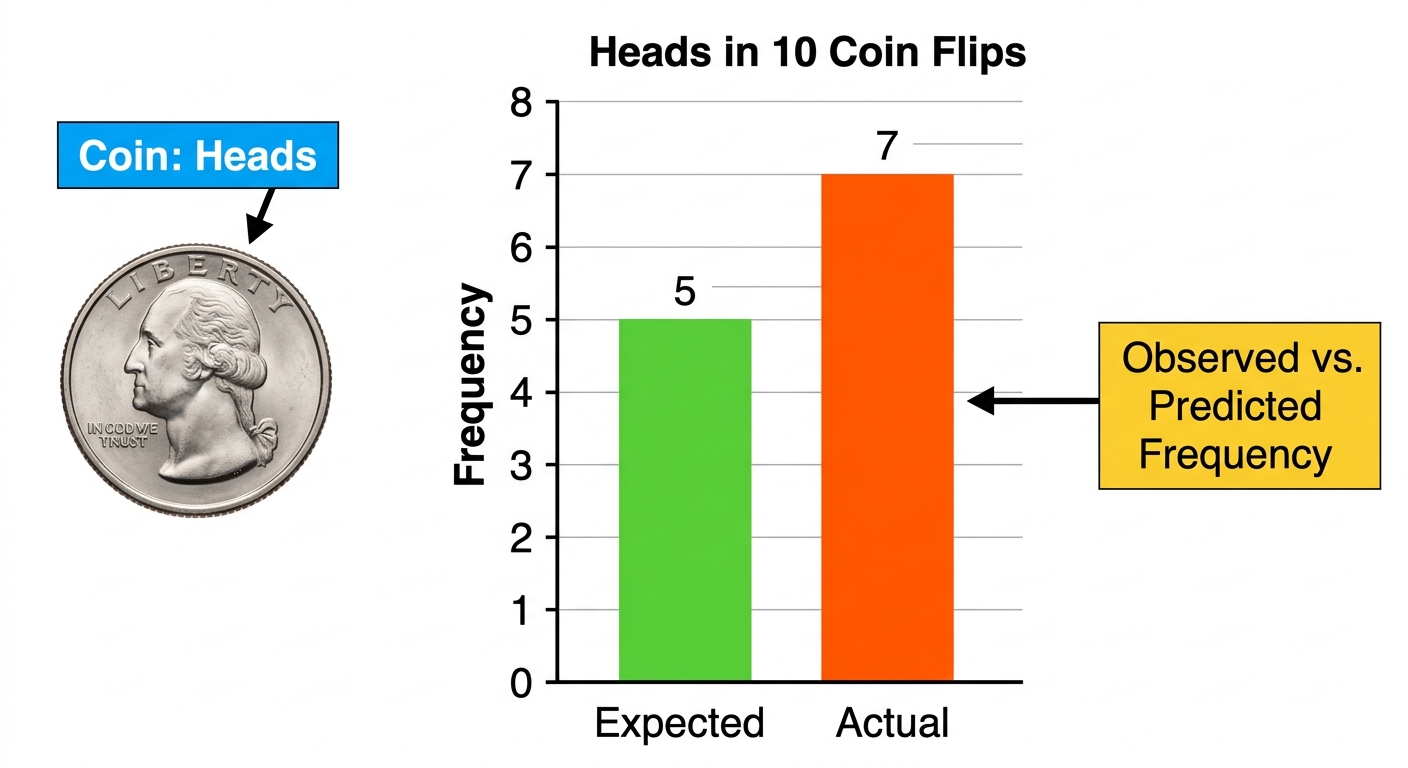
A student claims that a fair coin will always land heads up exactly 5 times out of 10 flips because the theoretical probability of heads is . The student flips a coin 10 times and gets 7 heads and 3 tails.
a
[2 marks] Discuss whether the student's mathematical model (theoretical probability) is valid, explaining why the actual outcome differs from the expected 5 heads.
b
[2 marks] Explain one limitation of using the theoretical probability model to predict the outcome of a single short experiment like this one.
Solutions
4QuestionProbability of Rolling a DieAssessment Practice
5 marks~8 minCriterion B
A student rolls two fair dice 20 times and records the sum each time.
| Sum | 2 | 3 | 4 | 5 | 6 | 7 | 8 | 9 | 10 | 11 | 12 |
|---|---|---|---|---|---|---|---|---|---|---|---|
| Frequency | 1 | 2 | 3 | 3 | 4 | 5 | 4 | 3 | 2 | 2 | 1 |
a
State the relative frequency (as a decimal) for each sum. [1]
b
Identify the most frequent and least frequent sums from the table. Then explain, in one sentence, why sums near 7 are more likely than sums of 2 or 12 when rolling two dice. [2]
c
List all possible pairs of dice outcomes that give a sum of 2, a sum of 7, and a sum of 12. Compare the number of pairs for each sum and explain how this supports your answer to part (b). [2]
Solutions
That's every free question here — 4 of 60.
+56 more questions, plus Mock Papers & Worksheets, are waiting in Premium.