You're viewing free preview questions — 4 questions previewing here — subscribe to unlock 62 more, plus the Full Question Bank, Mock Papers & Worksheets.Upgrade
Theoretical vs Experimental Probability — Free MYP2 Mathematics Practice Questions

1QuestionComparing Theoretical and Experimental ResultsConcept Practice
2 marks~3 minCriterion A
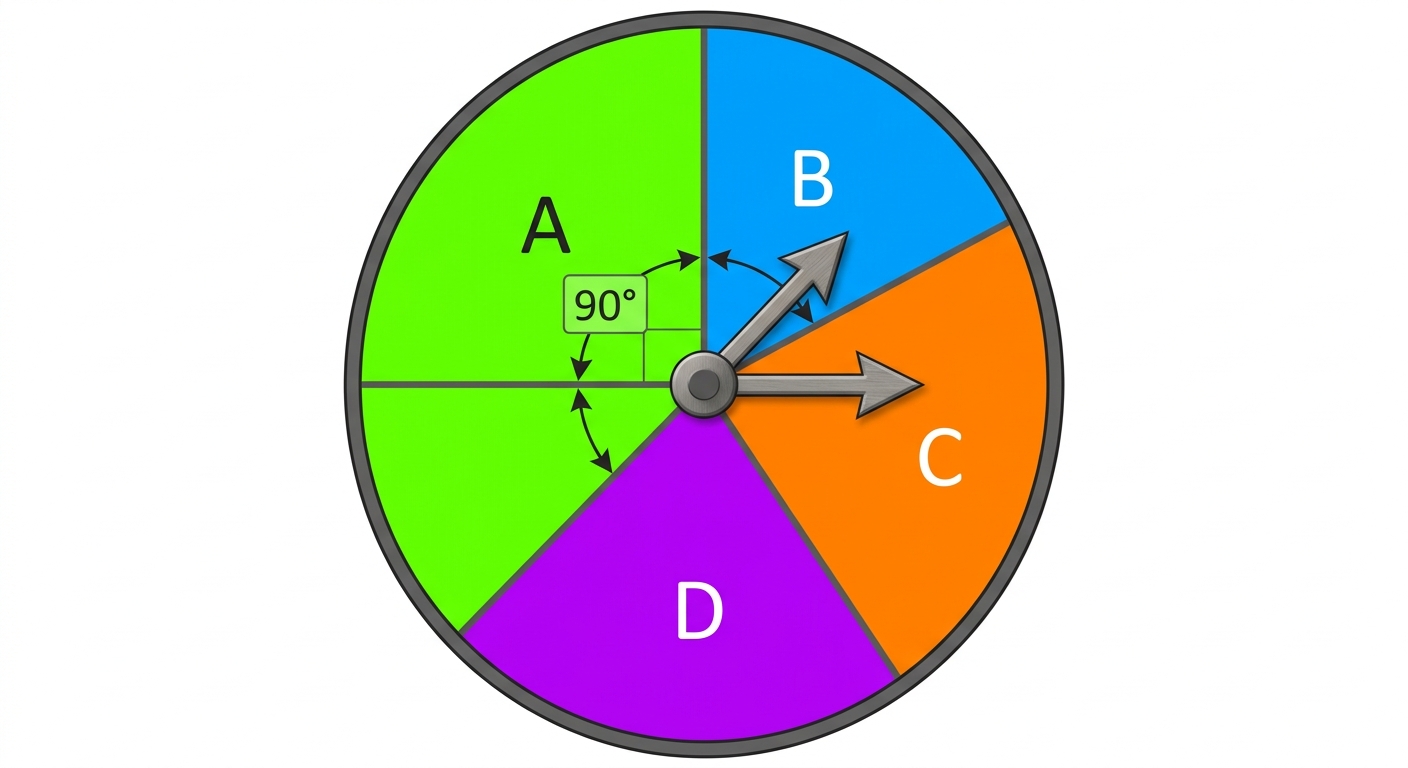
A spinner is divided into four sectors labelled A, B, C, and D. Sector A has a central angle of . Theoretical probability is the mathematically expected chance of an outcome.
a
State the theoretical probability of the spinner landing on sector A. [1]
b
Calculate, showing your working, the theoretical probability of landing on sector A. [1]

Solutions
2QuestionComparing Theoretical and Experimental ResultsAssessment Practice
7 marks~11 minCriterion B
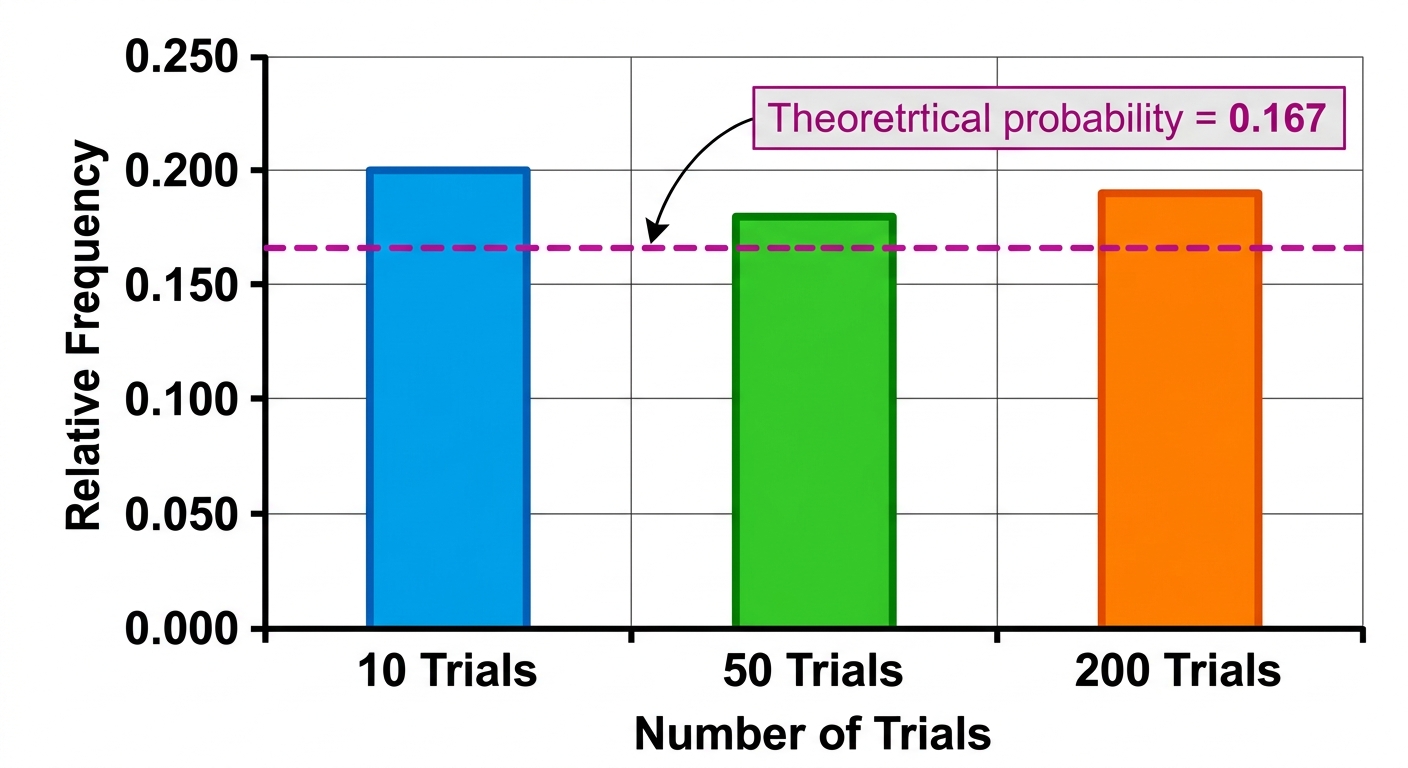
A fair six-sided die is rolled 200 times.
| Trials | 10 | 50 | 200 |
|---|---|---|---|
| Number of 3s rolled | 2 | 9 | 38 |
a
Calculate the relative frequency of rolling a 3 after each number of trials. Give each answer as a decimal rounded to three decimal places. [3]
b
The theoretical probability of rolling a 3 is . Calculate the difference between each relative frequency and . Describe what happens to this difference as the number of trials increases. [2]
c
Compare the relative frequency you would expect after 500 trials with the theoretical probability of . Justify your answer. [2]
Solutions
3QuestionUnderstanding Variability in ResultsAssessment Practice
8 marks~12 minCriterion C
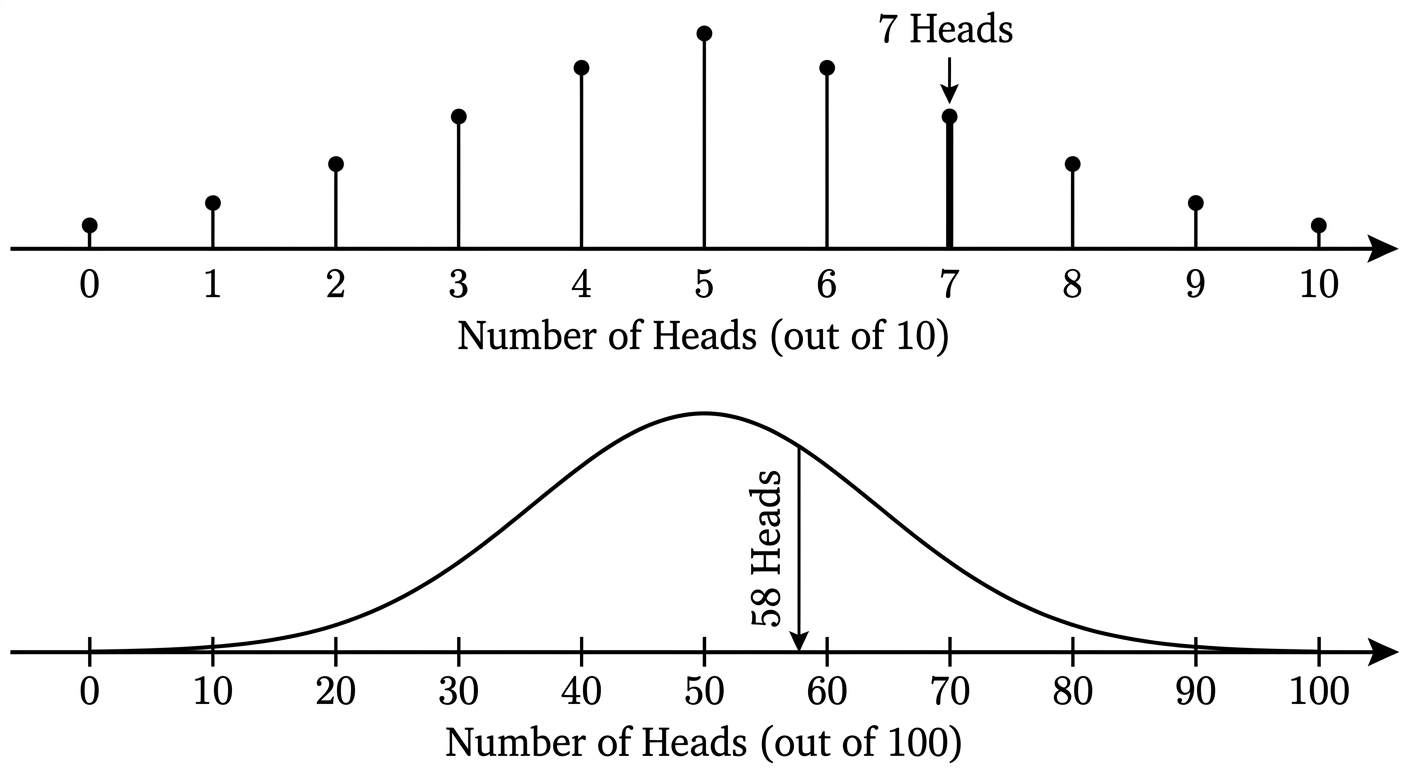
A TV game show uses a coin flip to decide a prize winner. The host flips a coin 10 times and records 7 heads. The contestant requests a fairer test; 100 flips are made, giving 58 heads.
a
State the theoretical probability of getting heads on a fair coin. [1]
b
Calculate the experimental probability of heads for each set of flips. Show your working. [3]
c
Compare the two sets of results. In your answer, explain which result is more reliable for deciding whether the coin is fair, and why the result after 100 flips still does not match the theoretical probability exactly. [4]
Solutions
4QuestionConducting Simple Probability ExperimentsAssessment Practice
8 marks~12 minCriterion D
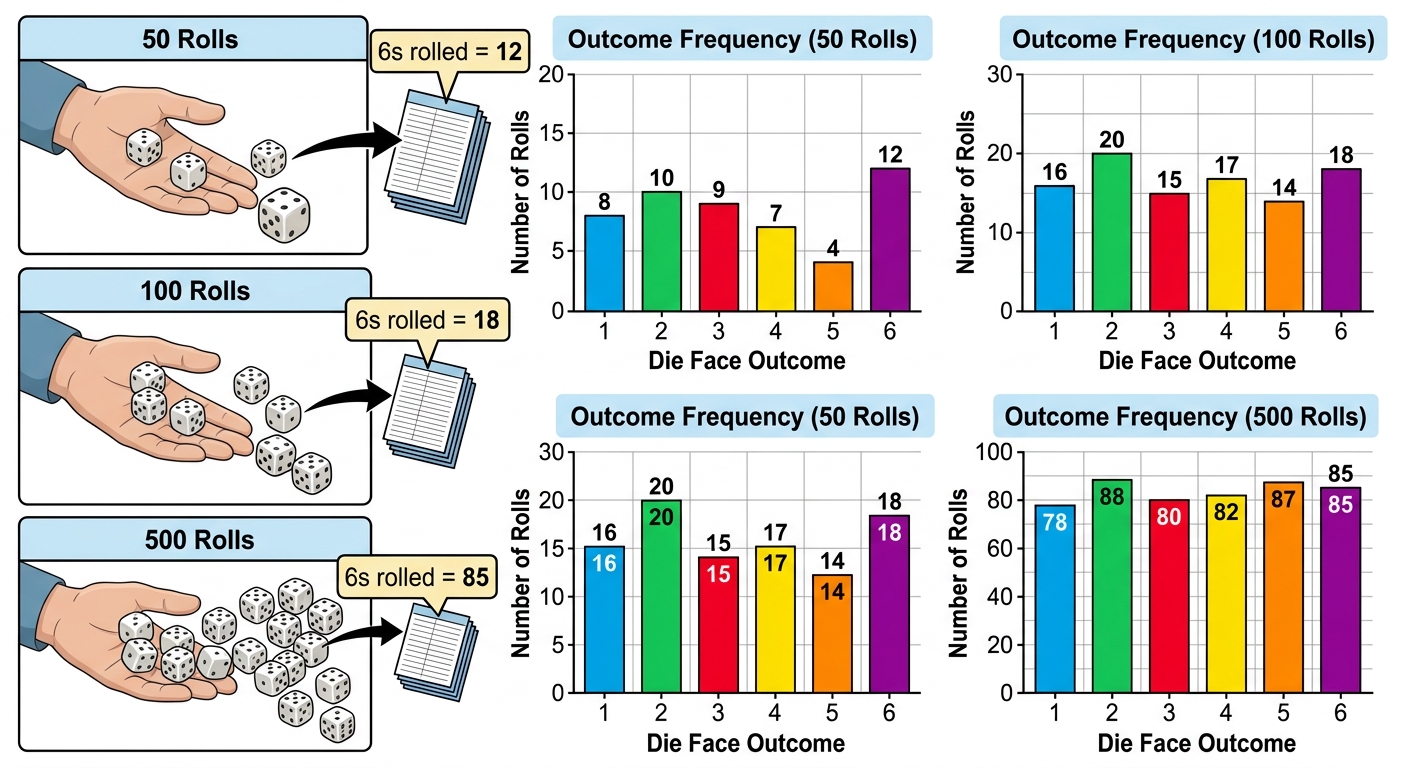
A toy company claims its dice are fair. For a fair die, the theoretical probability of rolling a 6 is .
Quality control tests record how often a 6 appears over several series of rolls.
Results:
Series 1: 12 sixes in 50 rolls
Series 2: 18 sixes in 100 rolls
Series 3: 85 sixes in 500 rolls
Quality control tests record how often a 6 appears over several series of rolls.
Results:
Series 1: 12 sixes in 50 rolls
Series 2: 18 sixes in 100 rolls
Series 3: 85 sixes in 500 rolls
a
Calculate the experimental probability of rolling a 6 in Series 1. [1]
b
Calculate the experimental probability of rolling a 6 in Series 2 and Series 3. Show both calculations. [3]
c
Compare the three experimental probabilities with the theoretical probability . Use your results to explain whether the die appears fair and how the number of rolls affects the reliability of the estimate. [4]
Solutions
That's every free question here — 4 of 66.
+62 more questions, plus Mock Papers & Worksheets, are waiting in Premium.