You're viewing free preview questions — 4 questions previewing here — subscribe to unlock 75 more, plus the Full Question Bank, Mock Papers & Worksheets.Upgrade
Everyday Chemical Changes — Free MYP2 Sciences Practice Questions

1QuestionChemistry in Cleaning ProductsConcept Practice
3 marks~5 minCriterion B
The table below shows the pH values of five cleaning products and how well each removes grease and limescale.
| Cleaning product | pH | Grease removal | Limescale removal |
|---|---|---|---|
| Lemon juice | 2 | Low | High |
| Vinegar | 3 | Low | High |
| Baking soda | 8 | Medium | Medium |
| Soap | 10 | High | Low |
| Bleach | 12 | High | Low |
a
Identify one acidic product from the table and state its pH. [1]
b
Describe how pH affects a product's ability to remove limescale. Use data from the table to support your answer. [1]
c
Compare how acidic products and alkaline products (pH > 7) differ in their cleaning effectiveness. Use evidence from the table in your answer. [1]
Solutions

2QuestionChemical Reactions in CookingAssessment Practice
4 marks~6 minCriterion D
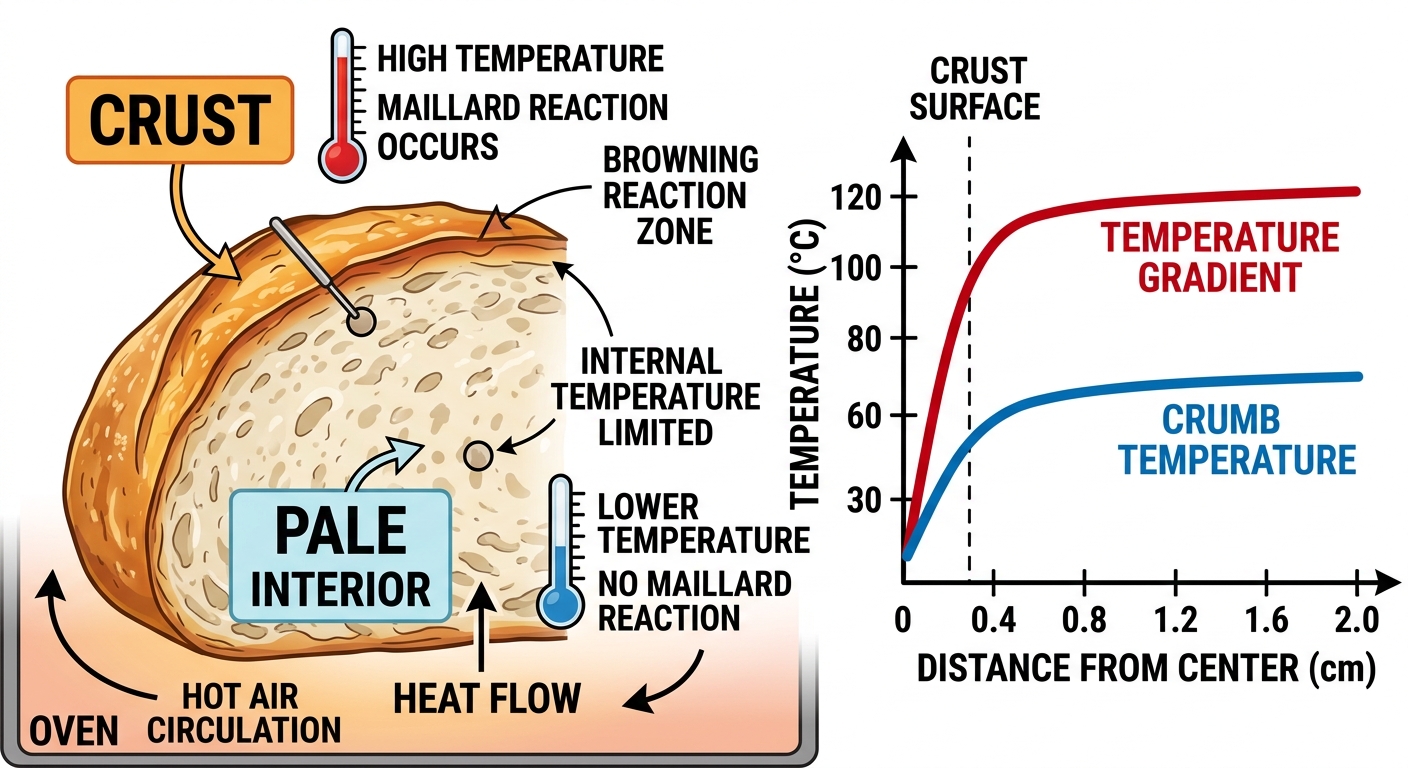
When baking bread, the Maillard reaction — a chemical reaction between amino acids (protein building blocks) and simple sugars — causes the crust to turn brown at high temperatures. The inside stays pale because it stays cooler.
a
Identify one sign that the Maillard reaction has taken place during baking. [1]
b
Explain why a higher oven temperature causes the crust to brown more quickly. [1]
c
At temperatures above , the Maillard reaction can also produce acrylamide, a compound that may be harmful to health. Compare the effects of baking at a high temperature versus a moderate temperature, and suggest one way a baker could achieve a brown crust while reducing acrylamide formation. [2]
Solutions
3QuestionChemistry in Cleaning ProductsAssessment Practice
5 marks~8 minCriterion C
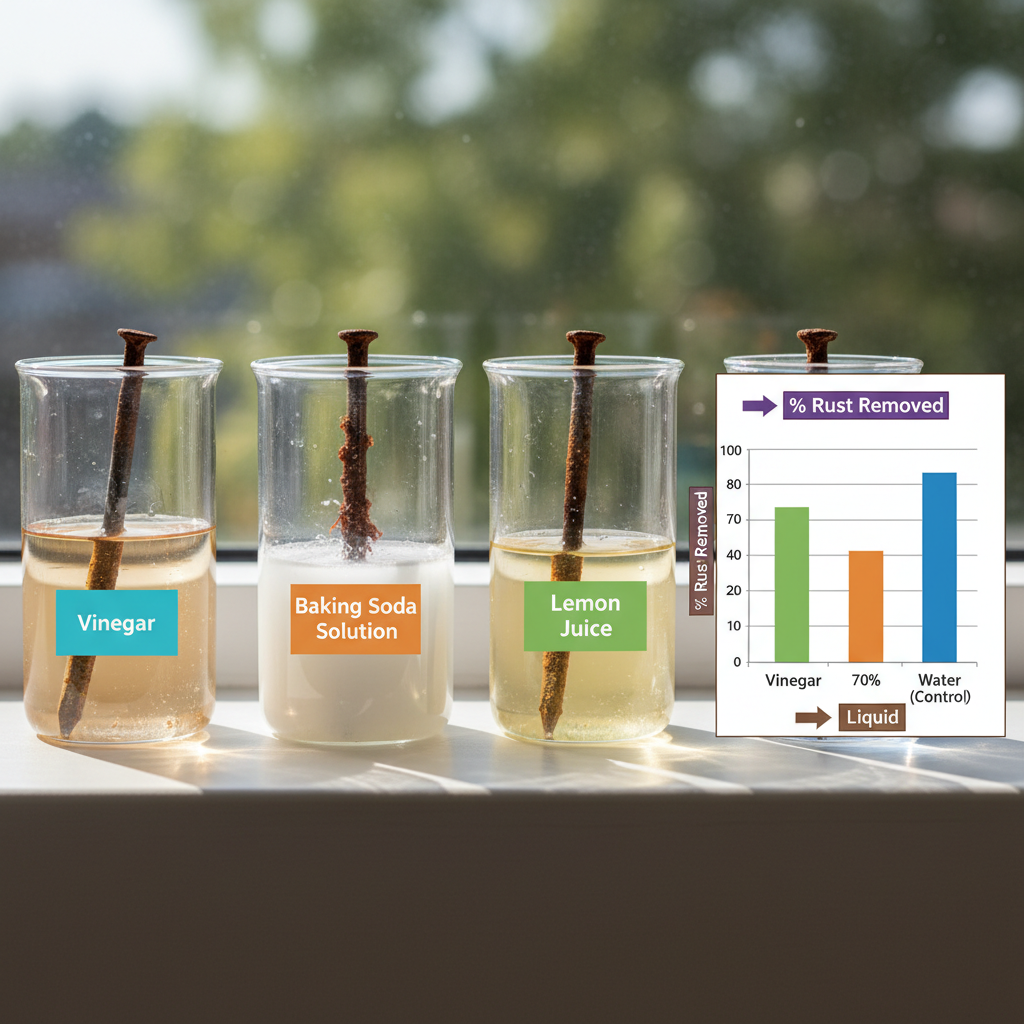
A student tested three cleaning products for removing rust from nails. Each nail was submerged in a liquid for 24 hours. The room temperature fluctuated between and .
Rust removed — Vinegar: 85%, Lemon juice: 70%, Baking soda solution: 40%, Water: 5%
The student claims: "Vinegar is the best rust remover."
Rust removed — Vinegar: 85%, Lemon juice: 70%, Baking soda solution: 40%, Water: 5%
The student claims: "Vinegar is the best rust remover."
a
Identify one variable that was not controlled in this experiment. [1]
b
Explain why this uncontrolled variable makes the experiment unfair. [2]
c
Compare the results for all four liquids and state whether the student's claim is valid. Give a reason for your answer. [2]
Solutions
4QuestionChemical Reactions in CookingAssessment Practice
6 marks~9 minCriterion A
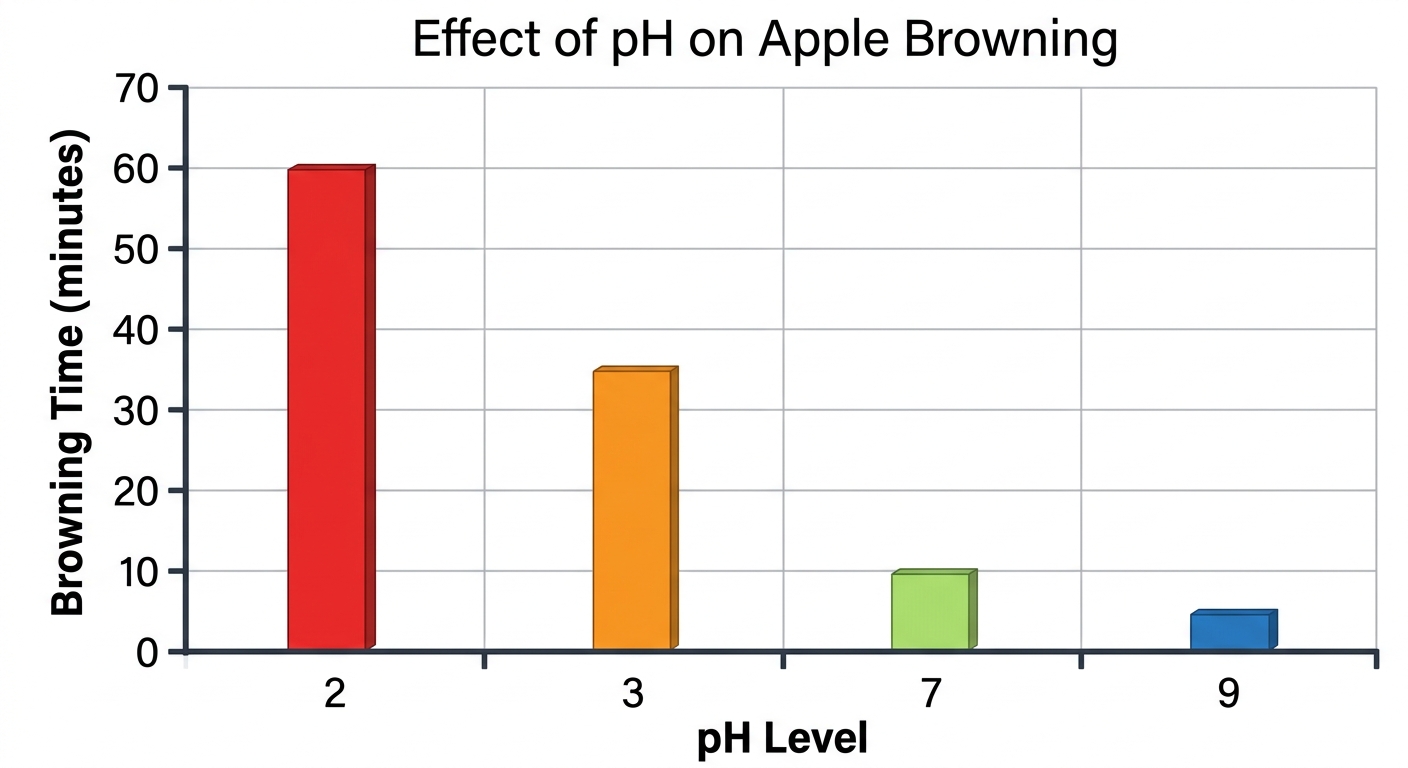
A student treats apple slices with four solutions and records how long each takes to turn brown.
Solution (pH): Lemon juice (2) · Vinegar (3) · Water (7) · Baking soda solution (9)
Browning time (min): 60 · 35 · 10 · 5
Solution (pH): Lemon juice (2) · Vinegar (3) · Water (7) · Baking soda solution (9)
Browning time (min): 60 · 35 · 10 · 5
a
Identify the relationship between pH and browning time shown in the data. [1]
b
Explain why acidic solutions slow down the browning of apple slices. In your answer, name the type of reaction responsible for browning. [3]
c
Estimate the browning time for a solution of pH 4. Compare your estimate with the result for pH 3, and explain what the difference tells you about the pattern in the data. [2]
Solutions
That's every free question here — 4 of 79.
+75 more questions, plus Mock Papers & Worksheets, are waiting in Premium.