You're viewing free preview questions — 4 questions previewing here — subscribe to unlock 71 more, plus the Full Question Bank, Mock Papers & Worksheets.Upgrade
Reactivity and Chemical Properties — Free MYP2 Sciences Practice Questions

1QuestionComparing Reactivity Using ExperimentsConcept Practice
2 marks~3 minCriterion A
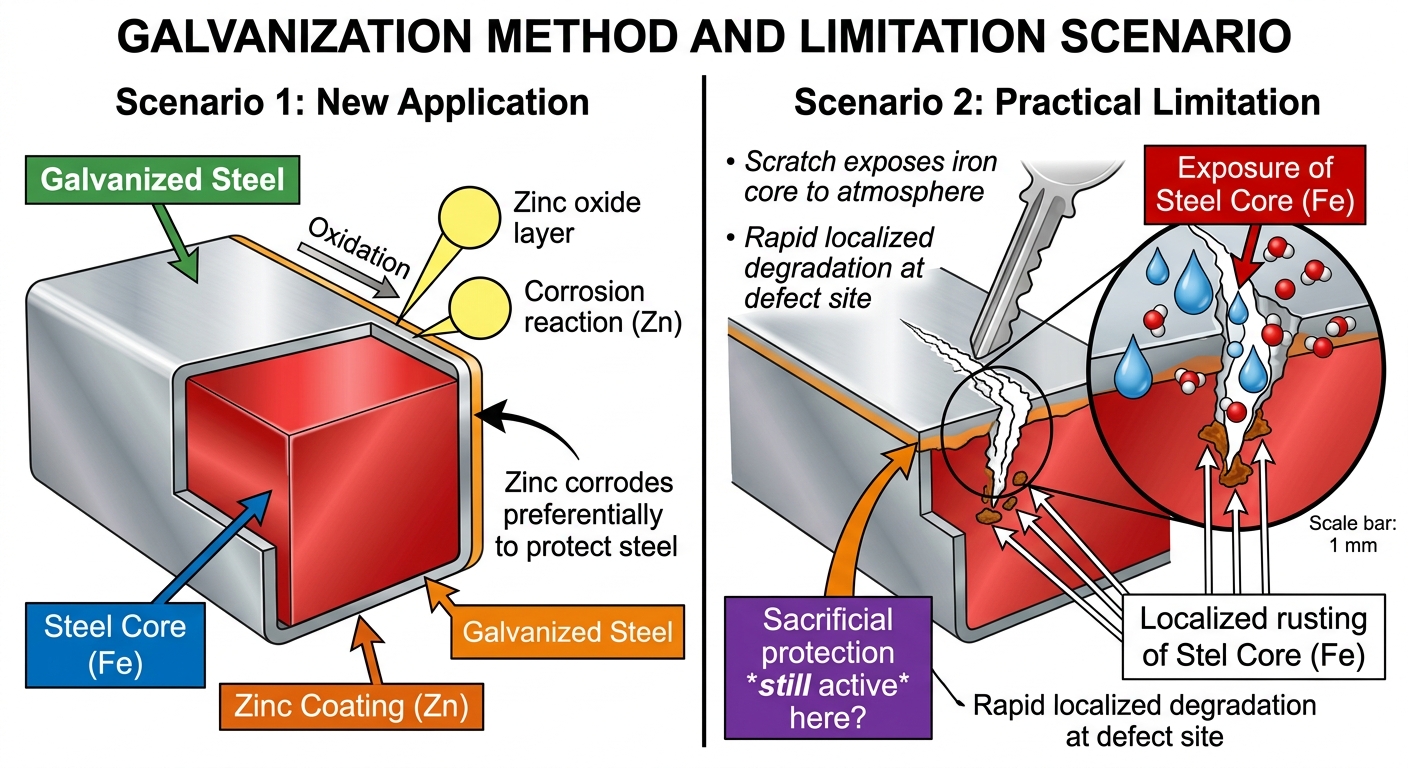
Galvanised steel is steel coated with zinc (a more reactive metal) to stop the iron underneath from rusting.
a
Identify one real-world object made from galvanised steel and state why zinc is used as the coating. [1]
b
Describe one practical limitation of using galvanised steel as a method of rust prevention. [1]

Solutions
2QuestionComparing Reactivity Using ExperimentsAssessment Practice
3 marks~5 minCriterion D
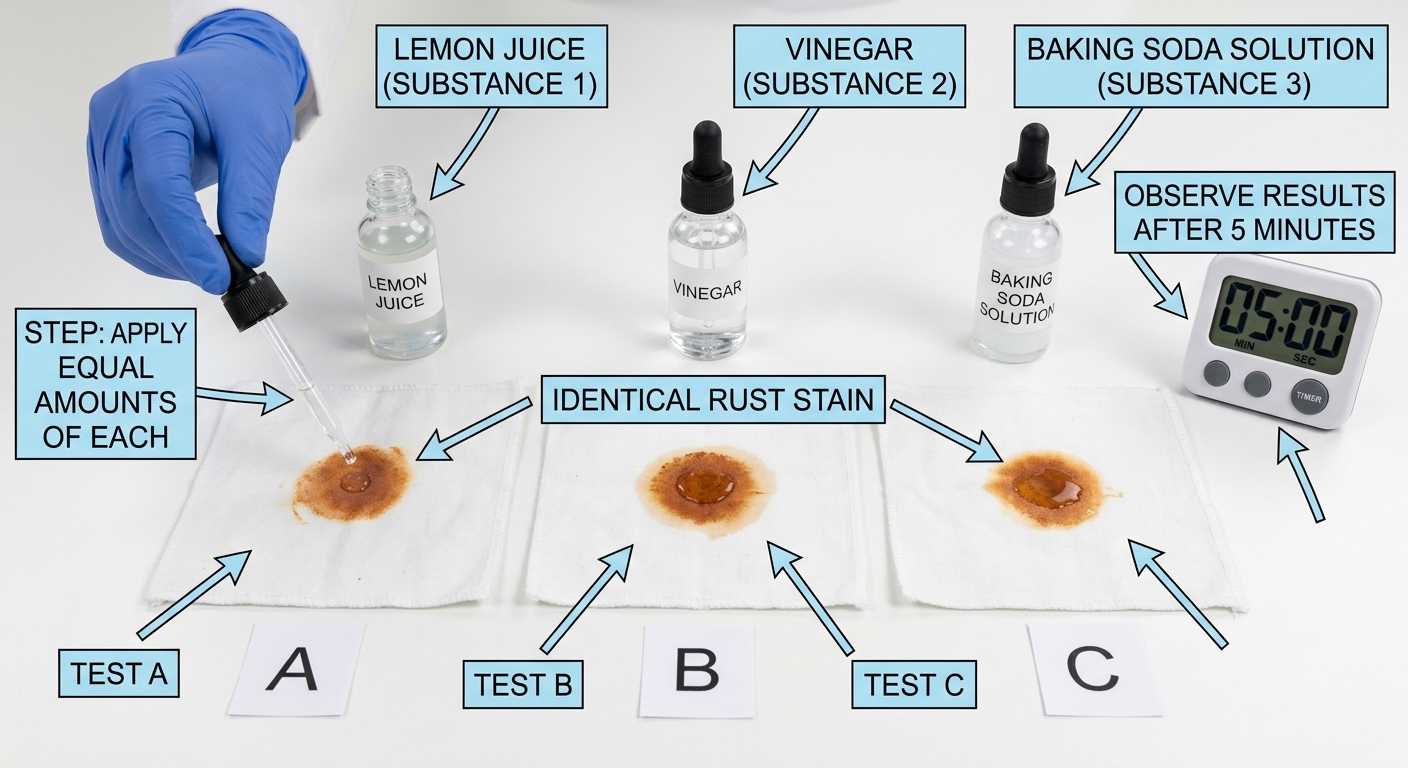
A student tests three household stain removers on identical rust stains on white cloth. Equal amounts of each remover are applied for 5 minutes.
Results:
Lemon juice: stain almost completely removed
Vinegar: stain partially removed
Baking soda solution: stain barely changed
Results:
Lemon juice: stain almost completely removed
Vinegar: stain partially removed
Baking soda solution: stain barely changed
a
Identify the order of reactivity of the three substances with rust, from most reactive to least reactive. [1]
b
Explain one reason why the concentration (strength) of each substance not being measured makes this experiment unreliable. [1]
c
Identify one other variable that was not controlled in this experiment and explain how it could affect the results. [1]
Solutions
3QuestionDefinition of ReactivityAssessment Practice
4 marks~6 minCriterion B
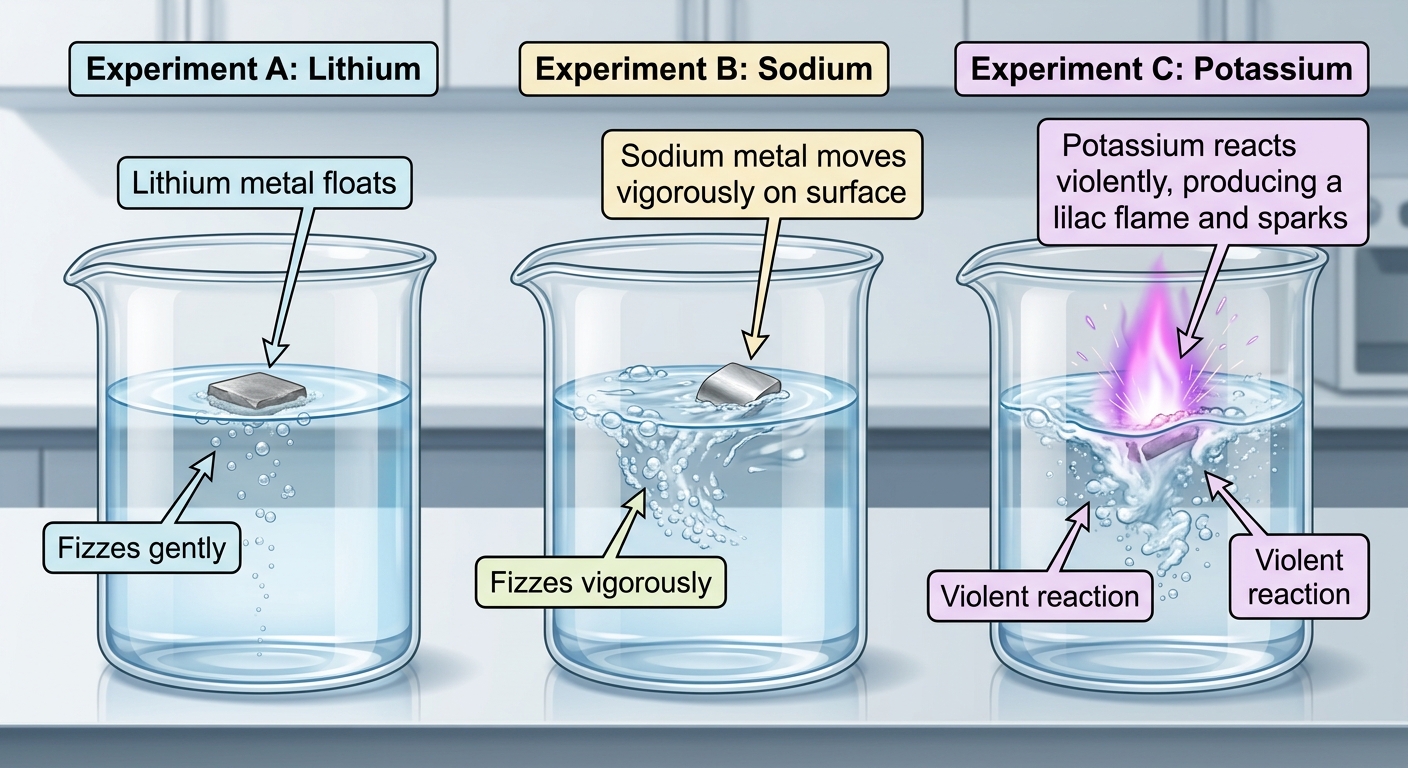
The diagram below shows three separate beakers. A small piece of lithium, sodium, or potassium is added to water in each beaker.
Observations:
Lithium — fizzes gently and floats.
Sodium — fizzes vigorously and moves across the surface.
Potassium — reacts violently, producing a lilac flame and sparks.
Observations:
Lithium — fizzes gently and floats.
Sodium — fizzes vigorously and moves across the surface.
Potassium — reacts violently, producing a lilac flame and sparks.
a
Describe the trend in reactivity of Group 1 metals with water as you move down the group. [2]
b
Explain why potassium reacts more violently with water than lithium does. Use your knowledge of atomic structure (how electrons are arranged around the nucleus) in your answer. [2]
Solutions
4QuestionDefinition of ReactivityAssessment Practice
5 marks~8 minCriterion C
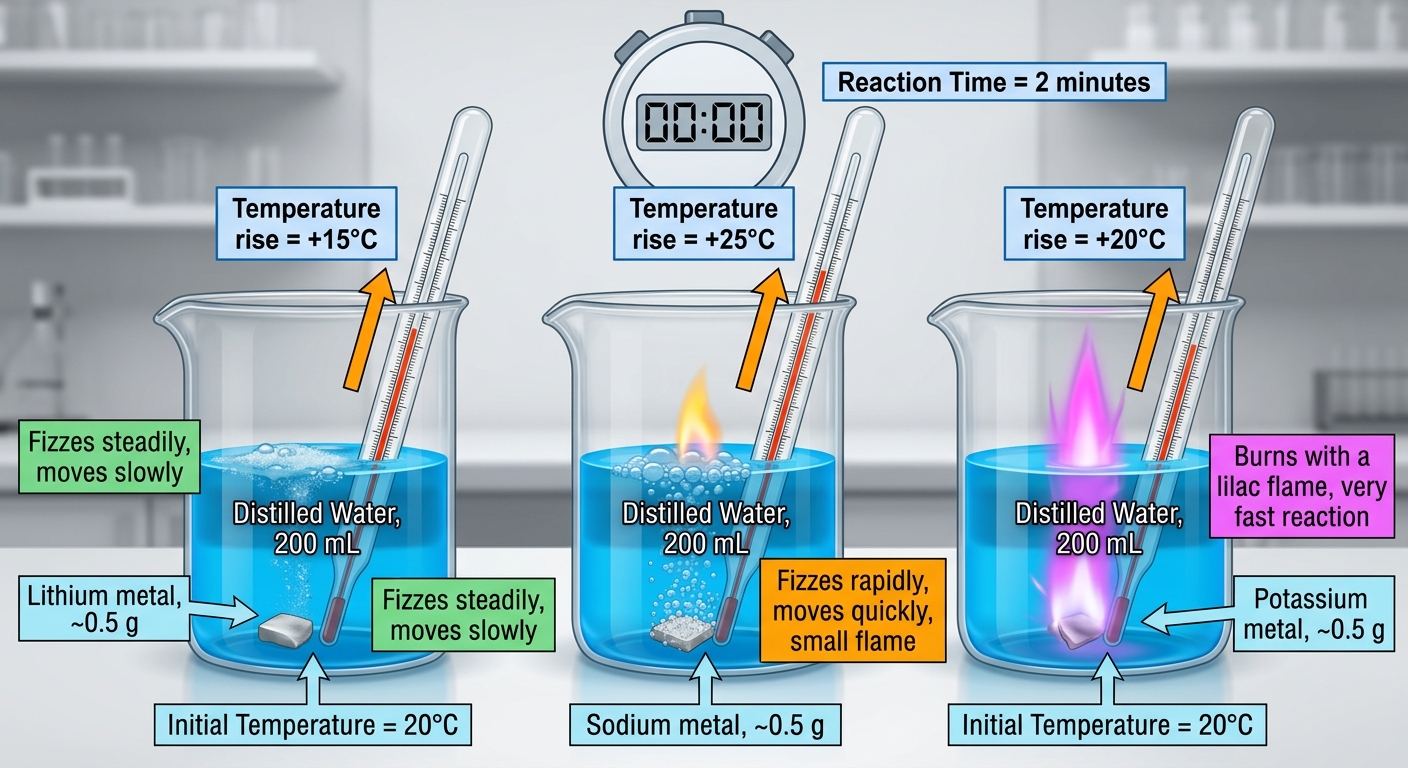
A student claims that Group 1 metals react more violently with water as you go down the group. She tests lithium, sodium, and potassium in separate beakers of water at and records the following results.
Potassium — — burns with lilac flame, reacts very fast
| Metal | Temperature rise | Observation |
|---|---|---|
| Lithium | fizzes steadily, moves slowly | |
| Sodium | fizzes rapidly, moves quickly, small flame |
Potassium — — burns with lilac flame, reacts very fast
a
Identify the trend in reactivity that the student's claim predicts. [1]
b
Explain why the temperature data does not fully support the claim. [2]
c
Compare the qualitative observations (what was seen and heard) with the temperature data, and state whether the claim is valid overall. [2]
Solutions
That's every free question here — 4 of 75.
+71 more questions, plus Mock Papers & Worksheets, are waiting in Premium.