You're viewing free preview questions — 4 questions previewing here — subscribe to unlock 74 more, plus the Full Question Bank, Mock Papers & Worksheets.Upgrade
Electrical Circuits and Symbols — Free MYP2 Sciences Practice Questions

1QuestionBuilding and Testing Simple CircuitsConcept Practice
2 marks~3 minCriterion A
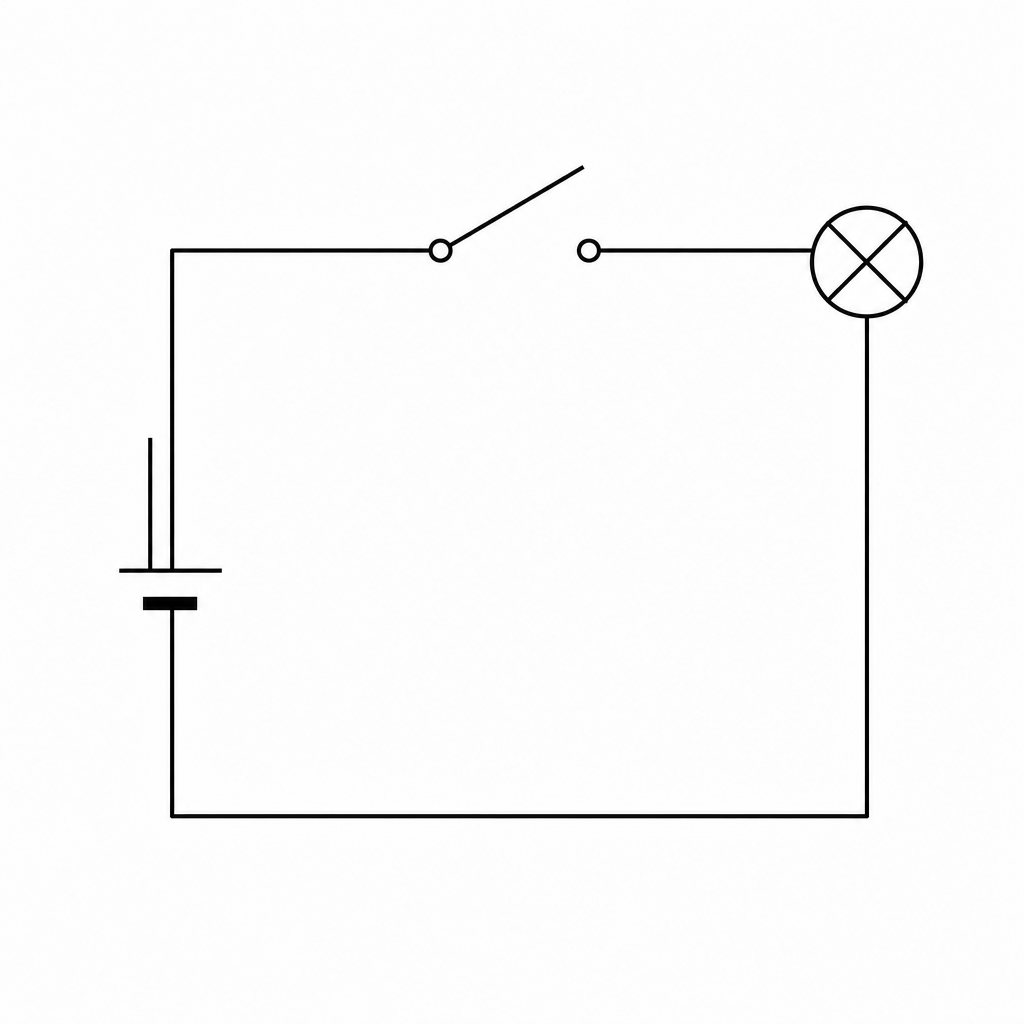
The circuit diagram shows a battery, a bulb, a switch, and connecting wires.
a
Identify the component that controls whether the bulb is on or off. [1]
b
Explain what happens to the bulb when the switch is open (the gap is not bridged). [1]

Solutions
2QuestionMeasuring Current and VoltageAssessment Practice
5 marks~8 minCriterion C
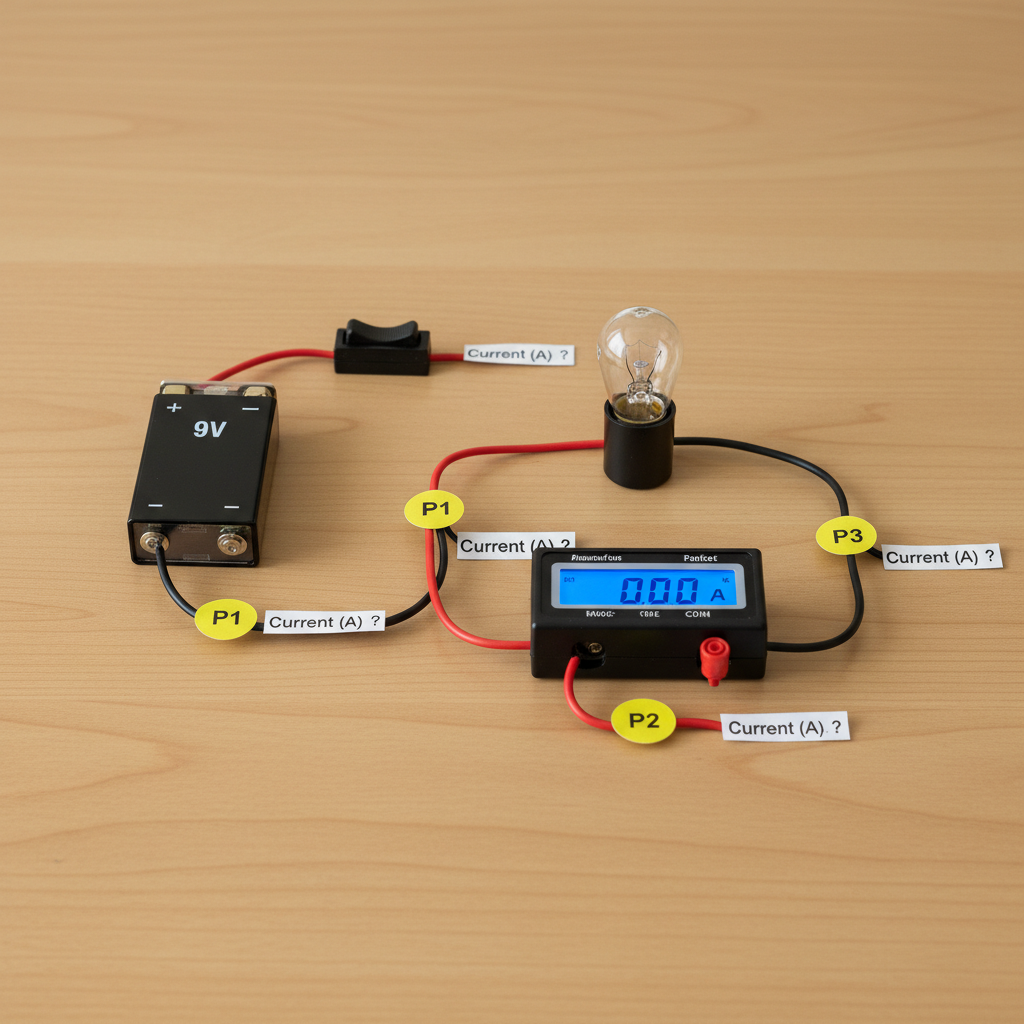
A class measures current at three points in a series circuit — before the bulb (P1), after the bulb (P2), and at the battery (P3).
Current (A): P1 = 0.32, P2 = 0.28, P3 = 0.31
Current (A): P1 = 0.32, P2 = 0.28, P3 = 0.31
a
State the rule for current in a series circuit. [1]
b
Identify the anomalous reading and explain one possible cause. [2]
c
Compare the data with the rule you stated in (a) and decide whether the data supports the claim that current is constant throughout the circuit. [2]
Solutions
3QuestionBuilding and Testing Simple CircuitsAssessment Practice
7 marks~11 minCriterion D
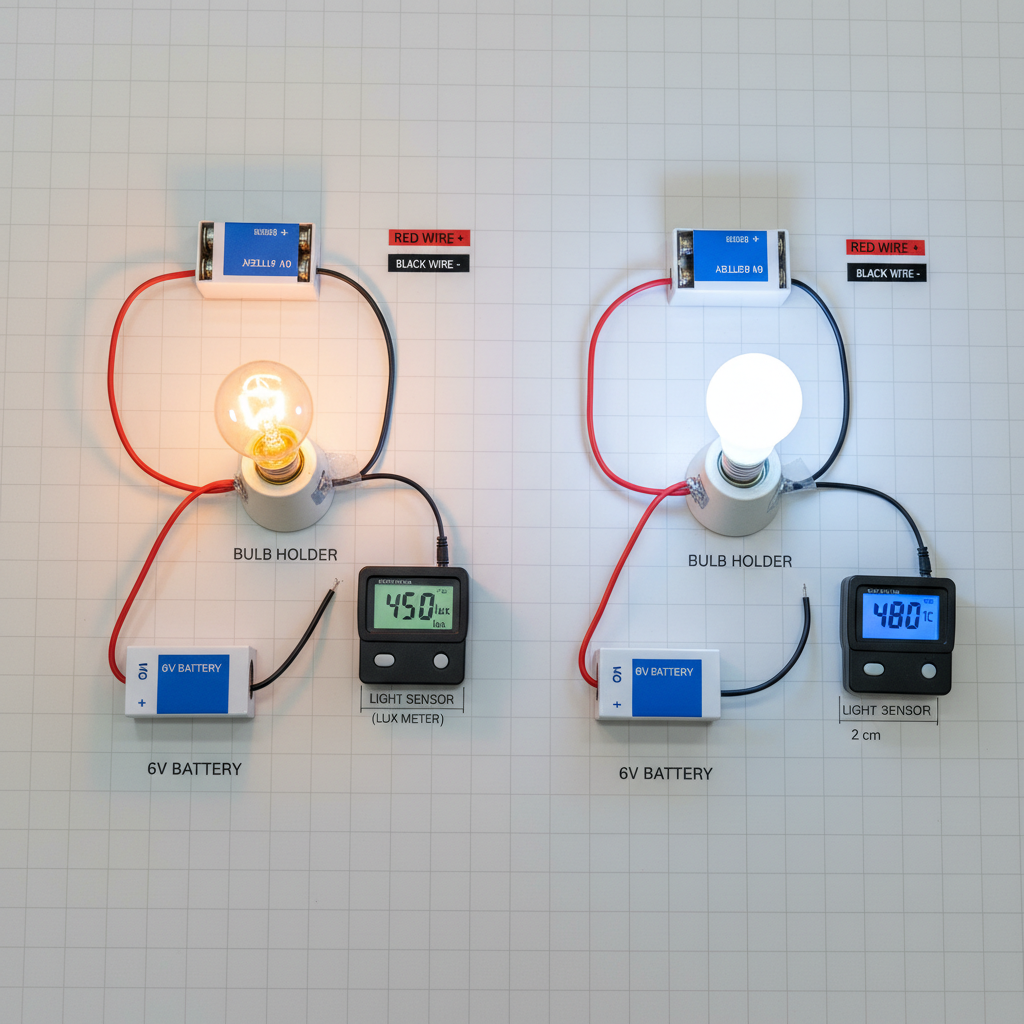
A school tested two bulbs in a simple circuit using a battery, wires, and a bulb holder. A light sensor measured brightness and a thermometer measured heat produced near each bulb.
| Incandescent bulb | Brightness = 450 lux | Temperature rise = 15°C |
|---|---|---|
| LED bulb | Brightness = 480 lux | Temperature rise = 2°C |
a
State which bulb is more energy-efficient. Use one value from the data to support your answer. [1]
b
Explain one environmental problem caused by throwing away the old incandescent bulbs, even though they still work. [2]
c
The school must choose between keeping the working incandescent bulbs or switching to LEDs. Compare the environmental costs and benefits of this decision. [4]
Solutions
4QuestionBuilding and Testing Simple CircuitsAssessment Practice
8 marks~12 minCriterion B
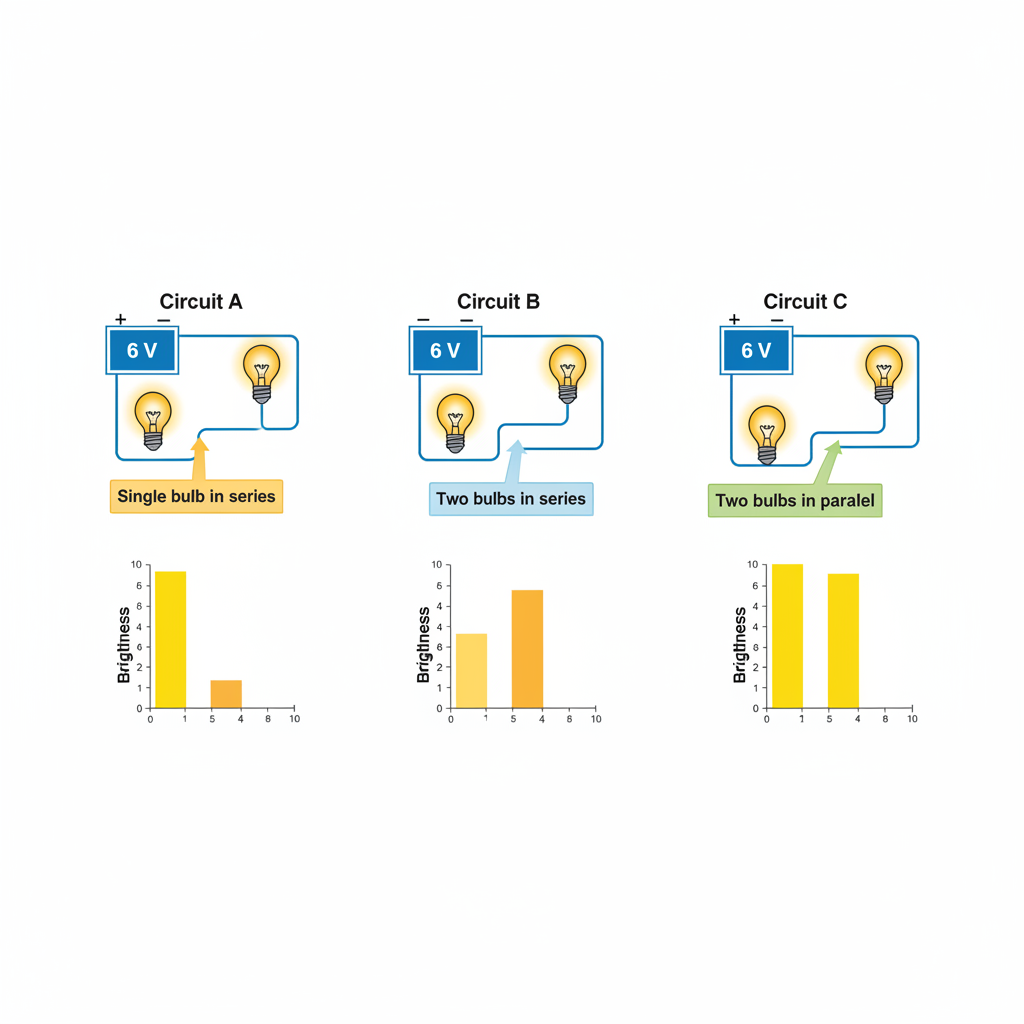
A student tests three circuits using identical bulbs and a 6 V battery. Bulb brightness is rated 1 (very dim) to 10 (very bright).
Circuit A: 1 bulb in series — brightness 10
Circuit B: 2 bulbs in series — brightness of each bulb 5
Circuit C: 2 bulbs in parallel — brightness of each bulb 10
Circuit A: 1 bulb in series — brightness 10
Circuit B: 2 bulbs in series — brightness of each bulb 5
Circuit C: 2 bulbs in parallel — brightness of each bulb 10
a
Identify the pattern in bulb brightness when bulbs are added in series and when they are added in parallel. [2]
b
Estimate the brightness of each bulb in Circuit D (3 bulbs in series) and Circuit E (3 bulbs in parallel). Show your reasoning. [2]
c
Compare how adding bulbs affects the current and voltage in a series circuit and in a parallel circuit, and use this to explain the brightness results above. [4]
Solutions
That's every free question here — 4 of 78.
+74 more questions, plus Mock Papers & Worksheets, are waiting in Premium.