You're viewing free preview questions — 6 questions previewing here — subscribe to unlock 82 more, plus the Full Question Bank, Mock Papers & Worksheets.Upgrade
Back

Forms of Energy — Free MYP2 Sciences Practice Questions

Free questions

Open in full, with answers, mark scheme and examiner insights.

Question 1Criterion A · Easy · 3 marksrevisionprep.com

Definition and Examples of Different Energy Types
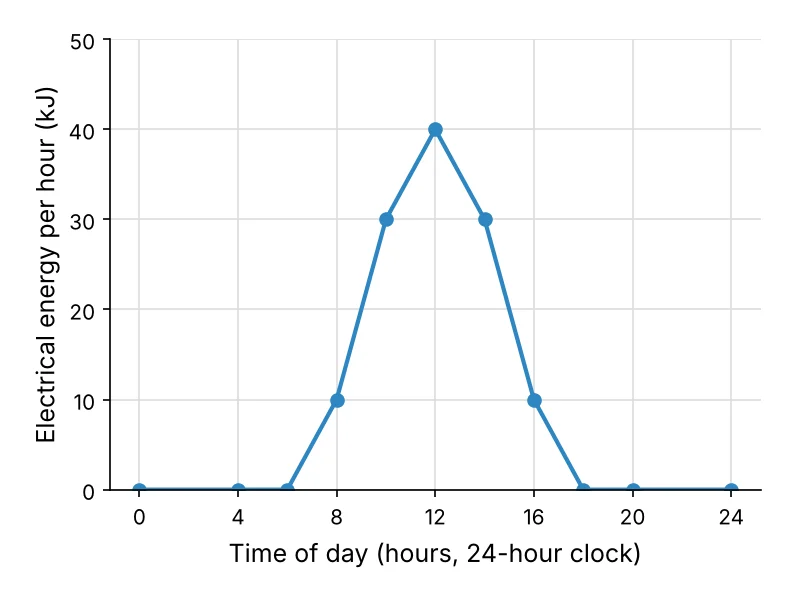
The graph shows the electrical energy a solar panel gives out each hour during one day.
Question diagram
(a)
Identify the time of day when the panel gives out the most electrical energy. [1]
(b)
Explain why the panel gives out no electrical energy at 02:00. [1]
(c)
State the form of energy that a solar panel changes into electrical energy. [1]

revisionprep.com

Summary Answer

Not available for this question.

Model Answer

Not available for this question.

Marking Scheme

Not available for this question.

Examiner Insights

Not available for this question.

Question 2Criterion A · Easy · 2 marksrevisionprep.com

Kinetic and Potential Energy

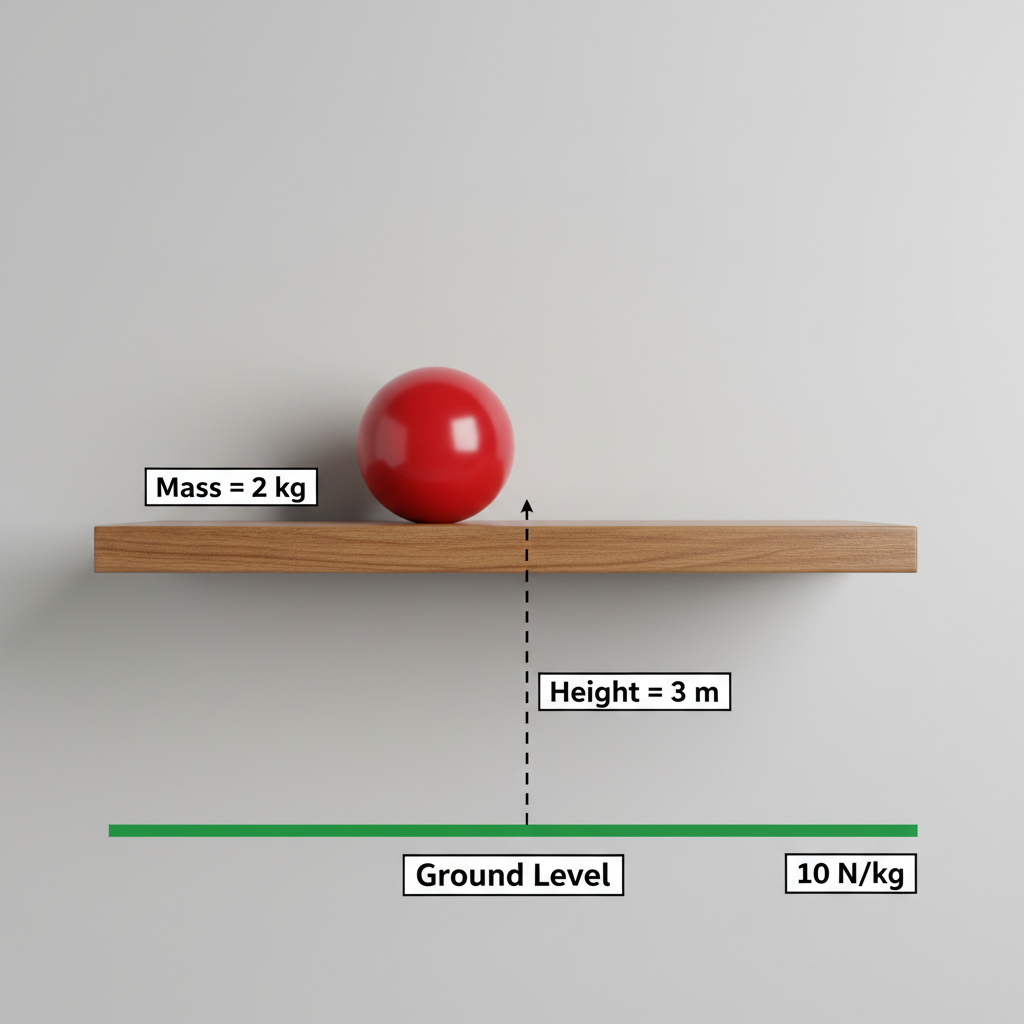
A ball of mass 2 kg sits on a shelf 3 m above the ground. The picture shows the ball. Use g=10g = 10 N/kg.
Question diagram
(a)
Name the type of energy the ball has because of its height. [1]
(b)
Calculate this energy using Ep=mghE_p = mgh. [1]

revisionprep.com

Summary Answer

Not available for this question.

Model Answer

Not available for this question.

Marking Scheme

Not available for this question.

Examiner Insights

Not available for this question.

Question 3Criterion A · Easy · 2 marksrevisionprep.com

Energy in Daily Life Applications

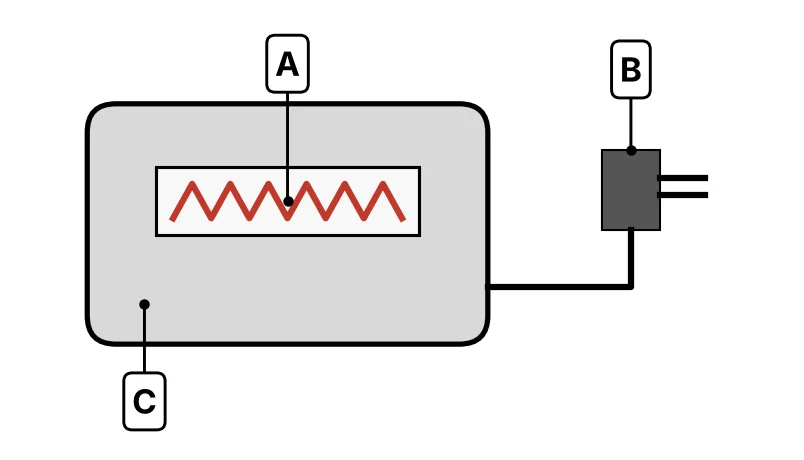
The picture shows the inside of a toaster. Part A is a thin coiled wire that glows red. Part B is the plug that goes into the wall socket. Part C is the plastic outer case.
Question diagram
(a)
Identify the part that changes electrical energy into thermal energy. [1]
(b)
Explain how this part changes electrical energy into thermal energy. [1]

revisionprep.com

Summary Answer

Not available for this question.

Model Answer

Not available for this question.

Marking Scheme

Not available for this question.

Examiner Insights

Not available for this question.

Question 4Criterion B + A · Medium · 6 marksrevisionprep.com

Definition and Examples of Different Energy Types
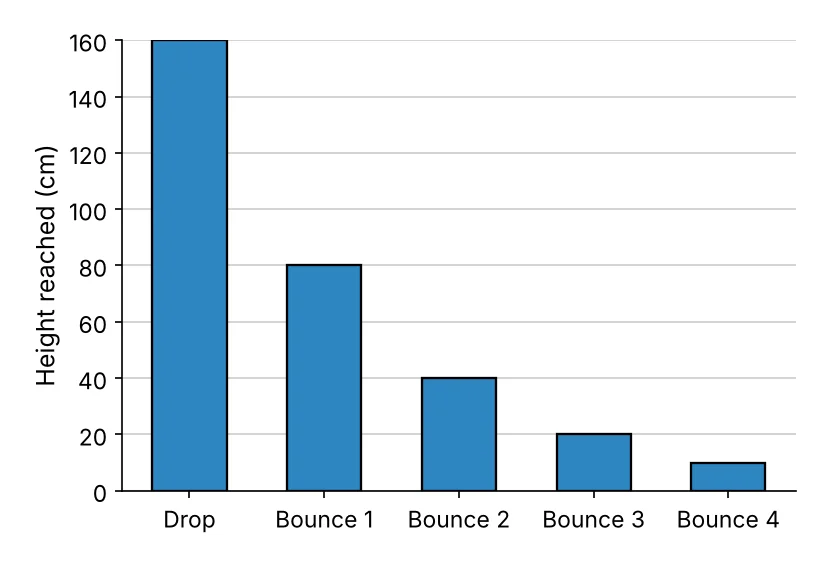
A ball is dropped from 160 cm onto a hard floor. The graph shows the height of the ball at the start and after each bounce.
Question diagram
(a)
Describe the pattern in the heights and calculate the percentage decrease from the drop height to bounce 1. [2]
(b)
Predict the heights of bounces 5 and 6. Show your working. [2]
(c)
Explain why the ball does not bounce back to its starting height. Use the idea of energy changing form. [2]

revisionprep.com

Summary Answer

Not available for this question.

Model Answer

Not available for this question.

Marking Scheme

Not available for this question.

Examiner Insights

Not available for this question.

Question 5Criterion C + A · Medium · 5 marksrevisionprep.com

Thermal Chemical Electrical Light and Sound Energy
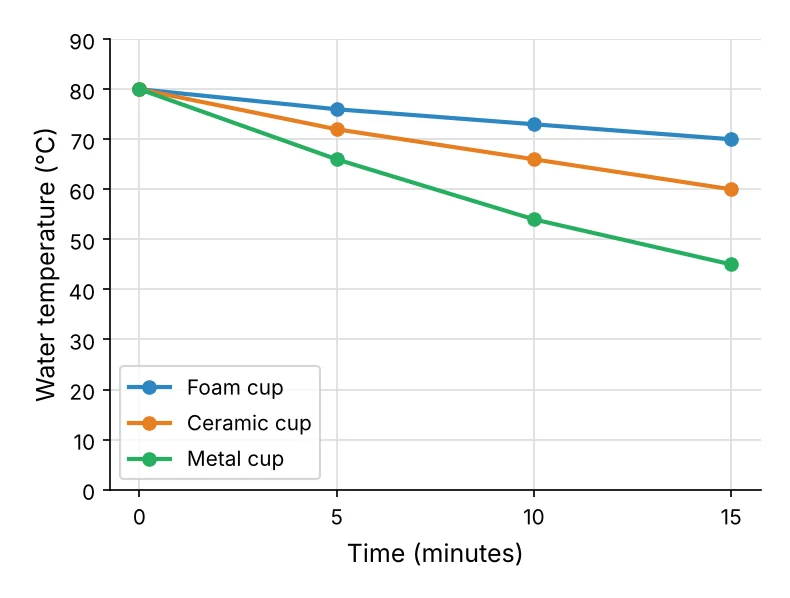
Three identical cups made of foam, ceramic and metal are each filled with the same amount of hot water at 80 degrees Celsius. The graph shows how the water cools.
Question diagram
(a)
Identify which cup lost the most thermal energy in 15 minutes. [1]
(b)
Calculate the rate of temperature drop for the foam cup. Show your working. [2]
(c)
Compare the three materials as insulators and suggest one way to improve the fairness of the test. [2]

revisionprep.com

Summary Answer

Not available for this question.

Model Answer

Not available for this question.

Marking Scheme

Not available for this question.

Examiner Insights

Not available for this question.

Question 6Criterion D · Challenge · 8 marksrevisionprep.com

Renewable and Non-Renewable Energy Sources

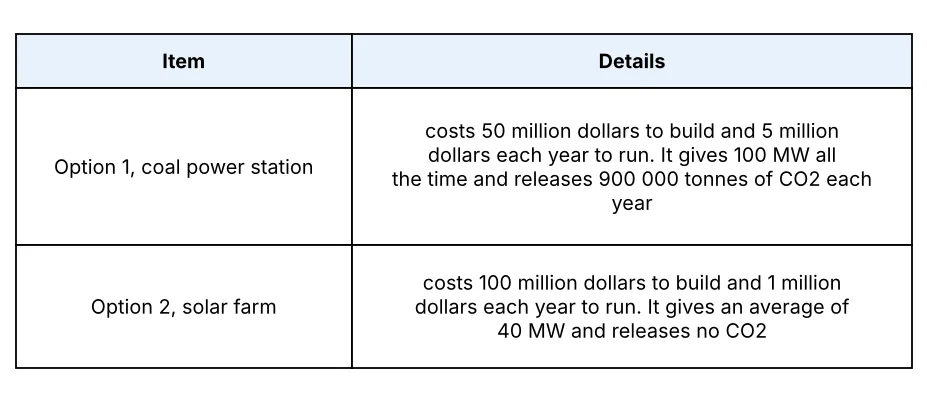
A town needs at least 60 megawatts (MW) of power at all times.

Option 1, coal power station: costs 50 million dollars to build and 5 million dollars each year to run. It gives 100 MW all the time and releases 900 000 tonnes of CO2 each year.

Option 2, solar farm: costs 100 million dollars to build and 1 million dollars each year to run. It gives an average of 40 MW and releases no CO2.
Question diagram
(a)
Identify which option meets the town's need of 60 MW at all times and state one reason why the other does not. [2]
(b)
Calculate the total cost of each option over 10 years (building plus running). State which is cheaper. [3]
(c)
Compare the options for the environment and reliability. Then give one other factor the council should think about. [3]

revisionprep.com

Summary Answer

Not available for this question.

Model Answer

Not available for this question.

Marking Scheme

Not available for this question.

Examiner Insights

Not available for this question.

That's every free question here — 6 of 88.

+82 more questions, plus Mock Papers & Worksheets, are waiting in Premium.

Upgrade