You're viewing free preview questions — 4 questions previewing here — subscribe to unlock 56 more, plus the Full Question Bank, Mock Papers & Worksheets.Upgrade
Combining Transformations — Free MYP3 Mathematics Practice Questions

1QuestionApplying Two or More Transformations SequentiallyConcept Practice
2 marks~3 minCriterion A
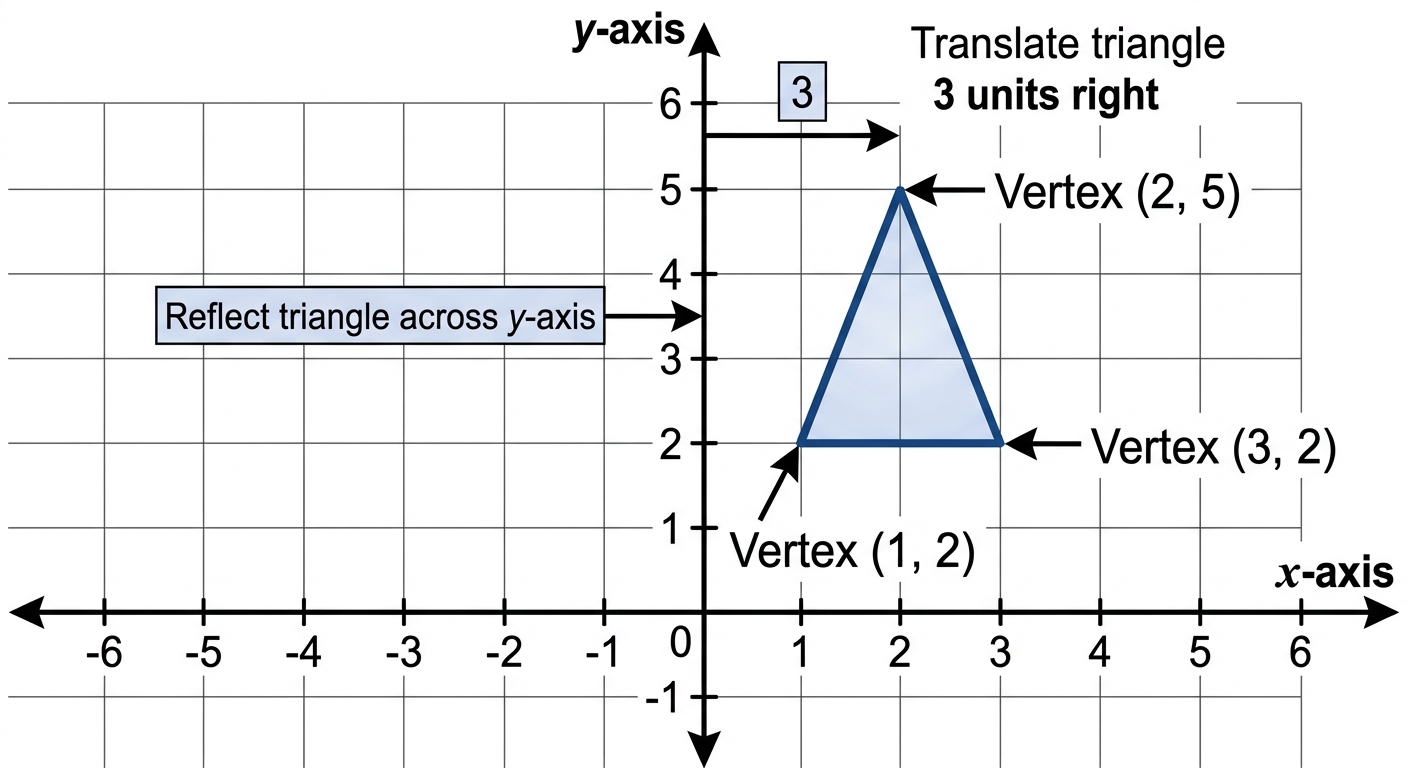
A triangle has vertices at , , and .
The triangle is first reflected across the -axis, then translated 3 units to the right.
Calculate the coordinates of vertex after both transformations. [2]
The triangle is first reflected across the -axis, then translated 3 units to the right.
Calculate the coordinates of vertex after both transformations. [2]

Solutions
2QuestionIdentifying Final Image After Multiple TransformationsAssessment Practice
6 marks~9 minCriterion D
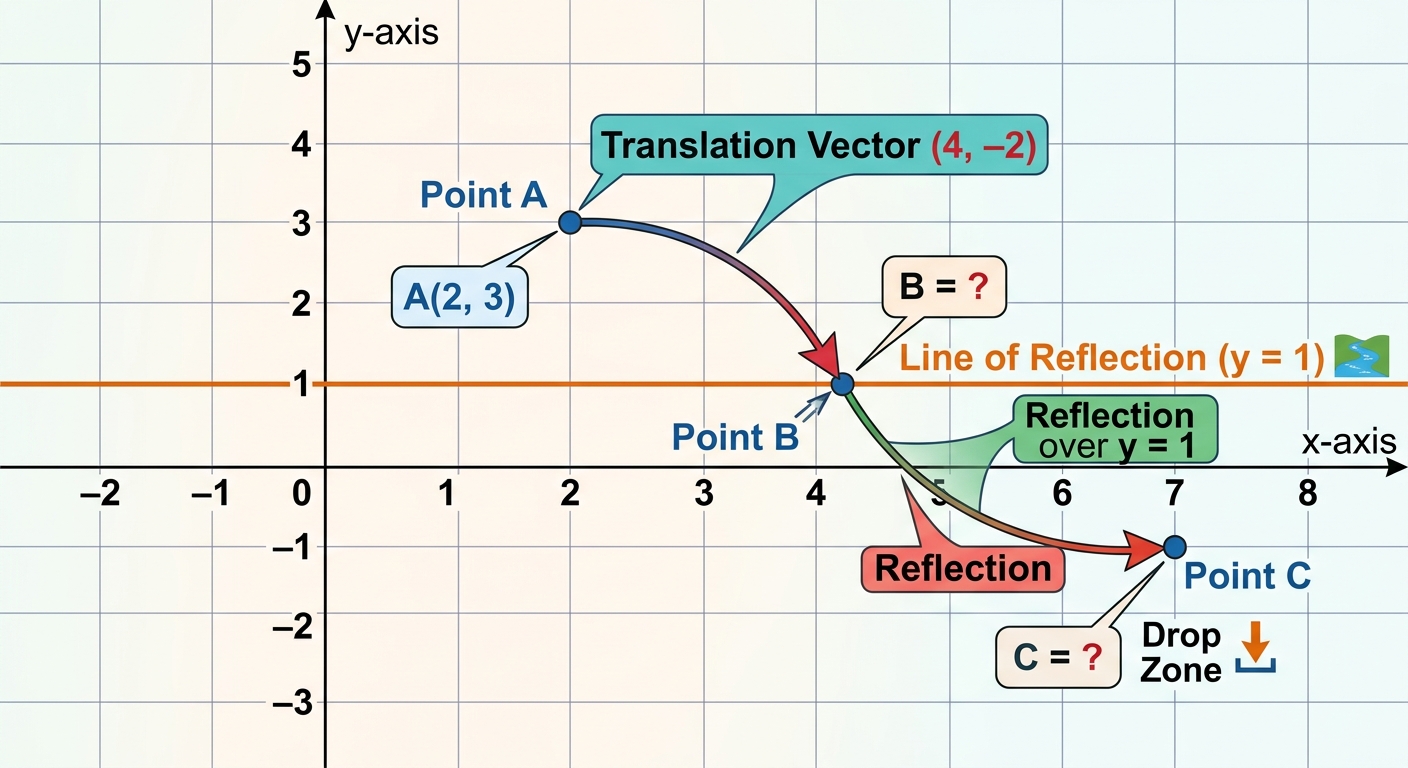
A drone delivery service uses a coordinate grid to plan its flight path. The drone starts at point . It translates by the vector to reach point , then reflects over the line to reach the drop zone at point .
a
Calculate the coordinates of point . [2]
b
Calculate the coordinates of point after the reflection over . [2]
c
Analyse one way in which using a 2D coordinate grid to model the drone's flight path may not reflect real-world conditions. Use the context to support your answer. [2]
Solutions
3QuestionApplying Two or More Transformations SequentiallyAssessment Practice
7 marks~11 minCriterion C
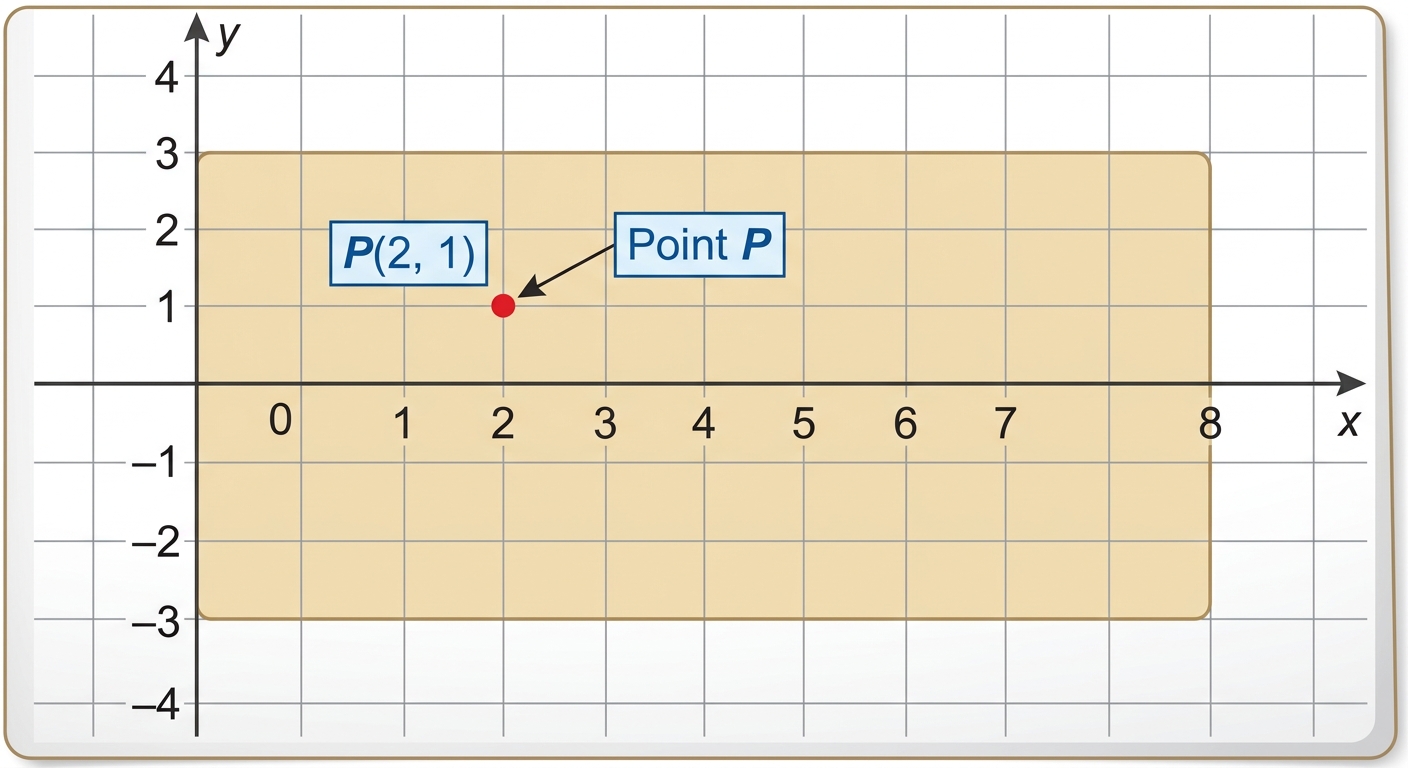
A graphic designer places a logo at point on a coordinate grid. She applies a translation of followed by a clockwise rotation about the origin. Her colleague claims the final position would be the same if the rotation were applied first.
a
Apply the translation then the clockwise rotation to . State the final coordinates. [2]
b
Apply the clockwise rotation then the translation to . State the final coordinates. [2]
c
Compare your results from parts (a) and (b) and analyse whether the colleague's claim is valid. In your answer, explain why the order of transformations matters and describe one consequence of assuming transformations can always be reordered. [3]
Solutions
4QuestionApplying Two or More Transformations SequentiallyAssessment Practice
6 marks~9 minCriterion B
A point is transformed by the following sequence: reflect in the -axis, then translate by the vector , then reflect in the -axis.
a
Apply this transformation sequence to each point below and record the final coordinates. [2]
b
Using your results from part (a), explain how you can write a single rule that gives the final coordinates directly from . State your rule. [2]
c
A student claims the rule gives the same result as applying the three steps one at a time. Choose a point not used in part (a), apply both methods, and justify whether the student's claim is correct. [2]
Solutions
That's every free question here — 4 of 60.
+56 more questions, plus Mock Papers & Worksheets, are waiting in Premium.