You're viewing free preview questions — 4 questions previewing here — subscribe to unlock 41 more, plus the Full Question Bank, Mock Papers & Worksheets.Upgrade
Compound Shapes and Nets — Free MYP3 Mathematics Practice Questions

1QuestionArea and Perimeter of Compound ShapesConcept Practice
2 marks~3 minCriterion A
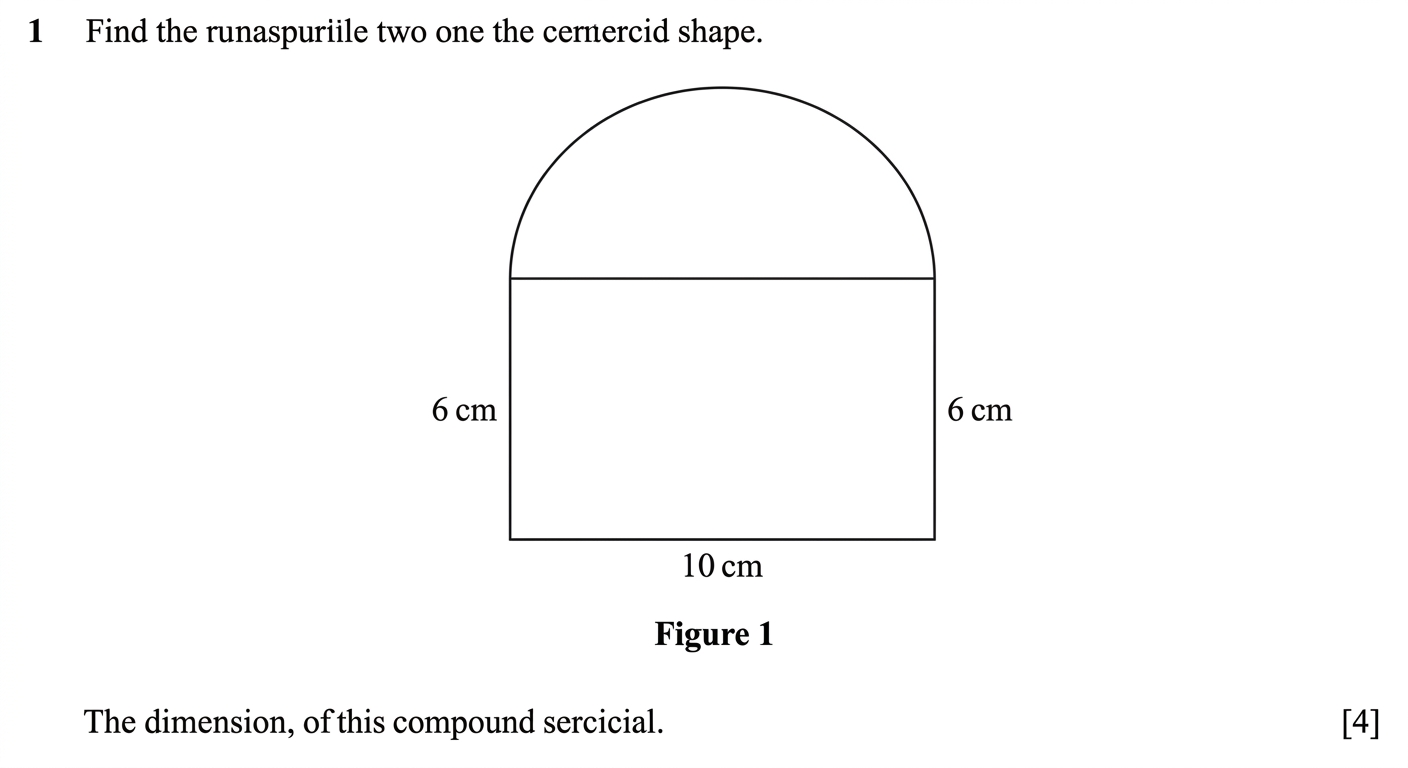
The diagram shows a compound shape made from a rectangle and a semicircle. The rectangle has a length of 10 cm and a width of 6 cm. The semicircle is attached to one of the 6 cm sides.
a
Calculate the radius of the semicircle. [1]
b
Explain how many sides of the rectangle form part of the perimeter of the compound shape. [1]

Solutions
2QuestionBreaking Down Compound Shapes into Simple PartsAssessment Practice
3 marks~5 minCriterion C
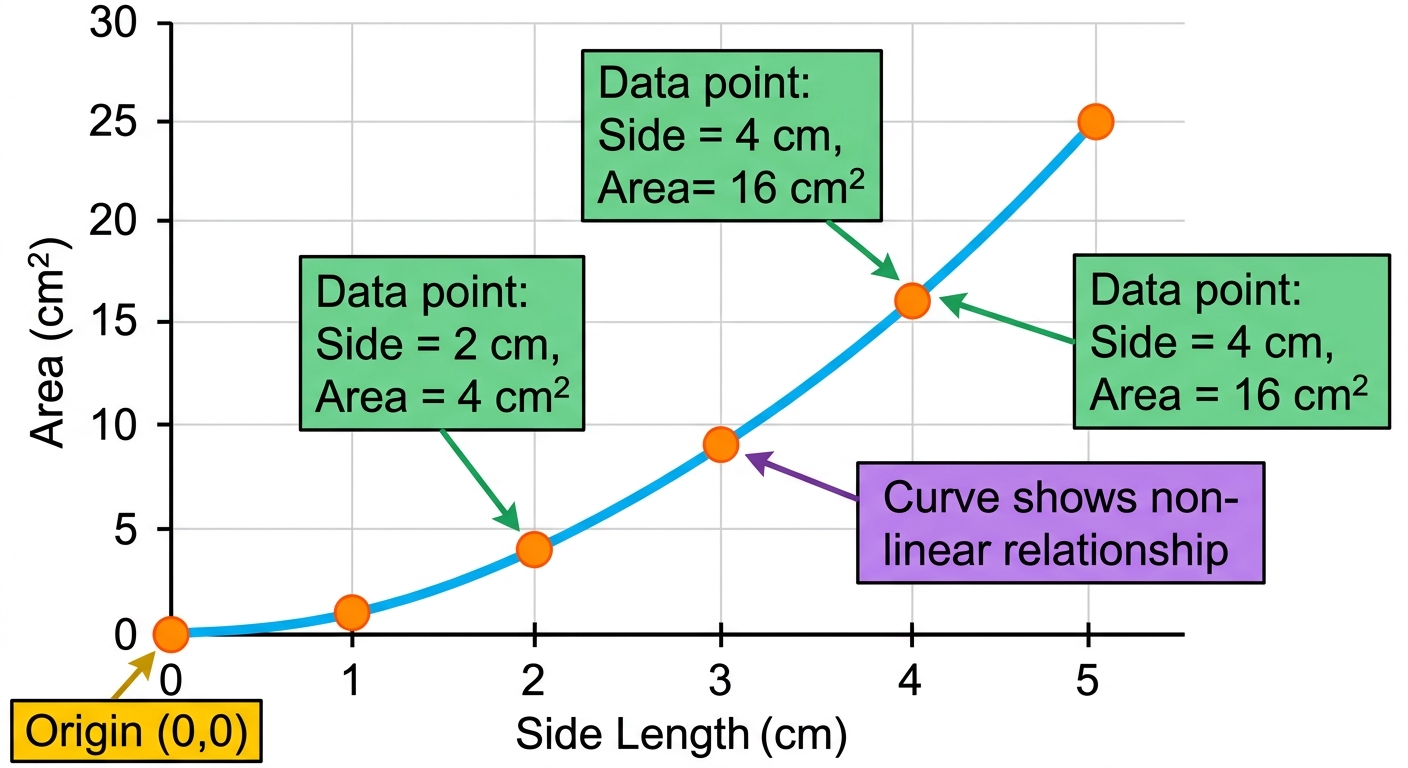
The table below shows the side length and area of a square.
| Side length (cm) | 0 | 1 | 2 | 3 | 4 | 5 |
|---|---|---|---|---|---|---|
| Area (cm²) | 0 | 1 | 4 | 9 | 16 | 25 |
a
State the formula that connects the side length and the area of a square. [1]
b
Explain why the graph of this relationship is a curve rather than a straight line. [1]
c
A student claims: "If the side length doubles, the area also doubles." Analyse this claim using values from the table. [1]
Solutions
3QuestionDrawing and Interpreting Nets of 3D ShapesAssessment Practice
6 marks~9 minCriterion B
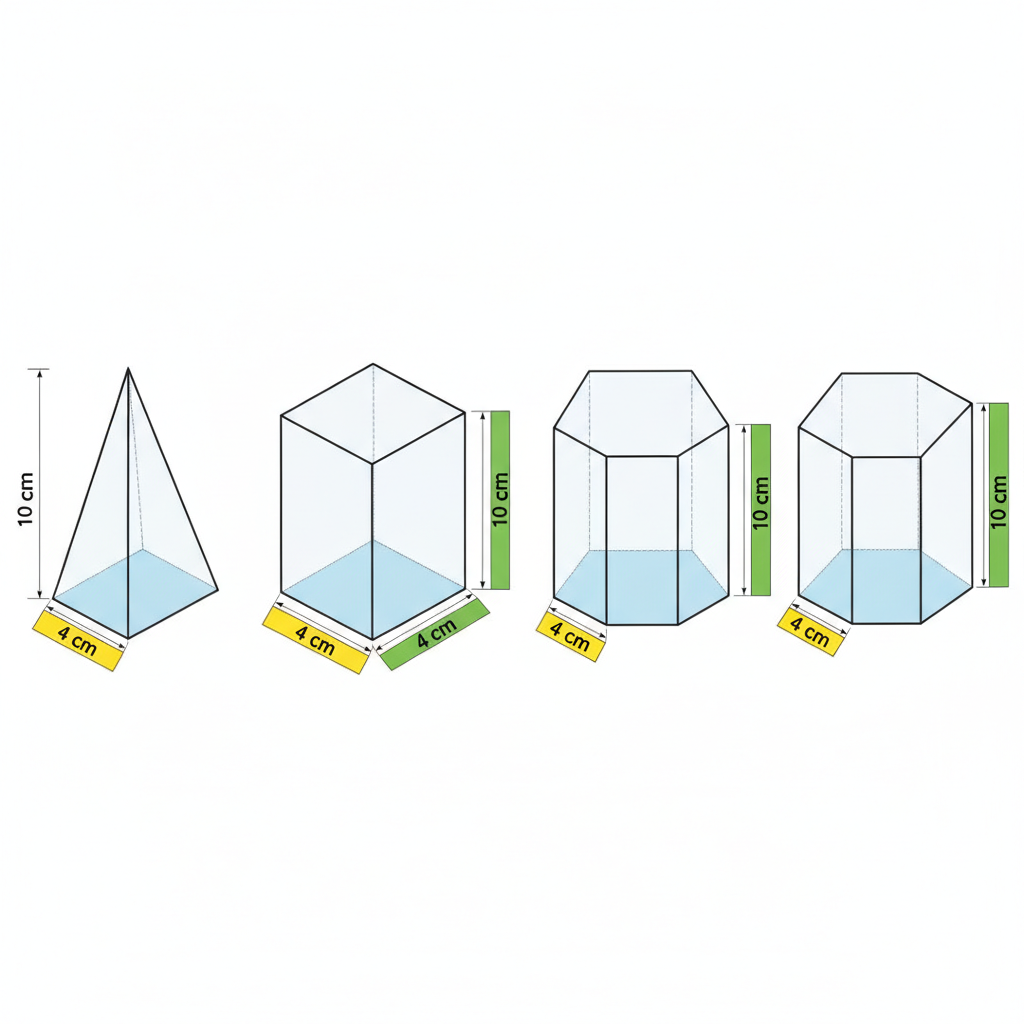
A right prism has a regular pentagonal base with side length 4 cm and height 10 cm.
The area of a regular polygon with sides of length is .
The area of a regular polygon with sides of length is .
a
Calculate the lateral surface area of the pentagonal prism. [2]
b
Calculate the area of one pentagonal base. Show your working. [2]
c
A student claims: "The more sides the base has, the greater the total surface area." Using your results and the total surface areas of a triangular prism () and a hexagonal prism (), all with side length 4 cm and height 10 cm, analyse whether this claim is correct. [2]
Solutions
4QuestionArea and Perimeter of Compound ShapesAssessment Practice
6 marks~9 minCriterion D
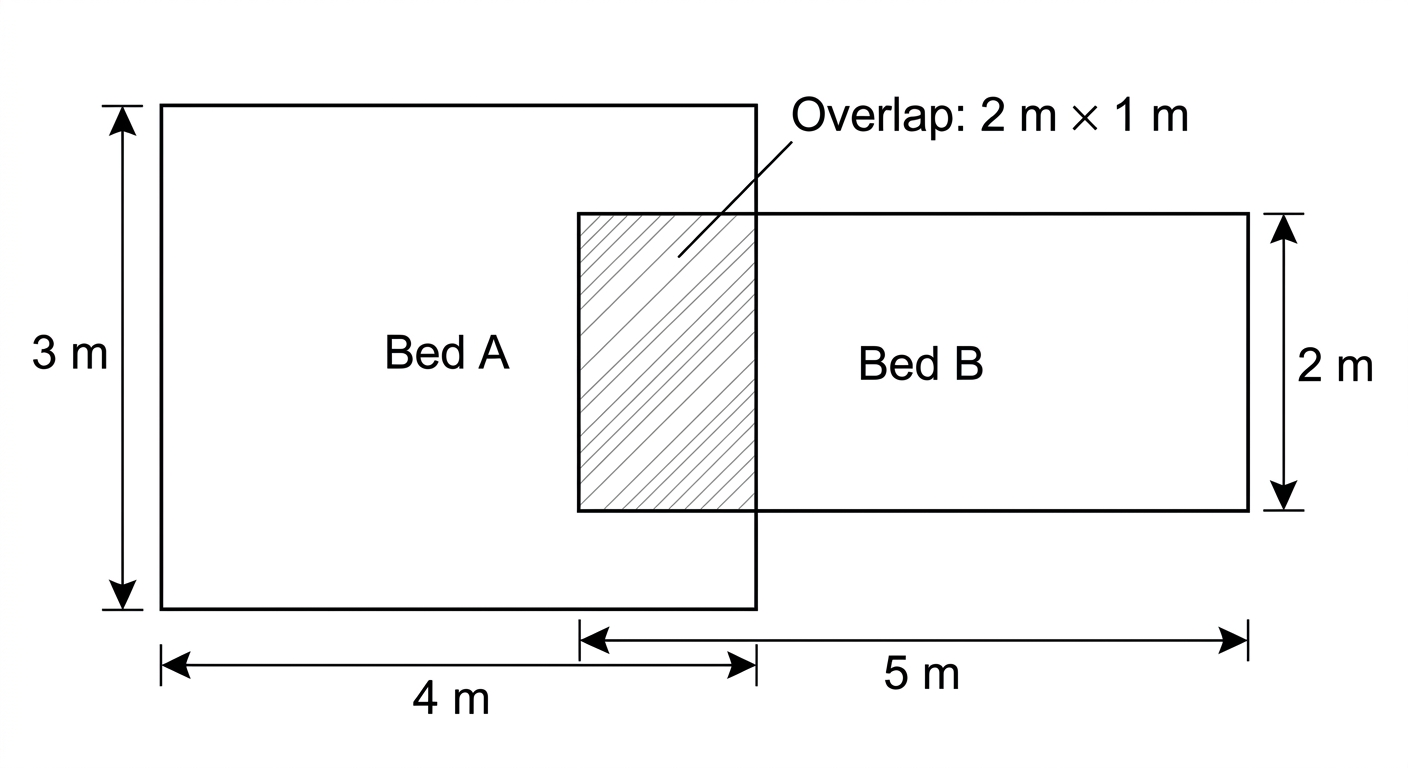
A gardener plans two overlapping rectangular flower beds and needs to find the total area to calculate the volume of soil required at a uniform depth of .
Bed A:
Bed B:
Overlapping region:
Bed A:
Bed B:
Overlapping region:
a
Calculate the total area of the two flower beds combined. [2]
b
Calculate the total volume of soil required. [1]
c
The gardener's model assumes perfectly rectangular beds and a uniform soil depth of . Explain two reasons why this model may not accurately predict the actual volume of soil needed in a real garden. [3]
Solutions
That's every free question here — 4 of 45.
+41 more questions, plus Mock Papers & Worksheets, are waiting in Premium.