You're viewing free preview questions — 4 questions previewing here — subscribe to unlock 64 more, plus the Full Question Bank, Mock Papers & Worksheets.Upgrade
Perimeter and Area of 2D Shapes — Free MYP3 Mathematics Practice Questions

1QuestionArea of Trapeziums and Compound ShapesConcept Practice
2 marks~3 minCriterion B
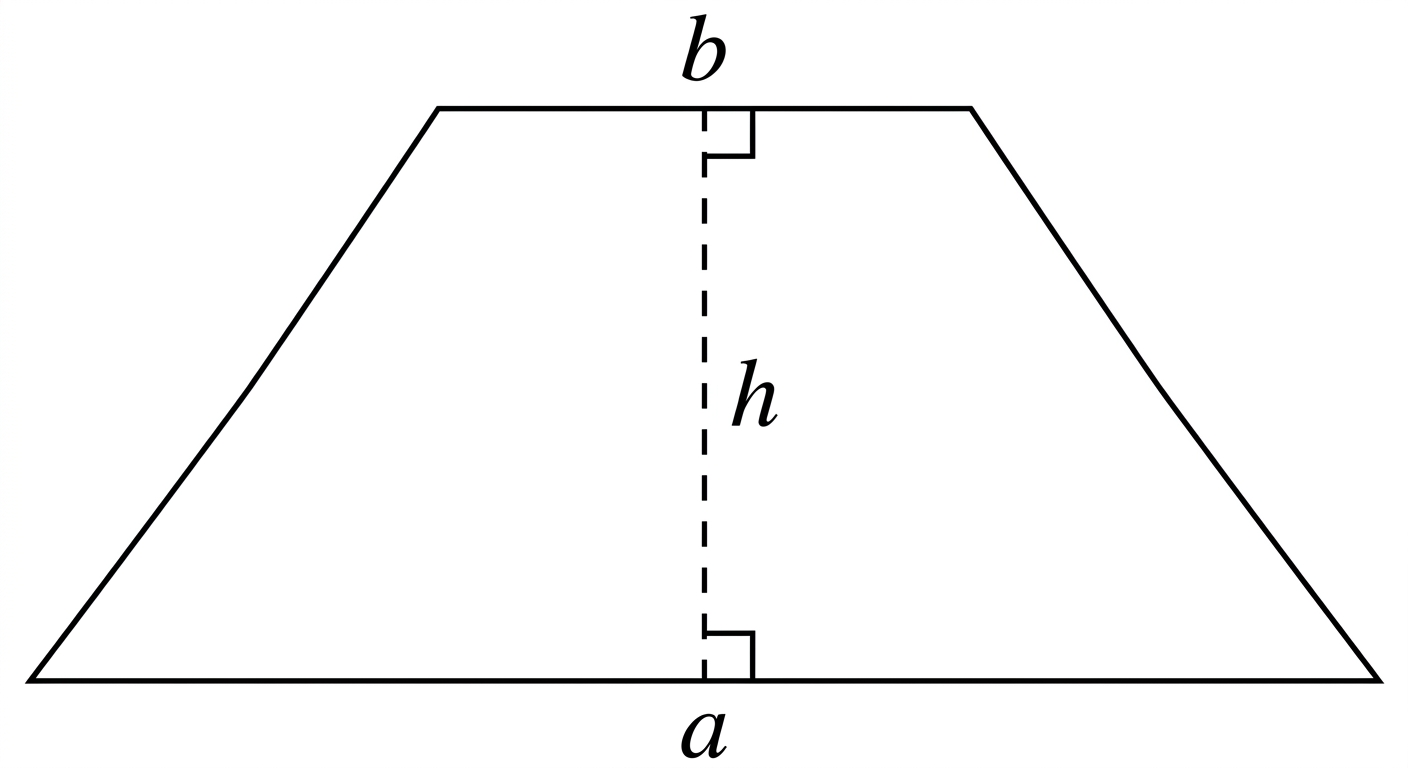
The diagram shows a trapezium. The two parallel sides are labelled and . The perpendicular distance between them is labelled .
a
Identify which measurements are the bases and which is the height of the trapezium. Use correct mathematical notation in your response. [1]
b
Explain why the area of a trapezium is calculated using the formula . [1]

Solutions
2QuestionArea of Rectangles Triangles and ParallelogramsAssessment Practice
4 marks~6 minCriterion D
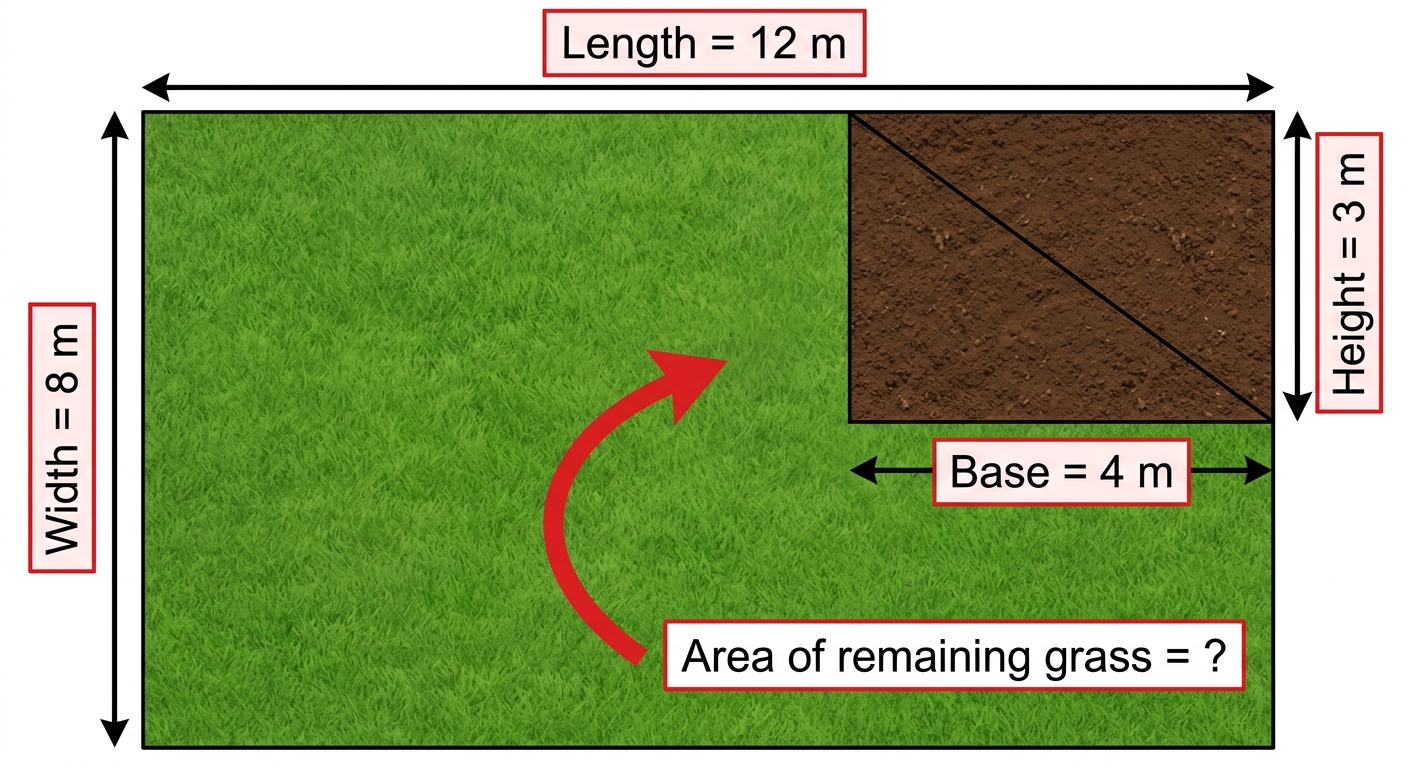
A rectangular garden measures 12 m by 8 m. A triangular flower bed, with base 4 m and height 3 m, is cut from one corner of the garden, leaving a grass area.
a
Calculate the area of the rectangular garden. [1]
b
Calculate the area of the triangular flower bed. [1]
c
The gardener claims the remaining grass covers more than 90% of the original garden. Using your results from (a) and (b), determine the remaining grass area and explain whether the gardener's claim is correct. [2]
Solutions
3QuestionArea of Rectangles Triangles and ParallelogramsConcept Practice
2 marks~3 minCriterion A
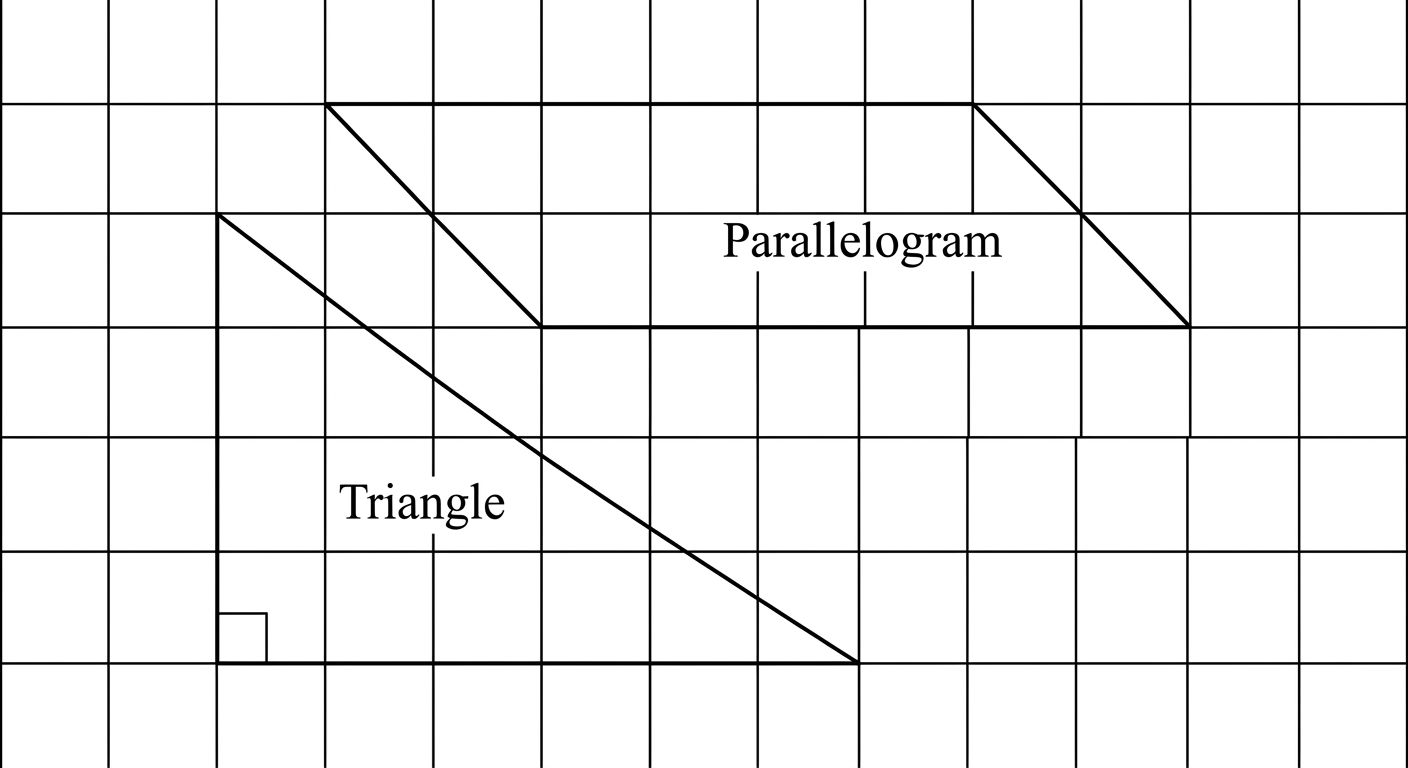
The diagram shows a right triangle and a parallelogram drawn on a centimetre grid.
a
Calculate the area of the triangle. [1]
b
Calculate the area of the parallelogram. [1]
Solutions
4QuestionCalculating Perimeter of Squares and RectanglesConcept Practice
2 marks~3 minCriterion C
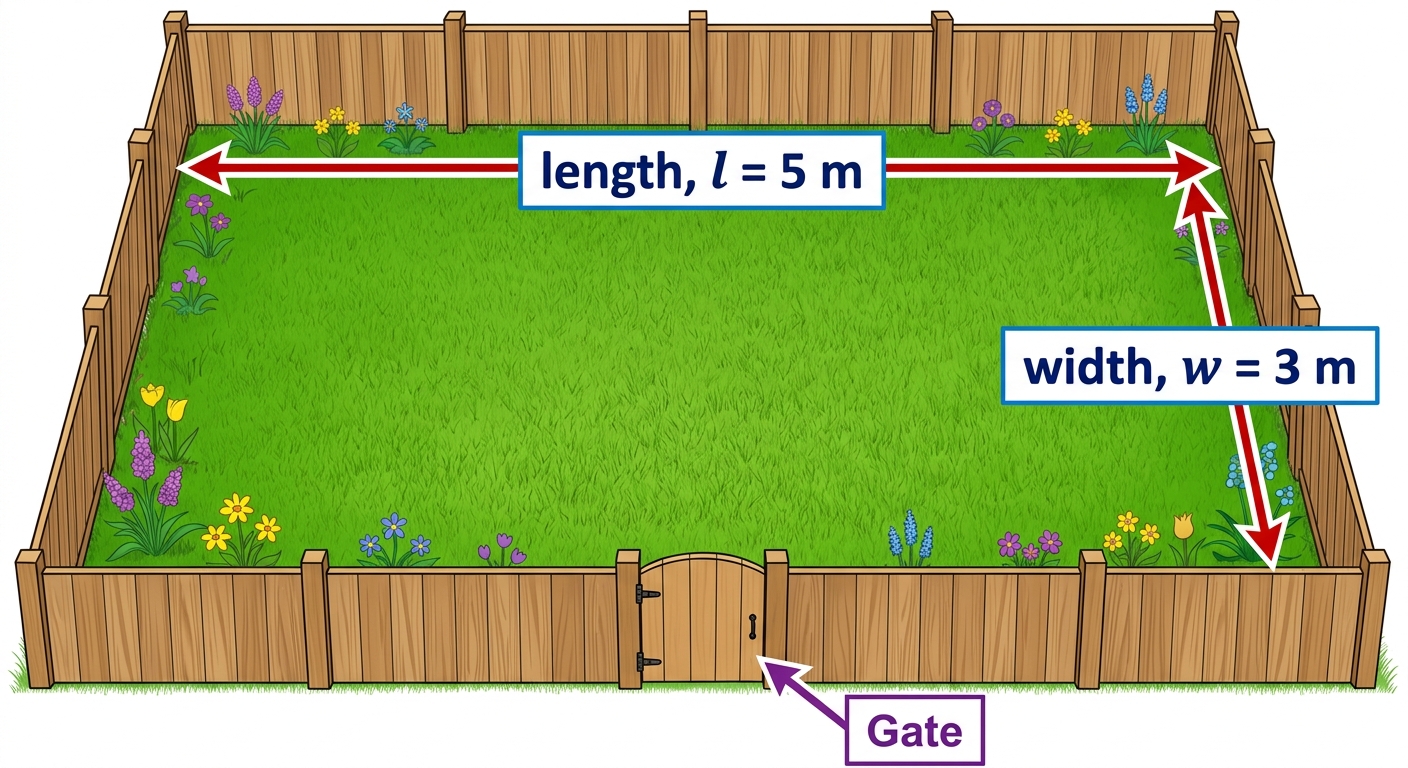
A gardener plans to place fencing around a rectangular vegetable plot.
a
State one real-world situation, other than a garden, where calculating the perimeter of a rectangle is useful. [1]
b
Explain why the formula works for a rectangle, and identify one assumption this formula makes about the shape. [1]
Solutions
That's every free question here — 4 of 68.
+64 more questions, plus Mock Papers & Worksheets, are waiting in Premium.