You're viewing free preview questions — 4 questions previewing here — subscribe to unlock 55 more, plus the Full Question Bank, Mock Papers & Worksheets.Upgrade
Scale Drawings Maps and Bearings — Free MYP3 Mathematics Practice Questions

1QuestionCreating and Interpreting Scale DiagramsConcept Practice
2 marks~3 minCriterion A
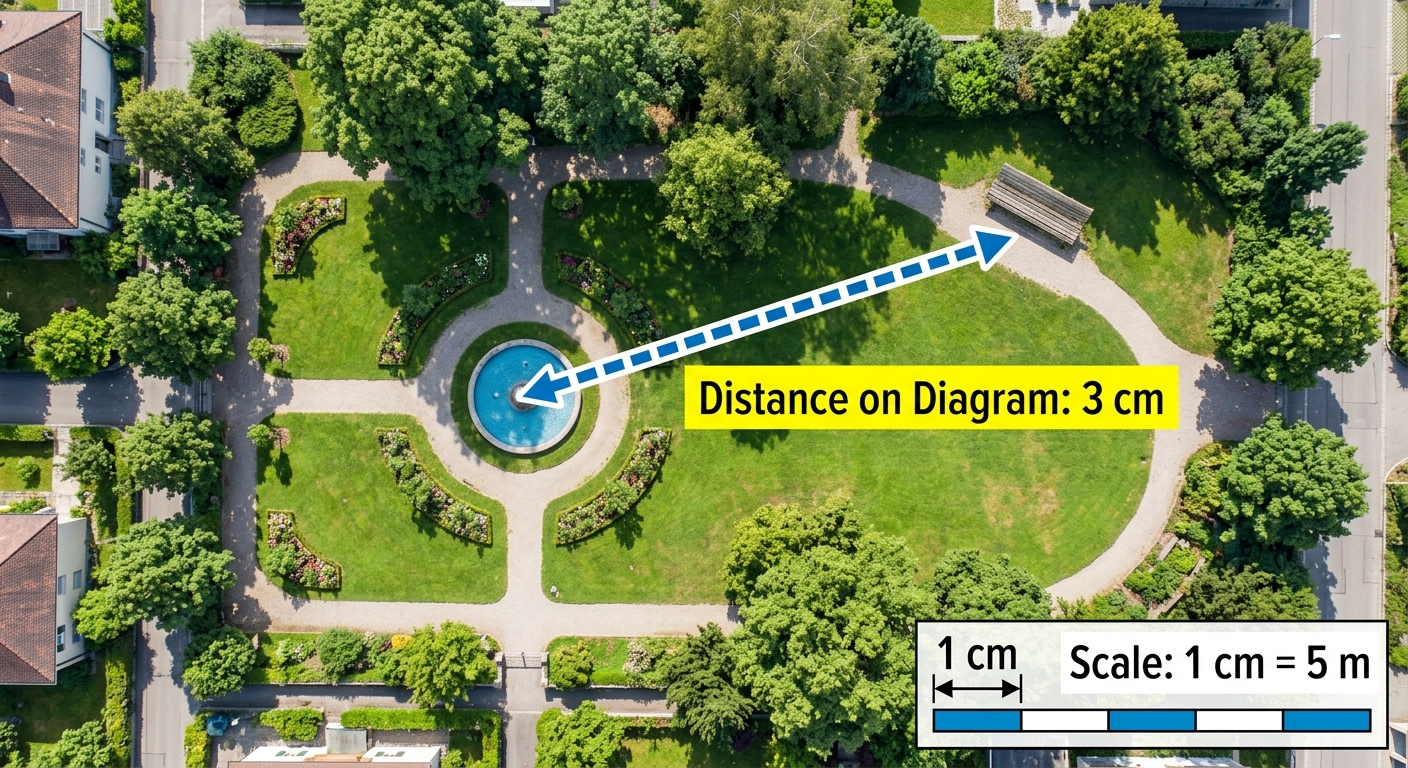
A scale diagram of a park uses a scale where represents .
On the diagram, the distance between the fountain and the bench measures .
(a) Calculate the actual distance, in metres, between the fountain and the bench. [2]
On the diagram, the distance between the fountain and the bench measures .
(a) Calculate the actual distance, in metres, between the fountain and the bench. [2]

Solutions
2QuestionCreating and Interpreting Scale DiagramsAssessment Practice
4 marks~6 minCriterion D
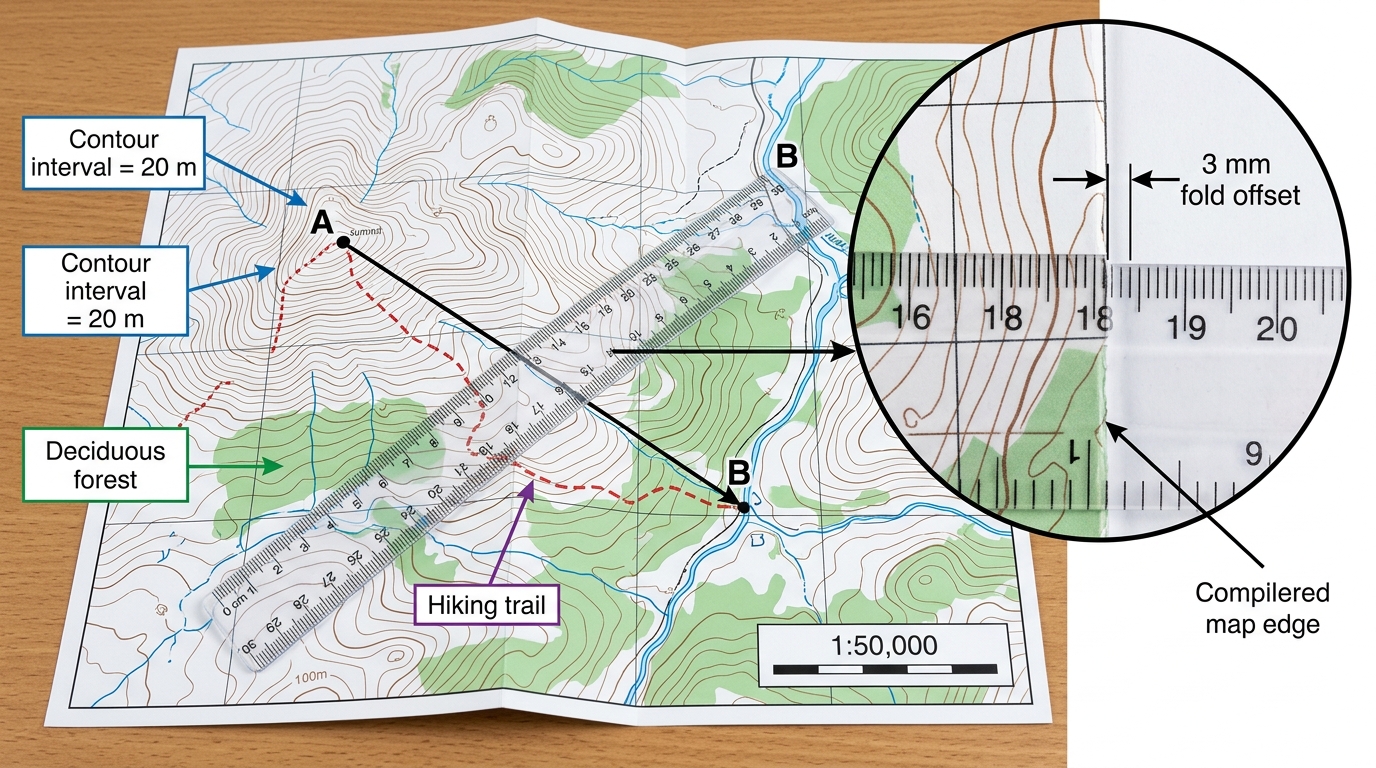
A hiker plans a route using a map with a scale of . The straight-line trail measures on the map. A fold in the map causes a measurement error of .
a
Calculate the actual distance, in kilometres, represented by the error. [2]
b
Explain how this measurement error and the fact that a map is a flat representation of curved terrain affect the reliability of using the map to plan the hiking route. [2]
Solutions
3QuestionMeasuring Bearings with a ProtractorAssessment Practice
5 marks~8 minCriterion C
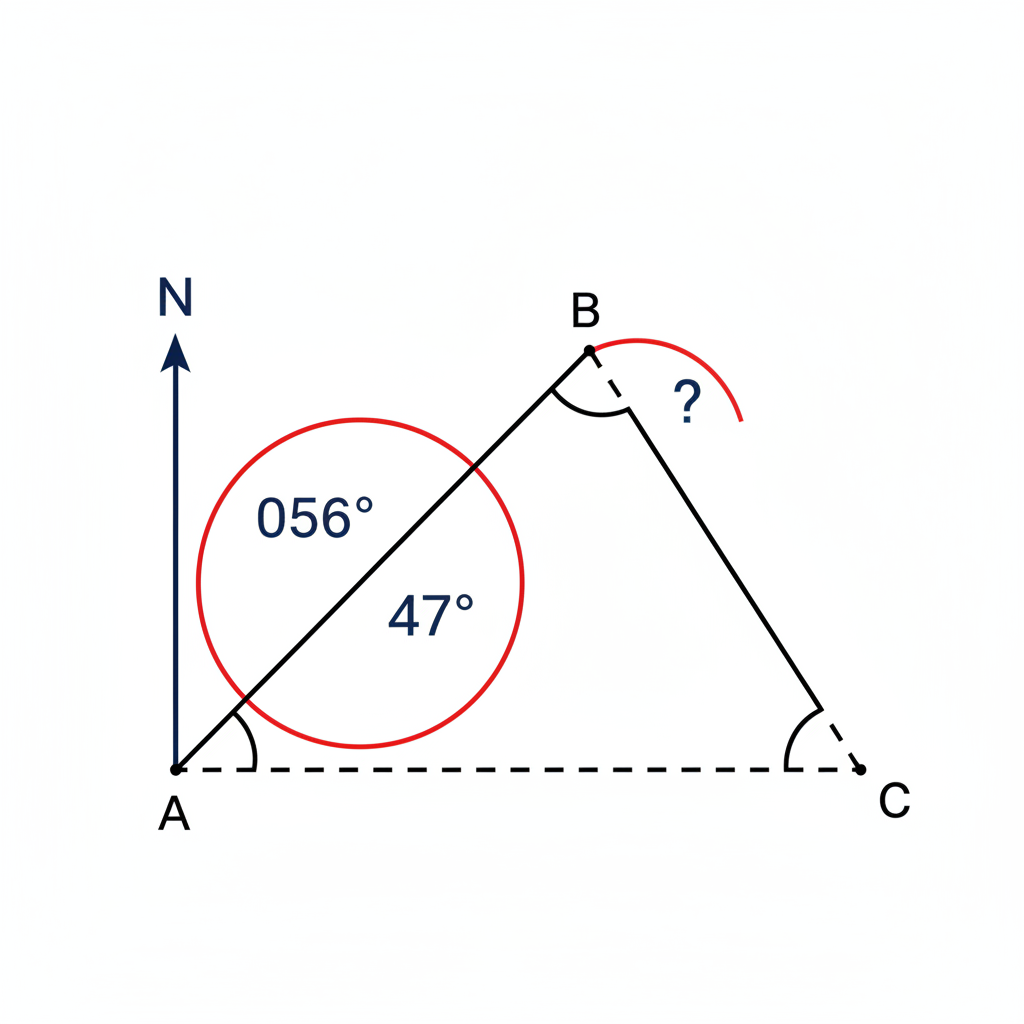
A surveyor stands at point and measures the bearing of point as . The interior angle of the triangular field is , with lying clockwise from as seen from .
a
State what a three-figure bearing measures. [1]
b
Calculate the bearing of from . [2]
c
Justify whether a bearing of for from would be consistent with the given information. [2]
Solutions
4QuestionMeasuring Bearings with a ProtractorAssessment Practice
8 marks~12 minCriterion B
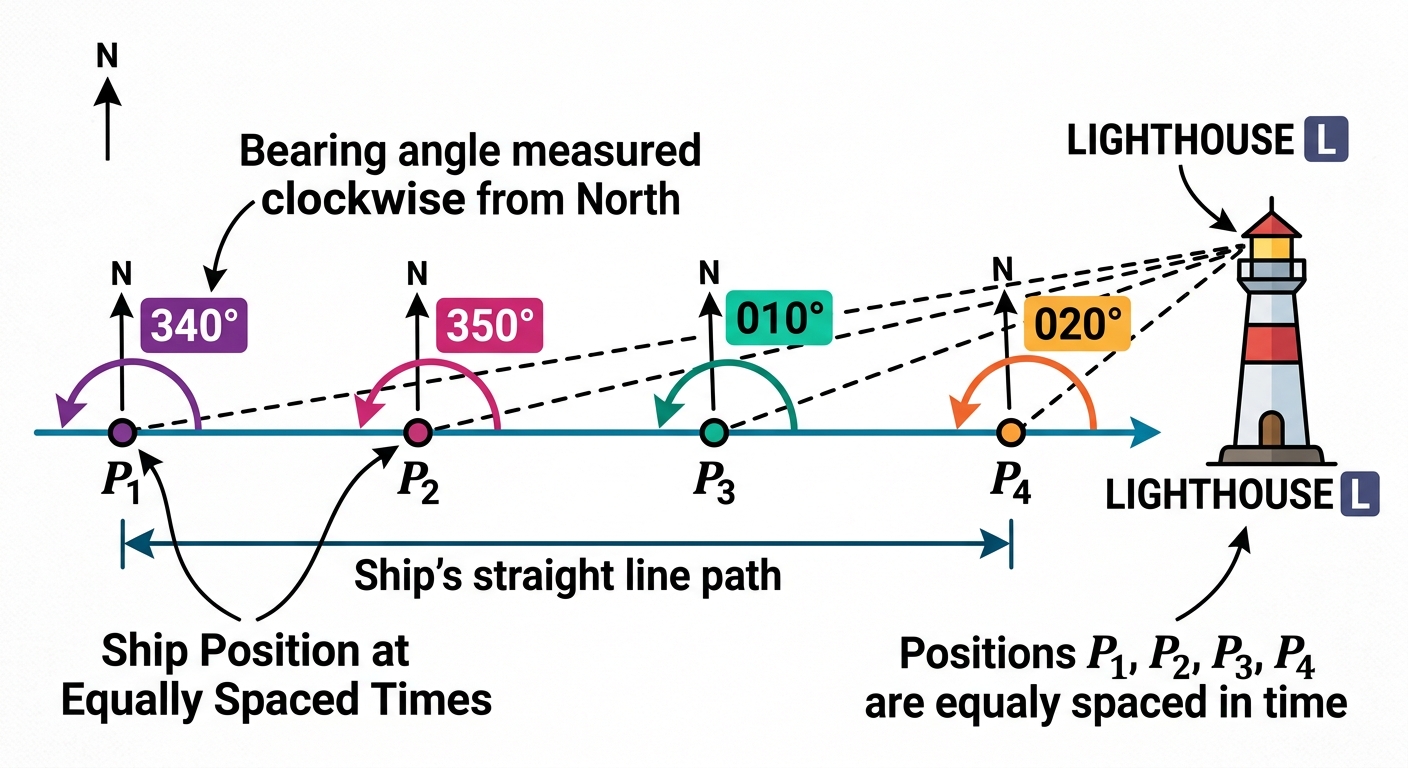
A ship sails in a straight line past a lighthouse . The table shows the bearing of measured from the ship at four equally spaced positions.
| Position | ||||
|---|---|---|---|---|
| Bearing of |
a
Describe the pattern in the bearings as the ship moves from to . [2]
b
Apply the pattern to predict the bearing of from position , the next equally spaced position along the same line. Explain your reasoning. [3]
c
Using the scale , the spacing between consecutive positions is . A scaled diagram is provided showing to and the lighthouse . Measure the bearing of from using a protractor, and analyse whether your measurement supports your prediction from part (b). [3]
Solutions
That's every free question here — 4 of 59.
+55 more questions, plus Mock Papers & Worksheets, are waiting in Premium.