You're viewing free preview questions — 4 questions previewing here — subscribe to unlock 64 more, plus the Full Question Bank, Mock Papers & Worksheets.Upgrade
Volume of Cubes Prisms and Cylinders — Free MYP3 Mathematics Practice Questions

1QuestionIntroduction to Volume of CylindersConcept Practice
2 marks~3 minCriterion A
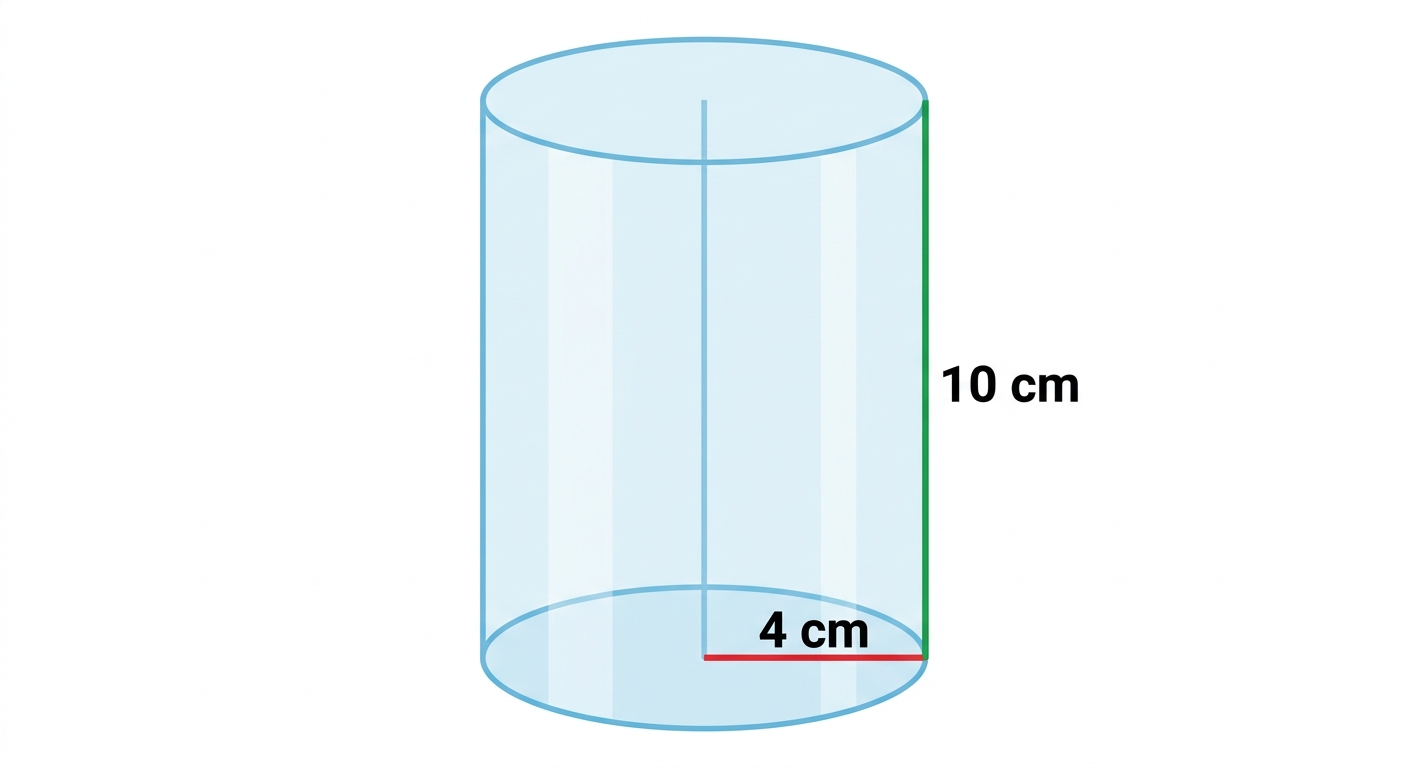
A cylinder has a radius of 4 cm and a height of 10 cm.
a
Write the formula for the volume of a cylinder. [1]
b
Calculate the volume of the cylinder. Give your answer in terms of . [1]

Solutions
2QuestionIntroduction to Volume of CylindersAssessment Practice
2 marks~3 minCriterion D
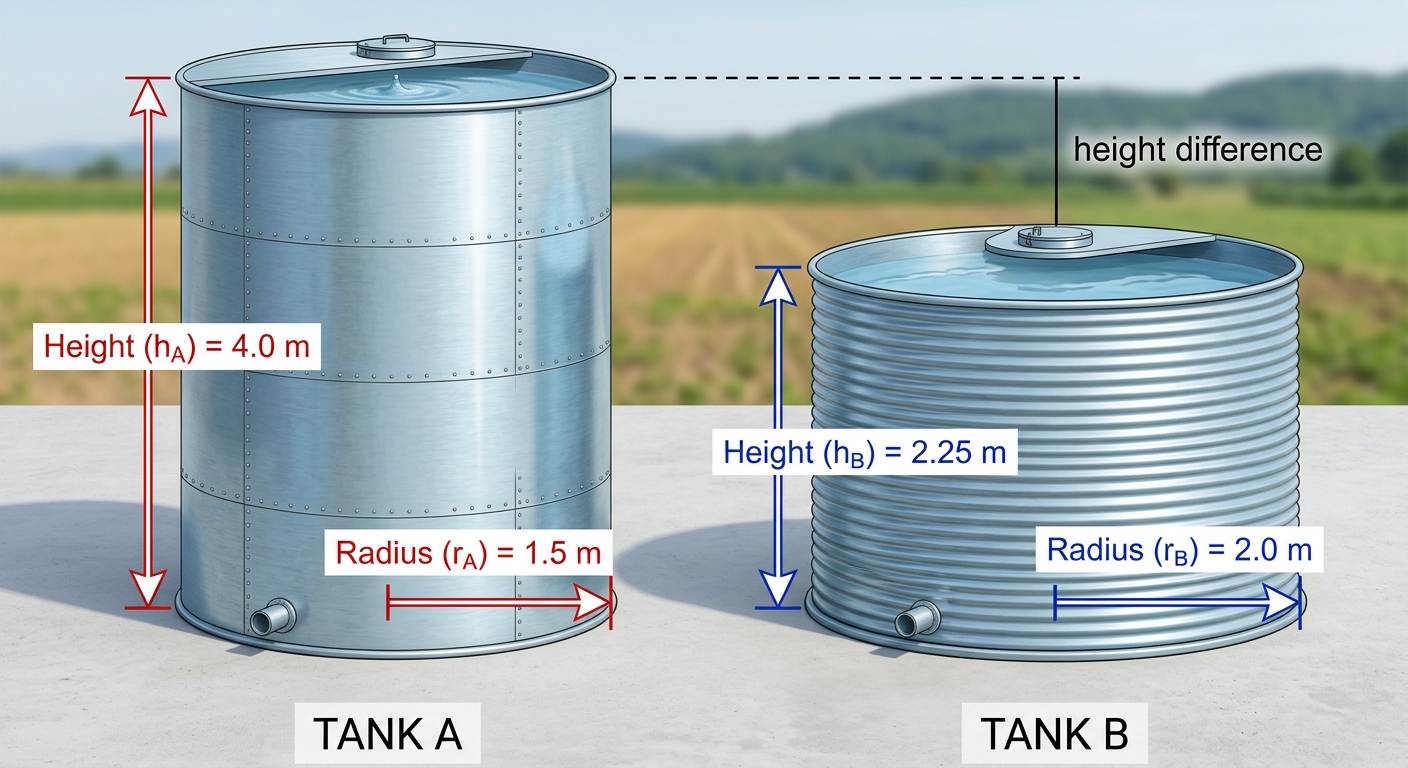
A farmer needs to store water for irrigation and is considering two cylindrical tanks. Tank A has a radius of 1.5 m and a height of 4 m. Tank B has a radius of 2 m and a height of 2.25 m. The volume of a cylinder is given by . Use .
a
Calculate the volume of Tank A and Tank B. [1]
b
The farmer's shed has a height limit of 2.5 m. Explain which tank is more practical for the farmer, and state one limitation of using volume alone to decide which tank to purchase. [1]
Solutions
3QuestionVolume of a Rectangular PrismAssessment Practice
3 marks~5 minCriterion B
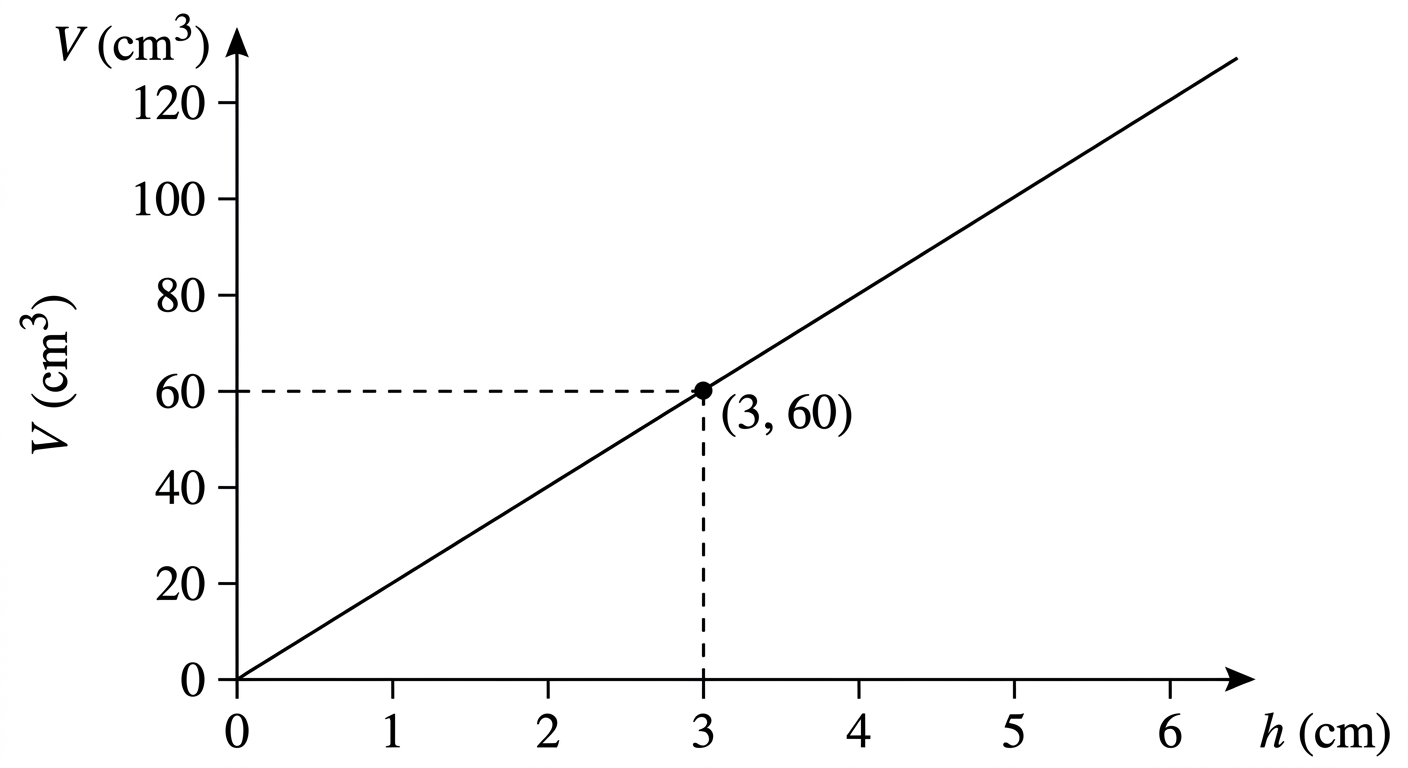
A rectangular prism has a fixed length of cm and a fixed width of cm. Its volume (cm³) is plotted against its height (cm) in the graph below.
a
Apply the formula to write an equation for in terms of only. [1]
b
Explain why the graph of against is a straight line through the origin. [1]
c
The graph shows a point at cm. Interpret what the corresponding value of tells you about the prism at that height. [1]
Solutions
4QuestionSolving Volume Problems with UnitsAssessment Practice
5 marks~8 minCriterion C
A student claims that a cylindrical water tank with a radius of m and a height of m holds more water than a rectangular prism tank with a length of m, a width of m, and a height of m, because the cylinder has a large radius.
a
Calculate the volume of each tank. Show all working and include units. [3]
b
Explain which tank holds more water, using your results from part (a). [1]
c
Analyse the flaw in the student's reasoning. [1]
Solutions
That's every free question here — 4 of 68.
+64 more questions, plus Mock Papers & Worksheets, are waiting in Premium.