You're viewing free preview questions — 4 questions previewing here — subscribe to unlock 57 more, plus the Full Question Bank, Mock Papers & Worksheets.Upgrade
Congruence and Similarity — Free MYP3 Mathematics Practice Questions

1QuestionExploring Similar Shapes and ProportionalityConcept Practice
2 marks~3 minCriterion C
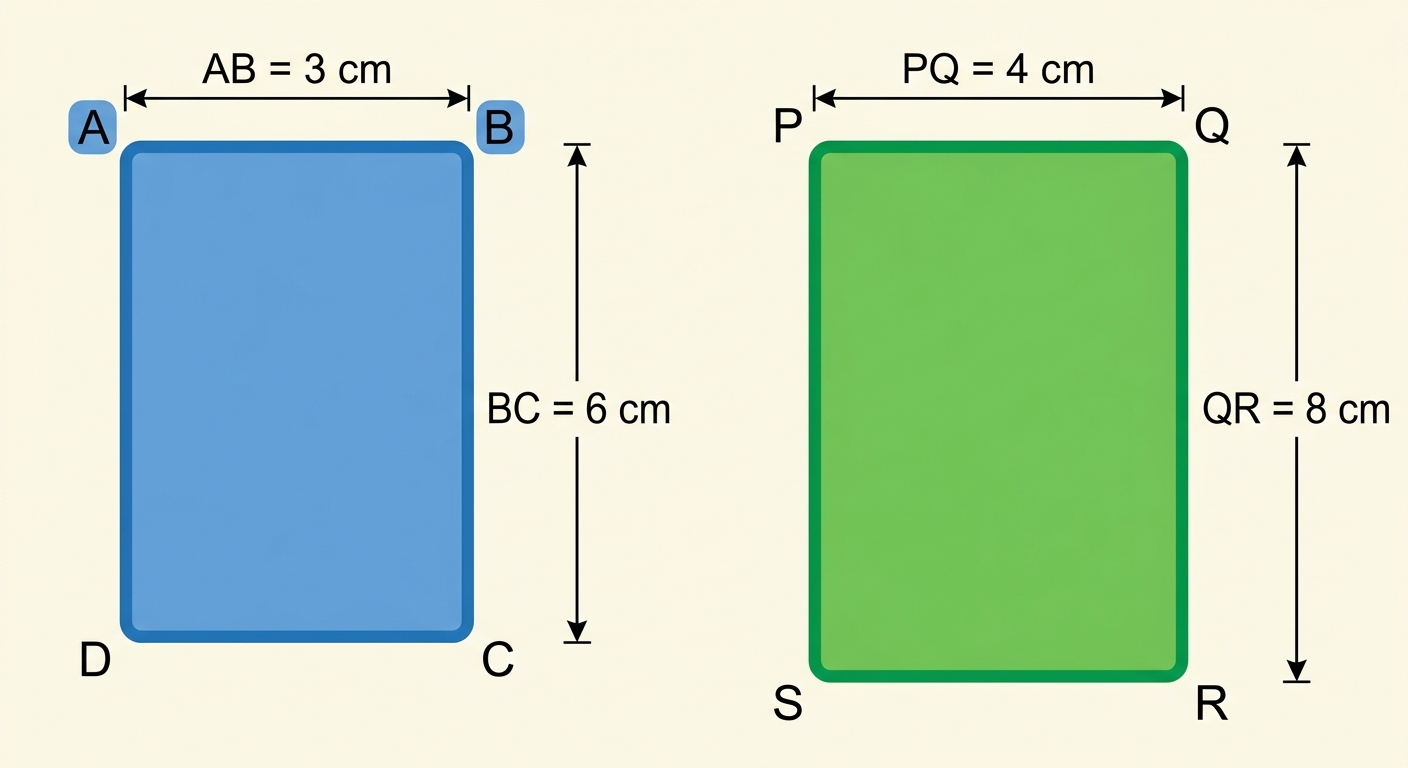
Rectangles and are similar. Rectangle has and . Rectangle has and .
Describe the relationship between the corresponding sides of the two rectangles. Use appropriate mathematical notation and terminology in your response. [2]
Describe the relationship between the corresponding sides of the two rectangles. Use appropriate mathematical notation and terminology in your response. [2]

Solutions
2QuestionApplications of Congruence and Similarity in Real LifeAssessment Practice
2 marks~3 minCriterion D
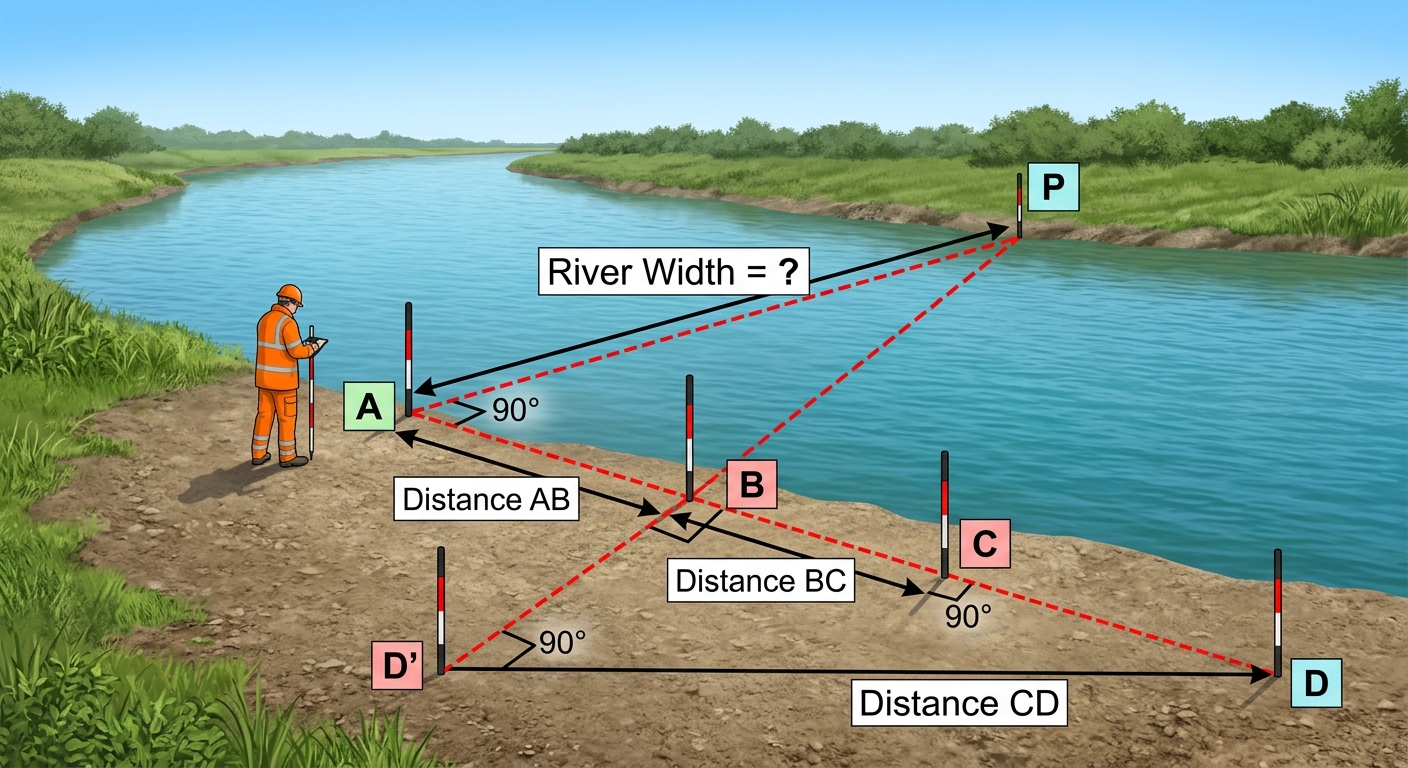
A surveyor wants to find the width of a river without crossing it. Standing on one bank, she measures a baseline of known length along the bank and records the angles from each end of the baseline to a landmark on the opposite bank. She then constructs a smaller triangle with the same angles.
Explain how the surveyor uses similar triangles to calculate the river's width, and state one assumption she must make for the result to be accurate. [2]
Explain how the surveyor uses similar triangles to calculate the river's width, and state one assumption she must make for the result to be accurate. [2]
Solutions
3QuestionApplications of Congruence and Similarity in Real LifeConcept Practice
3 marks~5 minCriterion A
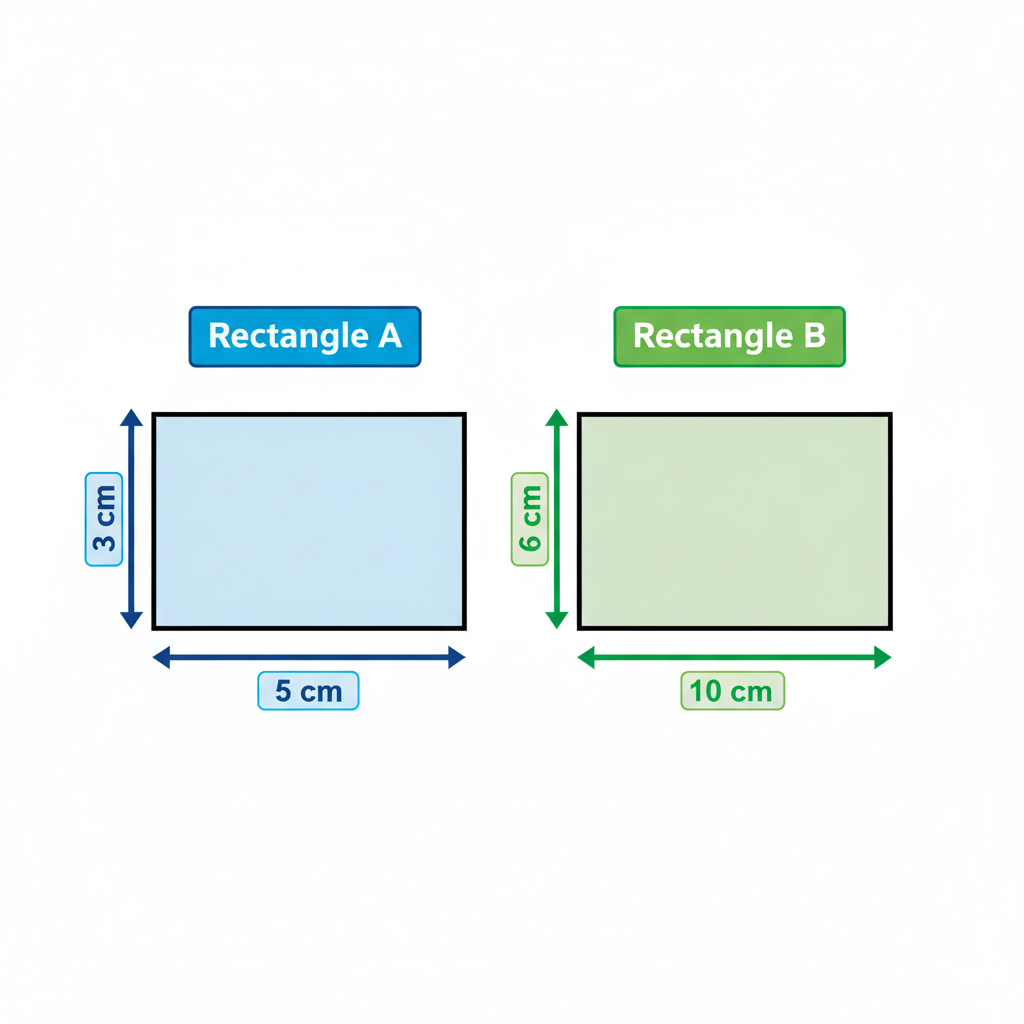
The diagram shows two rectangles. Rectangle A has dimensions 3 cm × 5 cm. Rectangle B has dimensions 6 cm × 10 cm.
a
Write the similarity statement for the two rectangles using the symbol . [1]
b
Calculate the scale factor from Rectangle A to Rectangle B, expressing your answer as a fraction. [1]
c
A third rectangle, Rectangle C, is similar to Rectangle A with a scale factor of from A to C. Determine the dimensions of Rectangle C and explain whether Rectangle B and Rectangle C could be the same rectangle. [1]
Solutions
4QuestionApplications of Congruence and Similarity in Real LifeAssessment Practice
5 marks~8 minCriterion B
Three pairs of similar rectangles are shown below.
Pair 1: and
Pair 2: and
Pair 3: and
Pair 1: and
Pair 2: and
Pair 3: and
a
Calculate the scale factor from the smaller rectangle to the larger rectangle for each pair. [1]
b
Calculate the area of each rectangle in all three pairs, then calculate the ratio of the larger area to the smaller area for each pair. [2]
c
A new pair of similar rectangles has side lengths and . Using the relationship between the side scale factor and the area ratio you identified in part (b), justify the area ratio for this new pair without calculating the areas. [2]
Solutions
That's every free question here — 4 of 61.
+57 more questions, plus Mock Papers & Worksheets, are waiting in Premium.