You're viewing free preview questions — 4 questions previewing here — subscribe to unlock 63 more, plus the Full Question Bank, Mock Papers & Worksheets.Upgrade
Arithmetic and Geometric Sequences — Free MYP3 Mathematics Practice Questions

1QuestionCalculating Common RatiosConcept Practice
2 marks~3 minCriterion A
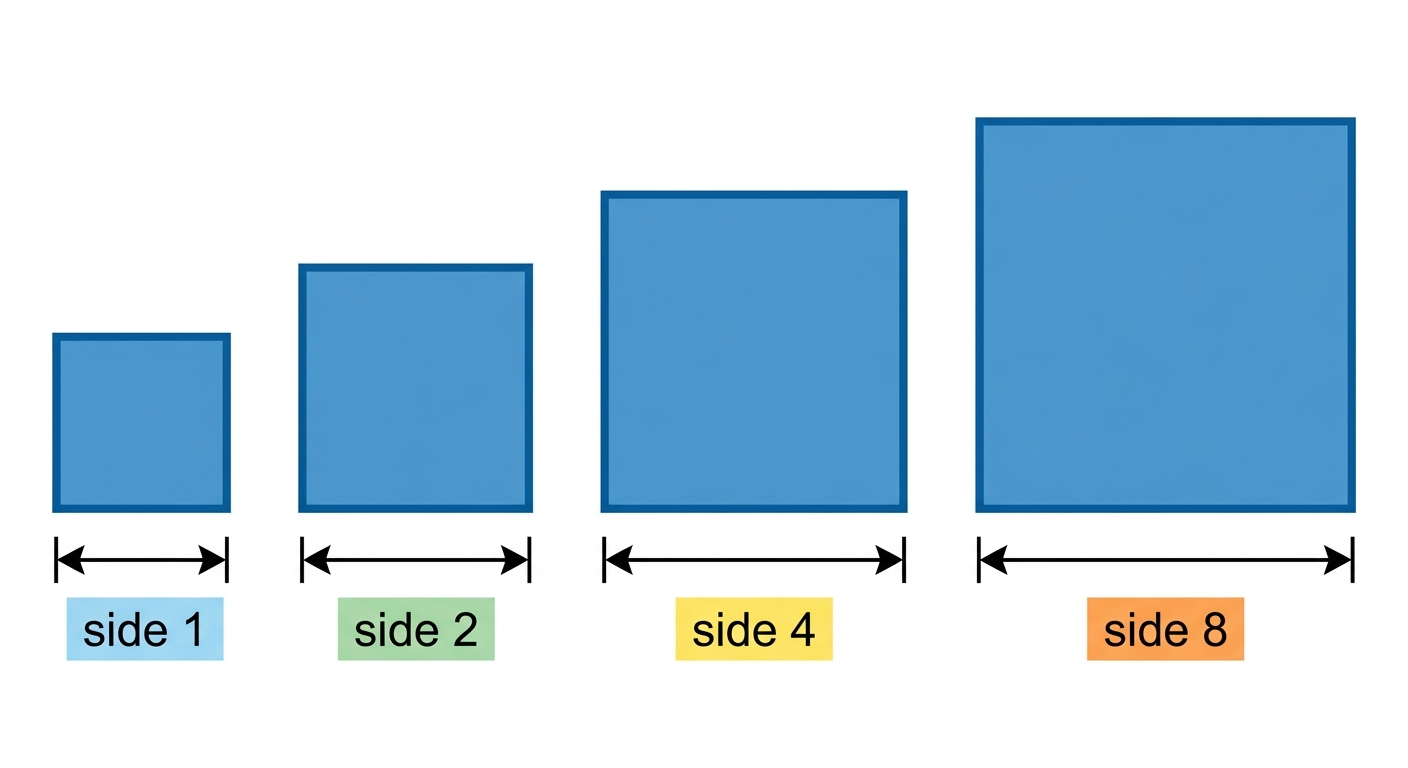
A geometric sequence has the following terms:
Calculate the common ratio of this geometric sequence. [2]
Calculate the common ratio of this geometric sequence. [2]

Solutions
2QuestionCalculating Common RatiosAssessment Practice
6 marks~9 minCriterion D
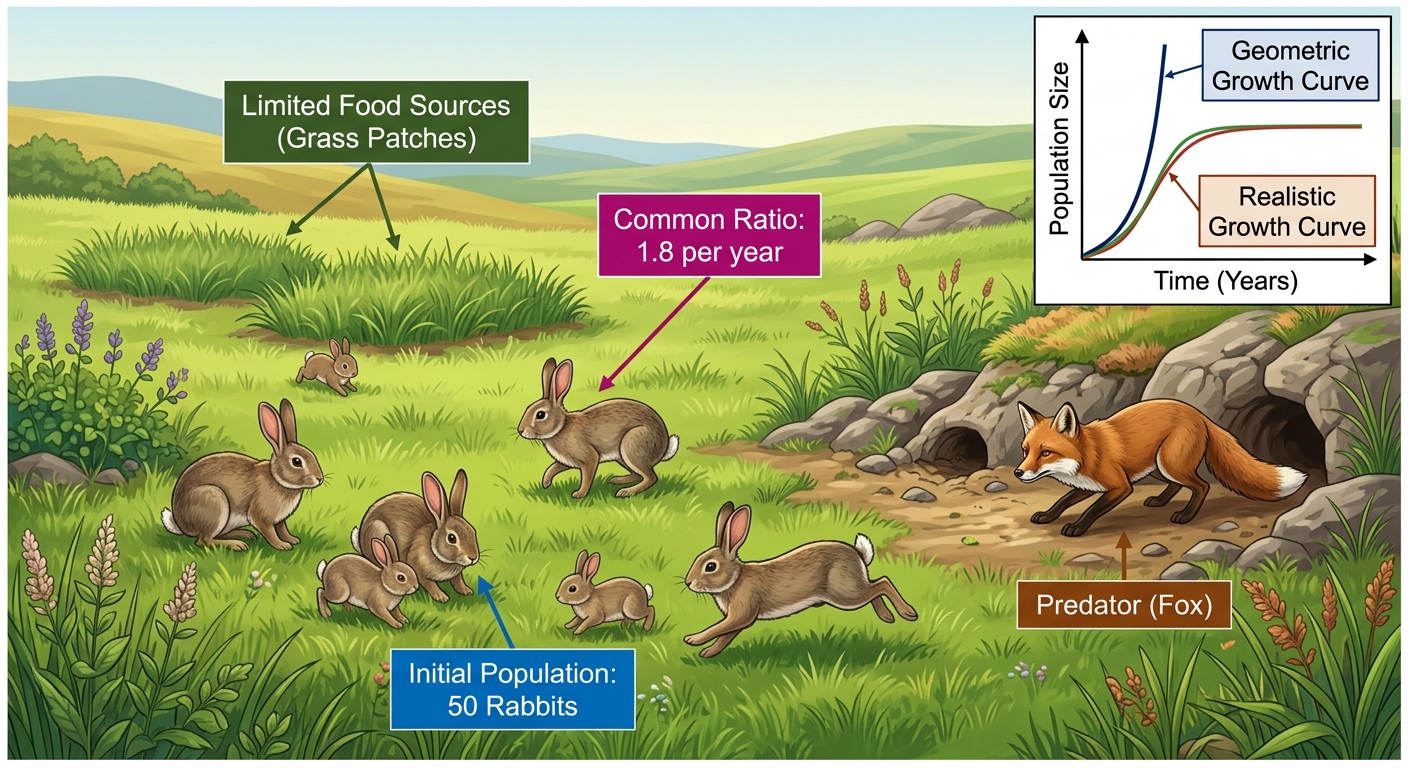
A conservationist tracks a rabbit population using the geometric sequence formula
where rabbits and .
where rabbits and .
a
Calculate the predicted population after 5 years. [2]
b
After 5 years, the actual counted population is 320 rabbits. Explain two reasons why using a constant common ratio may not accurately model a real rabbit population. [2]
c
The conservationist later discovers the initial count of 50 rabbits was incorrect; the true starting population was 60 rabbits. Calculate the corrected prediction for year 5, and interpret what this tells you about the effect of an initial counting error on the model. [2]
Solutions
3QuestionFinding Common DifferencesConcept Practice
2 marks~3 minCriterion B
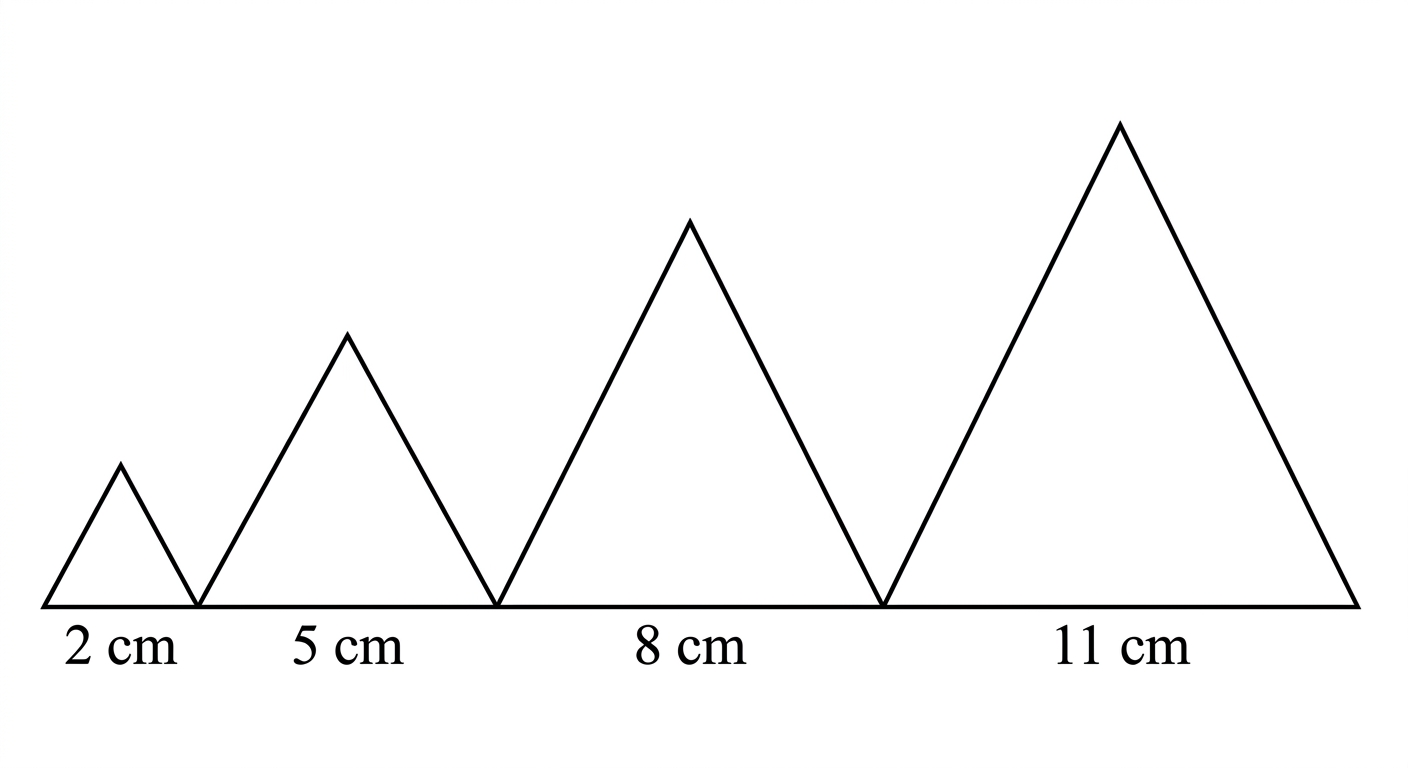
The diagram shows four equilateral triangles with side lengths forming a sequence.
Side length (cm):
Side length (cm):
a
Calculate the common difference of this arithmetic sequence. [1]
b
Explain how you can confirm that the sequence is arithmetic. [1]
Solutions
4QuestionComparing Arithmetic and Geometric SequencesConcept Practice
2 marks~3 minCriterion C
Compare an arithmetic sequence and a geometric sequence by describing the primary distinction between them.
Then provide one example of each type of sequence. [2]
Then provide one example of each type of sequence. [2]
Solutions
That's every free question here — 4 of 67.
+63 more questions, plus Mock Papers & Worksheets, are waiting in Premium.