You're viewing free preview questions — 4 questions previewing here — subscribe to unlock 62 more, plus the Full Question Bank, Mock Papers & Worksheets.Upgrade
Number Patterns and Sequences — Free MYP3 Mathematics Practice Questions

1QuestionCreating Patterns Using RulesConcept Practice
2 marks~3 minCriterion B
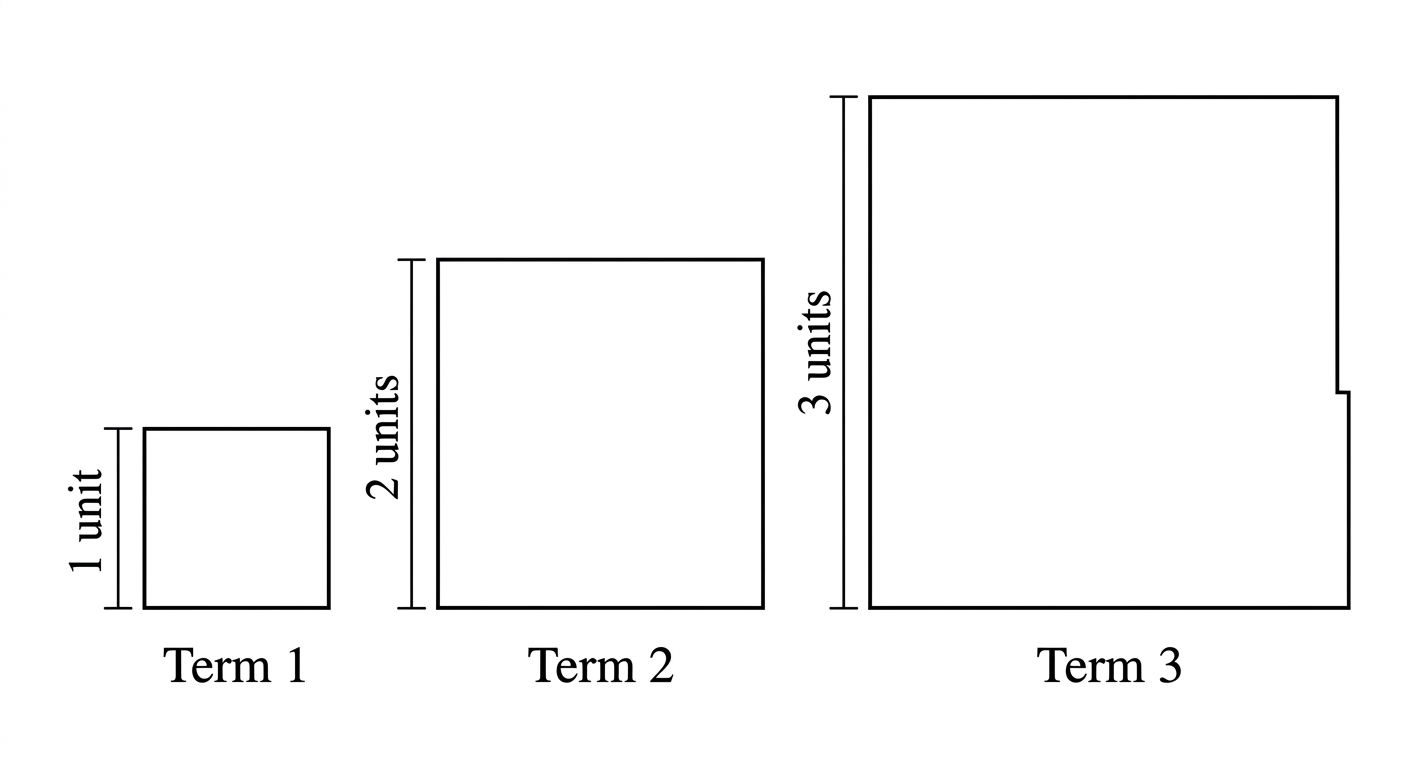
The diagram shows the first three terms of a pattern of squares. The side lengths are 1 unit, 2 units, and 3 units respectively.
a
State the rule for the side length of the th square. [1]
b
A student claims the 10th square has a side length of 12 units. Determine whether this claim is correct. Justify your answer. [1]

Solutions
2QuestionCreating Patterns Using RulesAssessment Practice
4 marks~6 minCriterion D
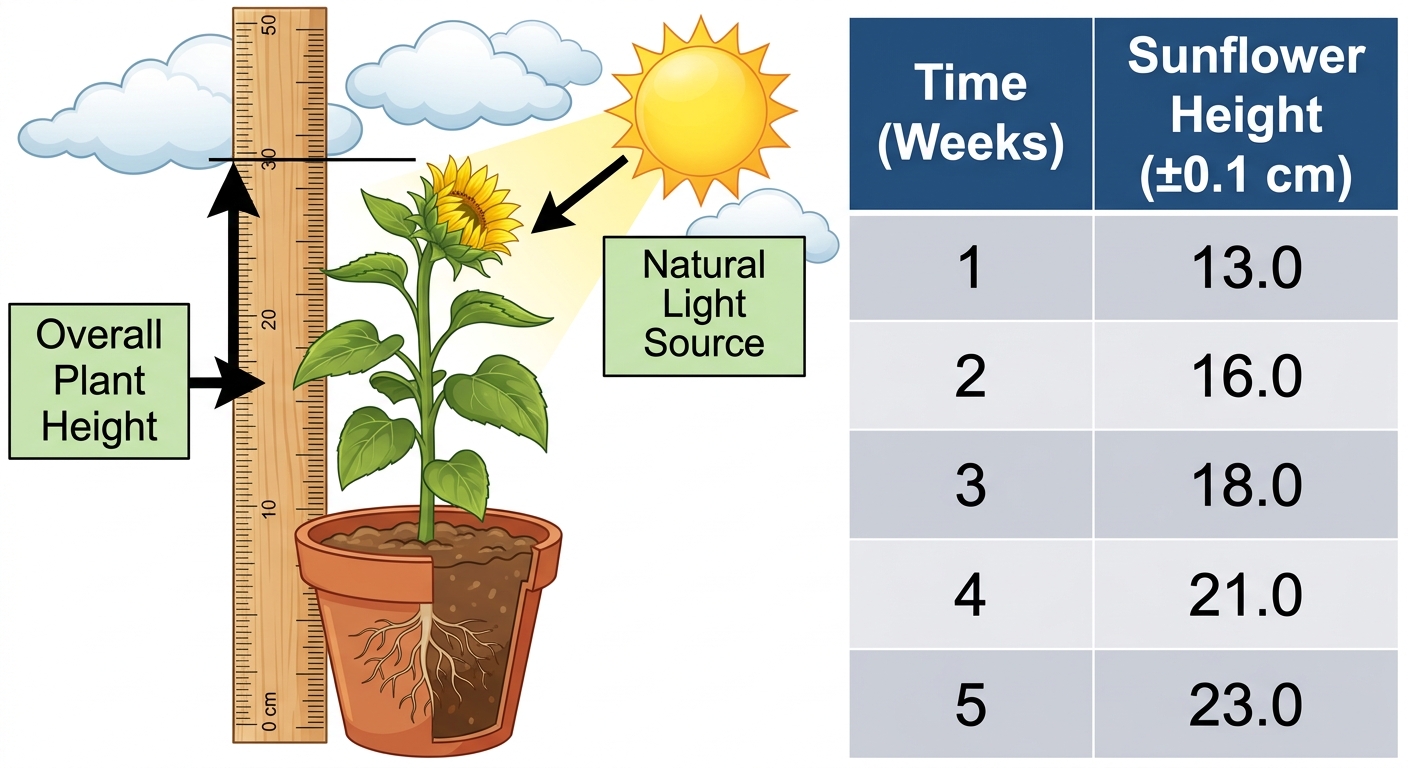
A student plants a sunflower and records its height each week using the rule
where is the number of weeks after planting.
Actual heights recorded:
Week 1: 13 cm, Week 2: 16 cm, Week 3: 18 cm, Week 4: 21 cm, Week 5: 23 cm
where is the number of weeks after planting.
Actual heights recorded:
Week 1: 13 cm, Week 2: 16 cm, Week 3: 18 cm, Week 4: 21 cm, Week 5: 23 cm
a
Calculate the predicted height at week 6. [1]
b
Compare the predicted weekly increase with the actual weekly increases shown in the data. [1]
c
Explain two reasons why the linear rule may not accurately model the sunflower's height over time. [2]
Solutions
3QuestionCreating Patterns Using RulesConcept Practice
2 marks~3 minCriterion A
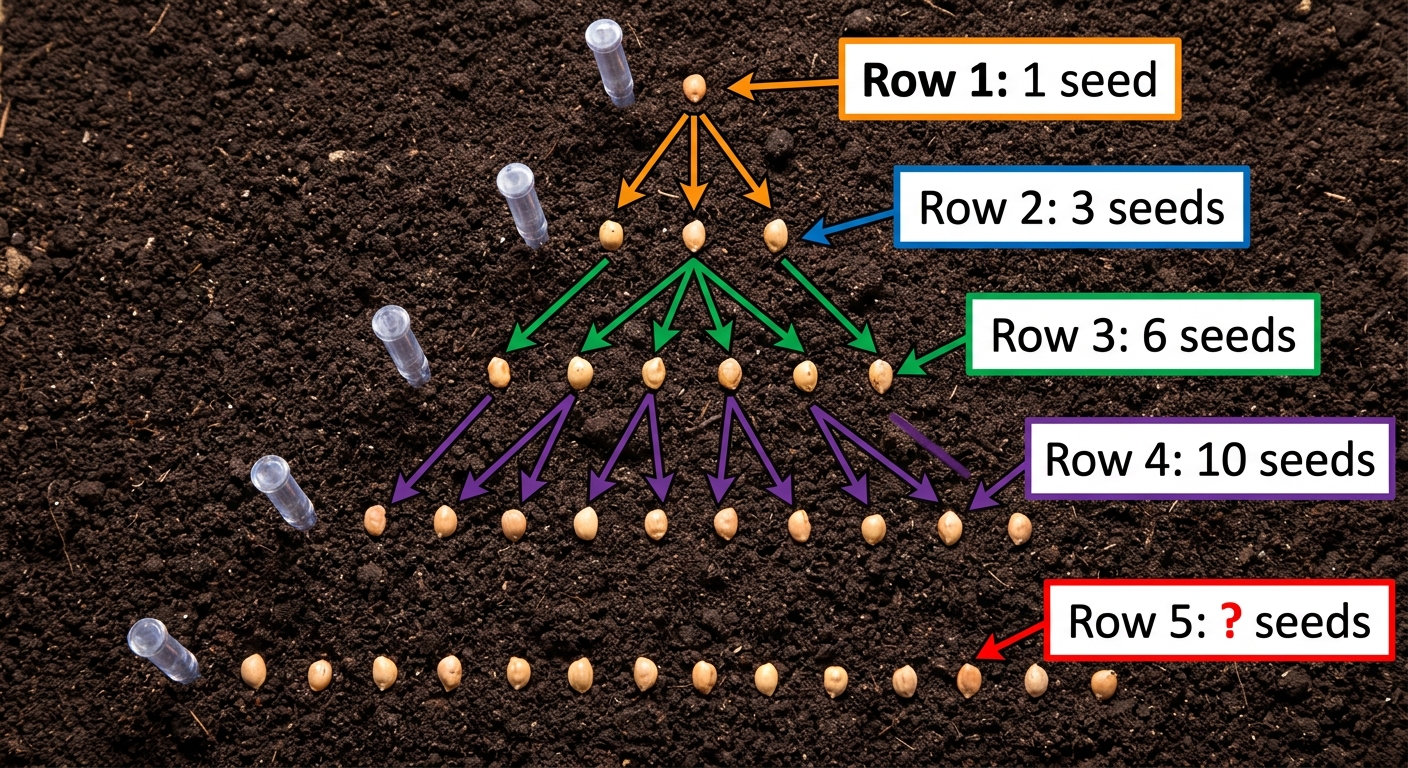
A gardener plants seeds in a triangular arrangement. The number of seeds in each row follows this pattern:
Row 1: 1 seed, Row 2: 3 seeds, Row 3: 6 seeds, Row 4: 10 seeds.
Row 1: 1 seed, Row 2: 3 seeds, Row 3: 6 seeds, Row 4: 10 seeds.
a
Calculate the number of seeds in the fifth row. [1]
b
Explain why using this pattern rule is more reliable than guessing when planning how many seeds to buy. [1]
Solutions
4QuestionIdentifying Patterns in Number SeriesAssessment Practice
4 marks~6 minCriterion C
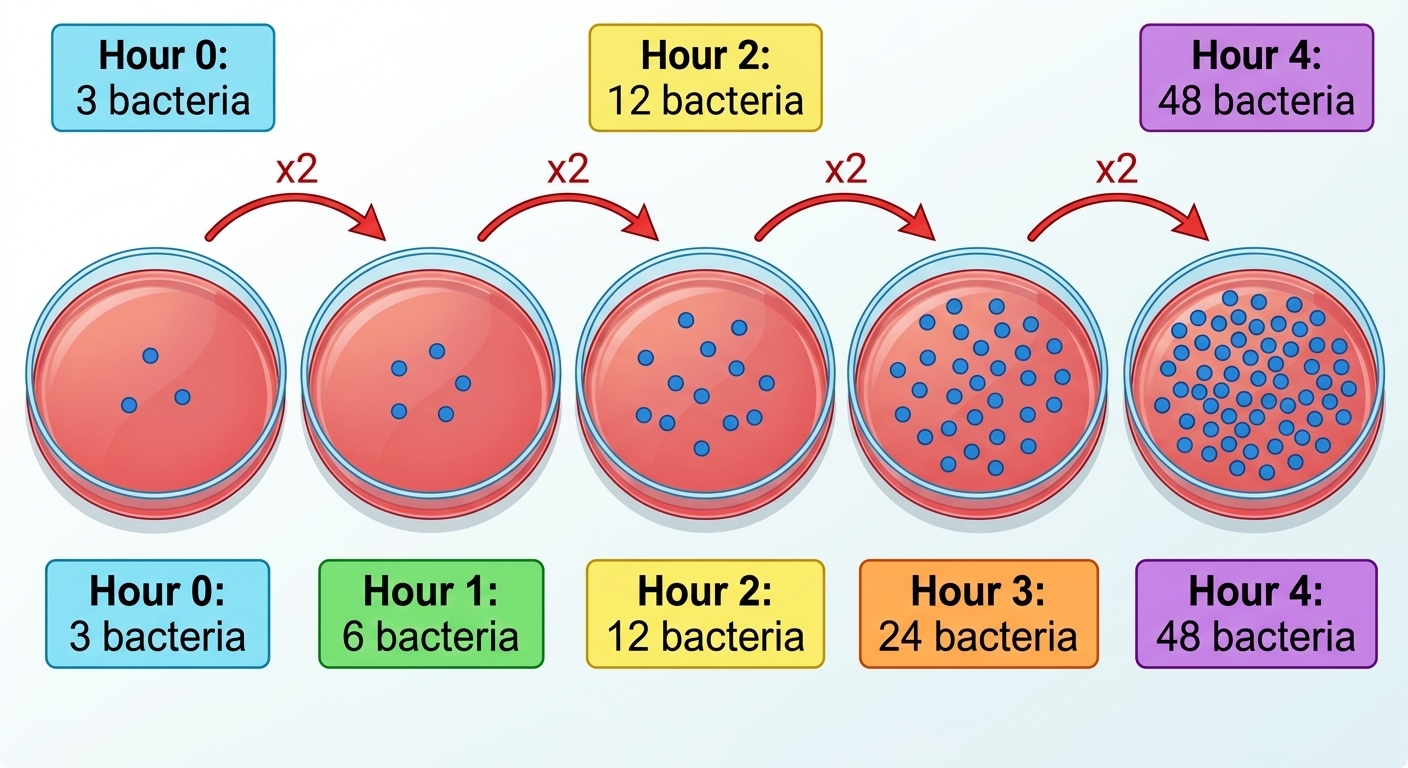
A population of bacteria starts with 3 bacteria at hour 0 and doubles every hour.
A student claims the sequence is generated by adding 3 to the first term, then multiplying each term after that by 2.
A student claims the sequence is generated by adding 3 to the first term, then multiplying each term after that by 2.
a
Calculate the bacterial population at hour 4 using the biological doubling rule. [1]
b
Explain whether the student's rule produces the same values as the doubling rule for the first five terms. Show your working. [2]
c
Justify why assuming this pattern continues indefinitely may not reflect real bacterial growth. [1]
Solutions
That's every free question here — 4 of 66.
+62 more questions, plus Mock Papers & Worksheets, are waiting in Premium.