You're viewing free preview questions — 4 questions previewing here — subscribe to unlock 49 more, plus the Full Question Bank, Mock Papers & Worksheets.Upgrade
Probability with Dice Coins and Spinners — Free MYP3 Mathematics Practice Questions

1QuestionCreating Fair and Biased ModelsConcept Practice
2 marks~3 minCriterion A
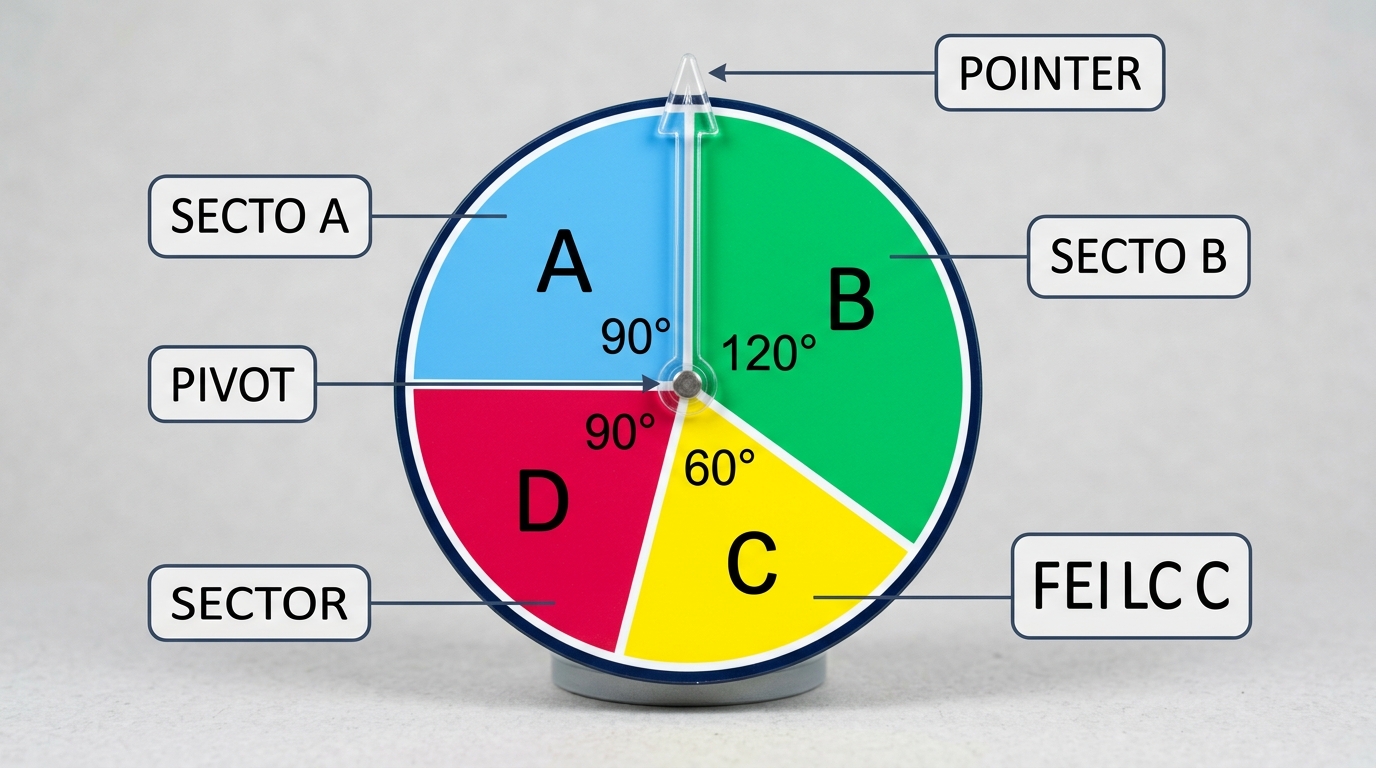
A spinner is divided into four sectors:
Sector A: Sector B: Sector C: Sector D:
The spinner is spun once.
Sector A: Sector B: Sector C: Sector D:
The spinner is spun once.
a
Calculate the probability of landing on Sector B. [1]
b
Sector B has the highest probability of being landed on. Explain why the spinner is biased. [1]

Solutions
2QuestionCreating Fair and Biased ModelsAssessment Practice
6 marks~9 minCriterion D
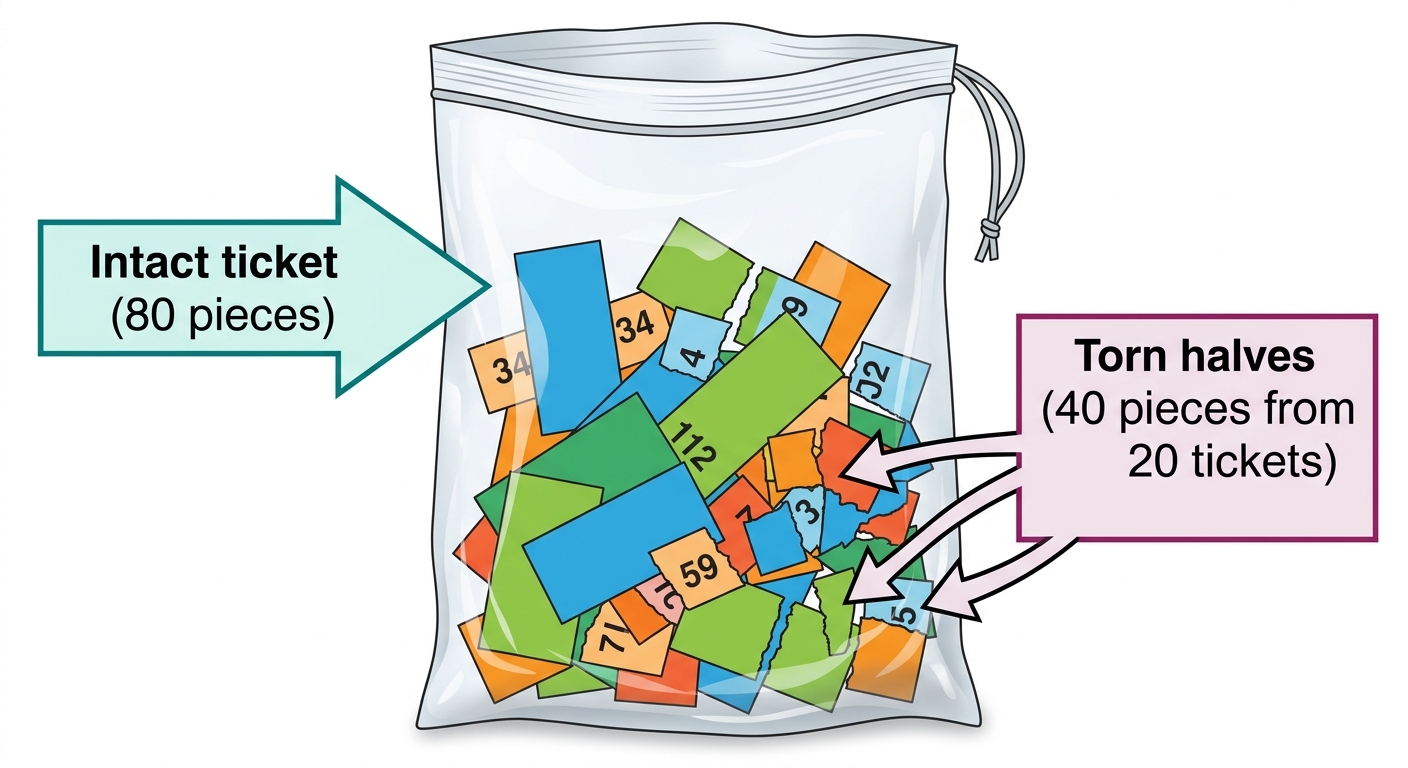
A school raffle sells 100 tickets. The principal accidentally tears 20 tickets in half. All torn halves and the remaining intact tickets are placed into one bag. A single piece is drawn at random.
a
Calculate the probability that a student holding one intact ticket wins the raffle. State one assumption you make. [2]
b
Explain how physical differences between torn and intact pieces could make this raffle unfair. [2]
c
Analyse how well the probability model from part (a) can be used to predict the outcome of this raffle. Refer to its assumptions and limitations. [2]
Solutions
3QuestionProbability of Flipping a CoinConcept Practice
2 marks~3 minCriterion B
When flipping a fair coin, the number of possible outcomes grows with each flip.
| Number of flips () | 1 | 2 | 3 | 4 |
|---|---|---|---|---|
| Number of outcomes | 2 | 4 | 8 | 16 |
a
Describe the pattern in the number of outcomes as increases. [1]
b
State the general rule for the number of outcomes for flips, and apply it to predict the number of outcomes for 5 flips. [1]
Solutions
4QuestionCreating Fair and Biased ModelsAssessment Practice
6 marks~9 minCriterion C
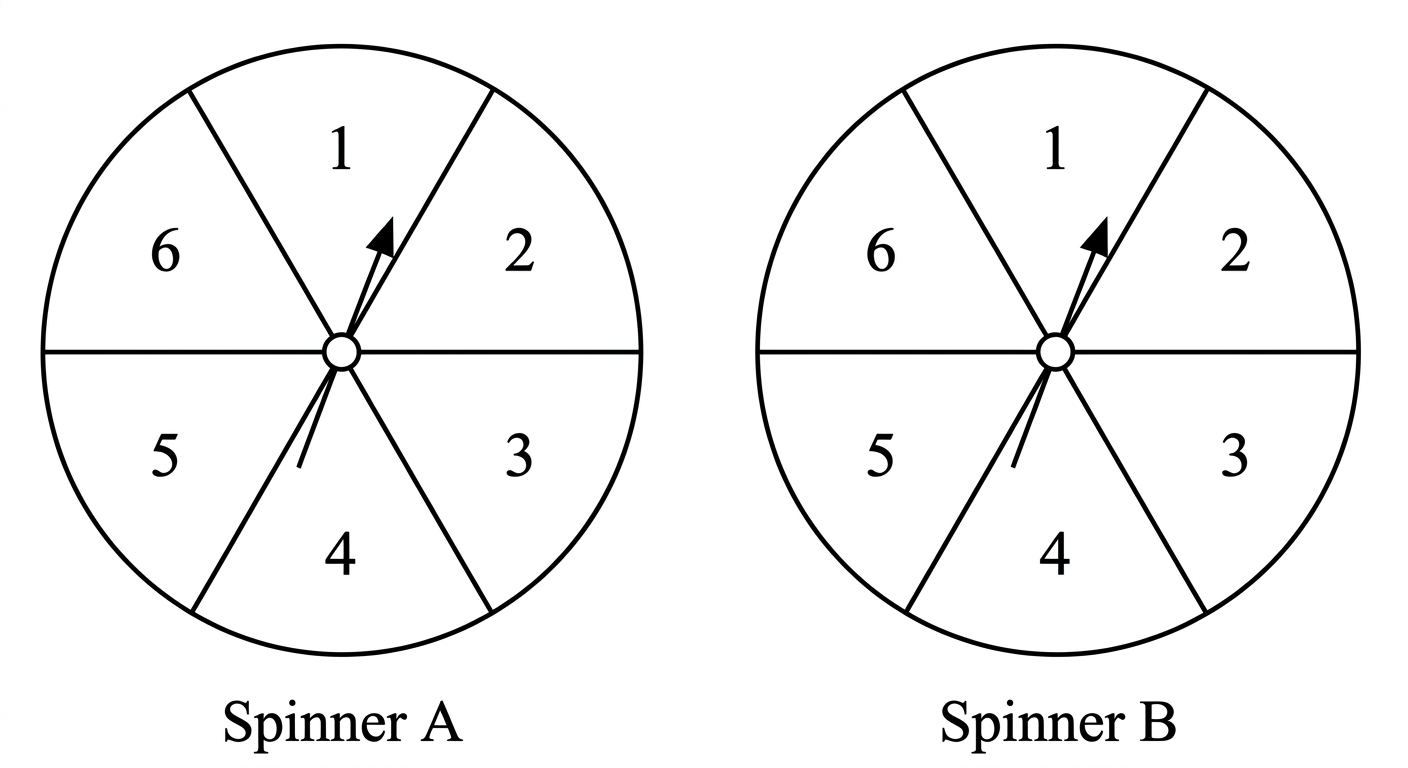
Spinner A has 6 equal sectors labelled 1–6. Spinner B has sectors labelled 1–6, but sectors 1, 2, and 3 are each twice as wide as sectors 4, 5, and 6.
A student claims: "Both spinners are fair because they both show the numbers 1 to 6."
A student claims: "Both spinners are fair because they both show the numbers 1 to 6."
a
State the condition that must be met for a spinner to be fair. [1]
b
Calculate for Spinner A and for Spinner B. Show your working. [3]
c
Explain whether the student's claim is correct, using your results from part (b). [2]
Solutions
That's every free question here — 4 of 53.
+49 more questions, plus Mock Papers & Worksheets, are waiting in Premium.