You're viewing free preview questions — 4 questions previewing here — subscribe to unlock 63 more, plus the Full Question Bank, Mock Papers & Worksheets.Upgrade
Theoretical vs Experimental Probability — Free MYP3 Mathematics Practice Questions

1QuestionDefining Theoretical ProbabilityConcept Practice
2 marks~3 minCriterion A
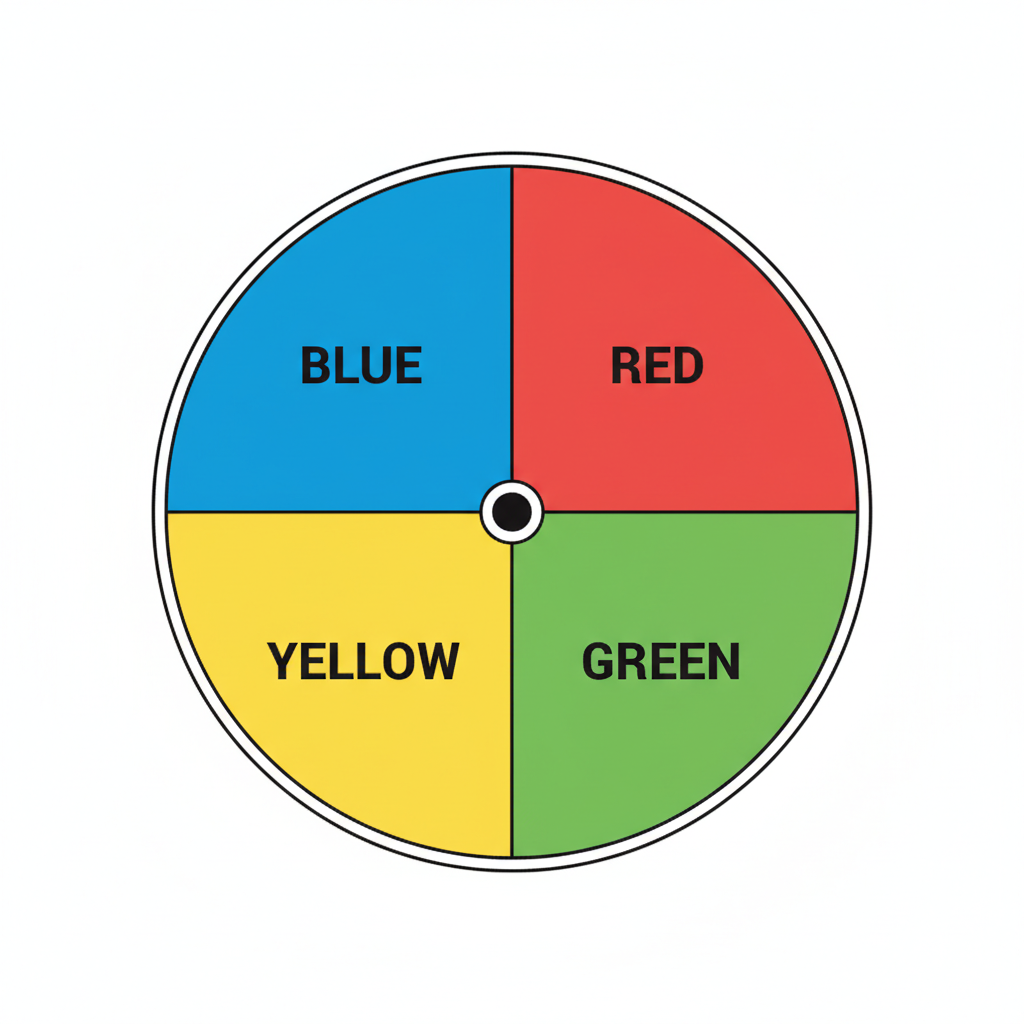
A spinner is divided into 4 equal sectors: blue, red, green, and yellow.
a
Calculate the theoretical probability of landing on blue. Express your answer as a fraction in its simplest form. [1]
b
Explain why this probability is described as theoretical rather than experimental. [1]

Solutions
2QuestionUnderstanding Variability in ResultsAssessment Practice
3 marks~5 minCriterion C
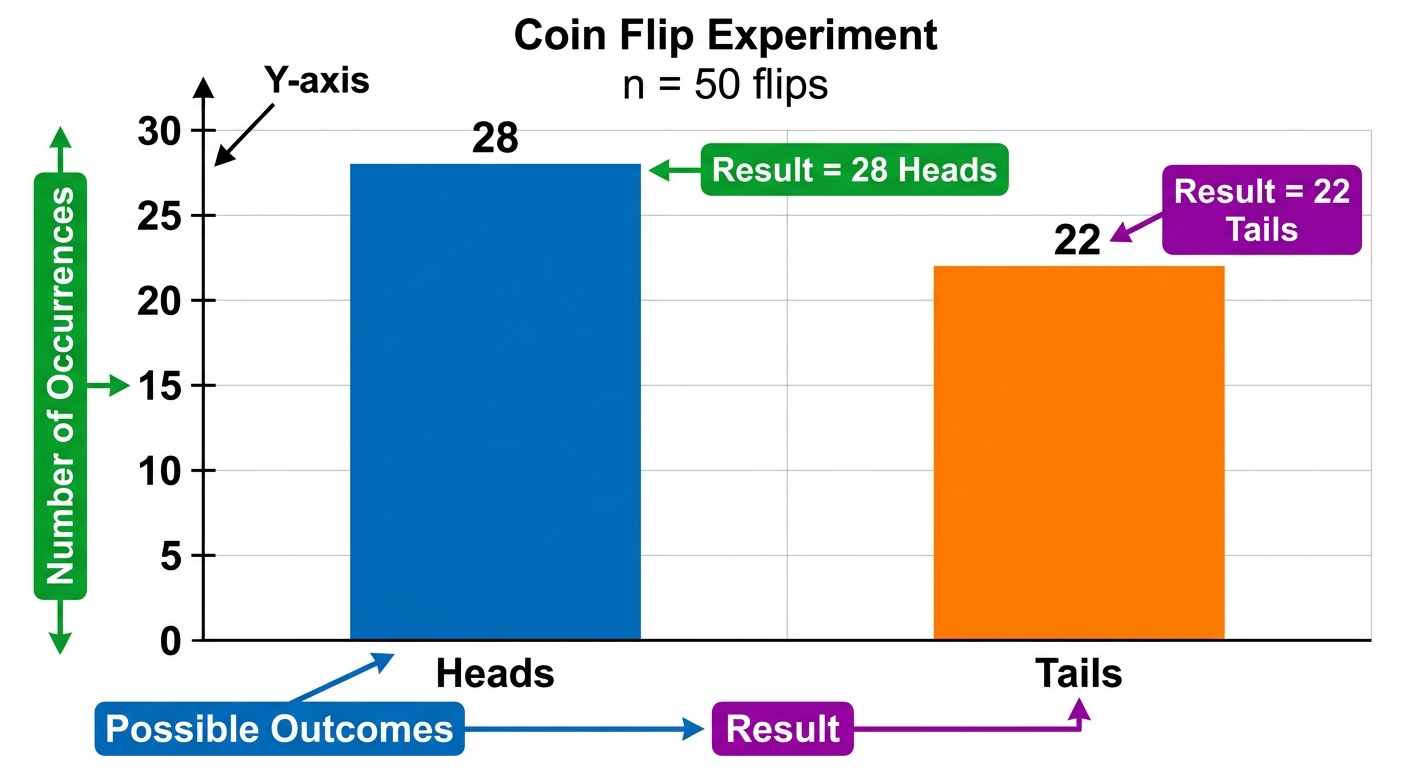
A fair coin is flipped 50 times. The results are shown in the bar chart: 28 heads and 22 tails.
a
Calculate the experimental probability of getting heads. [1]
b
Explain why the experimental probability differs from the theoretical probability of . [1]
c
A student claims that flipping the coin 500 times instead of 50 would give an experimental probability much closer to . Analyse whether this claim is likely to be correct, using the idea of variability. [1]
Solutions
3QuestionConducting Simple Probability ExperimentsConcept Practice
3 marks~5 minCriterion B
A fair coin is flipped 50 times. The results are: Heads: 28 flips, Tails: 22 flips.
a
Calculate the experimental probability of obtaining heads. [1]
b
Explain one reason why the experimental probability may differ from the theoretical probability of . [1]
c
A second experiment repeats the same coin flip 500 times. Explain what you would expect to happen to the experimental probability of heads, and why. [1]
Solutions
4QuestionComparing Theoretical and Experimental ResultsAssessment Practice
6 marks~9 minCriterion D
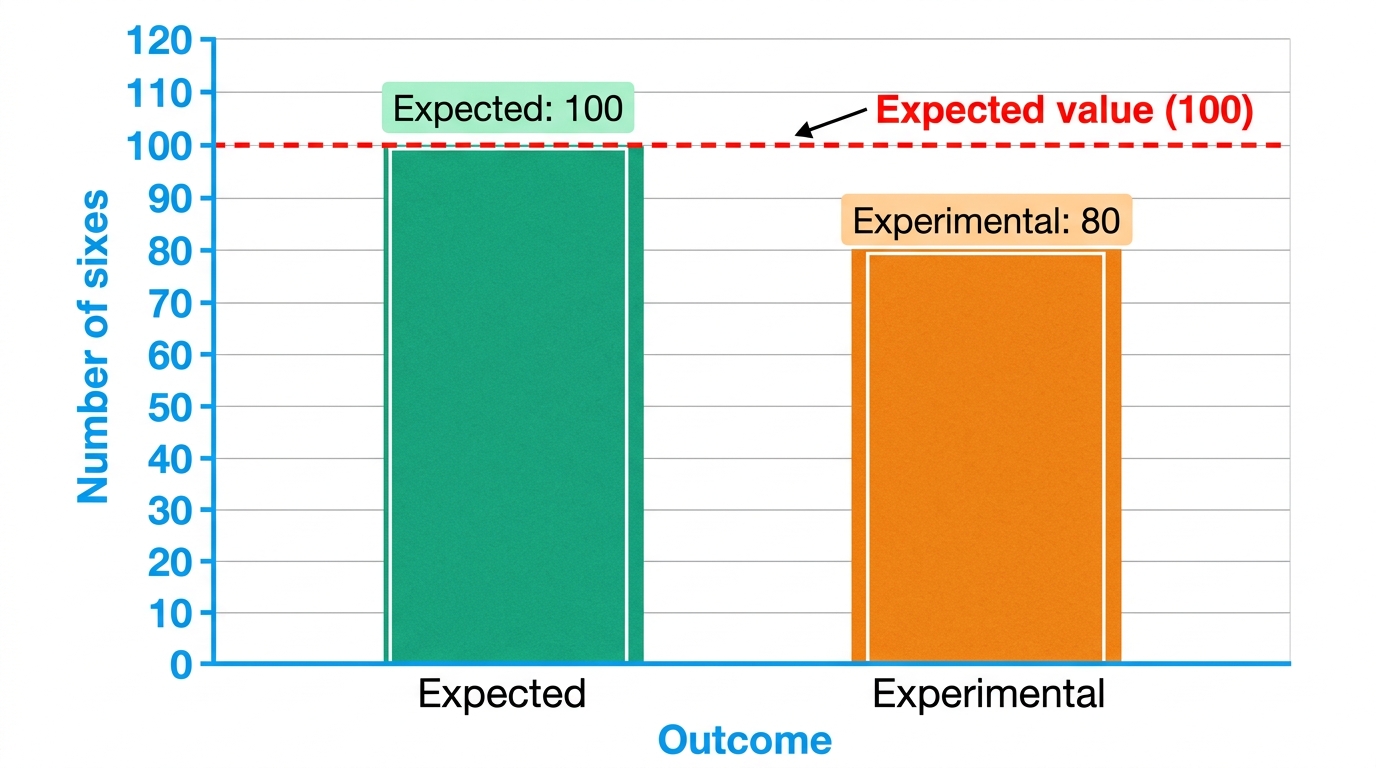
A student rolls a fair six-sided die 600 times and records 80 sixes.
a
Calculate the expected number of sixes in 600 rolls. [2]
b
Explain why rolling 80 sixes does not necessarily mean the die is biased. In your answer, refer to natural variation and sample size. [2]
c
The student concludes the die is biased after this single trial. Analyse whether this conclusion is valid, and justify your reasoning. [2]
Solutions
That's every free question here — 4 of 67.
+63 more questions, plus Mock Papers & Worksheets, are waiting in Premium.