You're viewing free preview questions — 4 questions previewing here — subscribe to unlock 79 more, plus the Full Question Bank, Mock Papers & Worksheets.Upgrade
Levels of Biological Organization — Free MYP3 Sciences Practice Questions

1QuestionExamples in Humans and PlantsConcept Practice
2 marks~3 minCriterion A
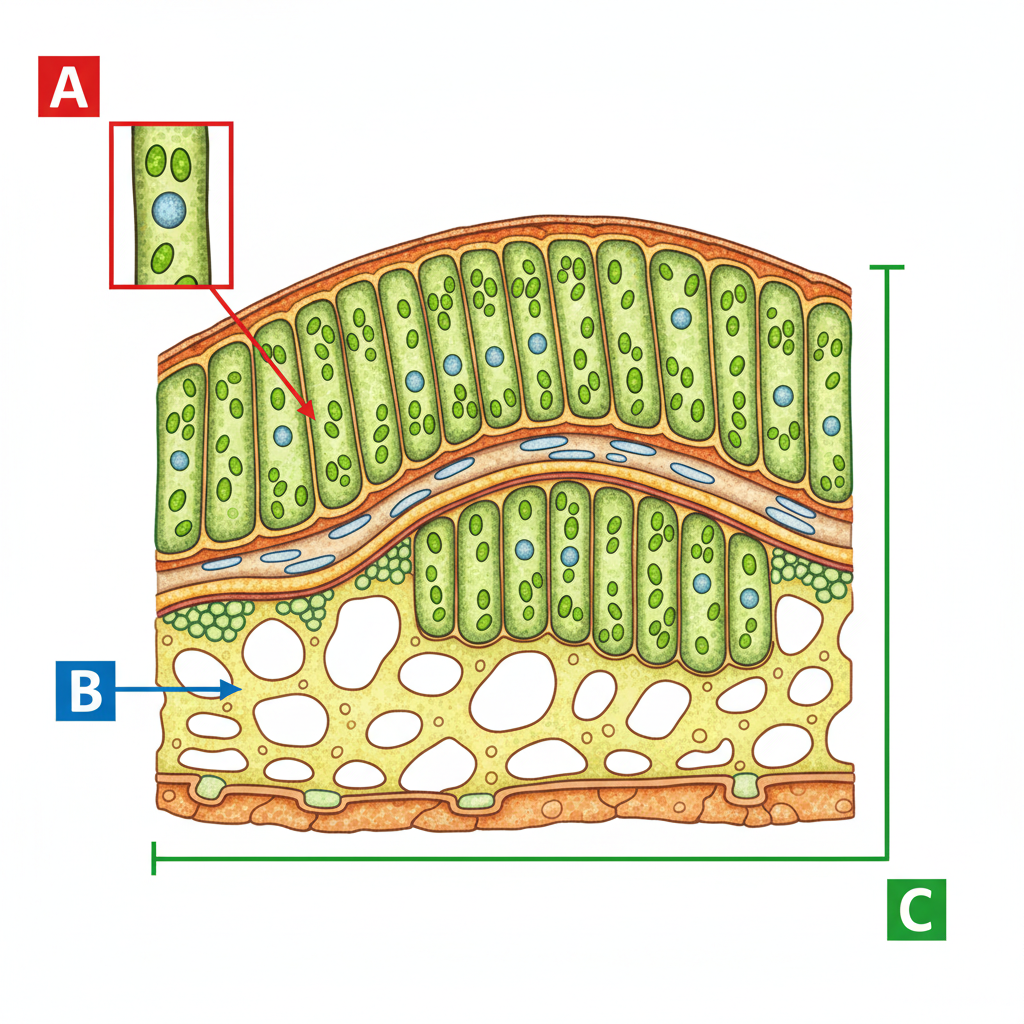
The diagram of a plant leaf shows three labels:
Label A — a single cell
Label B — the leaf's mesophyll (a group of similar cells)
Label C — the entire leaf
Label A — a single cell
Label B — the leaf's mesophyll (a group of similar cells)
Label C — the entire leaf
a
Identify which label represents a tissue. [1]
b
Explain why the other two labels do not represent a tissue. [1]

Solutions
2QuestionExamples in Humans and PlantsAssessment Practice
2 marks~3 minCriterion D
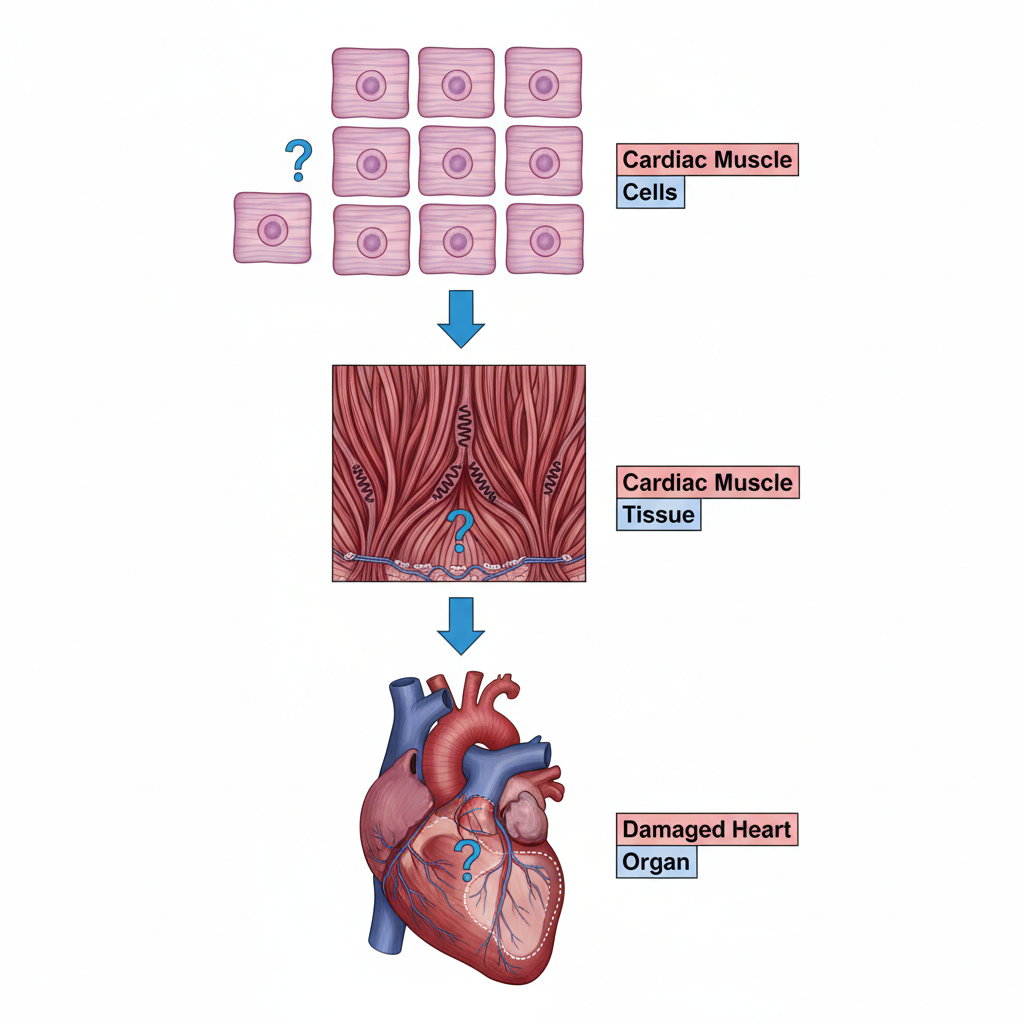
A patient is diagnosed with a heart attack in which cardiac muscle cells die, weakening the heart's ability to pump blood.
Explain why a doctor's understanding of the levels of biological organization — cells, tissues, and organs — is important when diagnosing and treating this patient. [2]
Explain why a doctor's understanding of the levels of biological organization — cells, tissues, and organs — is important when diagnosing and treating this patient. [2]
Solutions
3QuestionExamples in Humans and PlantsAssessment Practice
4 marks~6 minCriterion C
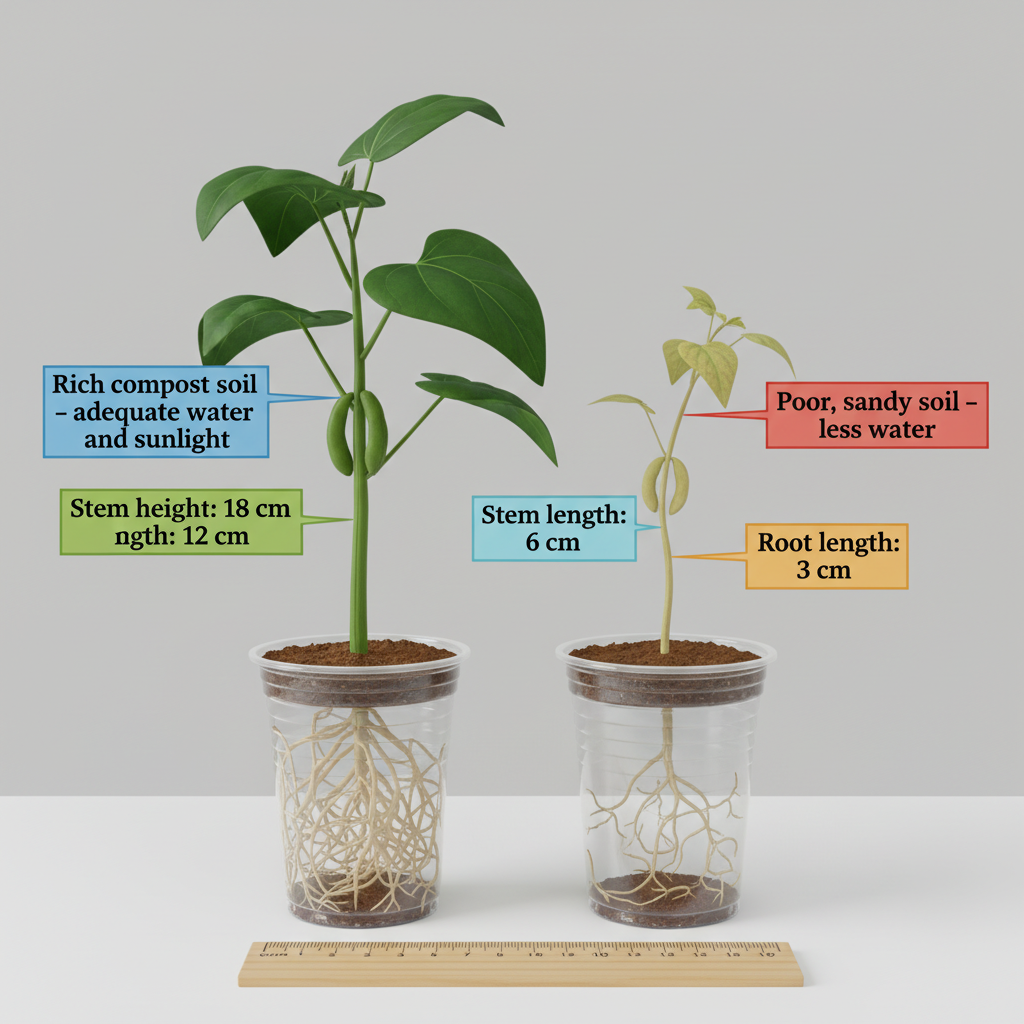
A student planted two bean seeds of the same variety. Seed A was grown in rich compost soil with adequate water and sunlight. Seed B was grown in poor, sandy soil with limited water and sunlight. After two weeks, Seed A had a taller stem and longer roots than Seed B.
a
Explain how the root system and shoot system of Seed A worked together to support greater growth than Seed B. [2]
b
The student concludes: "Rich compost soil always produces taller bean plants than poor soil." Identify one limitation of this conclusion and explain how it affects the reliability of the student's finding. [2]
Solutions
4QuestionInterdependence of LevelsAssessment Practice
6 marks~9 minCriterion B
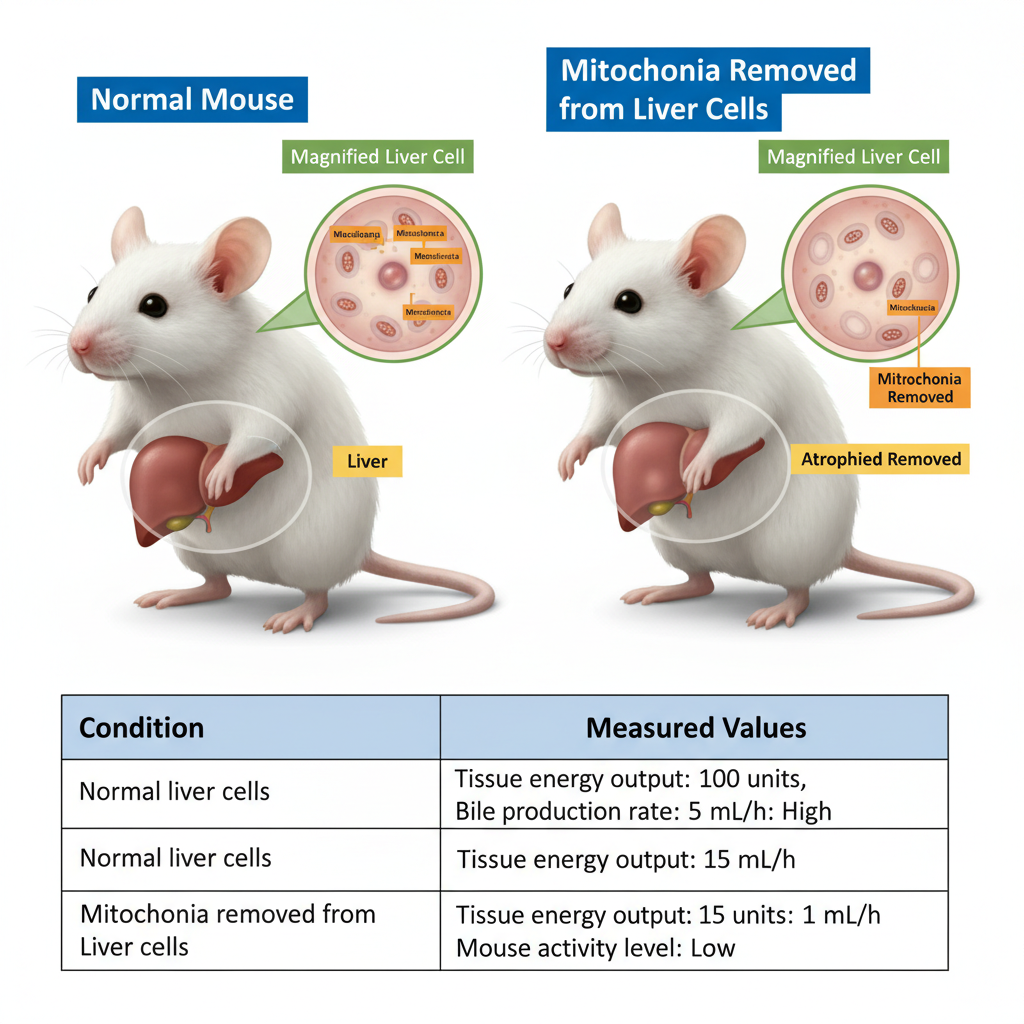
Students investigated the effect of removing mitochondria from liver cells in mice. Results are shown below.
Condition: Normal liver cells
Tissue energy output: 100 units
Bile production rate: 5 mL/h
Mouse activity level: High
Condition: Mitochondria removed from liver cells
Tissue energy output: 15 units
Bile production rate: 1 mL/h
Mouse activity level: Low
Condition: Normal liver cells
Tissue energy output: 100 units
Bile production rate: 5 mL/h
Mouse activity level: High
Condition: Mitochondria removed from liver cells
Tissue energy output: 15 units
Bile production rate: 1 mL/h
Mouse activity level: Low
a
State what happens to tissue energy output when mitochondria are removed from liver cells. [1]
b
Explain how the drop in tissue energy output leads to reduced bile production by the liver. [2]
c
Using the data, analyse how disruption at the cellular level produces effects at the tissue, organ, and whole-organism levels. In your answer, refer to emergent properties. [3]
Solutions
That's every free question here — 4 of 83.
+79 more questions, plus Mock Papers & Worksheets, are waiting in Premium.