You're viewing free preview questions — 6 questions previewing here — subscribe to unlock 72 more, plus the Full Question Bank, Mock Papers & Worksheets.Upgrade
Back

Specialised cells and their functions — Free MYP3 Sciences Practice Questions

Free questions

Open in full, with answers, mark scheme and examiner insights.

Question 1Criterion A · Easy · 2 marksrevisionprep.com

Definition and need for specialisation
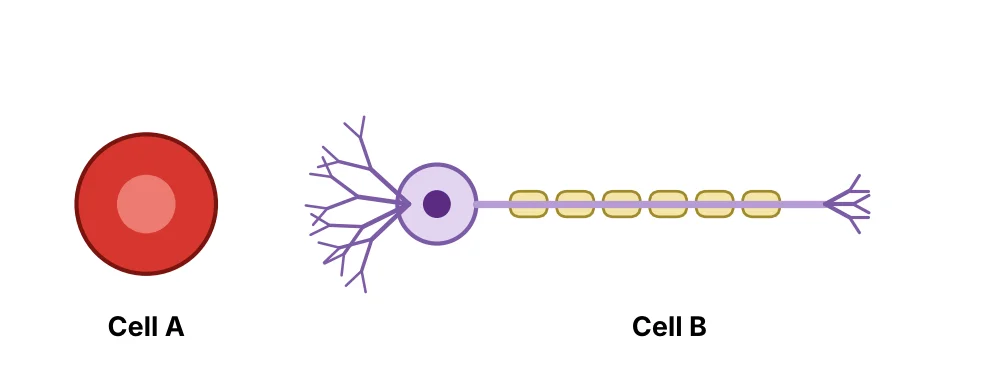
The diagram shows two specialized human cells.
Question diagram
(a)
Which cell, A or B, is the red blood cell? [1]
(b)
Describe one difference in structure between the two cells and say how it links to the job each cell does. [1]

revisionprep.com

Summary Answer

Not available for this question.

Model Answer

Not available for this question.

Marking Scheme

Not available for this question.

Examiner Insights

Not available for this question.

Question 2Criterion A · Easy · 2 marksrevisionprep.com

Comparing specialised vs unspecialised cells
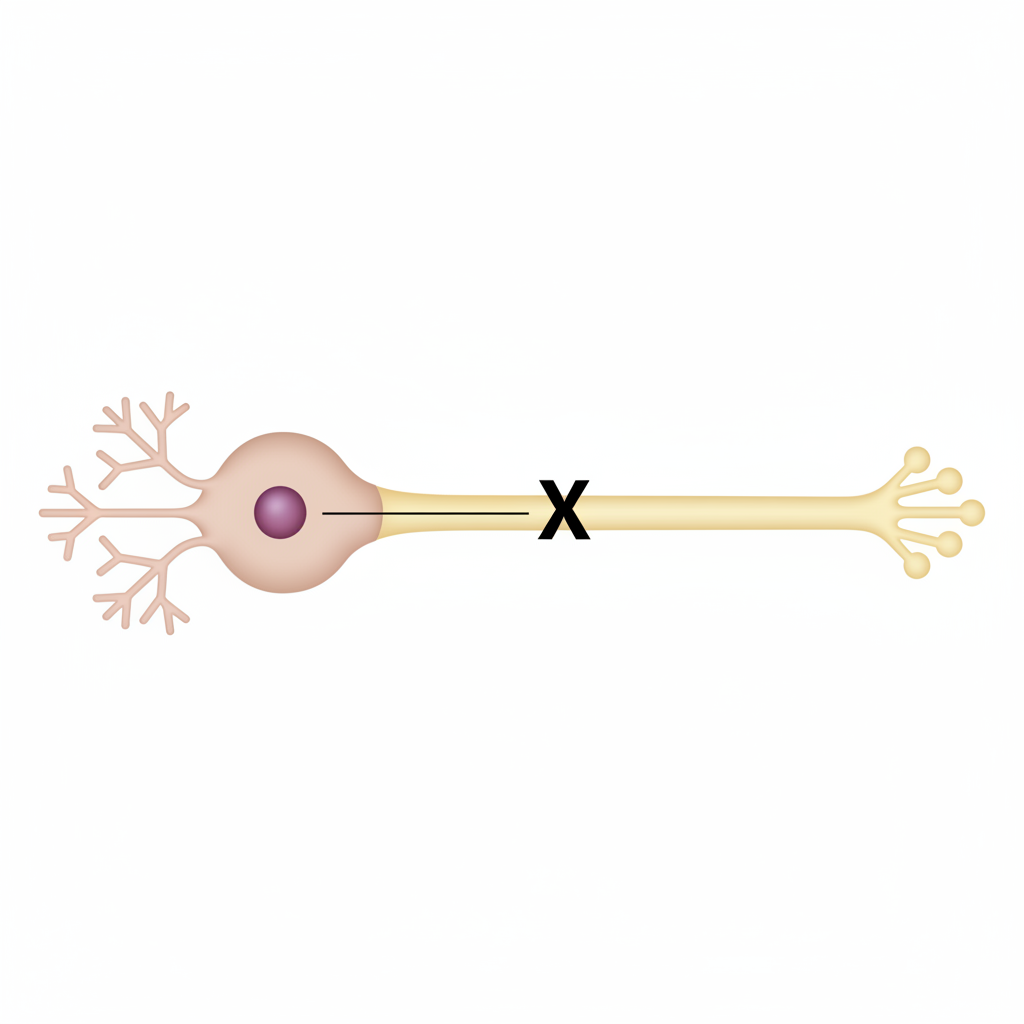
The diagram shows a nerve cell with one part labelled X.
Question diagram
(a)
Name part X. [1]
(b)
Explain how the structure of part X suits it to carrying signals away from the cell body. [1]

revisionprep.com

Summary Answer

Not available for this question.

Model Answer

Not available for this question.

Marking Scheme

Not available for this question.

Examiner Insights

Not available for this question.

Question 3Criterion A · Medium · 5 marksrevisionprep.com

Specialised cells: nerve, muscle, red blood and root hair cells
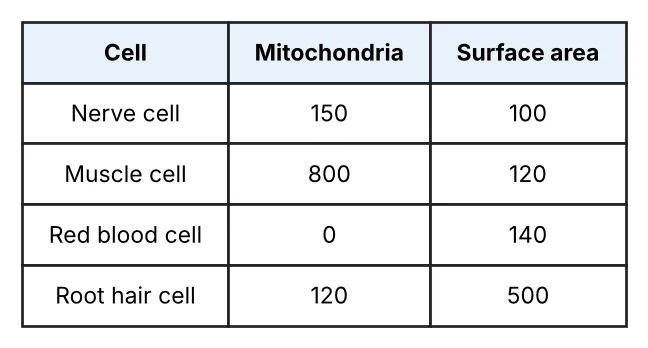
The table gives data about four specialized cells. The numbers are relative values.
Question diagram
(a)
State which cell has the most mitochondria. [1]
(b)
Explain how the number of mitochondria in this cell helps it do its job. [2]
(c)
The red blood cell has no mitochondria. Use the data to explain one advantage of this for the job of the cell. [2]

revisionprep.com

Summary Answer

Not available for this question.

Model Answer

Not available for this question.

Marking Scheme

Not available for this question.

Examiner Insights

Not available for this question.

Question 4Criterion D + A · Medium · 6 marksrevisionprep.com

Adaptations of specialised cells

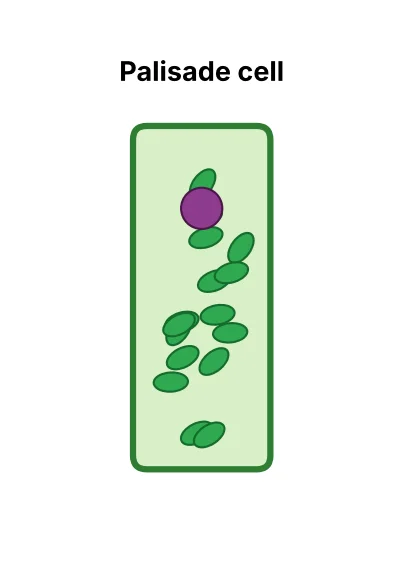
A farmer wants to grow crops in a dry, sunny place. Palisade cells are tall cells near the top of a leaf. They are packed closely together and contain many chloroplasts. A crop loses 18 mL of water per day in the shade and 54 mL of water per day in full sun.
Question diagram
(a)
Describe two ways palisade cells are adapted for photosynthesis. [2]
(b)
The farmer thinks about covering the crop with shade netting. Use the data to explain one advantage. [2]
(c)
Give one disadvantage of shade netting for the crop and decide if the farmer should use it. [2]

revisionprep.com

Summary Answer

Not available for this question.

Model Answer

Not available for this question.

Marking Scheme

Not available for this question.

Examiner Insights

Not available for this question.

Question 5Criterion B + A · Challenge · 6 marksrevisionprep.com

Definition and need for specialisation
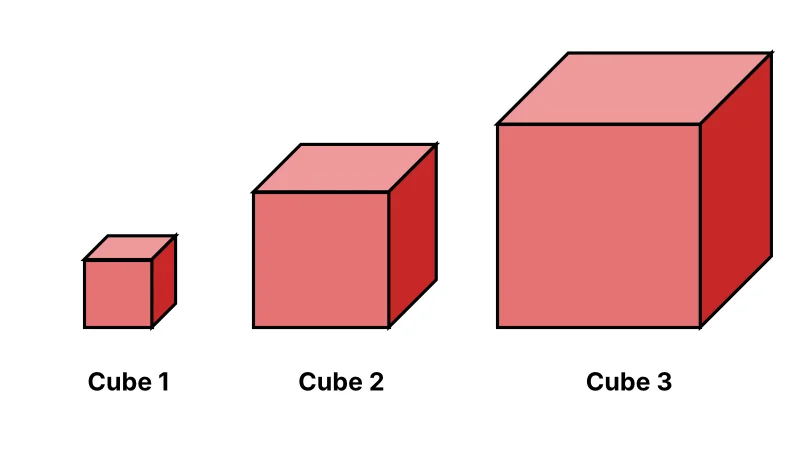
Students want to find out how the size of a cell model affects how fast a chemical moves into it. They cut jelly cubes with sides of 1 cm, 2 cm and 3 cm, as in the diagram. The jelly contains a dye that loses its colour when acid reaches it. They put each cube into weak acid and time how long it takes for the colour to disappear from the whole cube. A teacher watches, and everyone wears eye protection.
Question diagram
(a)
Write a hypothesis the students could test. [1]
(b)
State the independent variable, the dependent variable and one controlled variable. [3]
(c)
Explain how the results of this model show why cells are small. [2]

revisionprep.com

Summary Answer

Not available for this question.

Model Answer

Not available for this question.

Marking Scheme

Not available for this question.

Examiner Insights

Not available for this question.

Question 6Criterion C · Challenge · 5 marksrevisionprep.com

Stem cells and their potential (introductory)

A researcher tested whether a drug can turn mouse muscle stem cells into bone-like cells. Two dishes of identical stem cells were used. One was the control, with no drug. The other had the drug added. The number of bone-like cells was counted on day 0, day 3 and day 6.

Control: 10, 12, 15 cells.

Drug: 10, 25, 60 cells.

percentage change = (final - start) ÷ start × 100
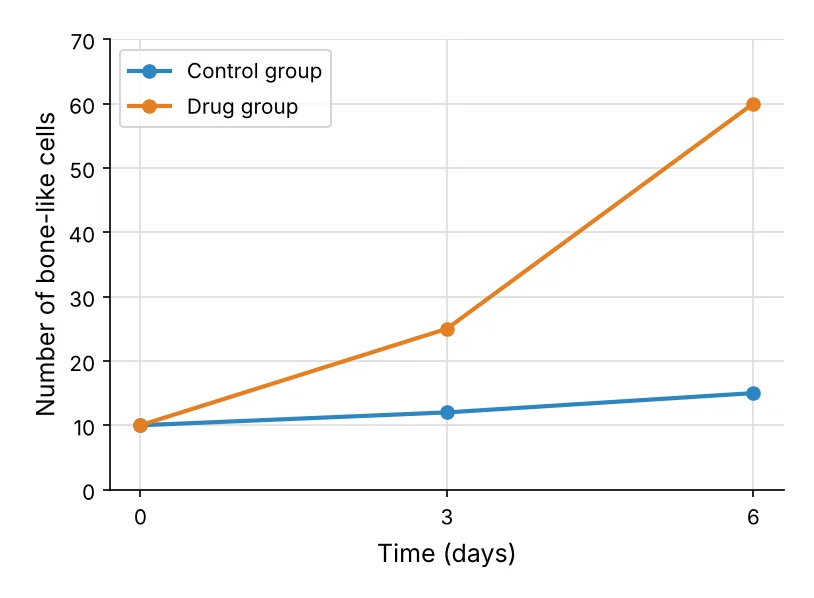
Question diagram
(a)
Calculate the percentage change in the number of bone-like cells from day 0 to day 6 for the control dish. [1]
(b)
Calculate the percentage change for the dish with the drug. [1]
(c)
A student says: The drug turns muscle stem cells into bone cells. Use your answers to decide if the data support this, and say what else should be done before it is used in people. [3]

revisionprep.com

Summary Answer

Not available for this question.

Model Answer

Not available for this question.

Marking Scheme

Not available for this question.

Examiner Insights

Not available for this question.

That's every free question here — 6 of 78.

+72 more questions, plus Mock Papers & Worksheets, are waiting in Premium.

Upgrade